


Fun is a word I use rarely. I sometimes, I hesitate to add, wince when other people use it. Play is a different thing because play always leans into a task and makes it something that human beings feel to be ‘real’, a space, set of circumstances and other characters in which they feel an embodied part – in the way Mead and Symbolic Interactionists argue that children play, and then create games, to model a world that appears to be ‘reality’ and to, as it were, try on its clothes, manner and actions, and find a ‘self’ therein that might satisfy.
Fun is not just play, it is a description of a part of the feelings that play arouses in you, that bit where you feel a simple pleasure – one that seems uncomplicated by the need to consult other people to check if it is ‘fun’ for them to or the excitement feels before you check the consequences of the ‘fun’ you’ve taken.
We like to excuse ourselves: “It’s only a bit of fun!”; “It’s just a joke – just having fun”. Meanwhile, the fun can be the release of something inhibited – like the chance to criticise or lampoon someone for some trait that feels ‘abnormal’. The feeling of winning and losing in ‘games’ though often described, regarding each of these roles, as ‘fun’, equally has always seemed suspect to me. Yes we learn ‘realities’, but we also learn that it is sometimes permissible to visibly and aggressively feel the effect of those roles. I don’t think that is just because I am a ‘sore loser’, though I must admit I rarely win for somehow I begin to fear loss at an early stage, as if it meant something other, something experienced before (and no doubt it was)!
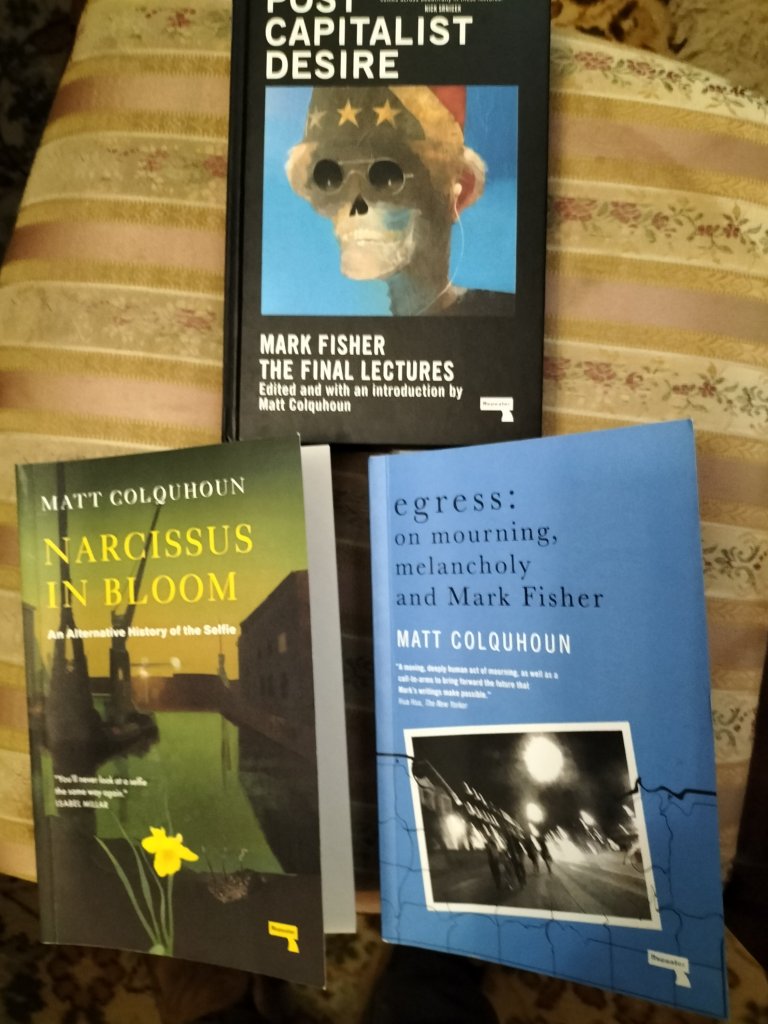
I am just reading (of course to prepare a blog) works by a clever person called Matt Colquhoun, who constantly raises the issue (in summarising their hero and mentor, now deceased, Mark Fisher) that pleasure and pain are not simple opposites as Jeremy Bentham insisted, and thus capable of being quantified and then compared to the quantities of pain involved in any act to decide its utility, its value in Bentham’s terms. Freud, Mark Fisher is transcribed (by Colquhoun) as saying in a seminar, that pleasure and pain were too often found in each other to be distinguished, and not just in the dreams and actions that are frankly sado-masochistic.
And ‘fun’ too has that edge – that treading a boundary of something that might become pain for self or other. Hence Freud’s wonderful book on ‘jokes’ wherein he traces in the morphology of the joke, the ways in which it builds excitement and restraint simultaneously, as he saw it, in the same manner as sexual foreplay does. For completion, he argues is something to fear as well as long for, something better put off while you have ‘a bit of fun’. Racist jokes (as Freud found in anti-Semitic humour) often play this game. In England, when I was young the same function was played by Irish jokes.
I do find pleasure in things. I find some things funny. With the latter I often find a reflexive after-wash however where I wonder if I have gained that release of energy from someone else’s pain. I have to say, often it is my own. There is a virtue, after all, in ‘making fun of yourself’ the point of the story of The Emperor’s New Clothes.
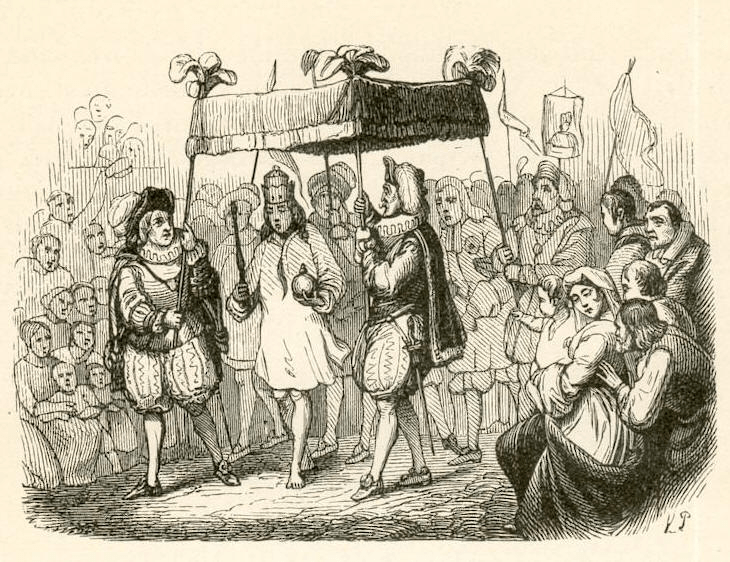
The story asks: ‘How much are swayed by your desire to appear as you wish to be and see that reflected only in the eyes of the servile?’ Quite a lot it seems but then. Would we have the ability to become a person at all without playing at appearances and seeing which work and which do not in any particular context. For that is symbolic interactionist play? The play is in seeing, as the young boy in the crowd does in the above illustration, that playing at being Emperor makes you just seem funny. The point is to only act it, when its necessity is required not in show merely. Well, that would be the point, if ‘show’ weren’t itself a good enough aim, to find in ‘winging it’ that we are seen as what we wanted to be.
The stuff goes much deeper as Colquhoun shows us in their best book, Narcissus in Bloom, and in places in their other books.(1) There are moments when we have to produced loved selves (loved primarily by ourselves) to stop our identities hardening and rigidifying into what powerful systems want them to be. In those moments we can find a way out of an imprisoning system (‘egress’ – more on that in the full blog) into newer senses of community that can redefine us all in interaction with each other – in a collectivity of exchanges of everything that matters.
See you at the next blog. My love:
Steve
___________
(1) See my first Colquhoun blog at: https://livesteven.com/2023/12/04/we-are-all-narcissus-we-are-all-monstrous-in-that-we-are-trapped-between-various-ways-of-seeing-and-being-seen-some-books-cannot-be-praised-enough-this-is-a-blog-on-matt-colquhou/
 Steve_Bamlett_blog
I have two of these on my To Be Read pile, I find Fisher to be an interesting theorist ‘The Weird and The Eerie’ returned to my above mentioned pile as soon as I had finished it as I felt it needed a second reading to fully appreciate. Thank you once again for prompting me to make time for more concentrated reading.
LikeLike
You were a step ahead of me, Kes. I only learned of Mark through Matt Colquhoun’s beautiful books. Would be interested in your views of Narcissus in Bloom.
LikeLike
Will do, as soon as I have applied myself 🙂
LikeLiked by 1 person
Don’t worry. I am retired. You are not. X
LikeLike
Ramathra Fort
LikeLike
We sometimes get startled when people mention ‘play’ or ‘fun’ and ‘adult’ in the same sentence. Apparently, play is for the children. Alas! Mature people need fun too!
LikeLike
Fascinating exploration of ‘fun’ and its intricate ties to pleasure and pain. Your insights into play as a tool for self-discovery and societal reflection are thought-provoking. I appreciate your reference to Freud’s perspective on jokes and the delicate balance between excitement and restraint. Looking forward to more depth in your upcoming blog, especially on the interplay between appearances and authenticity. Keep the insightful reflections coming, Steve!
LikeLike
What a kind comment Moumita
LikeLiked by 1 person
Your posts are always well-referenced and credible.
Taxi Service In Jodhpur
LikeLike