Do you trust your instincts?
Daily writing prompt
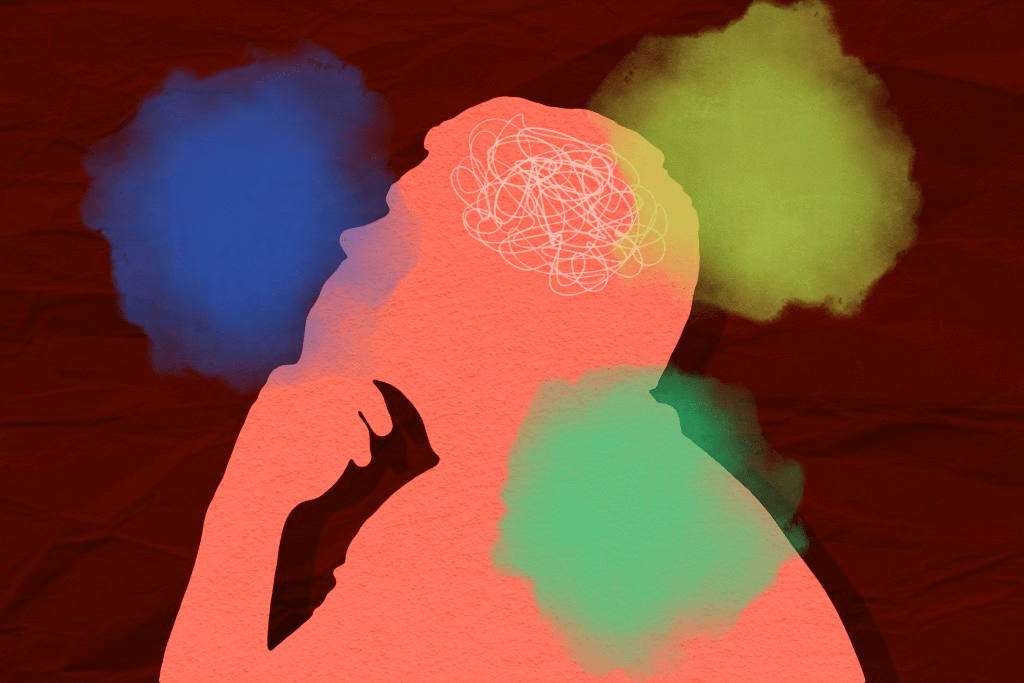
I have tried in my long-winded rewritten title to re-frame this question in a way that allowed me to answer it. There were two problems for me in its terms and a larger one in its possible assumptions. Let’s take the terms first:
- INSTINCTS. The word ‘instinct’ does not have a straightforward meaning even in biology where one would first look for a definition. Wikipedia gives the following definition of it as the ‘inherent inclination of a living organism towards a particular complex behaviour, containing innate (inborn) elements. The simplest example of an instinctive behaviour is a fixed action pattern (FAP), in which a very short to medium length sequence of actions, without variation, are carried out in response to a corresponding clearly defined stimulus’. That, you will recognise, is a definition that works only in the context of a number of conditional factor with which it is bound up- not least that it must be triggered by a ‘clearly defined stimulus‘. Moreover it is not a cause of behaviour but an ‘inclination‘ towards the behaviour that will not act alone in determining whether and how the behaviour occurs (hence invoking what we mean by ‘trust’ in this question – see point 2 immediately below). But this contradicts with the understanding of a Fixed Action Pattern (FAP) for it presumes that not only the way the action is structured in time in a fixed way but that the certainty of the action occurring in the first place is also fixed and unregulated by environmental or agentive factors in the individual animal (to give two examples of other causes of action) . FAPs are often invoked in relation to the concept of instinctive drift which argues that even animals conditioned to perform a behaviour will return to instinctive ways of performing that behaviour – that pigs, for instance, will still return to ‘rooting’ behaviours, even after initially effective training in performing an action in another way. Instinct has always been used in the debate between whether behaviour is prompted by nature (innate [or inborn] impulses in a species) or nurture (learned and environmentally conditioned responses) and in determining the relationship in an animal’s development of phylogeny (the replication of the inherited development of the species at an individual level) and ontogeny (the developmental characteristics of a particular individual of a species through its life course). Maslow was to go as far as to argue that human animals had no instinctual determinations because of the over-development of higher systems of action or behaviour systems in individuals and social groups. But even song-birds have been studied to show that no individuals in any type develop songs related to a range of causes not just instinct.[1]
- TRUST. A basic definition might be this one derived from its use as a term describing a category in determining human decision-making that is used in practice and pragmatically as a : ‘heuristic decision rule, allowing a person to deal with complexities that would require unrealistic effort in rational reasoning’ (as expressed in Wikipedia again). We are talking then I think about whether a person, me in the case of this prompt, will use what I recognise as my instinct to decide how and if I carry out an action or commit to an emotion. And, of course, that decision may also depend on whether I can trust that I am prompted by ‘instinct’ or something quite other – like habit or concealed self-interest or learned fear – any number of possible things.

These images tell you how nature and nature (instinct versus environmental influence) effects in determining how birds pattern song are varied and the effects measured (I don’t describe them for I, for one, find them unbearably cruel to think about).
But even if these issues were clarified I find a troubling assumption in the question – that it matters whether I am talking about absolute trust in my ‘instincts’ (whatever I understand these to be and I think I may mean all kinds of things by the word as indicated above) or a relative trust in them. In the latter case, I might trust that I know what my instincts are saying I should do, feel or sense in a situation but still weigh that trust against other determinants such as the advice of others, an institutionalised strategy, a trusted moral axiom, ethical principle or making an informed plan of action with options contained to match contingencies in the process. I might just believe in chance, magic or good luck. It is even possible that I accept the proposed action to which I am inclined as my Fate.
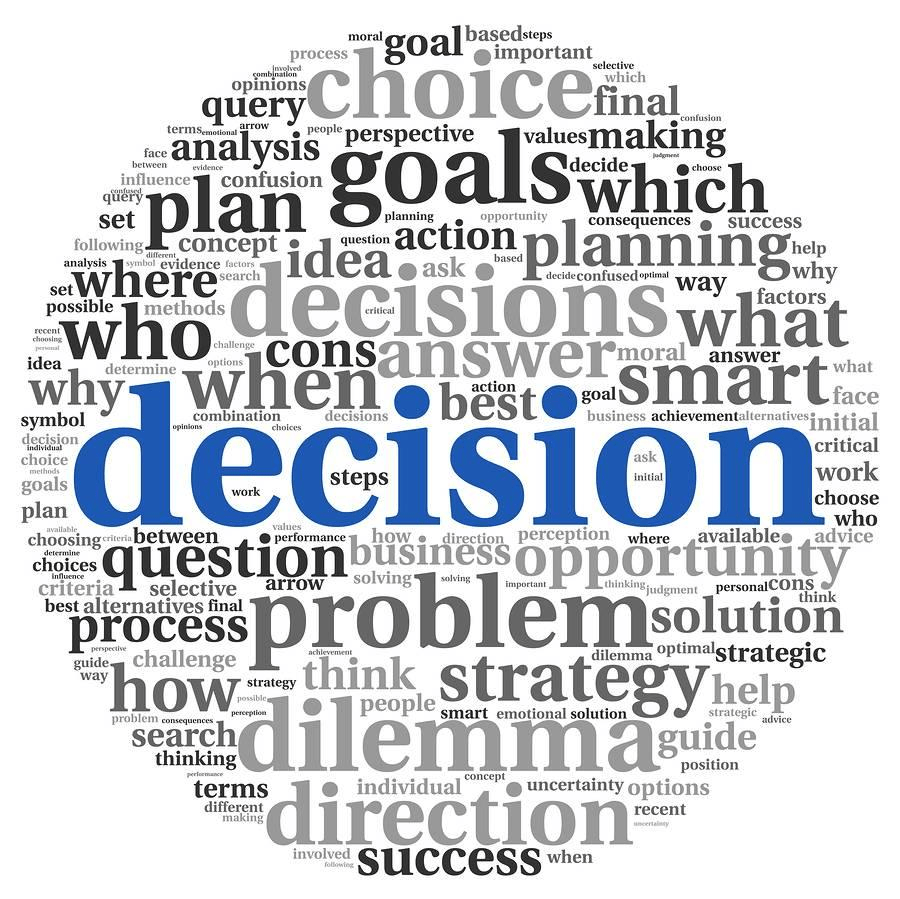
Can you find ‘trusted instincts’ in this word-map of the word ‘DECISION’?
Let’s think about fate for a while. It is not unknown for people to use ‘instinct’ as a retrospective explanation of a decision or drive to an action of which they had no control. This action was fated and inevitable, some people may think at the moment they complete the action. That is, I think, what I mean by a belief in fate or other form of predestination. Predestination figures in religious and folk narratives. It is a concept much queried in fifth and fourth century BCE tragic plays where folk tales undergo scrutiny, not least the myth of Oedipus, King of Thebes.
Freud revived these questions in terms of the unconscious inclinations he called the Oedipus Complex: an inclination for a man to kill their father and marry their mother. He didn’t attribute the inclination in these cases to biological causation but that is another matter and equally complex, and moreover not relevant to us now. But the inclination he thought could be found so frequently that it seemed to him a psychosocial universal in the history of development. It was a predestined fact in the nature of desire and therefore the equivalent of a natural instinct.
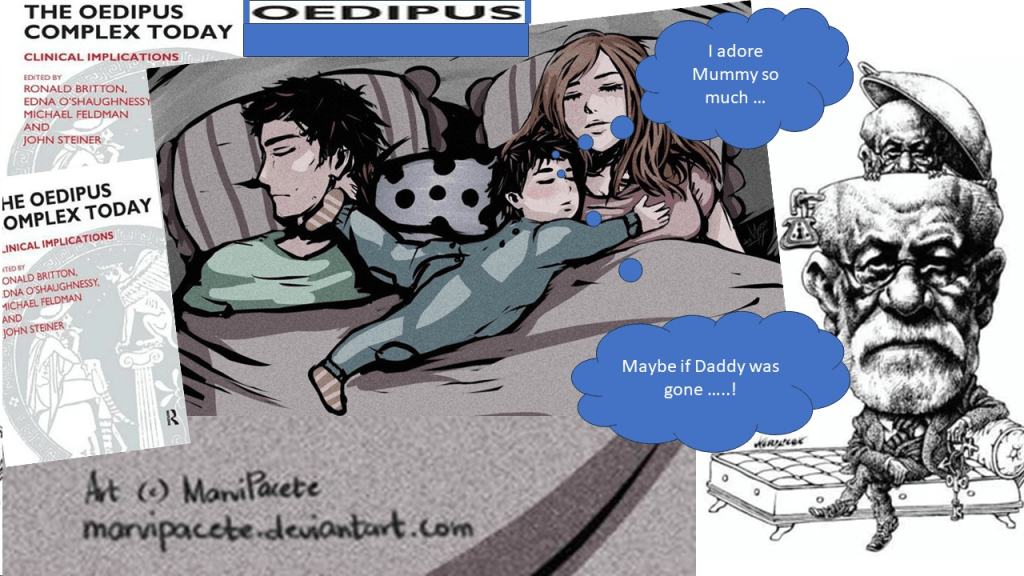
Of course, he did not think The Oedipus Complex manifested itself in completed actions, as in the myth or the plays where Oedipus actually does kill his biological father and marry his biological mother (although both persons are unknown by him to be such at the time). Indeed for people experiencing the unconscious conflicts of the Oedipus Complex even the desire (or inclination) for these things is a buried one, repressed from their conscious knowledge. This was true he thought as much of the realm of sexual desire and the drives which were located for all of us in a mental location that he called the unconscious or Das Es (the It in English which is translated unhelpfully by James Strachey, Freud’s most used English translator, as the Id). Even in dreams and day-time fantasies, these desires acted in disguise, revised to pass censorship by conscious thoughts, which still operated in the dream world. Human actions and mental phenomena, Freud believed, had complex and multiple determinations of action, even though he felt some behaviours like dreaming, ‘slips of the tongue’ and jokes were often to overdetermined (Überdeterminierung was Freud’s coinage in German and is translated as overdetermination in English), allowing the unconscious will to express itself because it can attribute the cause of the action to another determination, even a rational one. The French Marxist philosopher, Louis Althusser, was to use the term (see his essay at the link on his name) to indicate that this was often the case in understanding how a range of psychosocial behaviour and human thought could be said to be determined by economic factors, as Marx said.
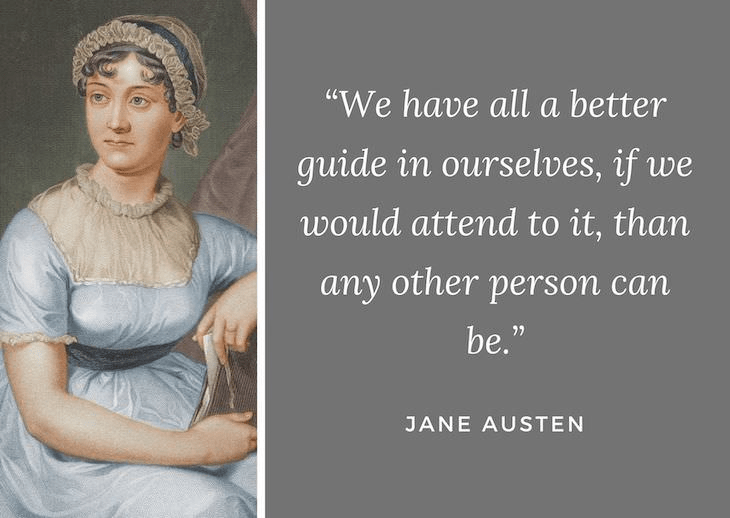
At this point I want to leave Freud behind however, despite (or even perhaps because of) the example I use in what follows. We could take a common enough phenomenon, if, that is, one believes in it at all, which is that of ‘falling in love’, to follow through my thoughts. This strange compound of sensations, feelings, thought and actions, is sometimes thought of as ‘instinctual’ and trust of its dictates is the rationale of romantic love as a social concept thought to explain the choice of long-term partners in marriage or other dyadic personal relationships or even relationships of polyamory. Yet querying it’s persuasive force was also at the heart of romantic novels, most obviously in Jane Austen’s aptly entitled novels Sense and Sensibility and Persuasion.
But the reason romantic love is often as doubted a thing as it is a validated one in the most common forms of its public expression as literature is because of the deep contradictions human beings experience in commitments to each other. In reality and in novels the question of whether the expressed feeling of falling in love can be trusted is central. The trust is not only to be weighed in someone professing that love to one but of the love too we feel ourselves to have fallen into.
The whole thesis of Samuel Richardson’s Pamela is that we know the rich lover and master of the maid Pamela must not be trusted but the subtext of the novel is entirely about about whether Pamela is a reliable narrator of her own feelings, observation of others and her own actions and talk in her endless letters which compose the whole novel. That is why Henry Fielding spoofed the novel in his own Shamela. In that latter novel, the female letter writer is an obvious fake, a ‘sham’ (Sham-ela), and a source of ‘shame’ (Shame-la) on ideals of womanhood. The theme was again that of the patriarchal eighteenth century in England, as Alexander Pope expressed it most openly in a world where sexism was de rigueur (though he cloaked the slur as a quotation from ‘a Lady’ about her own sex/gender – a better example might be Così fan tutte, ossia La scuola degli amanti [Women are like that, or The School for Lovers] as Wolfgang Amadeus Mozart and Lorenzo Da Ponte’s contribution) rather than shameful in men:
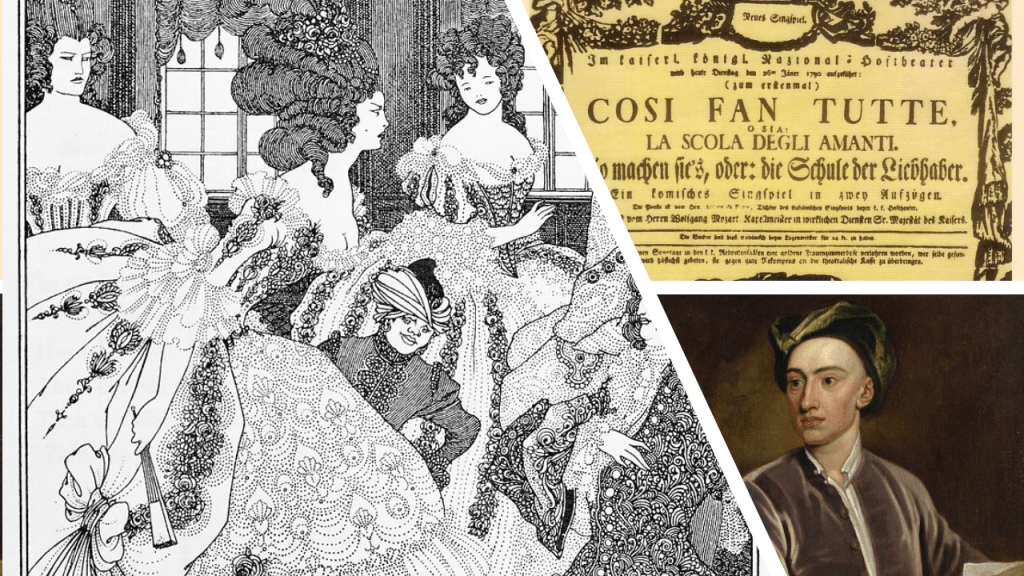
‘The Rape of the Lock’ does not do the representation of women any great favours but does Mozart either.
Nothing so true as what you once let fall,
“Most Women have no Characters at all.”
Alexander Pope ‘Epistle II: to a Lady on the Characters of Women’ available at: https://www.poetryfoundation.org/poems/44893/epistles-to-several-persons-epistle-ii-to-a-lady-on-the-characters-of-women
The issue here is that, for all the talk of instincts of love and beauty, in the eighteenth century (as before and since – witness Chaucer and Philip Larkin for instance), we often think the motives for speaking of ‘falling in love’ to justify our actions as being so much ‘moonshine’ (although the Barry Jenkins’ film Moonshine I think puts a rather different complexion on that statement).

The three moments of one male for whom the nature of ‘falling in love’ is tested in Barry Jenkins’ film ‘Moonshine’
My own observation suggests that people use the word ‘instinct’ in rather differing and varying ways when talking about love relationships of their own, especially past ones. Thus I seem to hear quite often variations of the phrase ‘I had an instinct that this person: (a) wasn’t telling the truth (b) was hiding things, (c) was fooling themselves about their feelings or (d) had other motives – in fact the list of alternatives could go on forever. Indeed, I think I have said or thought of each of these myself regarding one particular person in my life. But they are not really instincts these options at all – they are often anyway imagined after the event consciously or unconsciously (as a kind of confabulation) to make the deluded lover (deluded by themselves or the other person – it matters not) feel less pathetic as a person. At best, they represent remembered folklore about lovers, or innate, habitual or learned distrust of persons and /or professions of love (as in the case of ambivalent attachment types as an instance of at least one of these variations).
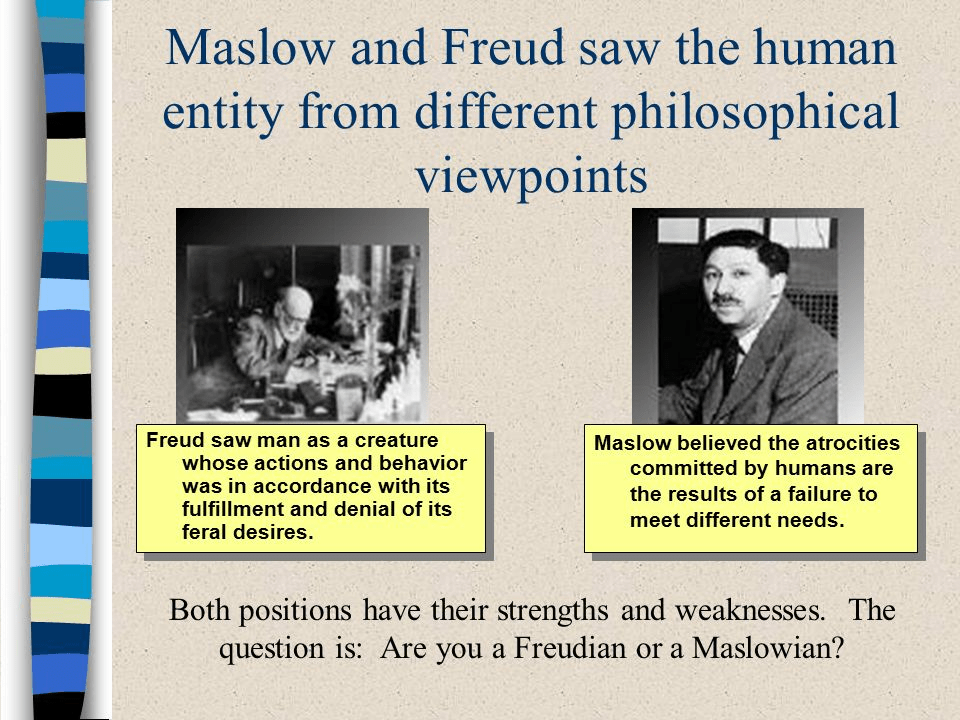
I always find other people’s teaching slides on the internet amusing. For instance faced with the associations of ‘creature’ and ‘feral’ in the description of Freudian theory here, who would admit to being an adherent, unless like me they were bloody-minded. LOL.
The truth is likely to be that Maslow is right. The role of instincts is probably rather much lower in humans than in other animals (and perhaps as he thought has no role at all). The reason for this may perhaps be because of the adaptive complex behaviours made possible by a grossly enlarged cortex of the brain (so much is that the case that, unlike the smooth cortex of the rat brain, in humans it is endlessly folded in on itself in hills and valleys and unexpected hiding places). Whilst Freud thought instinctual drives must gain expression (even if in compromise formations or in disguised form), Abraham Maslow ‘argued that instinct does not exist anymore because we have already overridden our instincts’. We may have done this by development of associative links in cognition, social cognition, and institutionalised forms of behaviour and by a developed agency in independent action guided by custom, social morality or ambition for self-actualization. The latter category aside, human beings are capable of analysis of their differing motivations followed by reflection on each element of ‘inclination’ it isolates. If I name one of those elements ‘instinct’, I may or may not be right that this element is in fact instinctual. That may depend on the criteria I use to adjudge what an instinct is and these criteria differ in many thinkers from many domains of practice and thought. But that in itself may also be unnecessary to determine. The point is whether the motive will be ‘trusted’ and used as a means of deciding what to do in a circumstance prompting human action.
And I think that process must be based on as rational an assessment of each and every motivation in making a complex plan of action to meet complex aims in complex circumstances. The assessment must take account of a whole series of decision-making points in the sequence of doing anything too. For each of these points it is possible to devise a range of alternative responses in oder of preference: options A, B, C, … etc. And such a process means that throughout it no motive should be ‘trusted’, and all of our heuristics in making a decision are tested and their risks assessed.
That is how I operated as a social worker – even if that process had to be learned and refined. But should it apply to ‘falling in love’? I think it probably should. Perhaps that is how even novels thought to be ‘romantic’, the narrative of events follows this process too. Emma Woodhouse in the novel bearing her name has to learn ‘match-making’ even for herself let alone her dependent friend Harriet Smith. The stories all involve Emma in distrusting her own motives and what she feels to be her ‘instincts’ before she leaves Franck Churchill alone, stops making plans for Harriet or Mr. Elton, and realises the sense of a marriage to Mr. Knightley for HERSELF.
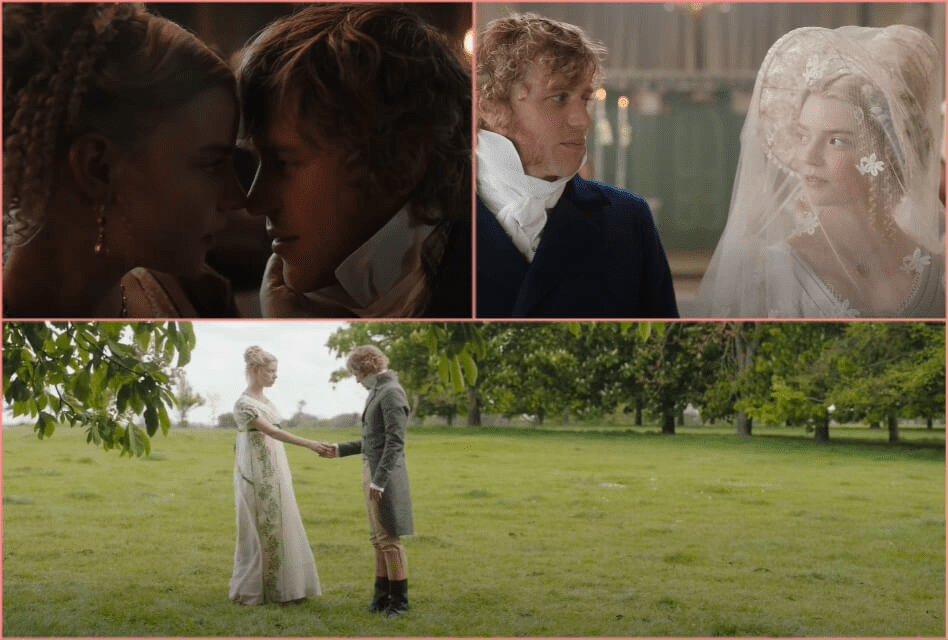
The photographs from this televised ‘Emma’ rather support a ‘romantic love reading of the novel, don’t they?
What, though, of myself? In every way that question is the most difficult one yet asked, though – perhaps because I have some issues with trust that appear to link to areas that are also well known and well researched aetiological domains in the theory and practice of developmental psychology and human mental well-being or otherwise, I have sometimes doubted a sense that it would be safer to distrust, given my ambivalences around trusting. Indeed, I remember the last person I fell in love with and lost, telling me that I ought to distrust most my own ‘instinct’ to mistrust, in the interests of not missing out on a good in life.
But let’s face it! It is never the fault of persons who say this kind of thing, for the important ruke of self-regulation is that this kind of assessment is one that you can only do for yourself. Assess all motives for letting go of doubts – even the advice of the loved one concerned or others. Nevertheless, there are a lot of reasons we don’t do that – not least that ‘love’ is too often (in the guise of ‘romantic love’ as an ideology) thought of as akin to magical thinking and the arena of impossible metamorphoses. The lover can change us. We can change the lover. The very meaning of unitary personal responsibility for decision-making can be absolved from contact with reality by love and we imagine a oneness where two once where.
Plato laughs at that last idea, using a character based on, and named after, the very real Greek comic playwright, Aristophanes, in The Symposium (see a blog mentioning this at this link). The costs of accepting the ideology of romantic love are high – especially in terms of well-being, and Jane Austen figured this kind of consequence in the fate of Marianne in Sense and Sensibility. But even if Marianne is a ‘silly goose’, aren’t we all sometimes. The consequences can be worse than Marianne’s, like those, for instance, in the parable that ends James Joyce’s The Dubliners. Love can kill we know and we can’t always laugh that off. The rather talented psychotherapist and crime and Gothic novelist Frank Tallis wrote a book in 2005 called Love Sick: Love as a Mental Illness in which he argues from clinical cases that the title of this book states a good case. His novels set in Freud’s Vienna and featuring a psycho-analytic detective (and now a wonderful TV series) presuppose the same thesis.
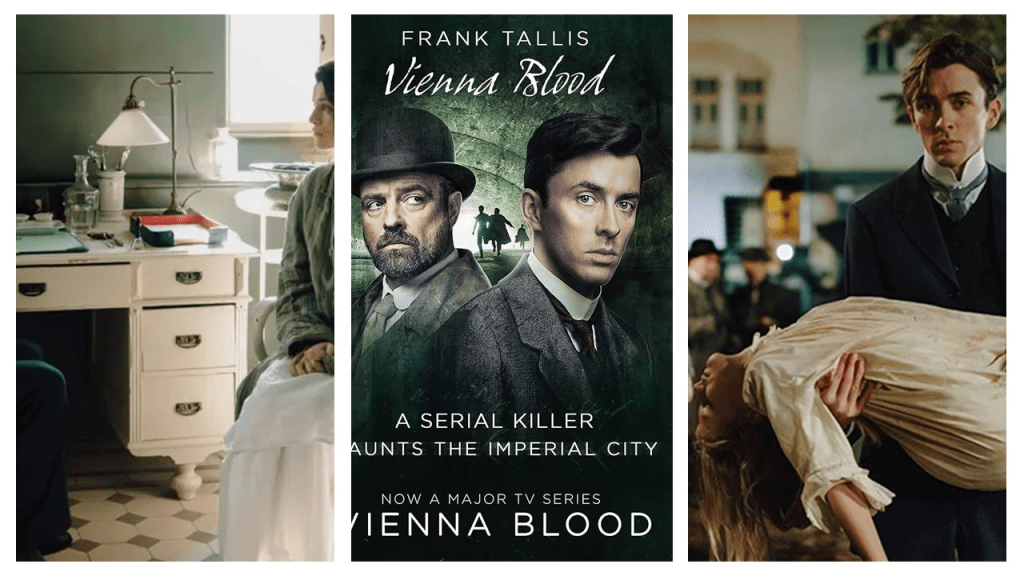
We laugh off our knowledge of the depth that that thing called ‘falling in love’ opens up in our subjective lives with Jane Austen. We may also fantasise over those horrid voids with Emily Bronte as Heathcliff takes his spade to the dirt of Cathy’s grave or readers hear Cathy outside our bedroom scratching on the window as in the first chapter of Wuthering Heights. Or we go to hell with Gothic crime-stories like the Vienna Blood series. However, the stories of people dying of unrequited love or love ended without symbolic closure that allows its settlement into memories of a dead rather than Undead past have their basis in experience, either as imagined potential or real endings of some stories.
It is inevitably true that people need to look after themselves. Perhaps not trusting or being wary is part of this? Nevertheless, there are risks at each end. It is theoretically possible that one’s own wariness becomes a way of ending a love relationship in which someone who loved you trusted. Responsibility is rarely taken in such cases and perhaps that just has to be okay. After all loving and being loved is not a science! Is it?
A conclusion? “Even if I knew all the causes determining a need to act in a certain way, it would be wrong to trust any one of them without reflection and planning my decision-making”. LOL. Or is it, after all, MOONSHINE.

Philip Guston ‘Moon’ (1979)
With love
Steve
_________________
- [1] Jill A. Soha (2020) ‘Nature, nurture, and noise in bird song ontogeny as determinants of phenotypic and functional variation among dialects’ in Soha (2020) Phenotypic Switching: Implications in Biology and Medicine, Pages 483-510. Available online in Science Direct at https://www.sciencedirect.com/science/article/abs/pii/B978012817996300013X
 Steve_Bamlett_blog