Do you need time?

In the 1970s we crooned about wanting ‘a little more time’ all the time to try and rectify we things we did too hastily or other things we did without thinking out the consequences. One that sticks in my mind is a group of nattily and glittery dressed not-so-young men called Chairmen of The Board who insisted to their ‘girl’ that they would do better next time if allowed that extra quantity of opportunity that they call time.
Give me just a little more time
And our love will surely grow
Give me just a little more time
And our love will surely grow
Life’s too short to make a mistake
Let’s think of each other and hesitate
Young and impatient we may be
There’s no need to act foolishly
If we part our hearts won’t forget it
Years from now we’ll surely regret it.
Time is a slippery customer. If we don’t use it as we ought we think we might insert an addition of time into the gap created by our youth and impatience to ensure that time becomes a long duration in which to regret our mistakes. Surely Time is double here. It is both what the Greeks called separately Kronos and Kairos. The former is the time of passing events in sequence that are irreversible. Hence, Kronos (sometimes in Roman hands Saturn) was an old miserable God: whose icon could pass also as Old Father Time and Death, both with a scythe, a mower of all flesh that is grass. The latter is a young man who is fleet of winged foot with one single lock of hair on his head that only the lucky or strategic caught. Both these gents are the subject of General Watson’s song ( Watson was lyricist and lead singer of Chairmen of The Board).
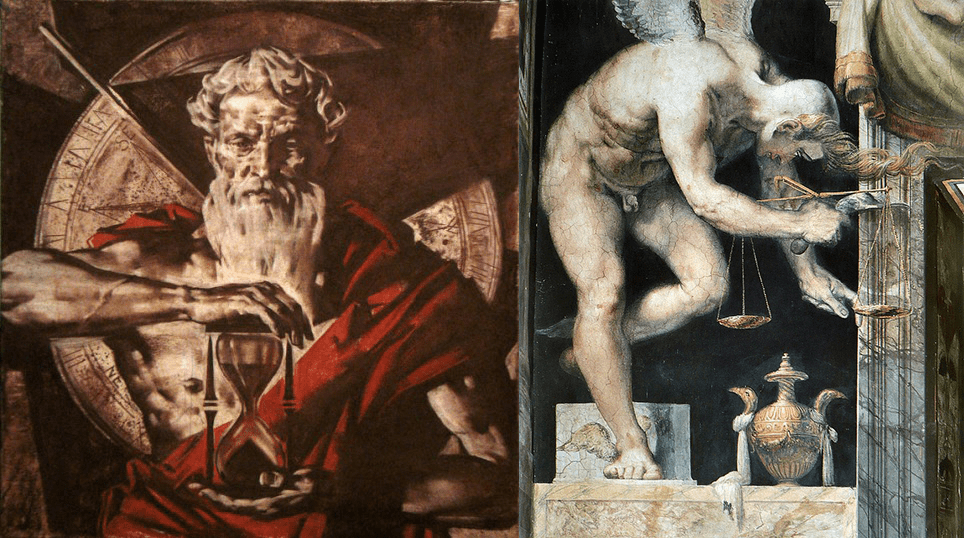
These gents wanted more Kairos (with opportunity to persuade their ‘girl’) lest Kronos (old age slowly creeping on) teach them an overlong lesson of regret. So they ask for more of ‘what’ in this song? They ask for opportunity to prove themselves or the nature of their desire and / or loyalty it seems rather than for more years of life, which from the point of view of the ‘young and impatient’ seem unimaginable anyway. The pop songs of the 1970s paid little truck to aging after all: which in whatever guise or person (even in thought about oneself) was often presented as a nuisance that gets in the way of ‘living’. Honestly, I know someone just like that and am thinking of him as I type this and he was born in the seventies. Old age was a bore, a drag or a responsibility and an icon of having left things too late or the threat of doing so. Even W. B. Yeats reproduced the exact same sentiment to Maud Gonne in his early lyric When You Are Old and Grey, asking her to be aware that her ‘soft look’ will disappear in time and then no man will take his opportunity ‘to love the pilgrim soul’ in her, whether his love be ‘false or true’ (and perhaps that matters less than that one’s loo had the power to raise love at all whatever the quality of the love:
When you are old and grey and full of sleep,
And nodding by the fire, take down this book,
And slowly read, and dream of the soft look
Your eyes had once, and of their shadows deep;How many loved your moments of glad grace,
And loved your beauty with love false or true,
But one man loved the pilgrim soul in you,
And loved the sorrows of your changing face;And bending down beside the glowing bars,
Available at: https://poets.org/poem/when-you-are-old
Murmur, a little sadly, how Love fled
And paced upon the mountains overhead
And hid his face amid a crowd of stars.
To be frank this motif in lyric poetry is an old one, old enough to be traced to its origin in poems from an older guy addressed to a younger one in the poetry of Classical Greece and Rome or celebrated in the epic chivalry of Homer and Virgil (see my blog on such poems at that link).
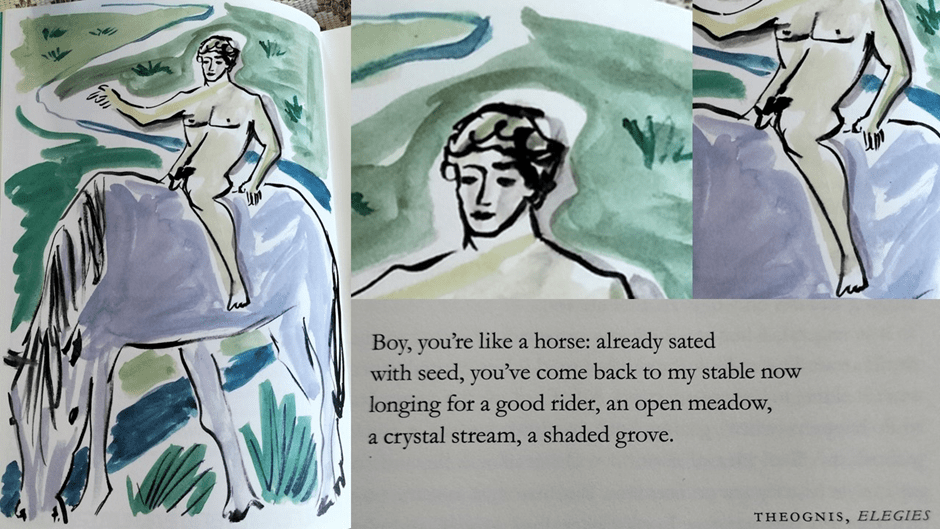
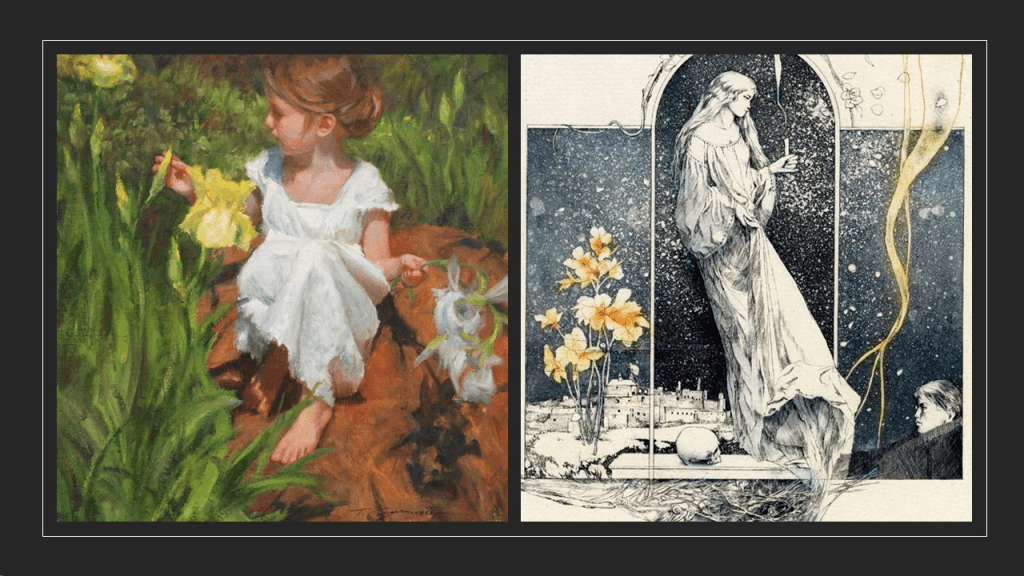
We associated the motif with the phrase Carpe Diem or ‘Seize the Day’ and with poetry aimed at a young girl to not deny an older man with power and gifts to give, at least in the short run. Beautiful poems would emerge from an anthology of such poems whose heterosexual pederasty is never focused upon such as Andrew Marvell’s The Picture of Little T. C. in a Prospect of Flowers 🌺 or Robert Browning’s Evelyn Hope 💀.
But for us today, the issue is more slippery than asking whether the ‘time’, that we want ‘ a little more’ of, is either Kairos or Kronos, for since Einstein we think of time as relative to its variant perception between different occasions, persons and circumstances. Don’t take my word for it. Here is a brief summary of the effect of the Theory of Relativity in thinking about time in modern times:
In the Special Theory of Relativity, Einstein determined that time is relative—in other words, the rate at which time passes depends on your frame of reference. Just as observers in two different frames of reference don’t always agree on how to describe the motion of a bouncing ball, they also don’t always agree on when an event happened or how long it took. A second in one reference frame may be longer compared to a second in another reference frame.
From The American Museum of Natural History Exhibition blog: https://www.amnh.org/exhibitions/einstein/time/a-matter-of-time
So, do I need time ? Probably the answer is, as it might be for everybody, I need it often and frequently not only in various quantities like ‘a little more’ or ‘lots and lots’ but in various qualities to suit the person I am, the occasion or the place which also varies who I am and what I need. Perhaps the greatest literary exploration of a person in want of ‘time’ is Shakespeare’s Macbeth.. When told his wife is dead he becomes disorientated and feels that everything that might occur is untimely and that literally as in Hamlet the ‘time is out of joint’:
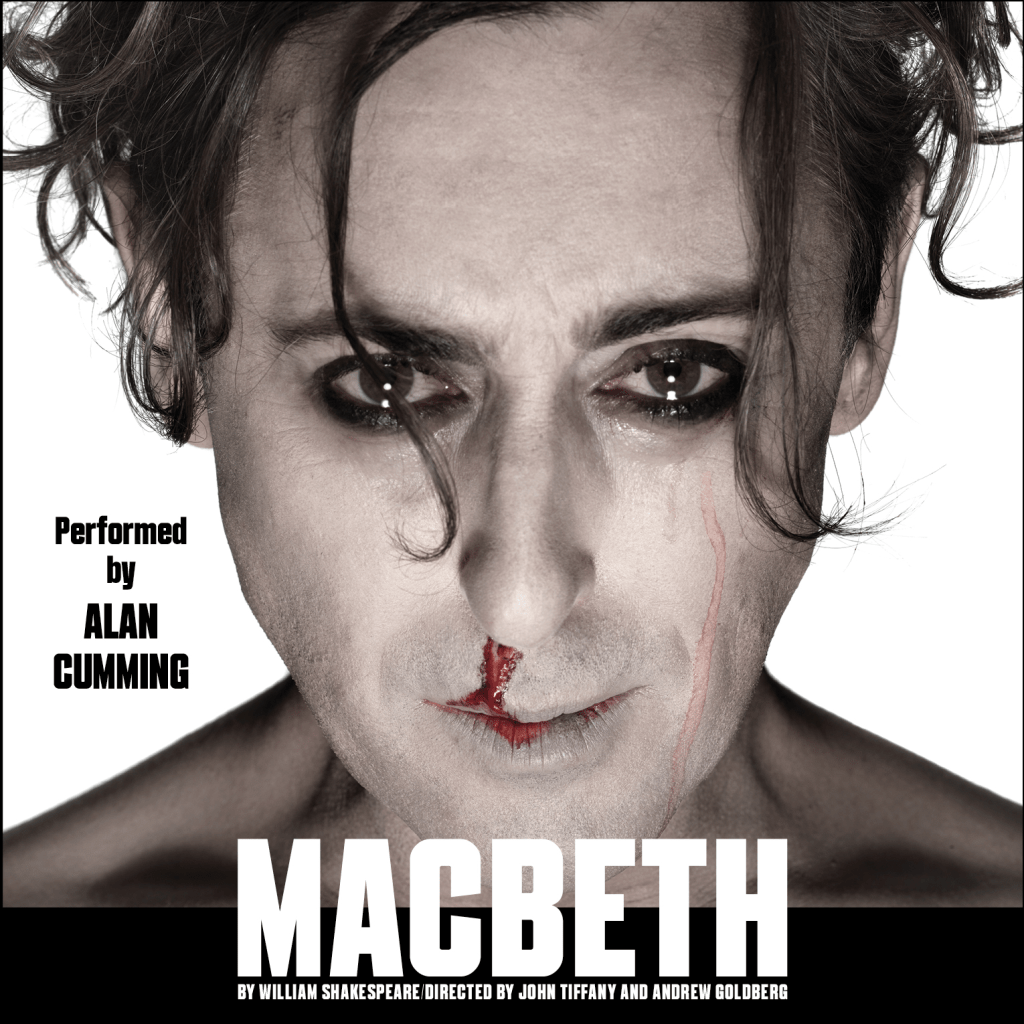
The point of ‘time’ in ‘Macbeth’ was never better conveyed that when Alan Cumming performed all the lines and all the parts in the role of someone shut in an asylum, but based on how R.D. Laing saw ayslums.
She should have died hereafter;
My italics in William Shakespeare ‘Macbeth’ Act 5 Scene 5 lines 17-28
There would have been a time for such a word.
To-morrow, and to-morrow, and to-morrow,
Creeps in this petty pace from day to day
To the last syllable of recorded time,
And all our yesterdays have lighted fools
The way to dusty death. Out, out, brief candle!
Life’s but a walking shadow, a poor player
That struts and frets his hour upon the stage
And then is heard no more: it is a tale
Told by an idiot, full of sound and fury,
Signifying nothing.
Could she have died on another tomorrow, or even another yesterday, her husband, now King Macbeth says of his ‘unsex’d’ wife. Perhaps time is only a chronic ( a word derived from Kronos after all) case of the illusion that anything in the span of human life is meaningful or other than the framework of a paltry script that the playwright might change at a whim or perhaps already has done and forgotten to bring their notes to the rehearsal.
If you want more: ‘Come live with me and be my love’ as Christopher Marlowe says, in the cunning disguise of a ruddy shepherd boy or at least, ‘Give me just a little more time’ to make myself attractive, as Aschenbach in Thomas Mann’s Death In Venice might have said had he known General Watson and Chairmen of The Board.

Dirk Bogarde as Aschenbach from the Visconti film of Mann’s Death in Venice having made himself look attractive & young, or so he thinks, for the boy Tadzio on the Adriatic Riviera.
But how could I end this without an even more primal resignation to te fact that time is relative than that in Paradise Lost, where Adam senses Eve’s twitchy longing for fruit only a superior Serpent can bear to her, and gives her that ‘time’: a warning, that old curmudgeon John Milton thought, to all men hereafter and an argument he might use in his pamphlet On Divorce. Your time, sweet Eve, he says, is your own to use and to confront what trial you may: ‘Go; for thy stay, not free, absents thee more‘ (Book 9 Paradise Lost). Or is he saying ‘If you want time out, have time out. Who, after all, am I to deny you’, whilst thinking still within ‘I am her husband and representative to God to her on earth, so what does she want with time:
God gave it all to me,
So patriarchally.
A poor little couplet but Stevie’s own. After all I was there. Heard of Adam and Steve. Always did like serpents.I’m not saying I haven’t been de-aged and otherwise improved in the picture below. LOL. xxxx
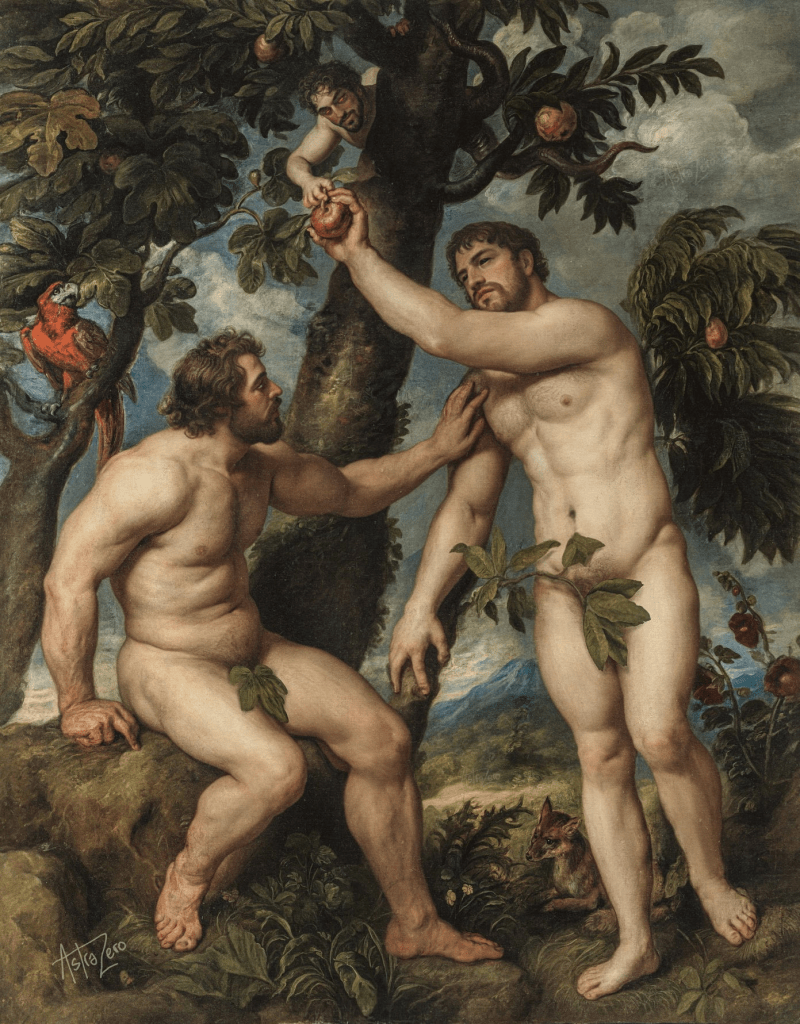
Censored version of AstroZero’s rehash of Titian (for uncensored version try: https://twitter.com/astrazero/status/1701763094966567032/photo/1
With love
Steve
 Steve_Bamlett_blog
2 thoughts on “‘Give me just a little more time’, before you go. As go you must!”