Daily writing prompt: You have three magic genie wishes, what are you asking for
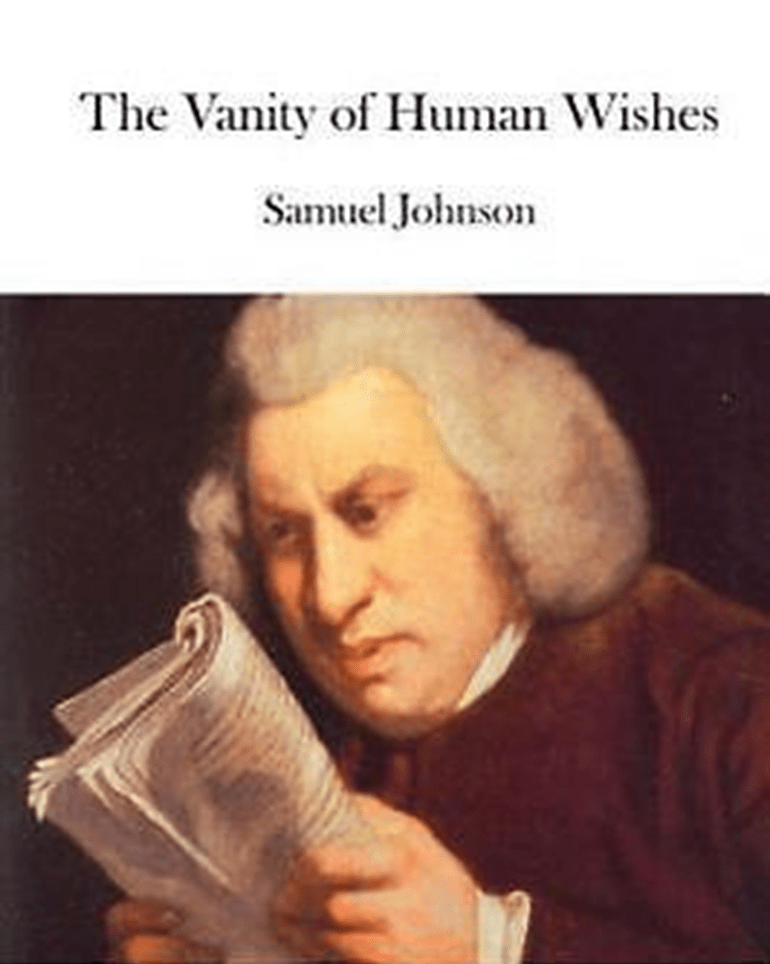
The line of poetry in my title comes from Samuel Johnson’s The Vanity of Human Wishes (read the poem from this link if you wish), a very specifically English eighteenth-century version of a satire by Juvenal. The story it tells so economically, for one line from an otherwise long poem, is totally in rhyme with a common thought that runs through the literature of many cultures – that wishes oft rebound on their maker and prove the content of that wish to be ‘specious’ and even, in some cases, dangerous. It is so I think because wisdom tell us that people who make wishes rarely think through, with that kind of realism that is the death of dreams of wish fulfillment (and all dreams are at base ‘wish fulfillment’ according to Sigmund Freud), the consequences and inevitable sequelae of our wish, involving as they must other variables in the world over which we cannot ever have full control.
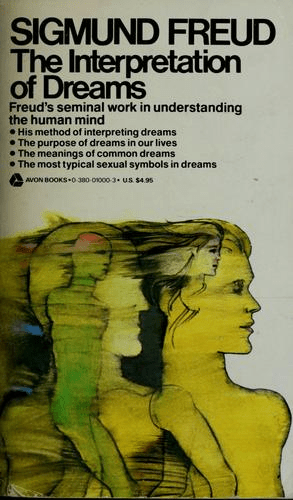
Freud’s The Interpretation of Dreams itself is a fine source of evidence for more nuanced thinking about the nature of the ‘specious pray’r’. He explains in that book that people fail to understand that weird dreams, and even nightmares, are at base Wunscherfüllung (‘wish fulfillments’ – Freud coined the German term) because they ignore those factors, even those in their own mind, from which standpoint there is much about the consequence of the wish being fulfilled that is is undesirable, so much so that it has to be represented in a disguised form. Sometimes the disguise is such that the pleasurable wish looks horrifying, terrifying or disgusting. In a complex psychosocial world populated with the contradictions implicit in the existence of many wishes for many, and sometimes incompatible, things, one individual can control very few of the factors involved in a dream becoming a lived reality.
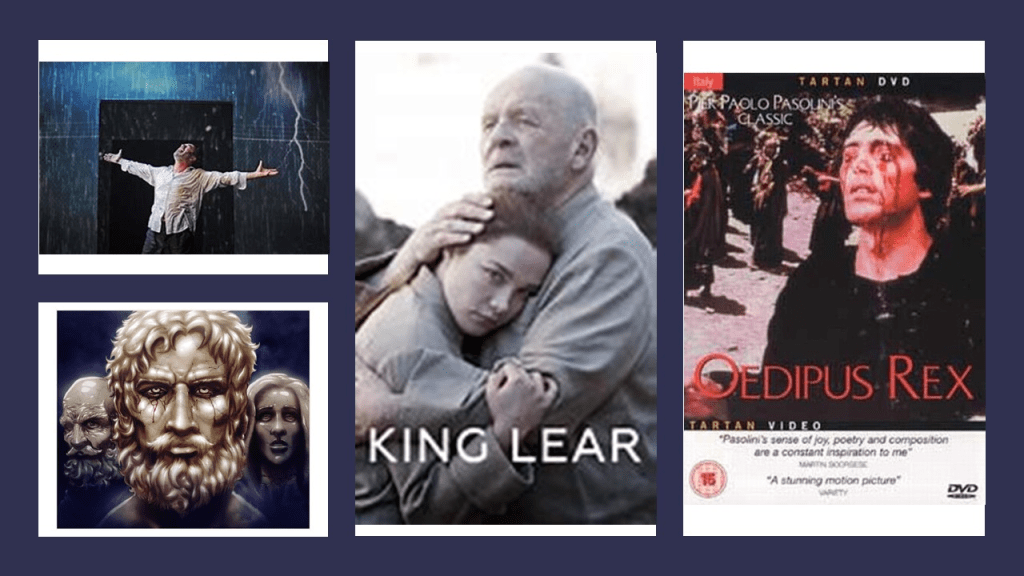
We wish for things that even if secured will have unseen costs and consequences because they involve, whether we have thought those possible eventualities through or not, other people, over whose life and wishes we have no or very limited control. This is the truth of the story of King Oedipus and King Lear in their great tragic stories – they wished for that of which they had no power to know the meaning they had to others, including their own children.
Everything we wish for involves other people’s wishes in some way or other, and their relative power to shape the world to meet or approximate the content of their wishes will certainly counteract the content of our wishes. If we fulfill our wish it will only be in interaction with the success or failure in fulfilling their wishes and we have little or no power over the extent of those wishes; whether that extent be measured by the number of those involved in the wish’s fulfillment or the potentially limitless nature and number of their own wishes. Our ability to control even the little world of our subjective lives is limited by the interactive power on each of us us of the wants of minds other than our own, whose legitimate and illegitimate wishes will in the end shape the content and the degree of what our wishes will in the event yield to us.
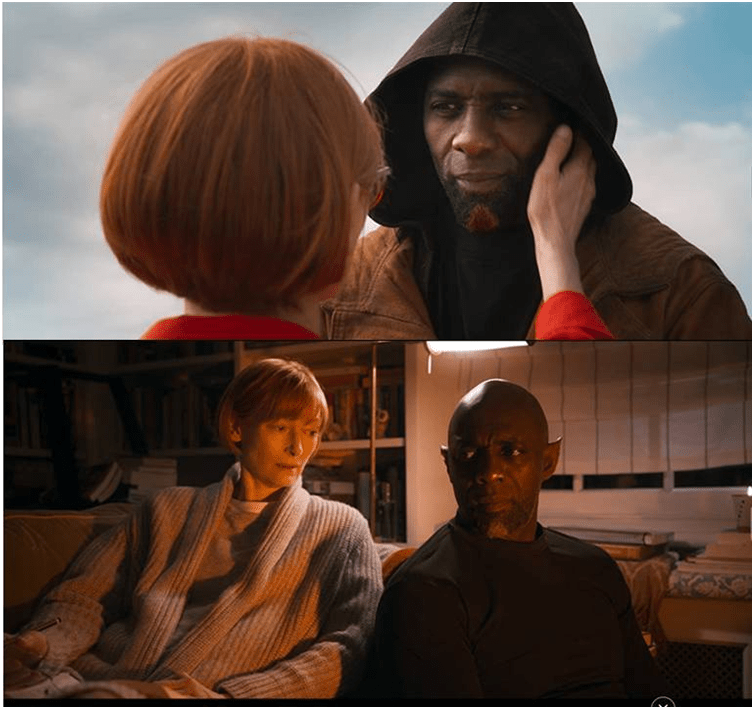
That is in part the meaning of A.S. Byatts’ novella of a three-wishes-from-a-genie form, The Djinn in the Nightingale’s Eye (1994) and the film based on it, Three Thousand Years of Longing of 2022 – in which the fabulous Idris Elba plays the genie (see my blog on these at this link).
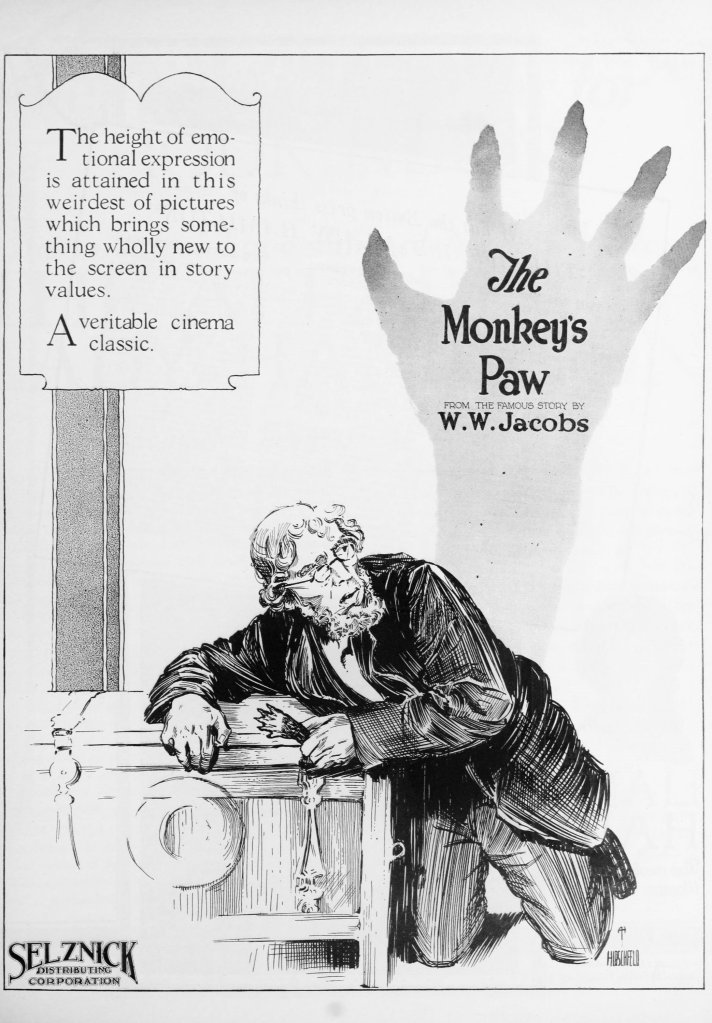
But such stories are legion, although the magic power involved may differ. Take, for instance the odd short story by W.W. Jacobs, replete with lessons about the fateful consequences of British Imperialist wishes, The Monkey’s Paw (use link for more information). In that story, as in the Byatt novella, the last wish must be used to reverse the first two, since the consequence of each and effect on others had not been thought through. The parents of a dead soldier in India ask for their son’s return without being aware that they are requesting the return to them of the living dead. The wonderful thing about the story is, in my view, are that all its consequences result from the hubris of the wish for control of an Eastern trading and manufacturing Empire in the East of the British nation.
I think the point is that magic pretends to be a system devoid of consequences other than pleasurable ones for the person who makes the wish, whilst always bearing a price. That is the overt lesson, differently interpreted for different periods of history, in both Christopher Marlowe’s Doctor Faustus and Goethe’s Faust (Part One). According to both Freud and Piaget infants use magical thinking to shape the world and that is the origin of a deep-seated belief that wishes still contain power that seduces the sleeping brain and induces day- dream fantasies. Genies are an semi-embodied form of such fantasies per se, as Lucy Perholt discovers in The Djinn in the Nightingale’s Eye when she wishes for a sexual relationship with her genie.
But rational thought attempts to overrule childish wish fulfillment fantasy and belief in magical processes in children whether in the form of the Ego in Freud or cognitive rationalism in Piaget. In its place those psychologically novel processes (from the child’s perspective, puts in the stead of fantasy the iron rule of work, perseverance, patience at setback in one’s goal and a calm stoicism. These are exactly the things God recommends at the end of Johnson’s The Vanity of Human Wishes.
Yet when the sense of sacred presence fires,
And strong devotion to the skies aspires,
Pour forth thy fervours for a healthful mind,
Obedient passions, and a will resign’d;
For love, which scarce collective man can fill;
For patience, sov’reign o’er transmuted ill;
For faith, that panting for a happier seat,
Counts death kind Nature’s signal of retreat:
These goods for man the laws of Heav’n ordain,
These goods he grants, who grants the pow’r to gain;
With these celestial wisdom calms the mind,
And makes the happiness she does not find.
Hence I won’t be making a wish here, or supposing that I could, lest I persuade myself that such a dream may one day come true. In truth my dreamy prince came and went and he was in the event as lacking in substance as any other mutually constructed fantasy. My wonderful husband, on the other hand, is solid and real if no less or more (I find) vulnerable than I. The real amusement in the question lies in the invocation in it not just of the genie, always a more childlike form of the Djinn entity in some forms of early Islamic theology, but of the magic number three. Three is a magic number in many philosophies and religions. It is at the heart of the story of the Zoroastrian redemption story embedded in Mozart’s The Magic Flute (see the link for a discussion of this from Welsh National Opera).
Three is, for the same reason, the number of wishes in The Monkeys Paw and the Byatt novella. It gets into most versions of stories of gifted magic and in most, it is part of the trickery involved in believing in wishes in the first place and not in their ‘vanity’. It is used in rhetorical practice (and replicated in writing tips on the web) and gets buried in conventions where its magical meanings are lost or forgotten. In Coleridge’s poem about the dangers of the poetic imagination, Kubla Khan, it is used as a magical antidote that ordinary folks use to withstand the power of the Poet’s magical and potentially world- transforming vision:
Weave a circle round him thrice,
And close your eyes with holy dread,
For he on honey-dew hath fed,
And drunk the milk of Paradise.
I think there is a reason why you might be offered THREE wishes and NOT ONE or any other number. That is because there is a dialectical formula in wish-making in which the second wish reveals the insufficiency of first wishes and requires a third. In a first wish, you wish for something you think you cannot do without. A person with a modicum of wisdom will realise that requiring a second wish already reveals that – once started – the process of wishing and longing is insatiable and would be so whatever the quantity of wishes allowed. The third wish will always be then, for all wishing to come to an end and for satisfaction not only with what you have, or might reasonably be thought able to achieve for yourself, but to not have (to lose that is) that thing delivered in the first wish, because it was not the satisfaction you thought it was.
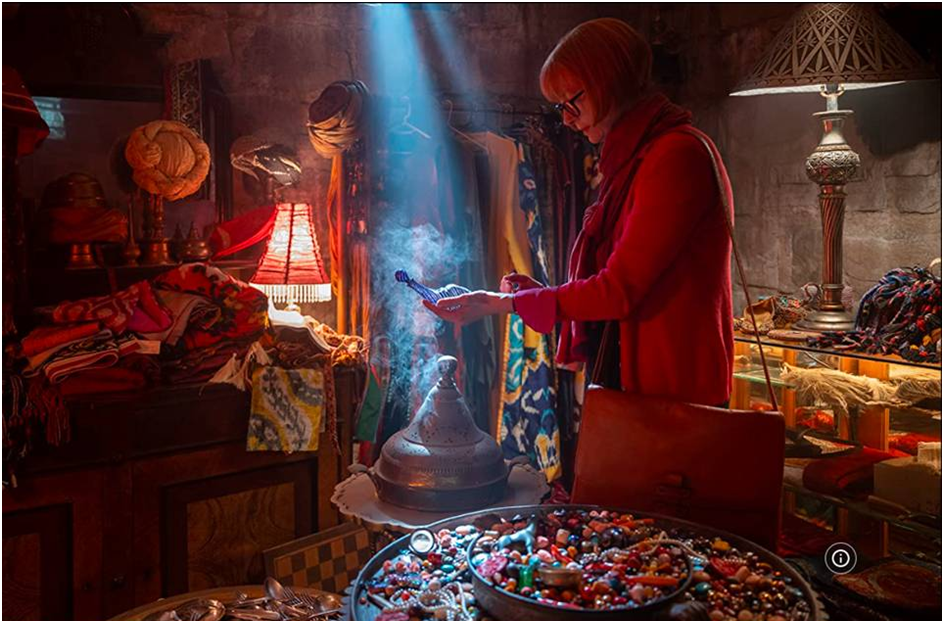
So what, oh genie, do I wish before I uncork the beautiful bottle in which you are contained. I wish …. so much do I wish …. that I was not ruled by wishes but by the capacity to set realistic goals that work for me and others I love and care for, and the health and energy to work towards them. In case you think I chicken out here and still wish for health and energy, I have to say that these qualities too are only optimised, of course within the limit of inherited resources you could not have influenced, by goal, making, planning and effective work towards them. Even effective loving is such. Just don’t blame yourself when you fall into ineffective loving – it sucks but it’s life! Lol.
With love
Steven xxx
 Steve_Bamlett_blog
Someone I love once said during a discussion of the three wishes trope many years ago, ‘you only need one wish, and it is not the hackneyed wishing for more or limitless wishes, all you need to wish for is to be lucky’ and this simple truism stayed with me. Love both the novella and the vastly underrated film, will return to read the poem slowly and Freud’s Interpretation of Dreams is something I often refer to. Thanks for this Steve, food for thought as usual.
LikeLiked by 1 person
You are a beautiful friend Kes
LikeLike