Tell us about a time when you felt out of place.
The rich man in his castle,
The poor man at his gate,
God made them, high or lowly,
And ordered their estate.
The third verse of the hymn All Things Bright and Beautiful is rarely sung now unsurprisingly and perhaps we did not sing it thus during the time I was at primary school, since the offending verse was removed from the Anglican hymnal in 1950. But we certainly read it and were introduced to it. I remember even now the feeling associated with that introduction
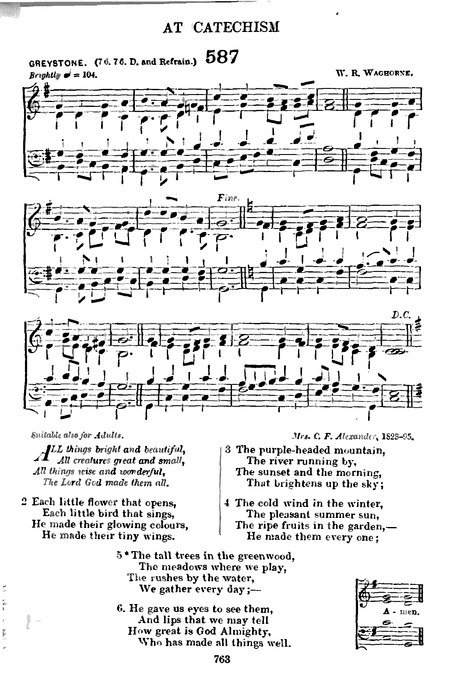
The theme of course was that one’s place in the world was ordained, and ordained by God. From the time the lyrics of this hymn was composed as one intended for very young children this had been no innocent accident of history to write in this way. It was written in 1848, known throughout Europe as the Year of Revolutions, the year too of the publication of Elizabeth Gaskell’s Mary Barton. The latter novel had been an exposure of the cruelties associated with the class system in industrial Manchester and was written in full awareness of the growth of the stand against it by the working class, perhaps to show but also to soften that stand. Engels of course too was writing of Manchester as the type of modern capitalism at the same time.

Cecil Frances Alexander knew full well the intended message: Know thy place, that the space and time a person fulfils are nailed down by the signifiers of social space too, a huge castle or a lowly hovel, a goodly income or a poor one. She was a charitable lady though Cecil, though she knew of extreme child poverty (in other people), she did somewhat in her own area of Anglo-Irish responsibility to ameliorate it, until she married a rich clergyman.
At the same period of history radicals both middle-class and working-class though were extolling a different message from both Alexander and Engels, not in terms necessarily of the condition of a whole class but of the genuine and facilitated freedom of any one individual to move one’s place within the class system as a whole. Carlyle was not alone at railing at the fixed class system derived from the remnants of feudalism, which they compared to the caste system associated with Hinduism.
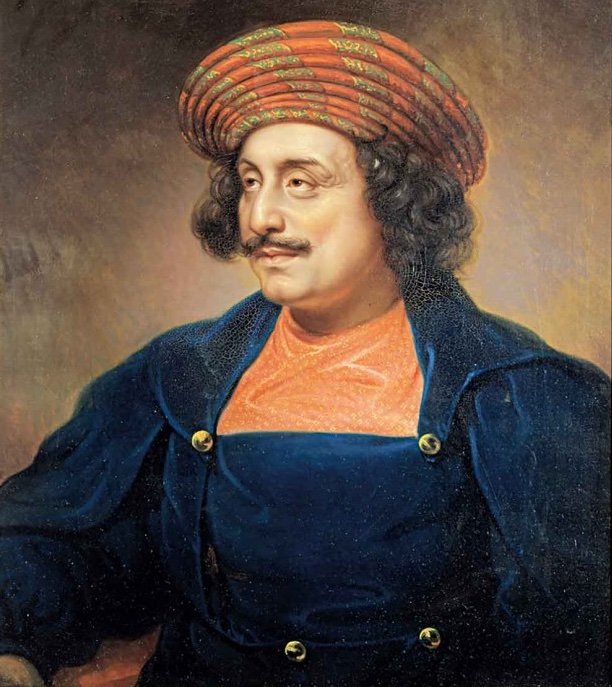
Charles Jame Fox, the Unitarian radical minister invited to speak at his South Place Church in London the Indian radical philosopher and reformer Raja Ram Mohan Roy FRAS (22 May 1772 – 27 September 1833) , who was there in 1830 to ensure the passage of laws forbidding the practice of the immolation of widows. We know Browning and Carlyle heard him there. They used that great man’s stance against the interests of caste to mould their own politics of social mobility. He actively supported the First great Reform Bill (of 1832) Movement in London when he was there for other reasons as a guest of other Unitarian radicals as well as the representative of the Mughal resistance against the excesses of The East India Company.
Hence no innocent was the good lady, Cecil Frances Alexander. Her pleas were based on the maintenance of social stability not unlike a caste system (as Thomas Carlyle himself thundered out in his blatantly prejudiced way about Hindooism – his spelling, when speaking about Islamic virtue in Mohammed). She wanted for the lowly a knowledge of one’s place in the world in her knowledge that the Chartist agitation of her own time was proposing other ways of knowing oneself and one’s class. Hers was an ideology much needed by the vampiric landowning class of Anglo-Irish Anglican landowners at the time.
But why might this still be relevant to me in primary school in the late 1950s. We have I suppose to remember that the hymnal had only been revised as late as 1950 and that the ideological battle between conservatism and the call for mass change was still being fought if on different ground. Whilst communism was not popular in the England of the time a socialism based on freedom of movement between classes was, the catch phrase the ‘equality of opportunity’. The buzzword was to become three words: ‘Education. Education. Education ‘.

The social differences were not as great then as Alexander confronted in her social work in Ireland but they were there and could be internalised by young things. I remember really vividly being asked to draw a plan of your house and not to forget to put all of the rooms in it In the council houses we lived in there were only two rooms downstairs – apart from a pantry where the cold stone was, the place where families attempted to keep perishable foods fresh and cold. My rectangle house plan looked pointed out as lacking when mounted on the walls with others of more interesting shapes, with halls and sub-halls dining rooms and studios amongst the rest of room types unknown to me. Nevertheless in a Clegg administered 11+ free zone I was selected for Grammar School.
In education I suppose and especially in university I never felt quite to be in the same place as others were in. Their access to wide knowledge of art, music, books and science felt overwhelming. As I grew to know them I began, I think, if slowly, to differentiate the confidence with these things from well-founded learning. On better acquaintance, I found they, or most of them, had inherited an ingrained and reinforced sense of social entitlement to elite things, ideas and attitudes. Most knew a lot thinly and were not afraid of their ability to mask its superficial nature.
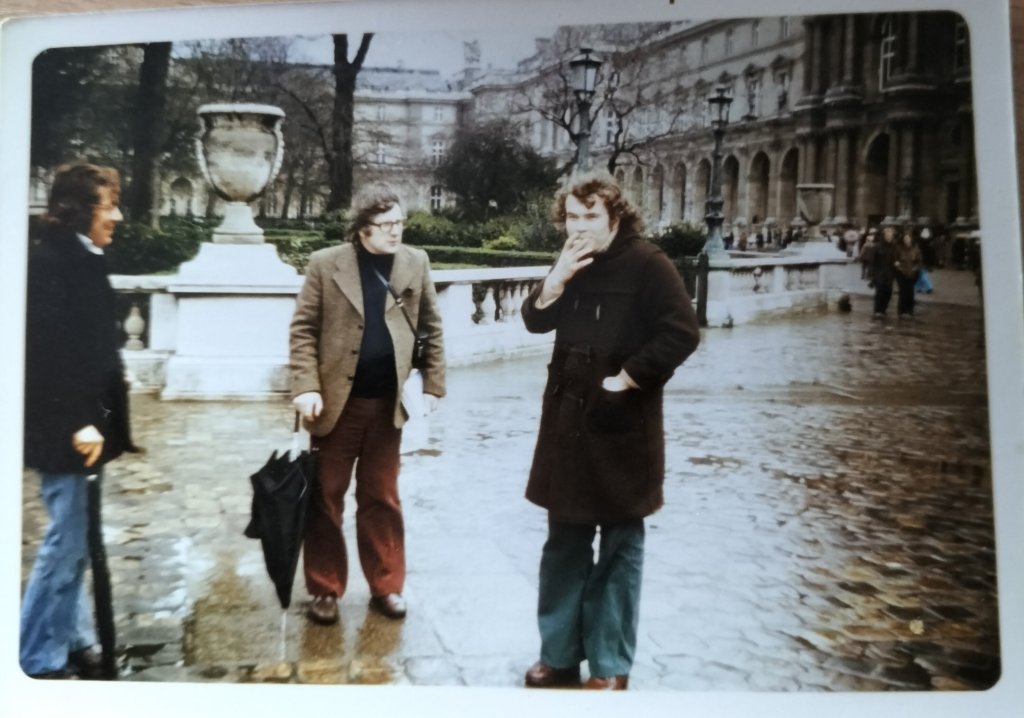
What I call ‘social entitlement ‘ here though is precisely the sense of place; of the rich man at his castle. At my ‘gate’ (in fact all the gates on my council gate had been ripped off) no longer, the world of value and values was a ponderous and overwhelming thing. I longed for some value system that sustained me in space in a way that the socially privileged did not appear to need. And this was not unlike the feeling too of being queer in a heteronormative value system. As with other knowledge, the entitled seemed settled in the space where sex and love meet, in the exchange of relationships as if on a grid.
The aim I suppose of all social mobility is the adaptation of self to available spaces and times accessible to you. Clearly not all were ever going to be available to me, some for nobody at all, but some were if one took the opportunity, though Kairos (the god of the time for opportunity ) too is often limited by social entitlements. But the self- confidence fostered by social entitlement must, and does, have its limitations too. Like most acquired narcissistic traits, it can be flimsy.
As youth passes and the boldness it engenders bows to experience, class entitled people tend to become more defensive of criticism or even suspected or imagined criticism and if they stay confident it is only because they know that the hierarchies established in capitalism societies are those of selfishness, self- interest and attributing to oneself the benefits gained by just being in the right place at the right time.

Those people, the true sons and daughters of Thatcherism and the dictum, ‘there is no society’ are the truly frightening people. The present Tory Party is stuffed with them, people who believe that they faced obstacles but were carried by class such as Rishi Sunak and Suella Braverman. Since they claim they fought the disadvantage of racial difference in a racist society, they often become more perfect in their selfish racism, a bowing to white entitlement that has drawn them in, than the most baked in the wool Churchillians.
Others, less selfish in practice and less skilled in their self-interested favour, fall by the wayside with the terminology of ‘it’s not my fault’ on their lips. They were, they claim, subject to plotting by bad people or they blame others for their fall into lethargy and inaction, especially those in close relationship with them. Sometimes , in relation to that too, they blame an acquired abuse of addictive substances, most often alcohol for that is a cool addiction, for the outcomes that have befallen them.
Since people of working-class origin sometimes buy into the values of a class that has before shown them they ought to feel in the wrong place in society, having aspired and gained it, they share this fate, often much more dramatically. And I have had this experience many times in employment where my ability to sustain the right appearance of control and regulation of the uncontrollable has faltered. But somehow, because of my sense of having never having been in the right place sustained me paradoxically through these crises of displacement represented by resignation or dismissal or just falling mentally ill. It sustained me because my self, for good or bad, still feels rooted in a set of values I acquired with difficulty. Unlike the pursuit of success (of reputation or financial gain) it carried no glittering prizes (well not after my first degree at University anyway), but it means I had a resilience after what felt like total collapse of my intended career path at the time.

A report in 2018 showed that alcohol abuse was greater in the middle-classes than working classes. This defied the stereotypes of the time. Is it linked to my topic. See: https://www.theguardian.com/society/2018/sep/16/middle-class-consume-more-drugs-and-alcohol-than-poorer-people
Whilst others wilted into self-pity or alcohol, I seem to have got over that – with the love of my husband (undemonstrative but totally solid). The ones with a feeling of class entitlement, especially those from the cusp of the working class, instead fall into regret for a lost self. They talk of moving on but in fact have an ideal that is from a past self-idealisation (a Jungian imago to use his alchemical terminology)- a remnant of the glowing self-images of their narcissism, which is unreachable because essentially an illusion. For me no past self had its ideal and hence no imago, for I have never felt that such an image could hold its place, not embodied in me at least.
As a result, my career has been fragmented, highly successful for a time but end-stopped when the realisation that the skills I needed demanded more cunning than I possessed and less pursuit of a true resolution in the terms of ethics and justice. But I also think I came out of that well – and found a lesser space to fill. Once that involved shift work in a mental health hostel for people decamped from the local mental hospital now shutting its vast gates, paid £1.50 an hour (it was before minimum wage). I have to say that I have survived that and learned more about mental health than in the whole of my training afterwards as a social worker, even on the supposedly advanced Social Work Post-Qualifying Diploma at Northumbria University.
There I learned to listen when other people were not listening, to empathise where others deliberately did not lest it teach learned helplessness and to help when help was needed, and facilitate empowerment of the person ready to help themselves. Carried forward into dementia work as a support worker, I think the learning invaluable and not just as a string to a worker’s bow, a file to add to their resume. Maybe that is because I felt as out of my place here, as I did when I suffered the worst kind of survivor guilt or workplace anxiety based on feeling out of my depth or overwhelmed (see https://www.webmd.com/anxiety-panic/features/workplace-anxiety), but it was not because I was in the wrong place but because (I knew this now because it had happened before) that there was no right place only a set of opportunities determined by the available space and time, just awaiting the energy to move, as the libido does in Freud’s conception, to cathect, occupy or invest that space with meaning for a time). No employer in our world might value that but it is redemptive for it keeps one on a trajectory of learning not targeted at a worldly goal. It is the equivalent of the vocations of the middle ages, that took persons out of the world as we know it, without the necessity of a hair-shirt and regular whipping and a 6′ x 3′ cell.
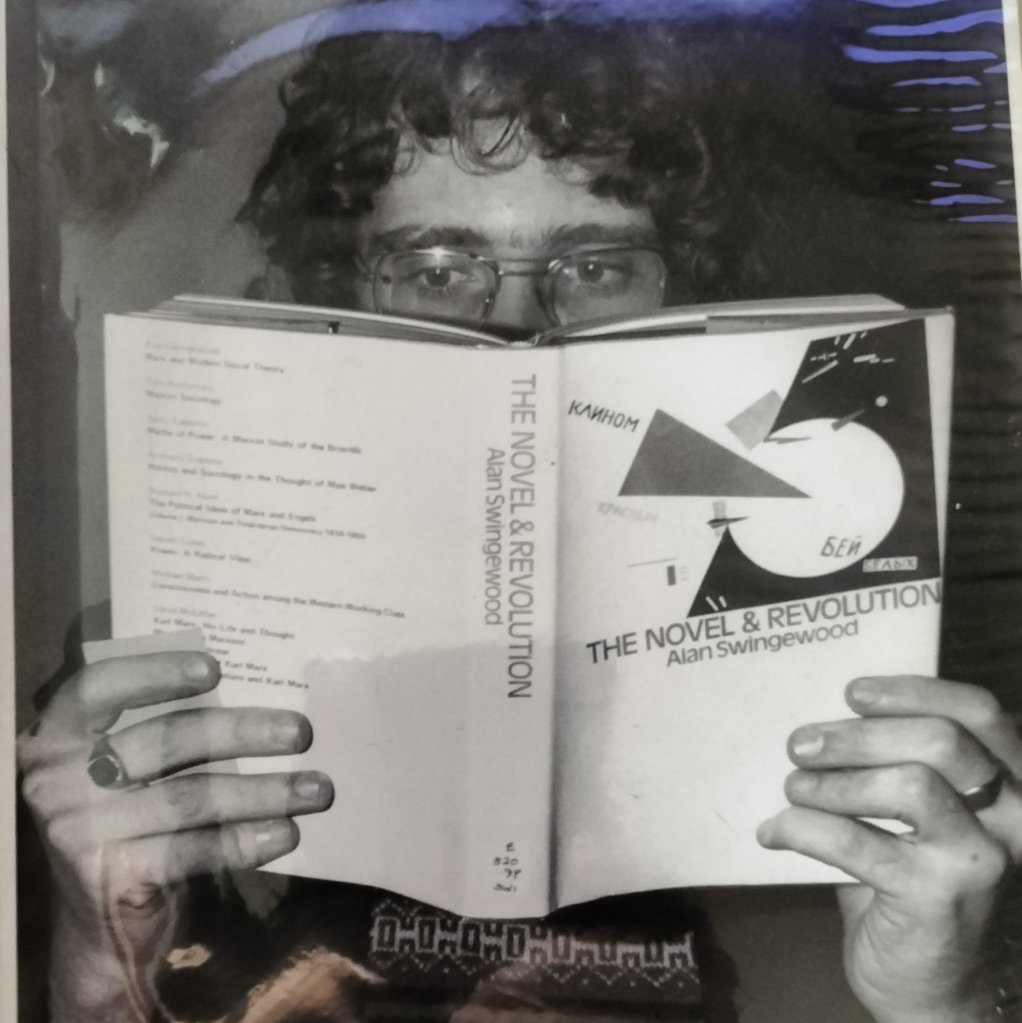
Now I am retired I still seek to fill space and time. My blogs are about this and not so dependent on an audience or their own success and failure. Each small project carries anxiety (even a blog) as you try to fill in the space in a manner that satisfies and perhaps it would help if I went for a larger project – many try to write a novel, play or book of poetry and some to paint a masterpiece, but somehow that seems not only too demanding (with a long extension of stress for an older novice with low stress thresholds) but too much to be a belated request that for a place someone else will find significant rather than oneself. So perhaps now I want to fall back on small projects, move and shift my thinking and developing my learning – skills and knowledge, yes, but most certainly and determinately, almost as if the whole project of life were a teleology, positive and humane VALUES.

All my love
Steve
 Steve_Bamlett_blog
Elements of your story struck a strong chord with me, coming from a council estate background, first in my family to go onto higher education at times I didn’t feel a true part of any space I occupied, more like an interested observer. Thank you for your blogs, they are always interesting and informative as well as entertaining.
LikeLiked by 1 person
Thank you.
LikeLike