How do you celebrate holidays?
Given I am retired, I have to redefine the term ‘holiday’. But, why not start with the term holiday itself.
The Word Press question-setter follows precise grammar (though that precision is rather dishonoured in everyday use I think) by using the plural ‘holidays’ in this question here to refer to more than one day about which we being are asked, without committing to whether these days are sequential or separate from each other. Nowadays a ‘holiday’ is a term commonly used to denote a period of time (and not usually one day only), despite the precise grammar’s correctness by its own standards (https://blog.harwardcommunications.com/2015/06/29/how-to-use-the-word-holiday/).
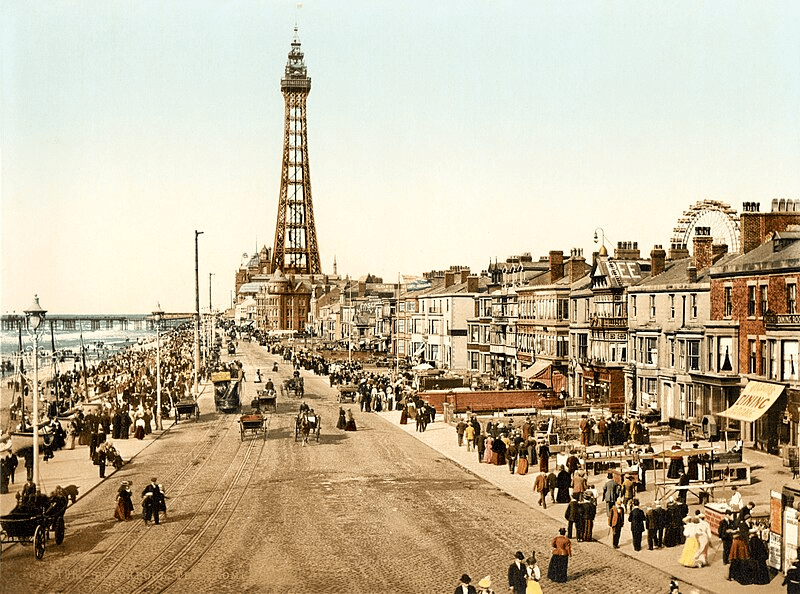
But the shift in meaning is essential to a shift in culture in the end – a holiday is now referred to as a ‘break’ from work or formal education, and increasingly these have to be seen as scheduled because work sets the life agenda of most, even those unemployed if they accept the indignity, that remains nevertheless necessary to life, of signing-on. Retirement lifts that onus of course of accounting for oneself in terms of a work schedule set by others, though all kinds of other knock-on effects come about by the force of numbers that determine when an event will occur or its cost – to be retired for instance is the chance to avoid the higher cost of going away in the ‘school holidays’. In my youth, whole districts and towns in the North of England where mass working-class employment was regulated by one industry used to, in my childhood, have ‘Wakes Weeks’ where (I lived near Huddersfield in West Yorkshire) everyone decamped to either Blackpool or Bridlington. The picture below though is rather before the time of my youth! Lol. (https://en.wikipedia.org/wiki/Wakes_week) Now work schedules are not defined geosocially, as it were and to coin a word, but by individual contract.
But etymologically, as people now tell you less than they did when I was in primary school, the word holiday derives in most languages from the term for a ‘holy day’, a day defined as separate by the ritual of a religion (https://www.etymonline.com/word/holiday). The question-setter may have intended us to think this because of the oddness, in my feel for everyday language, of the word ‘celebrate’, which also derives from mass ritual in religions or state events in its sense in the Latin ‘celebratus‘ (https://www.etymonline.com/word/celebrate). It had a sense in which it referred to the gathering of people that now is little used or intended. For instance, we don’t ask someone how they celebrated their birthday expecting an account of how they gathered people together to honour that event, and if we get such an answer it is because they are using an accidental, not definitive, sense of the word ‘celebrate’: so it is still acceptable for someone to say I celebrated it by reading a book.
For me, now retired, what is a holiday? Weekends, bank holidays and such differ only because of the force of other people’s choices on those days – to queue in traffic to get to he seaside for instance? For me and my retired husband, it might be a time spent away from home that I choose to take in Edinburgh or London for we never travel outside the UK for other reasons that make that impossible. In such times I might allow myself to make choices I wouldn’t at other times – in terms of eating out or affording to see another event I long to attend. In this I am not alone and others incur debt from holidays as a consequence of ‘celebration’, but that is already understood when we make these choices to make ourselves feel ‘treated’ (to good and desired things) for a period, even if only by ourselves.
I think there is a sadness in the notion of a holiday as a celebration of what the self might be as (for a short period) external demands are relaxed. It further defines the notion of ‘self’ as something we have to deserve and pay for; and as something that emerges only momentarily and privately. it reminds me of Wemmick in his fortified home in Great Expectations. This is how the BBC bitesize page for school students, describes that character:
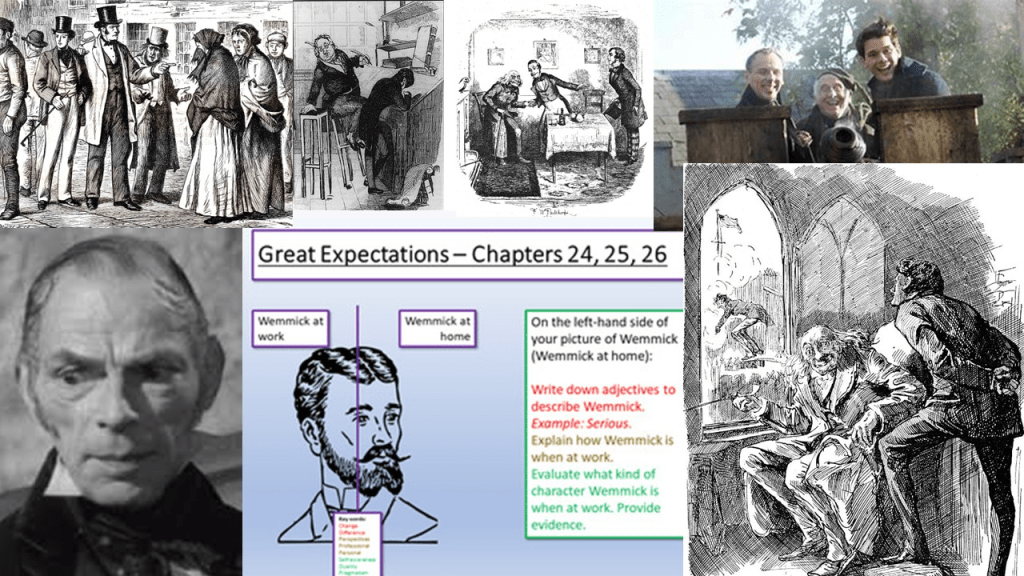
Wemmick has a split personality. At work, he is professional, business-like and can be quite a bully. At home (which is in the form of a miniature castle), he is kind, caring and fun-loving. Pip almost thinks that the two Wemmicks must be a pair of identical twins.
Are we then the product of what Dickens predicted in Great Expectations, persons who are split between work, a thing defined essentially as an imposition on life, and the celebrants of a ritual away-day of the self ? Are our celebrations in some way the firing of cannon out of our fortified and defended selves (which is what Wemmick and the Aged P do for fun) and showing care when we can?
In work, we say that we have no choice to do other than the boss says, the accountant demands, the need to make money as wages or profit determines or the conventional script prescribes – however unethically or uncaringly, we act in the role, as in the meanest side of Wemmick as agent of the shady lawyer Jaggers, getting money from poor people who cannot afford it, driving them to crime or worse. Celebration of a holiday, away from all that, becomes a means of socialising this kinds of duality (between work self and ‘true’ self), although not necessarily so starkly and certainly with nuance relative to social entitlements like education.
And in a sense, retirement can be for the wealthy retired such a prolonged away-day, for private pensions sometimes do that dirty work for us in the form of investments in polluting fossil fuels and other dirty things. We are never just what we celebrate. Holy days were not fun exactly at the start but ‘solemn’ days. A ‘celebrant’ ritualised the notion of sacrifice at Church Mass. They were about the recognition of something awesome beyond the world, the holy. But with the passing of awe (that which is sublime, fearful and joyous in the holy) are our days become focused on that little thing that tries to make itself look big – the SELF?
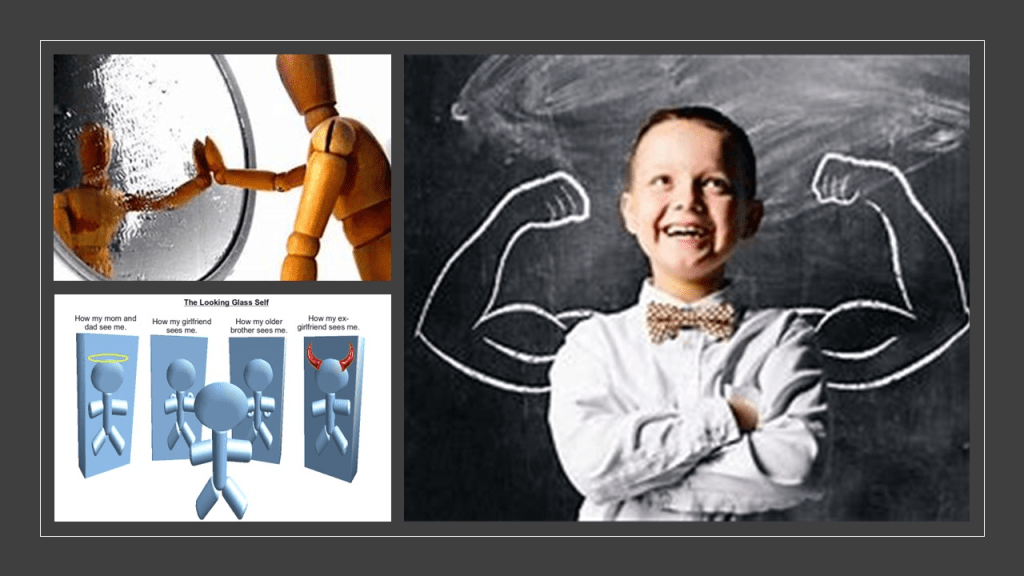
Maybe that is why we need ritual of some kind to fill the void. For me that must be what ART is. A need to speak to what makes it all meaningful. So that is how I celebrate holidays – where possible engaging in art (even lonely arts in which ritual too plays a part). Art involves the discipline of thought and ordering of a mass of data from the senses, thoughts, values and interactive world so that its muddle does not make it look like a VOID, and only a VOID, but something aspirant to meaning. At least, I think this is what I celebrate.

Love
Steve
 Steve_Bamlett_blog
Beautiful post
LikeLike