


We think we have the right to travel long distances based on the convenience to ourselves alone of our choices, but to go ‘cross-country’ was also once a choice about how much we have a right to militate against the country in the interests of congregations of human self-interest represented by towns.
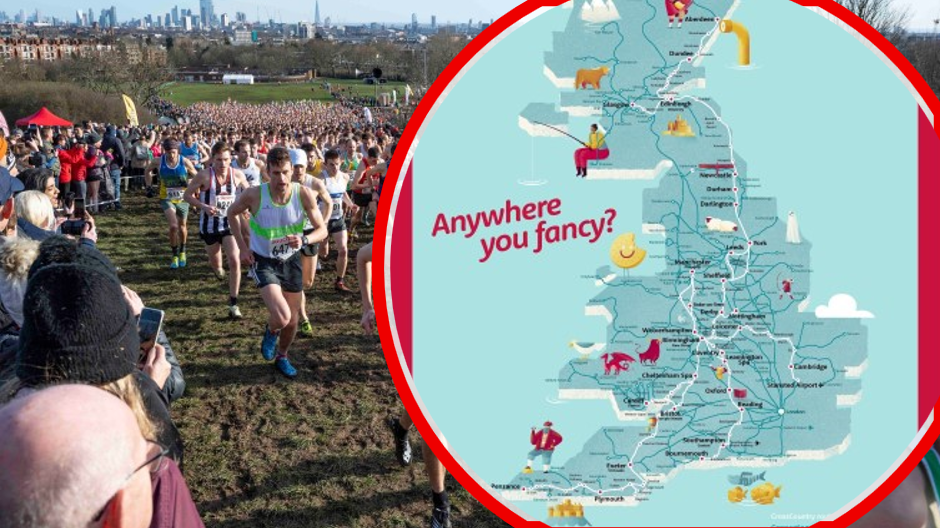
Cross-country is now a kind of noun and a piece in the webpage for the term in the website for the organisation Runner’s World, expresses most my first thoughts about that noun:
When many adults think of cross-country, they think back to one of their least-favourite school activities, thrust upon them against their will by a sadomasochistic PE teacher.
In my secondary school, this was exactly the memory – a teacher who had his favourites (the lithe young boys who always ‘won’ what was pretended not to be a competition), and whom that teacher joked with in the communal shower rooms, leaving them puffed with the pride that facilitated them, in his absence, to whip the less physically graced of us with wet towels as they basked in the transferred effect of his favour. Holme Valley Grammar School was rural and hilly and we ran across fields, bogs and over obstacles.
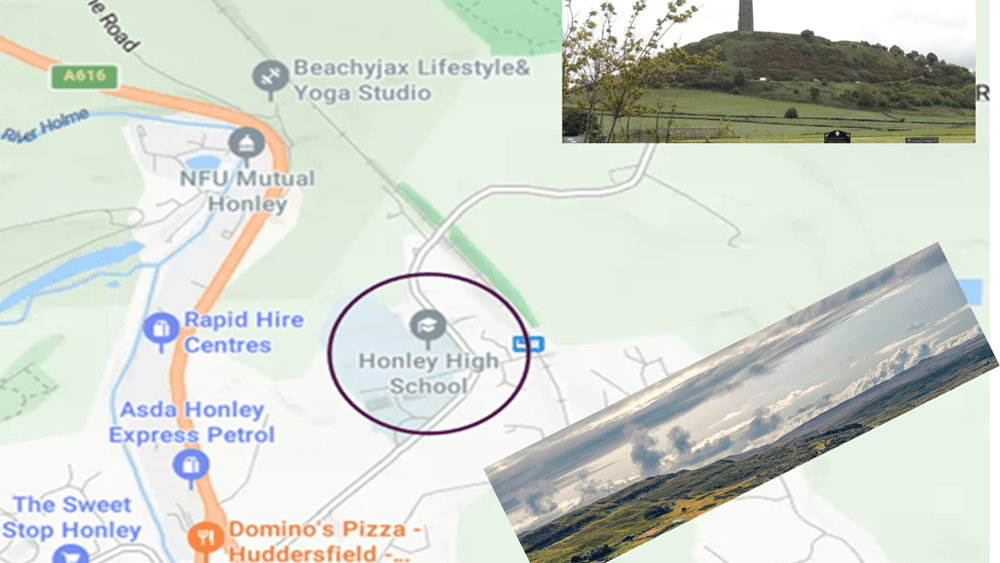
Strangely enough, having had that experience, it is hard to relate to the runners doing a cross-country in the picture, from Runners’ World, in my lead collage in this blog, because our school was already well established in country, less so now perhaps under its new name as a comprehensive, Honley High School. But that picture tells a better story. Clearly the runners there have started their cross-country in a city park and are heading out to the more open hinterland of tbe city in the country.
Actually it surprised me that the earliest meaning of ‘country’ given in Etymonline.com is that of the political unit, used in the thirteenth century ,but that by 1300 two main uses of the word were current, to denominate both that meaning and the one denoting the area around a city walls or limits, a more wild and natural place. As for cross-country, portmanteau term only the adjective became current in the nineteenth century to demark the things which describe transit across the country try when that meant a thing we do in its referred- to space, as in our prompt.pt with ‘cross-country trip’. A cross-country run on the other hand soon allowed the ‘run’ to be absorbed into the adjective, ‘nounifying’ it.Now no-one .misunderstands what is meant when so.eone invites you to participate in a, or the, cross-country they are talking about.
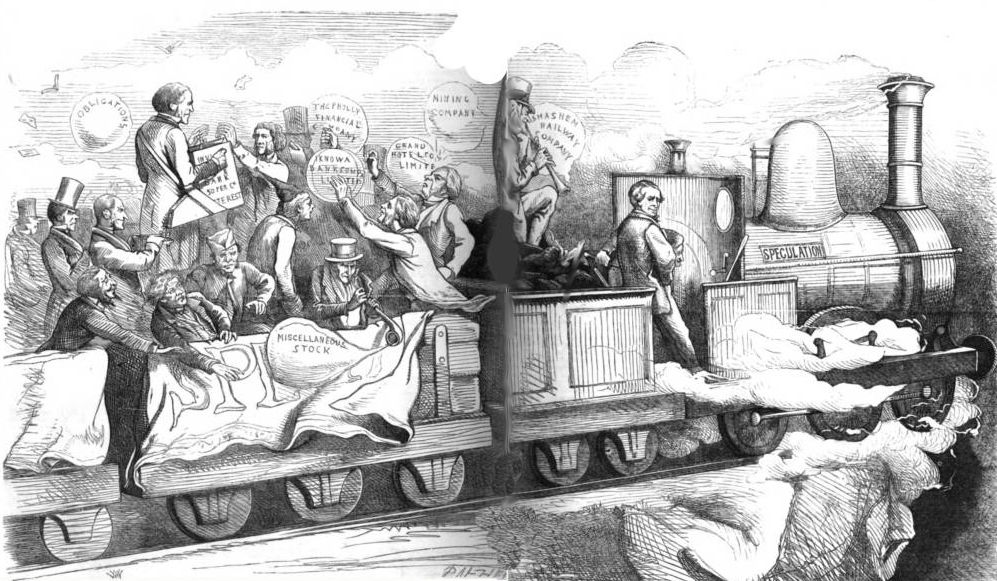
Meanwhile cross-country transit, whether talking about a ‘trip’ or a ‘road’, especially one about to be built, continues as an adjective only, we might think. The first uses of the adjective seem to be from the eighteenth century, in the first signs of a need to build roads between towns, even ones remote from each other that were not motivated, as cross-country Roman roads were in Britain and elsewhere for mainly military purposes; at first, at least. Soon a sign of progress,together with railways in the nineteenth century we see this registered in English and French novels (for example, respectively Dombey & Son and Madame Bovary). To contaminate country ways, either in terms of rural its and the meaning of a nation was the purpose of being cross-country. It subjected the natural to human needs and the mechanisation of that hungry need – look at the chapters about the building of railways in Middlemarch by George Eliot). The satirical cartoon below pokes fun at the expansion of railways both in the danger to private capital spe glaive investments and the cost of more fun on railways. The represented train is heading over tbe white cliffs of Dover.
And, lo and beholder, the re-privatisation in theate twentieth century has recently spawned cross-country as a proper noun,as the name of a railway service franchise, Cross-Country or CrossCountry. The second picture in my opening collage is from an advertisement for that company. Let’s see it more grandly:
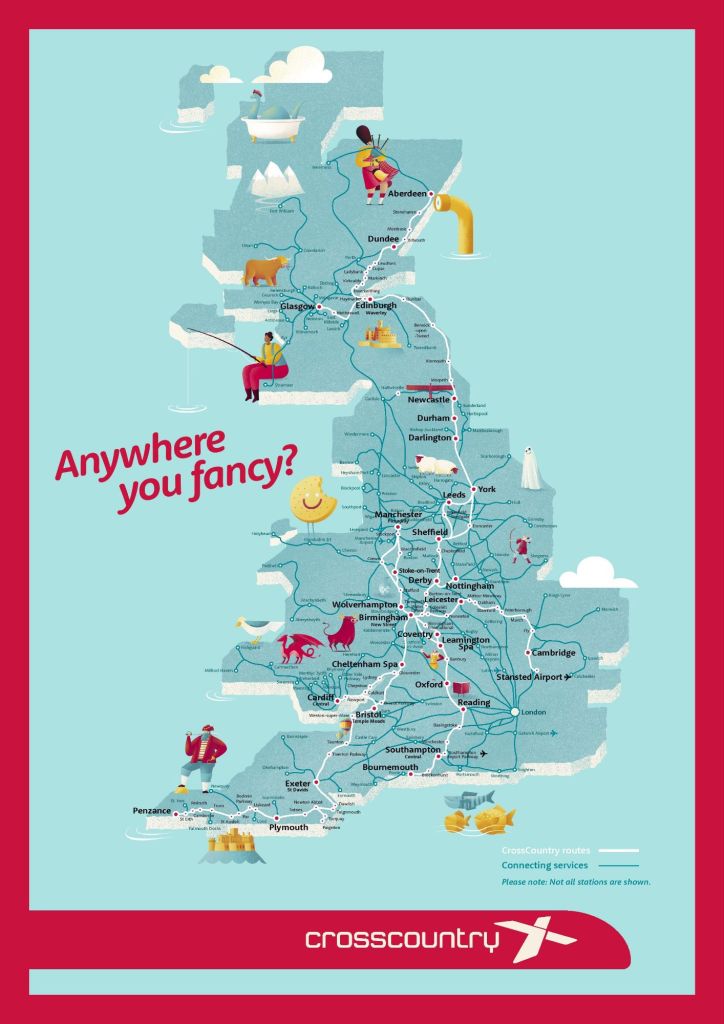
What a logo for cross-country travel, but note that the imagery and wording within it is much more concerned with the notion of travel as ‘trip’ than the commercial logistics of the nineteenth century, nowadays focused to our peril in road transport. It’s aim is to encourage wider use of cross-country routes, especially those operated by this company, and wider use of country leisure, that crosses – or opposes (one root of the word) – the purposes that might be supposed to be nature’s with those of a set of consumers created by the capitalisation of transport and leisure.
Notice the stress in the advertisement, with its pictures of types of person having types of holiday fun, on turning the arduousness of long travel into an easy choice of ‘whatever you fancy’. Even tne choice is not made under hardship but is proposed at the level of consumer desire (fancy) alone, be it for sea swimming,mountain-hiking,country-camping or any other of a plethora of consumable leisure pursuits its which country and rural its might be transformed. Twentieth century sales of mass travel tried to harmonise its image to tje natural, especially by exploitation of the similarity of steam train emissions with clouds and wide vistas that dwarf the train vehicles themselves.
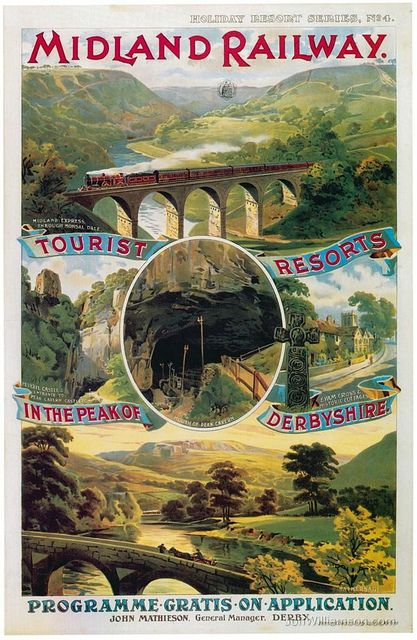
In a sense this tells us a lot about our prompt question. How do you ‘fancy’ to travel, as if it were a free choice between options regardless of the relative cost of each. Yet that cost is not only one borne by consumers – in terms of the future of a rural countryside, including seaside, it is the additional environmental costs that future generations will pay for – the huge carbon footprint for instance of intra-country air travel, nowhere so high as in the heedless USA, but growing too in the UK.
Rail is cheaper environmentally than road travel by car still but we still rarely see that feature in choice of travel. Rather tbe issue is tne purchase of means to lower personal inconvenience in the short-term, regardless of the cost to the future who must pay it. Even those who claim that they stand for their rights of their children when to comes to cheaply adopted anti-immigrant bias, have no compunction in raising the chances that their children will die in choking smag as a result of their choices of combustible xcarbon-based fuels for a range of purposes.
So what preference I have for a certain means of travel is for me a secondary question to the reason why I travel, the justification of tne necessity of that travel and consulting ways that query not just convenience to me but environmental and invisible costs to the ‘country/ as an idea representing nature rather than political units and the trans-country costs to the world, which no-one is required to thinking about.
That’s all.
With love
Steven xxxxxxx
 Steve_Bamlett_blog