


Unfortunately I, like most humans, continually find myself comparing myself, perhaps we do so because of the distinctive features of that animal we are, to a human animal only.
However much the academy still sneers at the reductive in internet resourced explanations, these have a certain economy, though no doubt perhaps an economy of the complexity of truth as well as of language. Nevertheless, I will go ahead with using them in here, for I do not wish to persuade anyone else than myself of what might lie behind my choices to compare myself only to the animal that is a human animal. One fine internet explanation (found here at this link) ends thus, having spent a few paragraphs showing how and why it is inappropriate from a biological perspective to categorise humans an a species of animal, yet still understand that humans have distinctive qualities that tend to get blown up to an argument about humans as exceptional – to the degree of claiming for themselves a categorical difference from other animals:
While humans fit the biological definition of an animal, we possess several specialized adaptations that contribute to our distinctiveness. One of the most fundamental is bipedalism, the ability to walk habitually upright on two legs, which developed several million years ago. This transition required significant skeletal restructuring, including an S-shaped spine, a bowl-shaped pelvis, and a foot structure with an arch for shock absorption.
Another defining trait is encephalization, the development of an unusually large and complex brain relative to our body size. The human brain size more than tripled during evolution, resulting in a complex cerebral cortex responsible for advanced cognitive functions. This expansion created an evolutionary challenge where a large-headed infant must pass through a birth canal narrowed by bipedal walking.
The development of complex language and abstract thought represents the peak of these cognitive adaptations. Our capacity for symbolic communication allows for the transmission of cultural knowledge across generations, driving technological and social advancements. These unique features are highly specialized evolutionary results of our primate and mammalian heritage, not reasons to exclude humans from the Animal Kingdom.
Put this into fine prose from the English Renaissance and you get Hamlet’s prose argument to Rosencrantz and Guildenstern in Act 2 Scene 2 of Hamlet, in which he argues that human ‘distinctiveness’, making it the ‘paragon of animals’ has been lost for him, giving an early description of depression to match Burton’s The Anatomy of Melancholy.
.... I have of late, but
wherefore I know not, lost all my mirth, forgone all
custom of exercises, and, indeed, it goes so heavily
with my disposition that this goodly frame, the
Earth, seems to me a sterile promontory; this most
excellent canopy, the air, look you, this brave o’erhanging
firmament, this majestical roof, fretted
with golden fire—why, it appeareth nothing to me
but a foul and pestilent congregation of vapors.
What a piece of work is a man, how noble in
reason, how infinite in faculties, in form and moving
how express and admirable; in action how like
an angel, in apprehension how like a god: the
beauty of the world, the paragon of animals—and
yet, to me, what is this quintessence of dust?
In Hamlet’s mind the world, describable as the very finest in culturally creative forms of his time (perhaps even a description of the stage of The Globe Theatre – frame, canopy, roof with fretwork in it – has become reduced to things we smell not see, for his mind has descended to the earth, to ‘dust’, the analogue of dried mud and death – the unenviable lifelessness without even the appearance of fire. Of course, sometimes human exceptionalism is not to be envied. H.G. Wells expresses this in his fine The Island of Dr. Moreau, wherein a scientist has attempted to ape the phylogenetic origin of humans from animal partners (and beyond – for Moreau uses panthers amongst others to create his hybrids) by vivisectional experimentation on real animals, creating hybrid humans. When the tragedy this represented for the animals thus treated is recorded in the novel, you can’t help but feel that Wells is showing that human exceptionalism itself is a tragedy unless we replace the ‘dread’ of a Creator (God as well as Dr Moreau), which makes life ‘one long internal struggle’, with a Fabian understanding of human animal potentiality:
“Before, they had been beasts, their instincts fitly adapted to their surroundings, and happy as living things may be. Now they stumbled in the shackles of humanity, lived in a fear that never died, fretted by a law they could not understand; their mock-human existence, begun in an agony, was one long internal struggle, one long dread of Moreau —”
― H.G. Wells, The Island of Doctor Moreau
The elaboration of the difference between themselves and animals in human thought occurs however at more than the level of learned bipedalism, for this has certain other consequences, including those in Hamlet in his disgust at smells of the earth and lowly vapours. Freud spent a long time attempt to understand how that difference registers on the psychosexual and psychoscial as well as cognitive-affective level. Here is a re-telling of that story called ‘Psychoanalytic Thoughts on The Psychotic Dimension of Disgust: Fascination, Repulsion, and Liminality‘ by Tsiky Cohen in the journal Psychoanalytic Perspectives (Volume 22, 2025 – Issue 2), pages 240-252, https://doi.org/10.1080/1551806X.2025.2481828:
Freud believed that the forces that inhibit sexual development—disgust, shame, and morality—contain historical traces of the external inhibitions enacted on the sexual drive during humanity’s psychogenesis. On November 14, 1897, eight years before the publication of Three Essays, Freud wrote to Wilhelm Fliess that he felt a new piece of knowledge had been created within him, or more precisely, a clearer formulation of research intuitions related to the origin of normal sexual repression. He wrote, in fact, that he always had a suspicion that there was “something organic that plays a role in repression … something connected with the phylogenetic abandonment by the human race of the primary erotogenic regions” (Freud, Citation 1897, p. 279). Freud then offered his fascinating hypothesis about the formation of the emotion of disgust related to the devaluation of the sense of smell. He assumed that as long as the position of the human body was close to the ground and the sense of smell was dominant (as with animals), bodily secretions such as urine, feces, mucus, menstruation and sweat had a sexually stimulating effect. When humans stood up, their ability to smell what was low to the ground was diminished, and interrelationships that had existed until then between smell, bodily secretions, and attraction were interrupted. The role played by the olfactory stimuli transitioned to visual ones.
Freud surmises that anal eroticism was the first sensory experience to be repressed since “[t]he coprophilic elements in the instinct have proven incompatible with our aesthetic ideas” (Freud, Citation 1912, p. 215). Nevertheless, he emphasized that even the progress of civilization has not been able to completely domesticate the polymorphic-perverted structure that characterizes the foundation of the sexual drive, since “the basic process that produces erotic excitement remains unaltered” (Freud, Citation 1912, p. 215). Although the development of disgust is organically and phylogenetically prescribed to humans and determined by heredity, every child is destined to relearn how to walk on two feet and how to internalize anew the social and cultural codes of what is repellant.
Full article: Psychoanalytic Thoughts on The Psychotic Dimension of Disgust: Fascination, Repulsion, and Liminality*: https://www.tandfonline.com/doi/full/10.1080/1551806X.2025.2481828
The genesis of disgust then is a cognitive-affective effect of, or contains remnants thereof, the primary means by which humans differentiate themselves from the animal they fear tbey might still be (in The Island of Dr. Moreau this is represented by the maxim like law forced by Moreau on his products, “Four legs bad, two legs good“).
Even Freud’s retention of the word ‘perversion’ shows the difficulties of dealing with issues four-legged mammalian animals do not ruminate about or want to label as different. When Freud described babies as ‘polymorphously perverse’,he upset many but perhaps it would have upset those many much more to hear his explanation that to the baby, there is no class of pleasurable experience that needs to be subjected to binary analysis (straight/gay, good/bad, moral/ immoral). Very complex issues of vulnerability to unequal power rest on that fact of course but these are not matters of nature but of social construction. What we need to remember is that social construction is an effect of social understanding, and that the more comprehensive that understanding the better for animals capable of such understanding. Non- human animals still exploit the vulnerability of the weak too without conscience and do not distinguish predation from feeding.
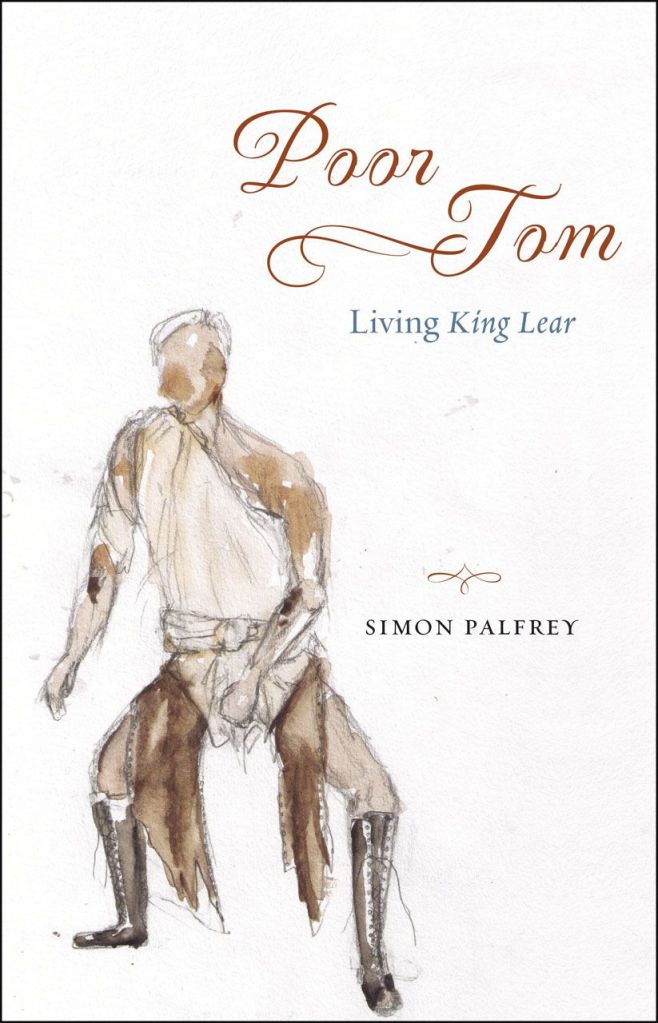
Hence comparing yourself to human animals may be the very source of morality and the key to human sociality that protects the species without disregard to the needs of the weak, marginalised or ill. We just have to hope that we are good animals,animals less concerned with grandeur that with empathy and love: Shakespeare’s Lear calls this ‘unaccommodated man’ or wo[man], ‘the ‘poor bare forked’ (i.e. bipedal) ‘animal’. Love them for you are but one of them them however much you want your comparison to make you look more powerful, significant, or worthy than they. That what makes you an animal that has the right to see itself as such ‘ work’ as they would like themselves to be.
With love
Steven xxxxxxx
 Steve_Bamlett_blog