


Baz came into the life of my and my husband, Geoff, in September 2025 from Darlington Dog’s Trust. He was 10, and his history, according to his adoption form, was somewhat shaded by rare single issues of behaviour that have challenged human owners and foster-carers in the past and have made getting insurance difficult and, in the end, too costly for us as pensioners. The ‘behaviours’ included reports of biting humans when stressed. Yet from the start, we found a dog that appeared extremely loving and responsive, though his body language seemed full of cautioned reserve, except as above and below when on a walk or chasing one of the many bouncy balls in our life nowadays (we keep them stocked because he loses them on a regular basis).
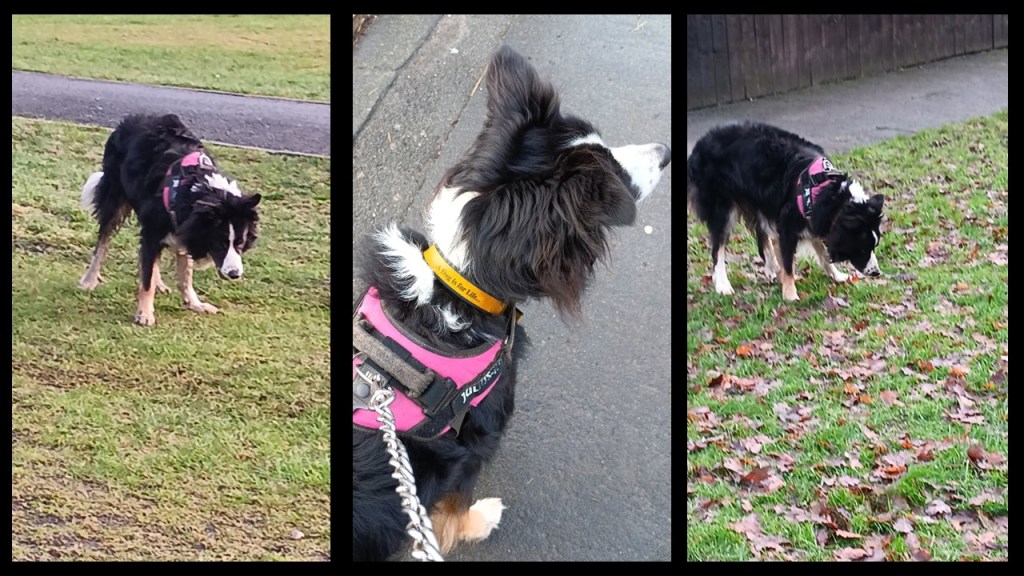
There are strange behaviours that I can’t account for. It is difficult to engage him with food and eating, because he acts as if he were scared of approaching his bowl without encouragement. He reacts strongly to pain – which he gets from his arthritis, even though regularly given three daily You-move tablets (double doses in the cold). He is a loner and chooses not to be with us for a lot of the time. All of this are treated as symptoms of distrust of us in write-ups I’ve seen. One site (link) expresses the signs of trust or distrust of an owner thus:
Here are ten small but meaningful signs your dog feels safe and secure with you.
1. They Look You in the Eyes. When your dog looks at you with soft, relaxed eyes, that’s not just affection — that’s trust. Eye contact can actually release oxytocin (the “love hormone”) in both of you, helping strengthen your bond. If your dog is calm and comfortable holding your gaze, it’s a sign they feel safe with you and see you as family.
2. They Choose to Sleep Near You. Dogs only sleep deeply when they feel safe. If your dog likes to nap near you, curl up at your feet, or even doze with their back turned to you, that’s their way of saying, “I feel protected when you’re around.” In the wild, dogs sleep close to their pack for warmth and security — and you’re part of that pack now.
3. They Roll Over and Show Their Belly When a dog rolls onto their back, they’re putting themselves in a vulnerable position. It’s a gesture that says, “I trust you not to hurt me.” Sometimes it’s an invitation for a belly rub, but often it’s just their quiet way of showing they feel completely safe with you nearby.
4. They Lean Against You. You might notice your dog pressing their weight into your leg when you’re sitting or standing still. That lean isn’t random — it’s a sign of affection and trust. Dogs don’t lean on people they don’t feel safe with. It’s their way of asking for comfort and closeness, much like how we might hug someone we care about.
5. They Pick Up on Your Emotions Dogs are experts at reading human emotions. If you’ve ever been sad and noticed your dog quietly resting their head on you, or seen them perk up when you’re happy, that’s empathy at work. A dog that responds to your mood feels connected and secure enough to share in your emotional world.
6. They Bring You Their Toys When your dog trots over with their favorite toy, it’s more than just a playtime request — it’s a social gesture. Dogs don’t share with just anyone. Offering you their prized possession means they trust you enough to include you in something they value.
7. They Follow You Everywhere If your dog follows you from room to room, even when nothing interesting is happening, it’s not just separation anxiety — it’s affection. Dogs are pack animals by nature, and sticking close to their favorite human makes them feel secure. If your dog always wants to be near you, that’s a good thing — it means you make them feel safe.
8. They Relax Around You You can tell a lot about trust from a dog’s body language. If your dog stretches out, sighs, and dozes off next to you, they’re completely at ease. Loose posture, soft eyes, and gentle breathing all mean one thing: they feel safe enough to let their guard down.
9. They Let You Touch Them Anywhere Not every dog likes being touched everywhere right away. Letting you handle their paws, ears, or tail — or staying calm during grooming or vet visits — is a big deal. It shows your dog knows you won’t hurt them, even in uncomfortable situations. That kind of trust takes time to build, and it’s one of the clearest signs of a strong bond.
10. They Check In With You Even confident dogs that like to explore will look back at you from time to time. This “check-in” behavior shows your dog trusts you to have their back. It’s their subtle way of saying, “I’m okay — just making sure you’re still there.”
In fact looking at the complete list, I would score some of the interactive behaviours highly currently (with variations when incidents occur that throw Baz like loud bangs like fireworks or gunshot (the latter is common enough in County Durham surrounds), especially 3, 6, 7 and 10, but others are more problematic still – or vary a lot, with some experimentation by the dog being evident. However, sometimes websites with a practical intent can mean we need to reflect on what is said before we enact what we think is the advice given on one Website (link here).
Dog problems usually have a human component. …. Always remember to consider your role in frustrating canine scenarios.
Trust is a thing human too can be deficient in and deficits therein are sometimes associated to mental health or characterological problems (up to the infamous personality disorders) but is anyway always a variant in human behaviour. Eric Erikson defines a whole first stage of childhood development from 0 – 1 to the learning of trust.
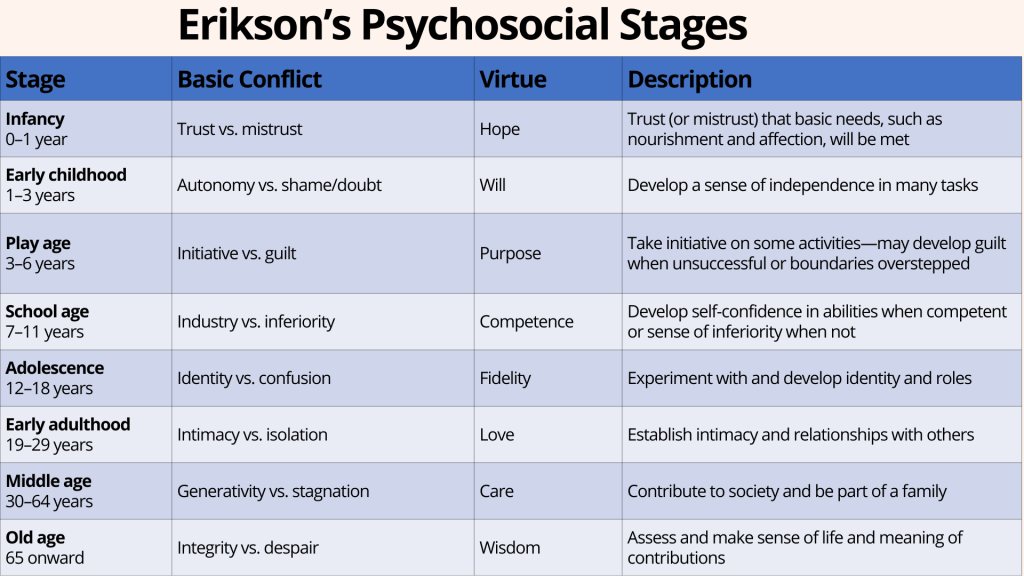
Without trust established, hope is absent. It effects security even in the most abstract way, a sense that the ground won’t hold you up. Tennyson has his monomaniac narrator in Maud have this extreme version of distrust:
O let the solid ground
  Not fail beneath my feet
Trust is almost certainly too related to the learning of attachment and bonding, as described by Bowlby and Winnicott, amongst others. But attachments that remain shaky can also include very shaky levels of trust – definitive of later psychological issues if they occur in childhood with a primary caregiver, but I think to renascent in aging. even Erikson’s late stages don’t leave the need to test trust behind in older age, since elders may feel unable to trust themselves to be ‘generative’ for instance, or to sustain themselves against despair.
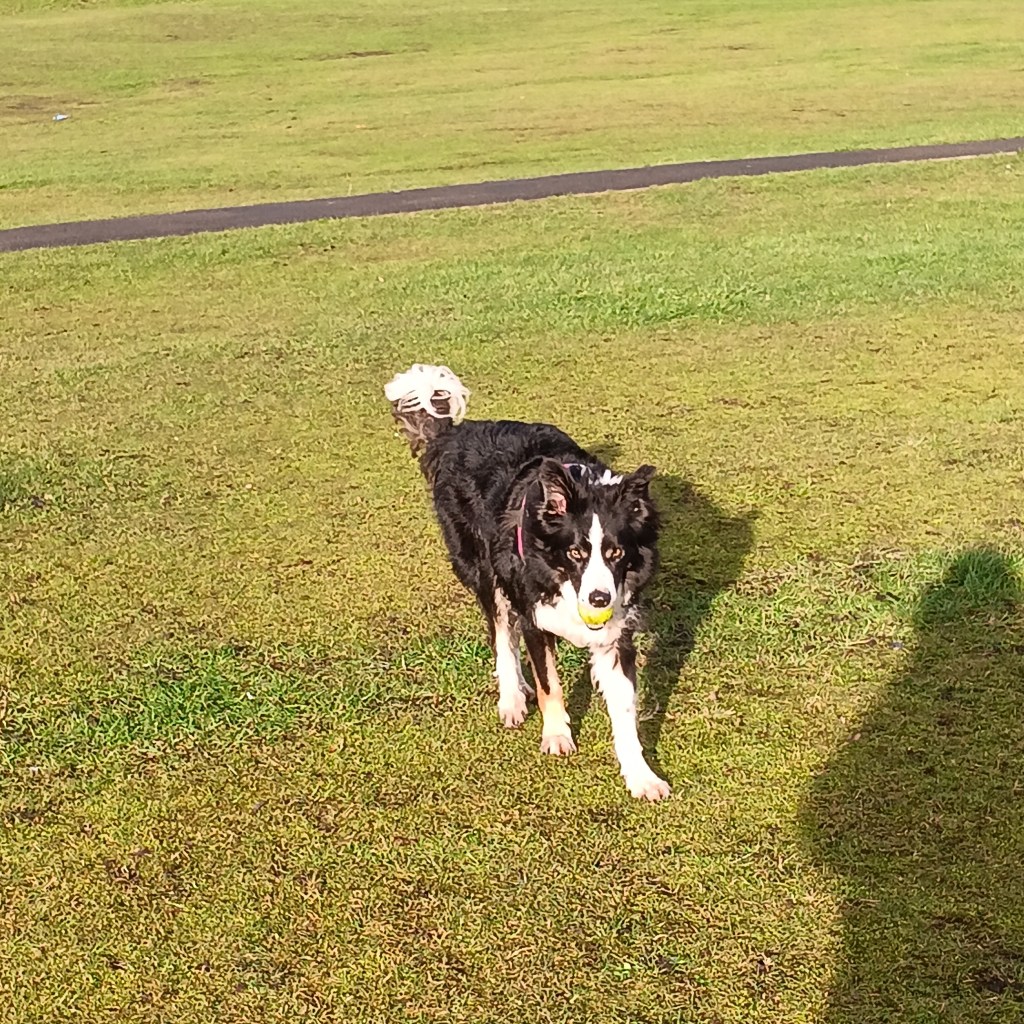
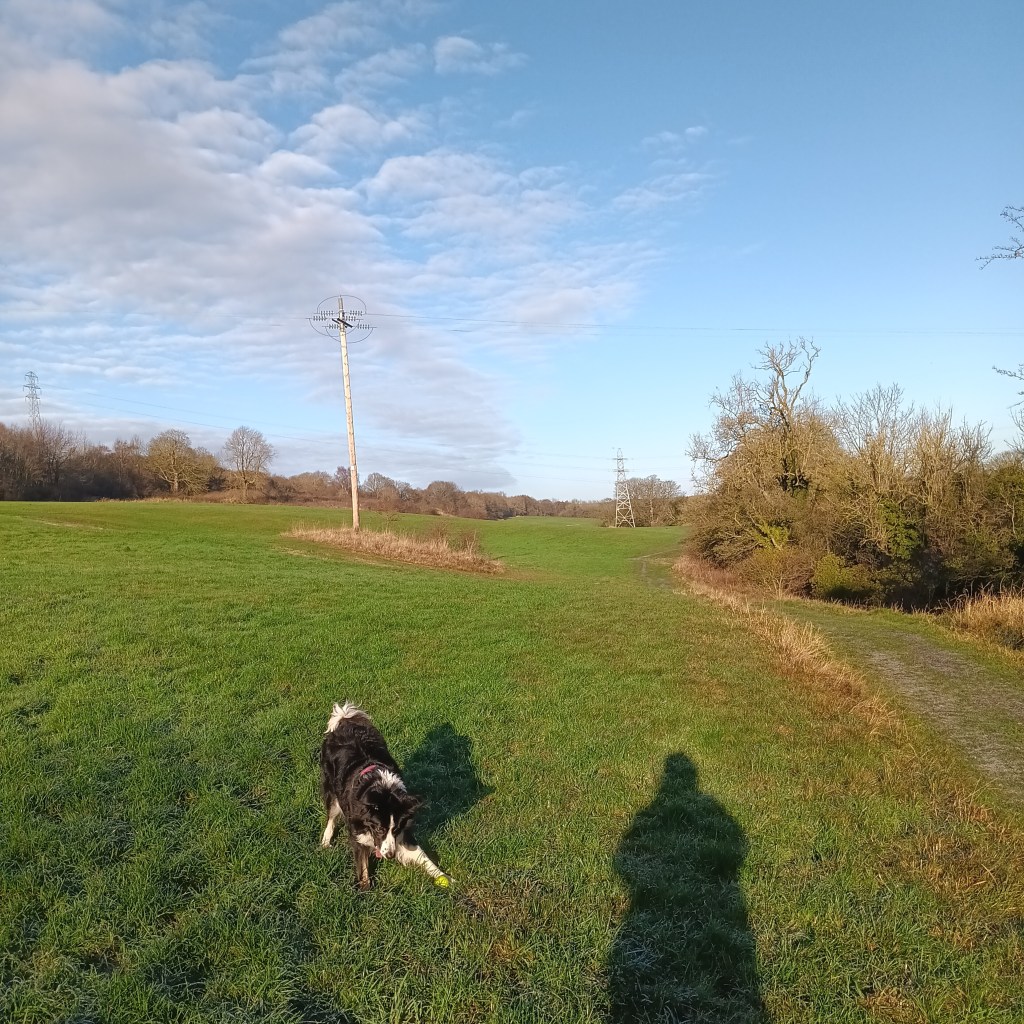
As I age (72 too) I do feel some pressures on the integrity of the ability to trust – maybe the sense that as we develop, others do too and become locked more into the domain of their main fulfillment, like a biological or chosen family grouping. They get lost to you (maybe not entirely), or they themselves finding trusting more challenging. These and some nascent issues with trust have sometimes shattered me. I was in one of those domains yesterday – feeling unable to trust others (except my husband) and querying things said to me lest they contain some seed of desired distance or breakaway, and ruminating on this events as depressives like me do. On that day I walked Baz alone and everything went wrong. It was a walk the very opposite of the morning one pictured below, as the gloom and mist descended. Baz lost his ball and seemed to plead that I find it – in the dark without a lmp 9i have ordered a headlamp from Amazon now).
I took him home but had difficulty removing his lighted collar. When we got home Baz retreated into a ‘safe space’ (away from us) and this concerned me, perhaps attached itself to my the feelings of mistrust more generally becoming a complex (though it passed despite my sense it wouldn’t). When his dinner time came, he refused even to be tempted to the kitchen. I tried a touch to his collar and, for the first time ever, Baz turned on my hand and clenched it in his teeth – releasing it without damage but with the beginnings of pain. It surprised and shocked me, and I felt the burden of being distrusted by our dog, even felt for a brief time the sense of shocked detachment from him.
Baz has had ten years of treatment that I cannot know – but it almost certainly involved the use of food in a disciplinary manner (some absurd behaviourist idea gone wild) and of hitting, especially to his back – he used to flinch a lot when we got him but less now.
About one hour later Baz came into the living room and brought a toy to me. But I was lost in reflection. How much was this lapse into mistrust of his human behaviour a reading of my mood. I needed, that is, to ‘remember to consider (my) role in frustrating canine scenarios‘.
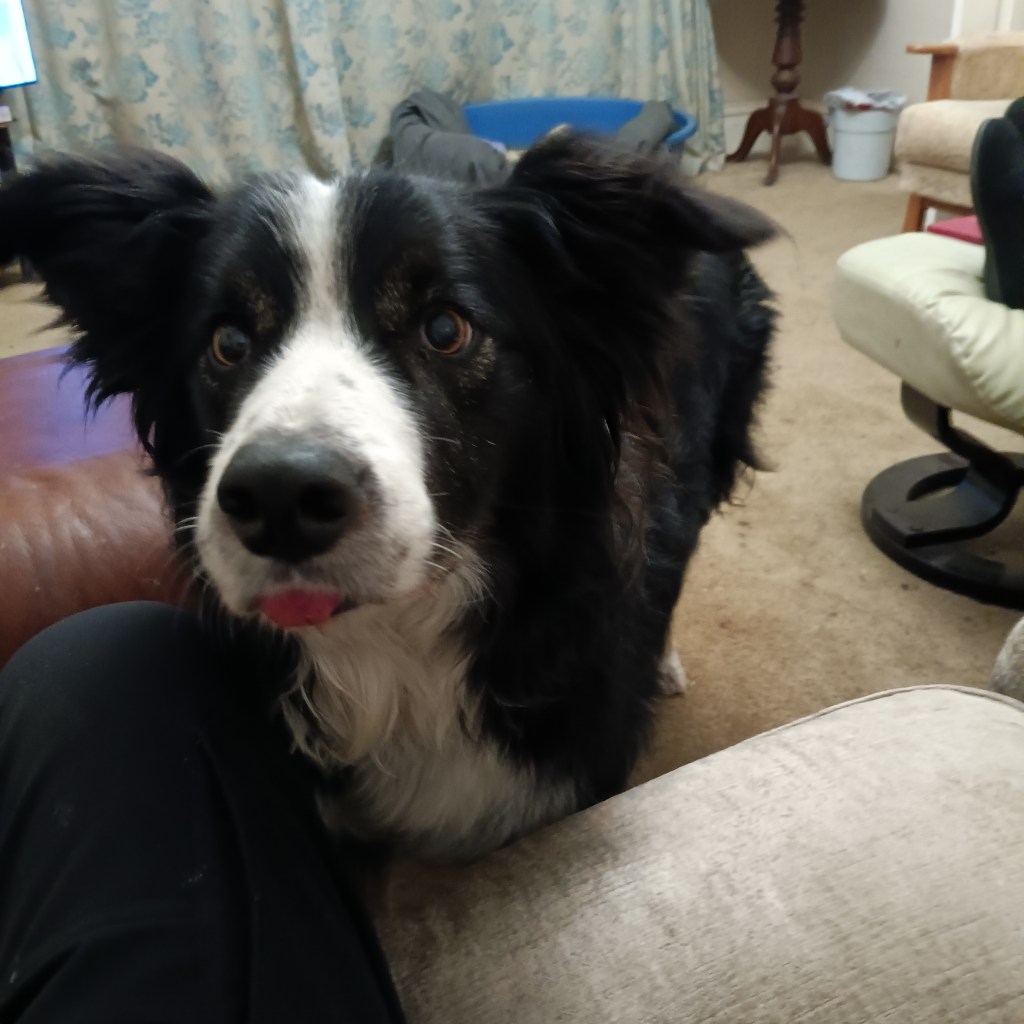
Most of the photographs above are from today (except the one immediately above) and both of us seem more confident in each other, as in that photograph of another day before the last weekend. But it is clearly early days in relearning trust for both of us old guys (I mean Baz AND ME)!
All for now
With love
Steven xxxxxxxxxxxxx
 Steve_Bamlett_blog