


Risk is universal in all engagements with life. It is impossible to act or even to stay passive in any prompt to action without incurring risk, for even disengaging from activity has risks involved, increasingly serious as the degree of disengagement increases. To harbour the wish to take a risk is merely a denial of risk or worse. It is worse if you consider that what holds you back from the risk is some circumstances in your life you feel you can not change, or some assertion that you lack the resources, externally or internally, to do so.
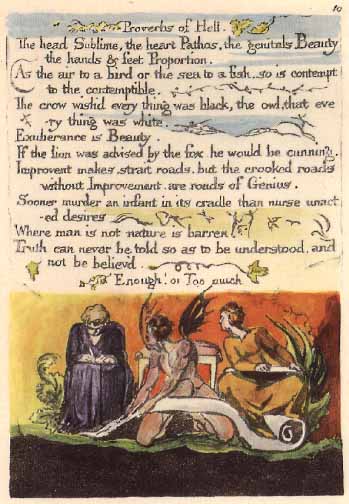
That is not to say that rushing into a desired risk behaviour is or ought to be mandatory. The danger lies not in not taking the risk, because in truth that risks that you mistake signs that you do not need, or even want to, but in nursing the desire to take the risk without doing so, developing it in all possible ways, some being negative ways. This is what Blake meant by that shocking infernal [ftrom The Proverbs from Hell section of a longer epic] epigram:
Sooner murder an infant in its cradle than nurse unacted desires.
It is a piece often quoted with fear, though it is fairly clear that its meaning is that because we ‘nurse’ enacted desires, we treat them like an infant that might develop into grosser adult form, and then therefore better to be rid of them, by taking the risk of their translation to action or other hard-to-imagine means. But Allen Ginsberg was write to ponder: ‘ what do we do with that’. The idea of infanticide is too strong in the sentence to remain merely a metaphor revived from the dead metaphor in the verb ‘nurse’. It seems the most terrible of injunctions, truly infernal.
The thing is that to turn a risk into the object of desire is a dangerous thing because the action deemed risky is more likely to transmute in the darkened place in the mind to which we repressed it or ruminate on it. The risk of nursing an unacted desire is sometimes greater than that of taking that risk in circumstances where you remain in control of your actions it is thought Blake really meant.
So, if you can answer this question, think again about why you still delay acting on something you think is risky. Is it really because you want to be in a position where inhibition is low, most people employ the early period of intoxication by substances for this purpose, and do it in such a way that its consequences were greater than needed to fulfill the desire.
The alternative, of course, is to pretend you are that positive risk-taking animal whilst hiding under that image and its projected narratives and self-images a thing even you can not respect.
Bye for now
With love
Steven xxxxxxx
 Steve_Bamlett_blog