


I blog to keep my brain and heart ticking! And to read better – sometimes the latter aim fails. This blog takes as an example my planned blog on Susan Choi (2025) ‘Flashlight’.
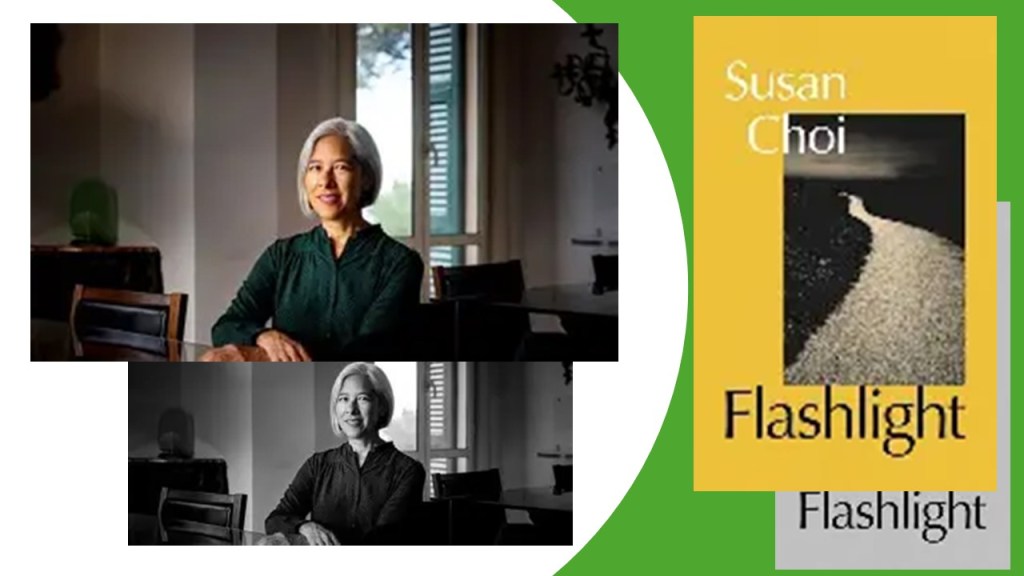
I feel I need to read to keep the synapses flashing in my brain, and my thoughts and feelings in evolution rather than in devolution and eventually disintegration. Writing a blog on a book helps even more because I can determine how my thoughts and feeling help order my responses to something complex and interesting, that engages more than rational intellect – but also visual, auditory and haptic imagination (the senses in short), emotions and intellect. Moreover, novels involve patterns: whilst pattern-making and pattern recognition are two sides of the way in which we construct our humanity as a set of imagery and impulses that equates to a better person than you might be otherwise and as a drive to action. Most often books offer that – a sense of how the person as a relational concept (a concept rooted in relationships between persons and persons and things) can be made to matter, rather than be rendered as insignificant as a world that pretends to rational objectivity alone pretends it is – a mere chimera or epiphenomenon.
Sometimes I test this out with other reviews but I know I have failed to meet the goals of this task when a reviewer says it all (and let’s face it is is usually the most talented of them all – Beejay Silcox – when that happens). I have, for instance, just finished Susan Choi’s Flashlight (from the 2025 Booker Longlist) and I started this, and indeed got to the moment when, as I was to find Silcox has already said, the book changes and plots a real-life political espionage plot (as amazing in truth as in fiction which blend in this part of the novel). Silcox says:
Flashlight delivers a […] jolt – a truth-rattling rupture. We feel it building with a cruel inevitability, and when it arrives, it shifts the novel’s moral (and political) terrain. To spoil the reveal would be churlish. The question is whether the novel can withstand the shock. It can – just. Choi is one of contemporary literature’s great demolition artists, and her emotional foundations hold. She can build as well as she detonates. Choi gives her cast the room they need to live; to be more than vessels for political wrangling. The opening of Flashlight isn’t the only set piece that could stand alone – and tall – as a short story.
Silcox is so correct about the ‘churlishness’ of spoilers here – exceptionally in this novel – that I will follow her lead, although it stops me pursuing much of the research I did into the novel’s real-life inspiration into Far Eastern political intrigue from the second World War Japanese Empire of the Sun, on the one hand, and Communist Revolutions onwards. Suffice it to say that what starts off with some humorous jibes at American Anti-Communist interventions gets a Colder war feel behind its metafictional play with the nature of stories subject to political/national bias and the failures of constructive capacity of memory in time, ordinary forgetting and the ravages of dementia. But I have less confidence than Silcox that ‘political wrangling’ of a thin pro- and anti- Communist kind does not take over in the novel . Of course, it is thin because Cold Wars are binary conflicts with little or no nuance in reality, so how can they be expected in fiction.
About it’s potential as a set of short (and some tall) stories (it was born from a germ of short story in The New Yorker and now its opening chapter) I agree too, but for me this makes me feel the novel is as a novel too long – too full of editable or otiose material that would make it stronger if edited or cut, even if its near repetitions are necessary to show the vast distances between some characters abilities and frameworks for understanding their world in various of its domains. I loved the main vehicles of this for most of the novel – the Japanese born Korean Serk, his American wife Anne and his very believable daughter (developing from brattish elistism to something softer and more beautiful), Louisa throughout but felt they were being asked to be vehicles for some other function by the end of the novel. In that I felt betrayed. once engrossed in them, they suddenly bored me – except for the amazing and beautiful final chapter in Part IV.
Silcox believes that this novel is a ‘noughties (00s)’ novel: she describes and examples them thus:
The millennium is back – …You can feel that early-00s energy jostling through a new crop of American novels: Lucas Schaefer’s The Slip, Kaveh Akbar’s Martyr! and Maggie Shipstead’s Great Circle are top-shelf examples. They’re big in all kinds of wonderful, infuriating ways: antic, overstuffed and richly peopled.
Of these novels, I only know Martyr! (see my blog here about which Akbar has been kind). That is a novel I do not see as failing by being ‘antic, overstuffed and richly peopled’ – far from it because it is so nuanced between its themes. Choi’s book feels for three-quarters of it to be thus nuanced too, but then felt to me like treading through sludge. Perhaps one feature of this is the tremendously long paragraphs the novel uses, giving a rather claustrophobic feel to the reading experience, as the eye works its way through clogged up prose.
And the patterns are not ones I can feel any connection to, as I do with Marty!. The one I noticed, I then saw Silcox noticed too and her words on it seem dead right, starting with a reference to the opening chapter / short story:
While the doctor is distracted, she steals an emergency flashlight from his office and smuggles it home – a low-stakes theft with high-voltage meaning. The night Louisa’s father disappeared into the water, he was holding a flashlight.
Portentous torches will appear throughout these pages (it’s not the subtlest of metaphors for a novel about absence and secrecy). There’s one at a seance, its battery case loosened to summon some otherworldly flickering. Another at an archaeological dig in Paris. This is a story told in brief illuminations, like a child spinning a torch in a dark bedroom. Slices of light; slices of life.
Brilliant critical writing that! And I have no way I could improve on Silcox’s conclusions, even though she sees the novel as a masterwork and I do not – because it turned off the sparks at my synapses – and for some of us, the ‘void’ is too much to look at, especially if you have to follow a ‘true-life’ story more improbable than fiction by the end. Silcox says:
When Serk drowns, he leaves behind a silence so complete it swallows the past whole. And so Louisa is left with two absent parents: one right in front of her; the other near mythic. “The sum of things she knew about her father could fit inside the sum of things she’ll never know about him an infinite number of times,” Choi writes. “The things she knows are as meagre as a pair of backgammon dice rattling in their cup.” Flashlight is a study of absence – absence of narrative, of inheritance, of place, of affection. Who are you, it asks, when there’s no story to inherit, no history to claim? How might that void be filled, or inhabited or weaponised?
Inside me there is a voice that still says – but no!. Louisa in that last fine chapter is a beautiful creation and there is that in it that reinvents human connection in a warm human imagination, but by then I felt knocked out by the novel’s directionless – which is to say going in too many directions altogether, for no purpose of connection to a reader that might make things richer in this poor world.
So here’s a blog that isn’t the blog it was meant to be and makes me ask – why do I blog? Don’t ask me!
With love
Steven xxxxxxxx
______________________________________________________
[1] Beejay Silcox (2025) ‘Review: Flashlight by Susan Choi review – big, bold and surprising’ in The Guardian (Mon 30 Jun 2025 07.00 BST).


2 thoughts on “I blog to keep my brain and heart ticking! And to read better – sometimes the latter aim fails. This blog takes as an example my planned blog on Susan Choi (2025) ‘Flashlight’.”