


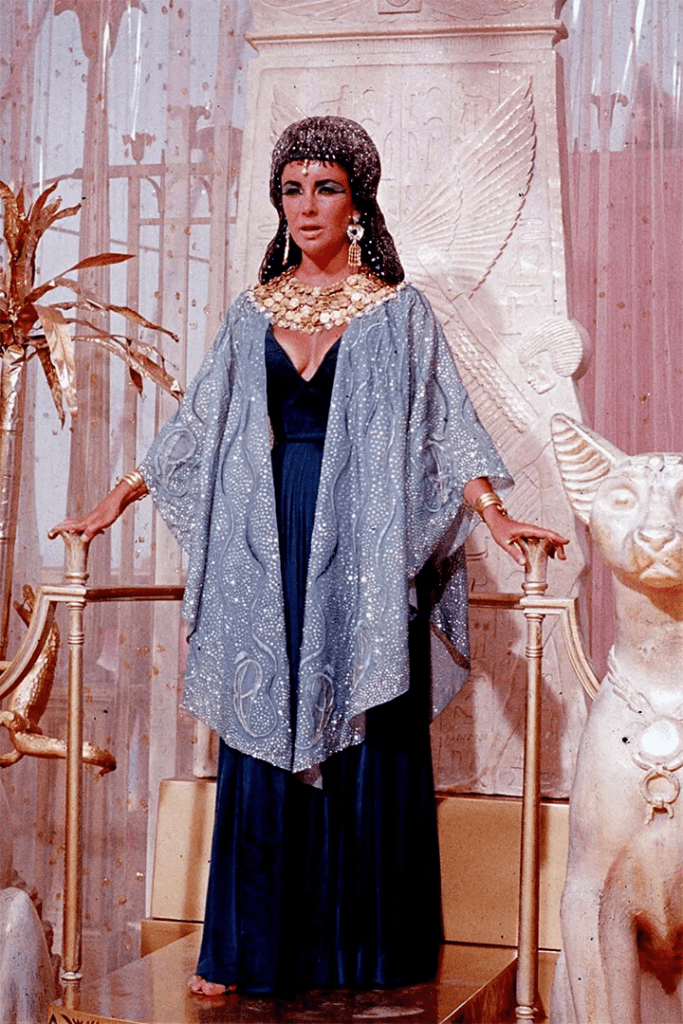
To be an icon of sexual attraction to men can never have been easy, and now even queer men find themselves fighting to fit into that category of being. Witness Elizabeth Taylor standing on the ‘burnish’d gold’ of her barge as Cleopatra, dressed and made-up to the nines but still clearly a woman of some age. Thete are some things a positive attitude can’t change: things my Yorkshire grandmother, Elsie, often called ‘brazen’, said with a glint in her eye. And yet the standard she fits into in the language of Shakespeare’s Enobarbus is never about her appearance only but her appeal to male ‘appetites’ that women are meant, in Enobarbus’ estimation to ‘feed’.
Age cannot wither her, nor custom stale
Her infinite variety. Other women cloy
The appetites they feed, but she makes hungry
Where most she satisfies; for vilest things
Become themselves in her, that the holy priests
Bless her when she is riggish.

Enobarbus in William Shakespeare 'Anthony & Cleopatra' Act 2, Scene 2.
It’s a logical mess that speech. It ought to be about stopping the process of age in the youth that is meant ideologically to most meet the needs of men – older men in particularly, but it is in fact in fact about the fact that as time passes desire the same object of sexual desire, or appetite when we eat some delicacy, fades. The stasis that she achieves is to keep her image inviting to appetite not by what she looks like but how she meets the appetites of starving men whilst never satisfying that hunger by substantial meat, but only by the image of her availability that never can be fulfilled. Can you satisfy appetite and hunger without feeding it with substance: of course, you create an image that meets desire as a want without fulfilling the need that perhaps underlies it. At the time of Elizabeth Taylor that means of vicarious feeding, appealed it was thought to the eyes of a standard stereotype of male desire to whom the glances made available by a low cleavage and suggested fulsomeness of available (but not yet) body.
Taylor though now, in that image, looks like the very icon, not of appetite, but of ‘custom’ – the accustomed habitual and easy to fake – that cloyed appetites long ago. Over made-up, over-dressed and over the hill – the parody of what she seems to represent. The nearest analogue is the mock-up of working-class drag in an artist like Baga Chipz, who even though young in 2020, plays to stereotypes of the ‘stars’ of an earlier age.

The artist Baga Chipz (also known as Leo Lorenz) performing in 2020. By Otto Colwill – Own work, CC BY-SA 4.0, https://commons.wikimedia.org/w/index.php?curid=99314163
There is nothing age ‘cannot wither’ or wrinkle – even an idea of desire. Of course, inappropriate evidence that is wrongly interpreted and applied is a problem but it keeps hitting us however much based on other animal species than ours and in, however, limited a measure of a limited type of performance. This lesson was once known as the inverted U theory of ageing and was often applied not only to biological but psychological processes. Take a study of innervation in ageing rats from 2018:
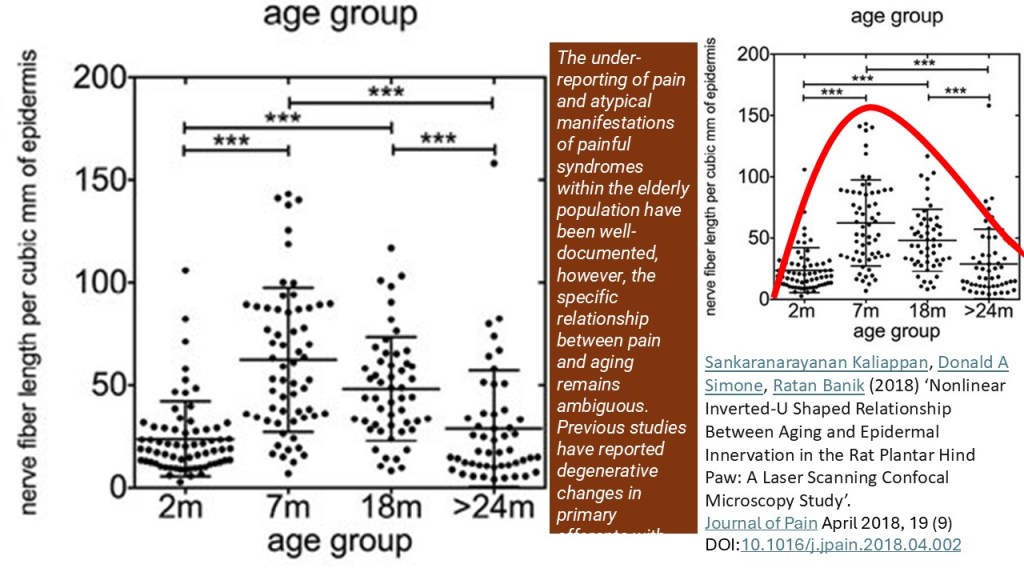
All associational or correlational studies try to generalise wide variance between individuals but even though such variance is seen in this scatter plot of correlations between the age group of rats and the length of nerve fibres, related to nervous activity in complex ways, in the skin of an area of their paws. But it is not hard to see that the relationship can be imagined as that of an inverted U shape, that of the red curve in the smaller occurrence of the graph.
However, let’s look at the evidence and contests against it avout human ageing and development. As a social work teacher, I used to spend a lot of time teaching the work to specialist older age social workers [my own specialism.as a starting social worker] of Paul and Margaret Baltes on this subject, start with theories of ageing and development. It was once normal to invoke the work of Paul and Margaret Baltes.
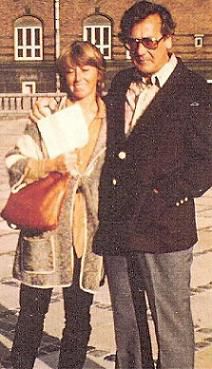
This couple whose own work in the Berlin Institute of Ageing, extended well into their own older age, spent a lot of time working to qualify universal beliefs in scientists of ageing in the implacability of the inverted U, which presents later old age only in terms of decline. However, they achieved only a modification of our expectations of ageing into a skewed U, as in the collage below. Their study of the strategies of aging people, applied to the whole network of biopsychosocial domains of the lived life of elders, and surprisingly, the Baltes found that by use of strategies of selection, optimisation, and compensation (really only wisely doing what you can become good enough at) that cognitive decline was still steeper than normal ageing as an average. However, successful ageing could buck both trends.
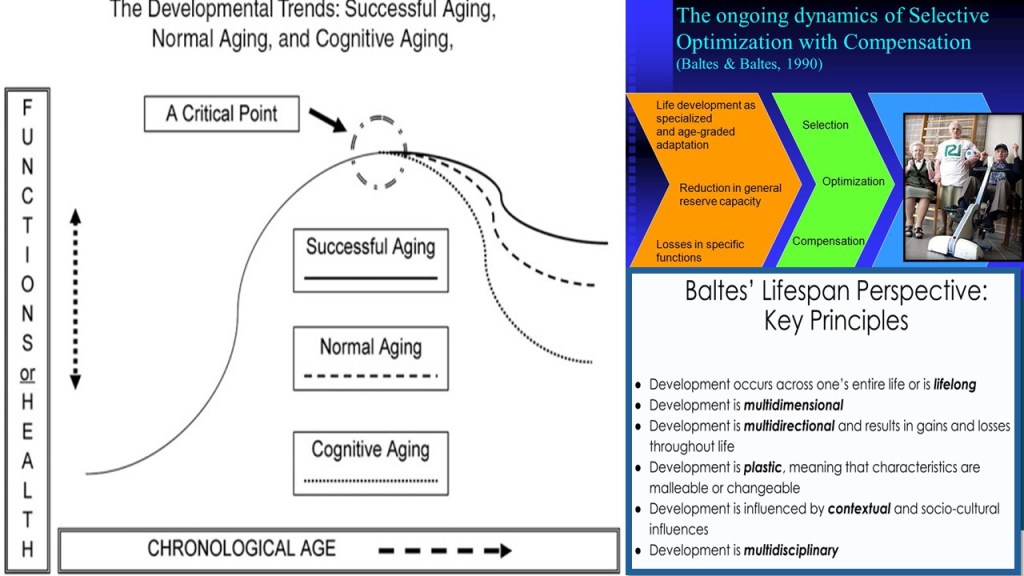
It does not however mean goodbye to the inverted U. Moreoiver in the Enobarbus speech, it is clearthat Cleopatra’s strategy was not aimed at age but keeping men ‘hungry’: unsatisfied and still desirous. This fits with another inverted U theory – the Yerkes-Dodson theory of maximal arousal.
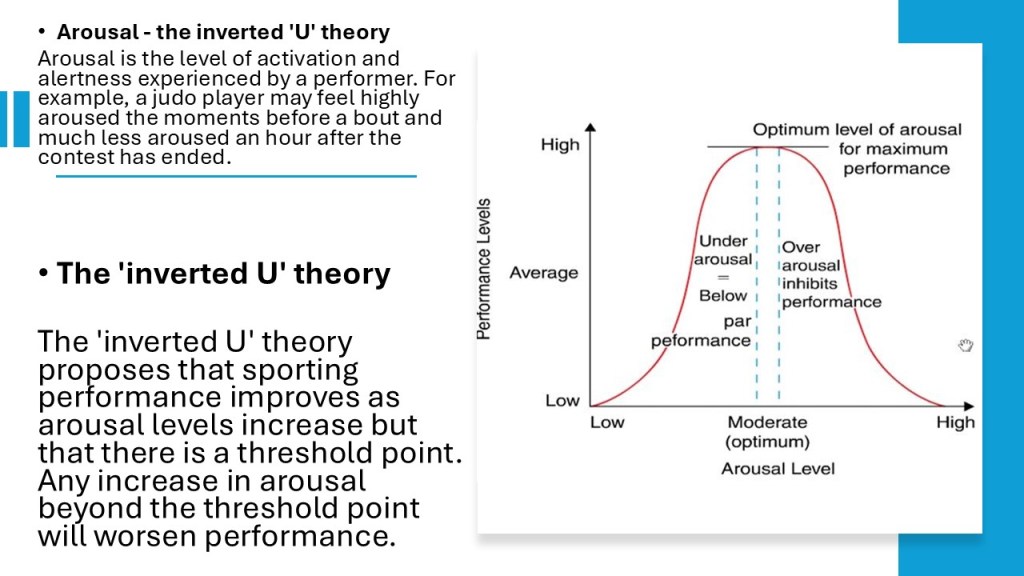
In this theory the level of nervous arousal in the body (it is usually of course applied in sports psychology, and the ‘performer’ mentioned in the text of the collage above is a ‘judo player’, but the point applies of course to sexual performance too, as Cleopatra knew according to Enobarbus. You will remember that Cleopatra made a ‘religion’ of such engineering of the desire of worshippers:
                                                ... Other women cloy
The appetites they feed, but she makes hungry
Where most she satisfies; for vilest things
Become themselves in her, that the holy priests
Bless her when she is riggish.
‘Riggish’ is word Mirriam-Webster say means ‘wanton’, although Wiktionary claims to derive it from a feminine, and interestingly non-binary (‘tomboyish’) application thus, giving these lines from Shakespeare as its first exemplary use:
From rig (“a wanton girl”) + -ish: Adjective: riggish (comparative more riggish, superlative most riggish): (archaic) Wanton, lewd, or tomboyish
Hence, I suspect the inverted U will be used to explain ageing for many years yet – however modified and sugared the basic premise of positive psychology: that things can only be evaluated in terms of our perception of them, was, is and will remain a nonsense fit only for magical thinking. That is the case, except in economics where magical thinking itself uses the inverted U (articulated as Kuznet’s Curve), to predict that capitalism will eventually of its own accord optimise the effects of inequality. This is rank nonsense, of course, a ‘truth’ only within ideology and thoroughly discredited by the evidence though it cheers up middle-way ‘thinkers’ like the current Labour leadership.

So then: “What do I think gets better with age?” The answer must be that it depends on the section of the lifespan that you look at when you consider ageing. Ultimately nothing gets better as a law governed by some self-driving function or law, though people have agency to modify decline even in the latter stages of life, if not ‘that goodnight’ into which we should not ‘go gentle’. The wonderful poem I refer to by Dylan Thomas looks at a number of things that seem in the section of ‘men’ it considers to have gained some high degree of proficiency: wisdom, goodness, creative wildness and serious attention to the world:
Though wise men at their end know dark is right,
Because their words had forked no lightning they
Do not go gentle into that good night.

Good men, the last wave by, crying how bright
Their frail deeds might have danced in a green bay,
Rage, rage against the dying of the light.

Wild men who caught and sang the sun in flight,
And learn, too late, they grieved it on its way,
Do not go gentle into that good night.

Grave men, near death, who see with blinding sight
Blind eyes could blaze like meteors and be gay,
Rage, rage against the dying of the light.
But all come to the same conclusion, only if you rebel and rage and reject the ‘passive gentility expected of age will you find some satisfying conclusion to one’s journey, that otherwise might, in each individual case be meaningless. Thomas is a one-off wonder of poetry and this poem his best, but he comes from a tradition is that he is provideing a riposte to the song in Shakespeare’s Cymbeline, which urges passive quiesecence in age:
Fear no more the heat o’ the sun,
Nor the furious winter’s rages;
Thou thy worldly task hast done,
Home art gone, and ta’en thy wages:
Golden lads and girls all must,
As chimney-sweepers, come to dust.

Fear no more the frown o’ the great;
Thou art past the tyrant’s stroke;
Care no more to clothe and eat;
To thee the reed is as the oak:
The scepter, learning, physic, must
All follow this, and come to dust.

Fear no more the lightning flash,
Nor the all-dreaded thunder stone;
Fear not slander, censure rash;
Thou hast finished joy and moan:
All lovers young, all lovers must
Consign to thee, and come to dust.

No exorciser harm thee!
Nor no witchcraft charm thee!
Ghost unlaid forbear thee!
Nothing ill come near thee!
Quiet consummation have;
And renownèd be thy grave!
And If Shakespeare wasn’t enough to contend with he had that other English Orpheus, as anti-Welsh as Shakespeare, showing that Death is the more ridiculous in being full of ‘rage’ in Book 2 of Paradise Lost:
                                                .....The other shape,
If shape it might be call'd that shape had none
Distinguishable in member, joynt, or limb,
Or substance might be call'd that shadow seem'd,
For each seem'd either; black it stood as Night, [ 670 ]
Fierce as ten Furies, terrible as Hell,
And shook a dreadful Dart; what seem'd his head
The likeness of a Kingly Crown had on.

John Milton Paradise Lost, Book 2, lines 666ff.
Milton’s character of Death is a kind of disjointed lump of meaningless rage, invented to show the worst way to imagine one’s own death, looking ‘horrid’ but also ridiculous with his paper crown on his head. Dylan stands firm to his own father and Death does not to his – his Father being Satan ultimately and Death calms down when he realises this – in Book 2 of Paradise Lost. Dylan wants his father to be as he must be – whether that involves cursing or blessing is son.
And you, my father, there on the sad height,
Curse, bless, me now with your fierce tears, I pray.
Do not go gentle into that good night.
Rage, rage against the dying of the light
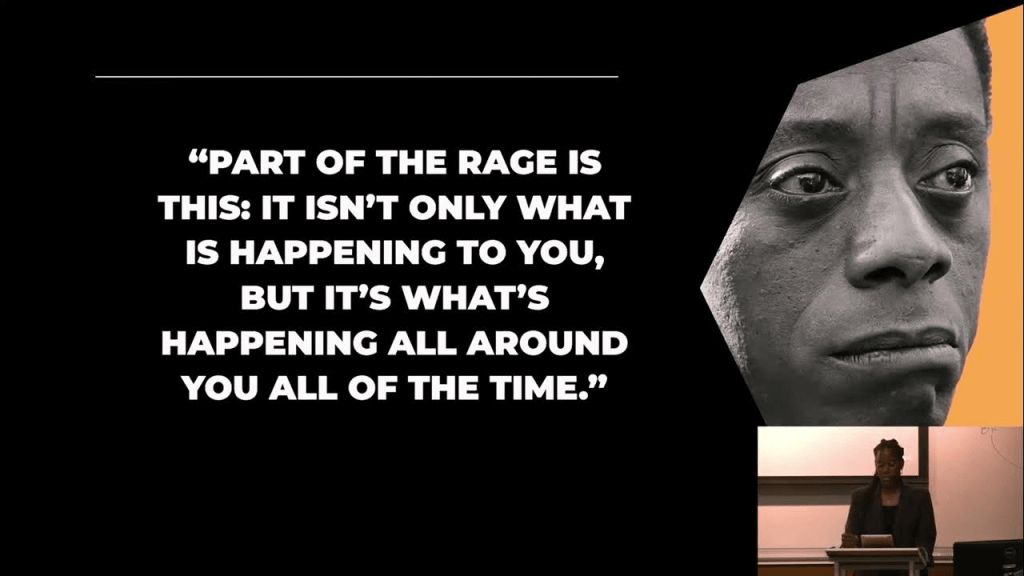
The conclusion however need not be so over-dramatic as Dylan, in his cups, could not help but be: NOTHING IMPROVES WITH AGE EXCEPT BY AGE TAKING AGENCY IN EACH INDIVIDUAL CASE. Moreover, standing on a gilded stage trying to pretend you are sexy, and passive to the gaze of men, ain’t gonna cut the mustard. And believe me, as for me I do not intend to have ‘finished joy and moan’, when Death takes me. Come in James Baldwin.
With love
Steven xxxxxxx
 Steve_Bamlett_blog
