What personal belongings do you hold most dear?
In a blog on novel called, and in some degree about, the wider implications of what we mean by Theft (see it at this link), I found myself considering associations with two different kinds of entitlement: the entitlement of ownership of things (and sometimes people) one calls one’s belongings and the entitlement of feeling that we ‘belong’ with and to the others in a group. In the blog, I expressed it thus in relation to what I called:
the deep networks that link the phrase ‘Belonging to’, as a phrase denominating the possession of something or the awareness of something being possessed (as a wife or servant can feel possessed in the novel) to the feeling of ‘belonging with’ a group that might have seem previously exclusive. How does this come about?
Nothing is more charged in this respect than a flag, for it identifies belonging to a group, and that group’s borders, or boundaries when it is an flag used in another country or legislative region by expatriates of a homeland, and its range of eligibility for ownership or membership.
The straightforward case is that of a national or regional flag flying in its designated homeland area. Nowhere was that more topical than in the wake of Brexit, when the flag of the European Community was removed from civic and national buildings that flew it formally in recognition of the dual or even multiple forms of membership of the citizens represented by those buildings – civic halls or other centres of government. Take the example of the Parliament building at Holyrood in Edinburgh before midnight on the 31st of January 2000. Flags betoken rights of belonging and a right to show and identify with them.

Every Scottish citizen might then identify, or choose to assert independence from their belonging within, the bonds of not only the Scottish Saltire above, but the Union Jack of the UK and the flag of the European Community.
Sometimes, the charge felt from these flags is heightened when they represent rights of belonging not recognised as the right of anyone by those who exclude anyone or everyone from those rights. In a sense, this is the case with Saltire, for though the UK recognises the nation within its own membership, it does not recognise its independence other than in very partial forms of matters of internal administration.
The Saltire does not share the fate of the Ukrainian national flag in Russia and those parts of the region of Ukraine, including The Crimea, as it was prior to Russian invasion and martial occupation. For Ukrainians in the Crimea, they neither may legally, in the view of the forces occupying and ruling them, own the flag as theirs nor be entitled to part of the sovereignities it claims.
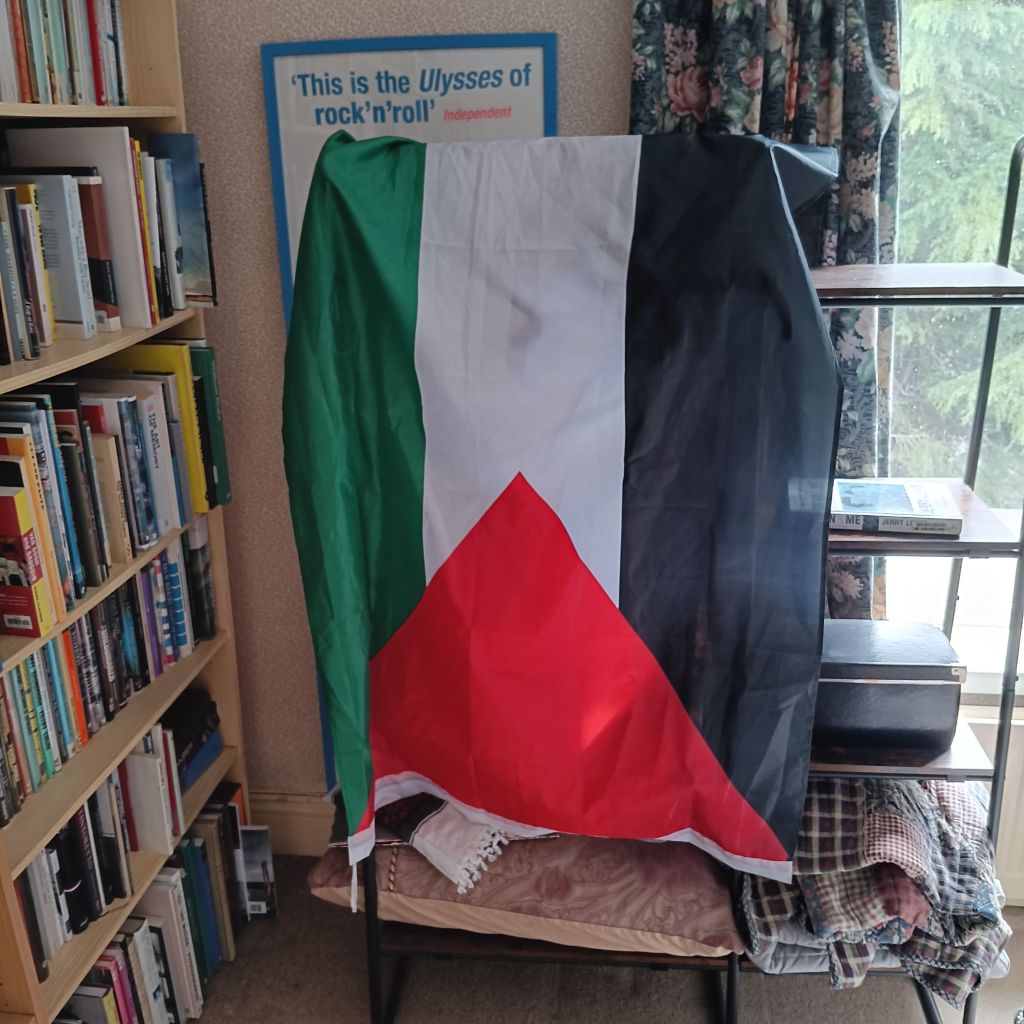
The situation is much more problematic in that domain known by some but not all as Palestine, with its distinctive flag but representing, in the eyes of much of the world, no state government that it considers valid. It is for this reason that I feel I must have, in our house [as others who are not Ukrainians feel about the flag of Ukraine] and on my apparel a representation of the flag as a symbol of my support for the rights and entitlement of a group of people’s in the world, spread by enforced diaspora and alienation of rights in the land now settled and claimed in toto as Israel.

But my aim here is now to divert to a more pressing political issue raised by the success of an arguably quasi-fascist party recently in British elections, the Reform Party, with roots in its biggest name in more clearly identifiable fascism.

The photograph above allegedly shows young Nigel Farage in close proximity with Martin Webster of the National Front. Decide for yourself
Unfortunately, the local administration I live in fell to them in the May 1 local elections this year, and they took power officially on Wednesday, 22 May 2025, at lunchtime. Their immediate goals were not to further their supposed unifying project of a focus on immigration and the effects of immigration, but on promoting the ideologies they claim.underlie their political stance natio ally – the reduction of the size and range of activity of local government, particularly in relation to what they claim to be non-local or diversity based politics. Thus, any reference to ecological goals was removed from departments dealing with the environment and support for global political effects. The department dealing with the demands made by diverse and previously excluded population became inferior for the goal of achieving community and belonging (their terms).
These are loaded words. The implementation of these goals fell was first manifested by agreeing on the first day policy dealing with the display of certain flags on public buildings. Gone were the right of local communities to show public communal.suppory, say for Palestine and The Ukraine, and the council ordered that these be removed with only three flags of belonging being enable to remain: the flag representing County Durham, the Union Jack for the UK, and the Saint George’s Cross for England.
County Hall has had three flagpole required lately for the European Community, for this was a region much bleed with local regeneration UK funding once, the Union Jack and the County flag. The morning after Brexit another flag could be raised, and some jurisdictions choose flags showing a communal alliance with sub-groups of their population, not least. Amo gst these was. Especially in June,during LGBTQ+ Pride month.
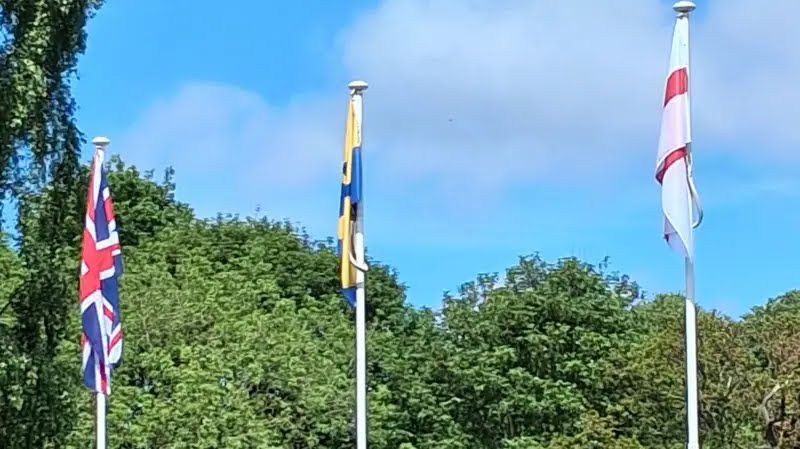
On the morning of Wednesday 22nd 2025, three flagez were flying: flags for the County [centre], the UK [left] and a version of the Gay Pride flag, precisely because it identified commitment to both equality and diversity of the membership of local populations.
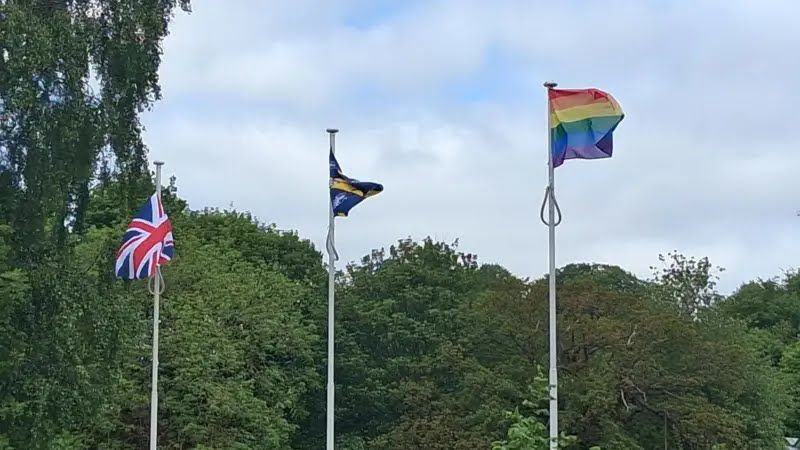
The Gay Pride Flag occurs in many versions precisely because some flags may exclude sub-populations, sometimes excluded from the ‘queer’ [as a self-chosen identity] population as a whole. The one above notably commits to a rainbow’ concept of community – the purple stripe, for instance, indicating that the community includes trans as well as his sex/gender populations. Other versions use a greater variation of colours to indicate the inclusion of black and brown communities, asexual as well as sexually self-defining groups. See a selection of these represented below:
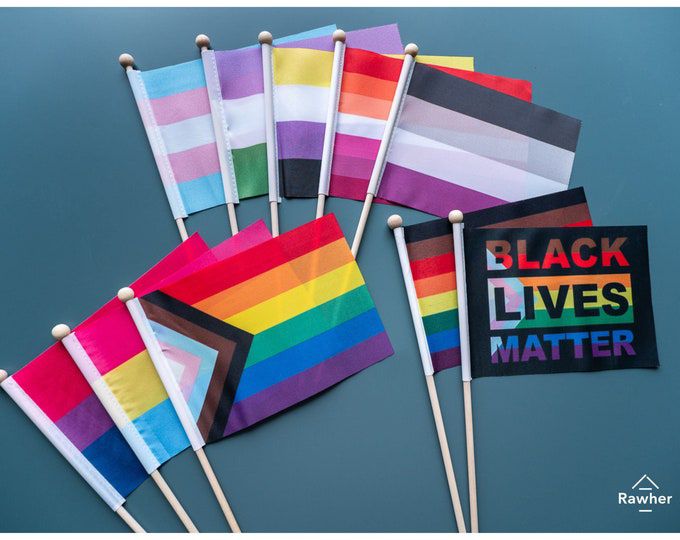
Often lambasted as over the top, not least by the best known gay male member of Reform, Darren Grimes, now the Deputy Leader of Durham County Council, the reason for the proliferation of pride type flags was to emphasise that community, and hence the right to belong, and diversity were not contradictory ideas.
However, the reason for dropping diversity and inclusion as local governmental aims by every newly elected Reform Council currently (it being the only policy headlined by Nigel Farage on election night and after) was to claim that what was called by them ‘identity politics’ was divisive and anti- communal. Nothing could have been further from the truth. Equality and Diversity initiatives were based on the recognition that communities oft defined those included as characterised only and mainly by those they excluded, not those differences of person, group, and values, they INCLUDED. This latter was always the spirit of The Equal Opportunities Act, despite the fact that the Supreme Court has now interpreted the letter of the law as demanding exclusions, in some areas.
So what happened first as Reform took over the County Council of County Dunham. They created a policy on flags, including only three specifically named ones and excluding others. Compare the flags scene above with how that translated I to acts on the afternoon. The Pride Flag has gone and, in its place, a nation’s emblem, though Saint George was not English.
The point is that people are asked and invited to feel included, they say with region, nation, and country. But in doing so, they, in order to be entitled to be included, must drop any right to diversity of appearance, behaviour, and values (at the level of language for one) from what they call local values.
They claim this does not exclude racial, cultural, or behavioural differences. It just, they continue, means that people must drop their desire to be part of anything ‘different ‘ from what they regard as the local culture and national characteristics. This is, of course, only inclusion by incorporating exclusion as inclusion’s definition in practice. It is similar to the demands made by Western communities of Semitic migrants and dramatised in The Merchant of Venice.
Yet Britain’s travelling now to the European Community on Danish boats still seem to feel entitled to boast the superiority of their culture to those they are visiting. At least, that is what I thought I saw aboard a Danish ship sailing to Amsterdam.
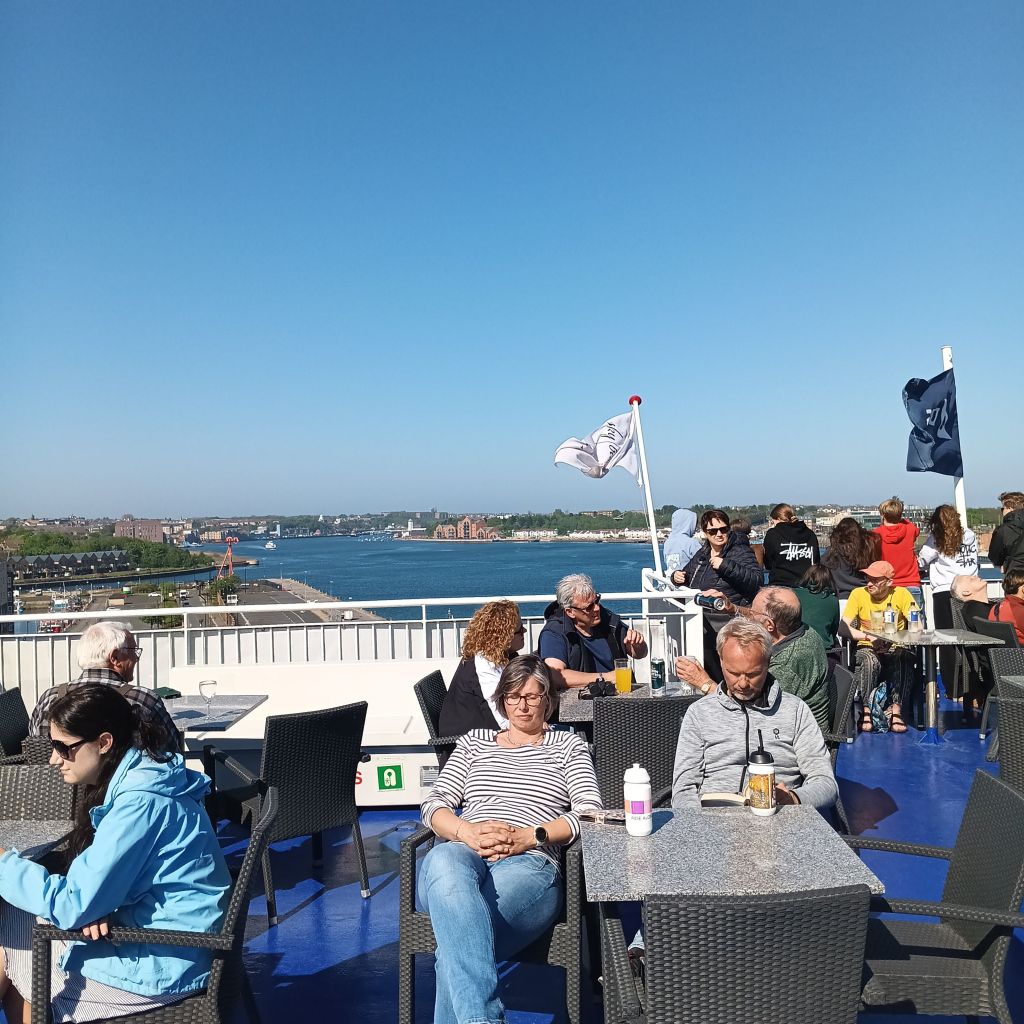
What is most dear to me in belonging – the right I think to feel included whatever my signatures of difference from others, perhaps the majority, that belong. What makes a belonging dear is that it is both mine and has a niche in the communal, just like other kinds of difference to me that I can embrace in others.
I had to write today to save me from the distress of this week.
With all my love
Steven xxxxxxx
 Steve_Bamlett_blog