


I still have not got myself ready to write on James Cahill’s wonderful novel The Violet Hour, though I have started, but today one part of it sticks out as usable in answer to this question.
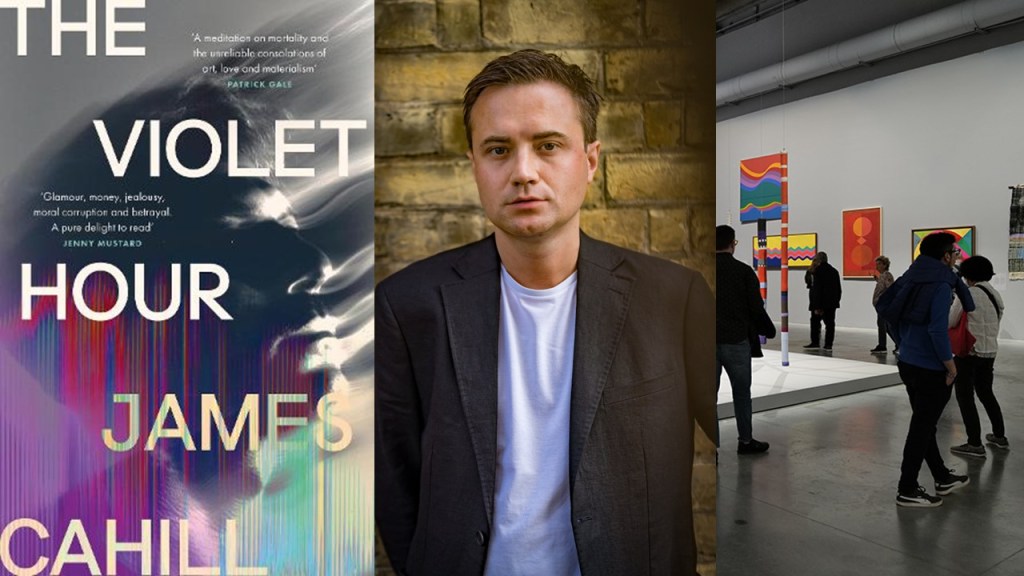
One particularly character in the novel, Fritz Schein represents what the ‘art world’ is increasingly meant to mean for people who say they love art and who look at the world in search of the ‘spectacular’. He is tasked with the organisation of the Venice Biennale and whats to make its theme for the coming year ‘spectacularity’. This is the working title I am using for that blog when it appears:
Fritz Schein lives entirely in, and on as his means of living, ‘the art world’ of ‘spectacularity’ – a world of apparently random images and appearances that eschews the privacy of inner reflection by being in love with the still surface of mirrors. When the ‘great recluse’ Thomas Haller turns up at a show Schein knows that the art world can now be known to be ‘pure spectacle’ in its essence. And for Schein it means that Thomas has been redeemed for the world that he only tries to shun. This will be his ‘lilac renaissance, his violet hour’.[1]
A world that is pure spectacle is a world besotted with ‘images’ that require little or no substance nor meaning deeper than that lent by their appearance. In the end, it can be reduced to a plain surface of contingent colour, shades, and tones that need not represent anything at all but the look they attract and satisfy, with no further questions asked. Today, I walked over the old railway bridge, now the A689 to Bishop Auckland (and thence on to Durham), where nestling below it is spread an exhibition ground.
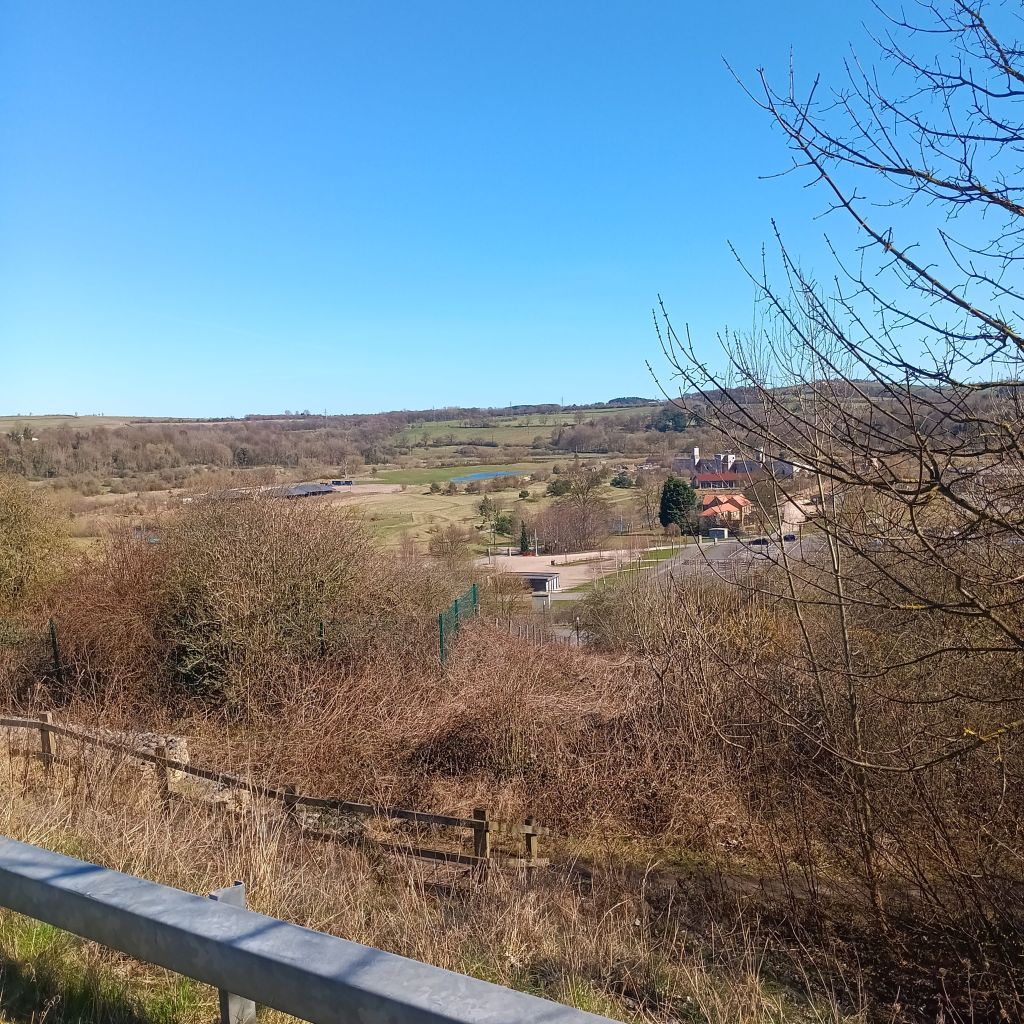
Every summer this is home to a ‘spectacle’ of history – a mix of local and national beliefs formed into a tableaux drama and played in front of a massive ranked auditorium, together with animals to pull chariots or coal tubs (for the span of history is wide) or be ridden, as it were, into bloody battle, or at least the look of it. It is called ‘Kynren’, a means of joking spectacular historical tableau into notions of family and community
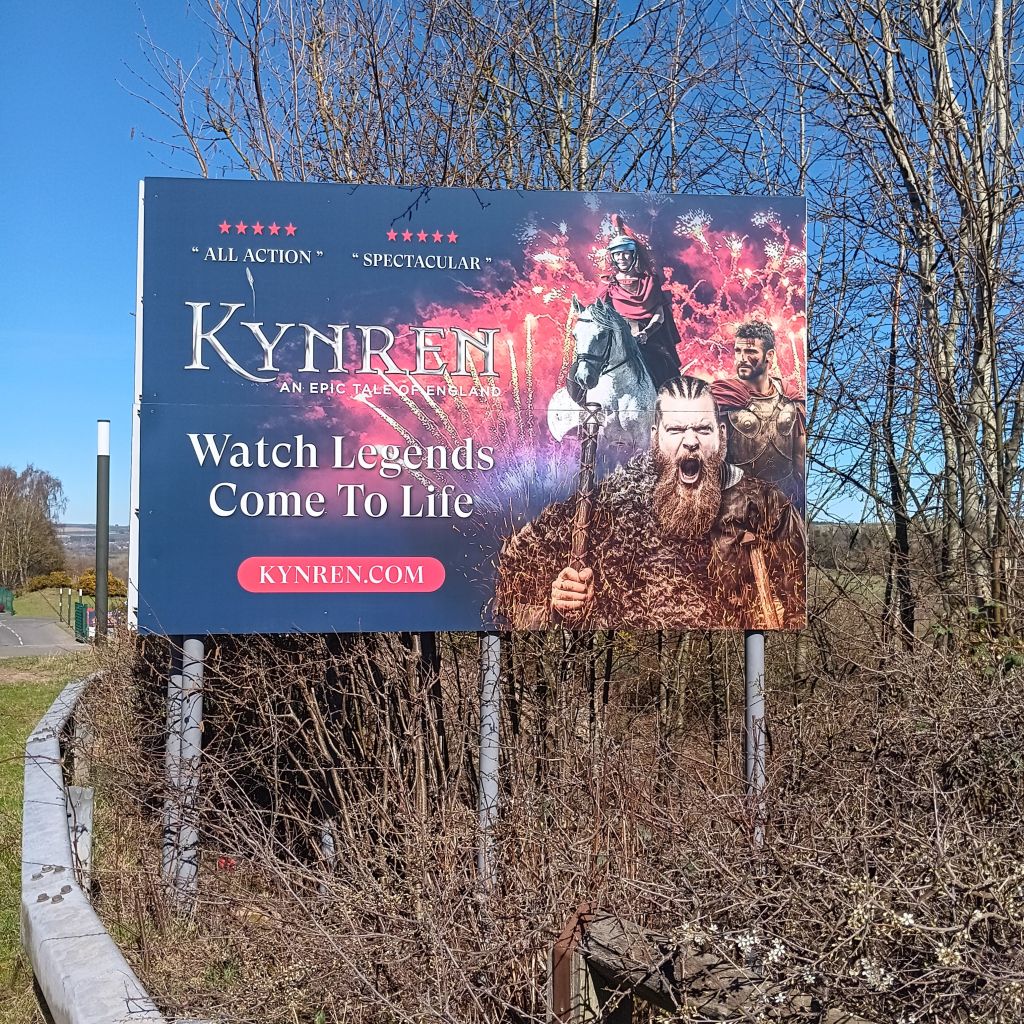
As you approach the entrance, it sells itself as an opportunity to WATCH ‘Legends Come To Life’. Legend is an interesting word because it by-passes the claim to historic truth with which it will also try to pander. But we have no illusions about this. Both legend and history are reduced to an appearance that reduces an audience merely to the role of witness to the ‘spectacle’, the playing out of stories that cannot involve them but as spectators, watchers, seers. These seers are entirely pasive and not of the sort with a privileged vision into the whole design of history as Ancient seers (Merlin, for instance, or the Druidic bards) were believed to be.
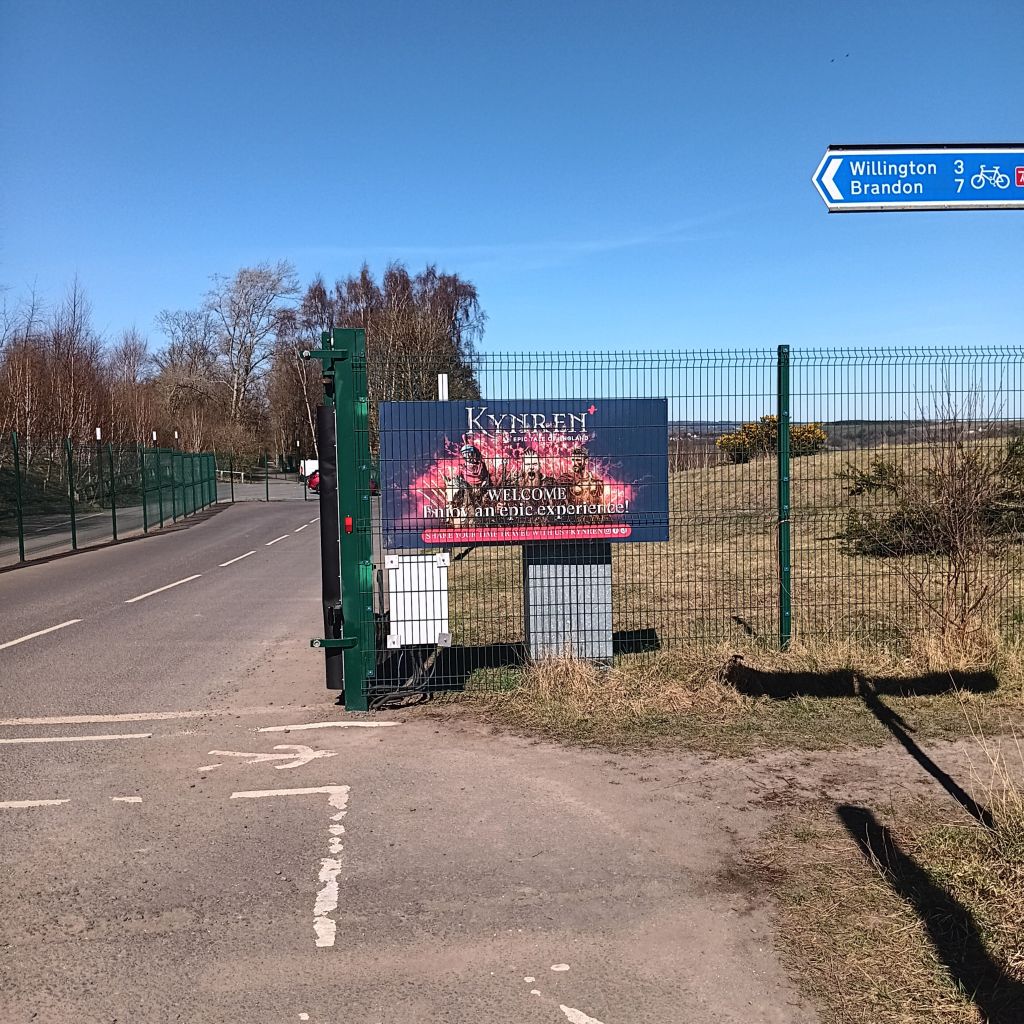
Move down the slip road to the perimeter fence, not unlike that you’d expect in both prison or holiday camps.

The next poster asks you to prepare for an ‘EPIC EXPERIENCE’.

It feels strange reading that through reinforced wire mesh.
In pre-literate times, oral poets told stories ‘over and over again’. They dealt with ancestors who seem to have the qualities of gods and the Gods of the day, like the men and women, were flawed too. But both gods, monsters, and heroes lived life on a grand scale, and the audience of the poetry in which their stories were encapsulated could imagine and inwardly visualise, and inwardly hear and inwardly taste and otherwise viscerally sense their lives. The epics they heard from The Iliad to Beowulf made them experience legendary versions of history as living because it was as if they lived within them.
The Romans liked to turn these stories into spectacle, playing them in their vast Colosseums alongside human blood sports. Tne idea was to pacify the populace by turning their into mere spectators of visually overwhelming power. Elizabeth I did the same with touring pageants.
The heritage industry does a similar thing, although the dulling of the sense of being participants of history is no longer as cynical, and hence, it is all the more effective. Every historic scene is drained of everything but what it looks like and overwhelms, when it does, merely as spectacle in which we are no longer involved, other than in watching the flow of figures and abstractions of colourful effect and affect.
Children hear stories over and over again to live them in imagination. Pre-literate civilisations do the same in order to link their being and identity to something larger. Hence, epics and legend. Literate civilisations have enabled this to occur in books that continually lend new perceptions as they are read over and over again. Dickens’ or George Eliot’s novels can have that effect. But when epic and legend are forced back into the mode of the spectacular, the work involved in reading may seem too much
Bye for now
With love
Steven xxxxxxxx
[1] James Cahill (2025: 61 – 62) The Violet Hour London, Hodder & Stoughton
 Steve_Bamlett_blog