


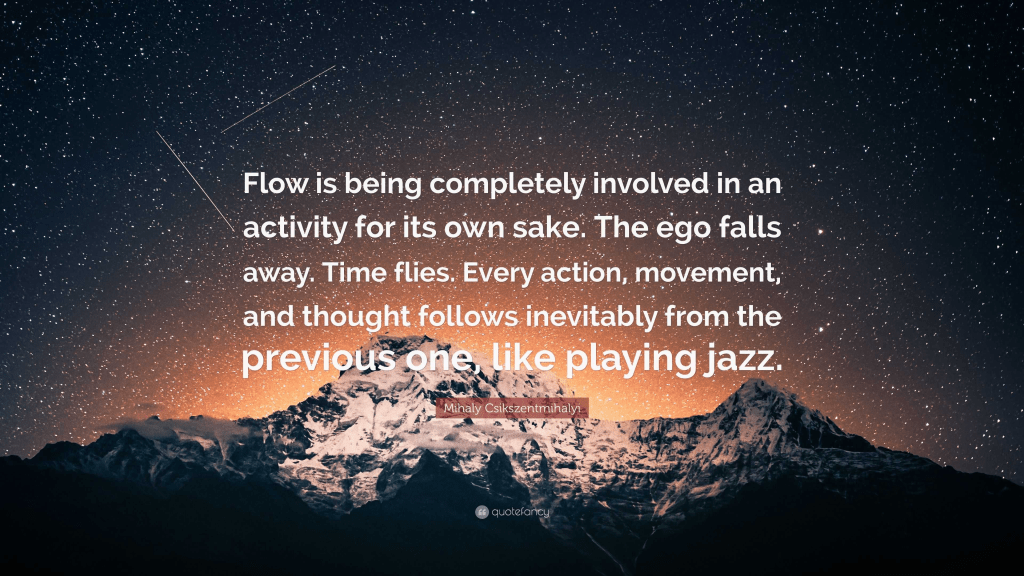
Prompt questions like this assume the virtue of loss of self, and even of coordinates of such concepts in constructs like time and space. The chief architect of the development of that virtue- into a concept he claimed his research participants themselves used called ‘FLOW’ – is Mihaly Csikzentmihalyi in bis book, pictured below:
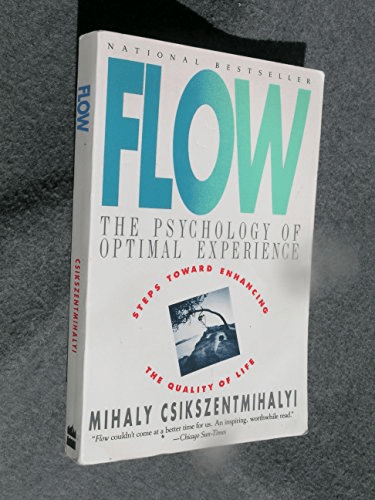
I mislead by placing a picture of Mihaly Csikzentmihalyi’ s book Flow at the head of this blog. That is because this blog does not attempt to elucidate that thinker’s concepts or the life-coaching that springs from it, but just to set some of the basic components of ‘flow’ experience against anecdotes of life as I have experienced it. It will be a shamelessly subjective statement – but what, for me, is new in that. But I do it for a reason for when I tried to enter social work teaching last I came across a head of department who complained that I had included this thinker on an introduction to psychology course. She said: ‘I have never hear of him: why should training social workers know more than I know. given all my experience and past achievements? All it does is make me uncomfortable’. There are people out there who will agree with her. Indeed this head of department consulted the counselling Head of Department who also had never heard of the thinker or his thought, It may well be that the teaching of degrees in tertary teaching establishments ought to be doomed by facts like that, though not it appears when degrees are validated by the Open University (paradoxically the institution that taught me about Csikzentmihalyi many years ago).
I hold no torch for the import of Csikzentmihalyi as a psychologist. By now, he, his work and theories, is so well known, if not in a certain English establishment purporting to teach Social Work at undergraduate level, that it has become hardened into dogma. Moreover, it belongs to a Rogerian humanist tradition in counselling that makes too much of an unexamined belief in ‘growth’ for its own sake ans validated at best only by analogies with nature, that see growth without seeing the equal import of understanding, accounting for and welcoming the wisdom of gradual inhibition and reversal of growth processes – of life principle that are independent of death principles.
Nevertheless, Csiksentmihalyi does offer is images to play with conceptually that do help us understand why humans work best when constructs like self, time, and even space become things that become secondary to us in the joy and excrement – the flow – of our engagement with doing and making something that matters to is. When Rogers used the word flow;, he used it to imagine the fluid character of onward movement that could also picture the flow of organic growth of a tree or bud as a dynamic process, that for him was the real meaning of biology as a theory of becoming, which personal psychology only shadows:
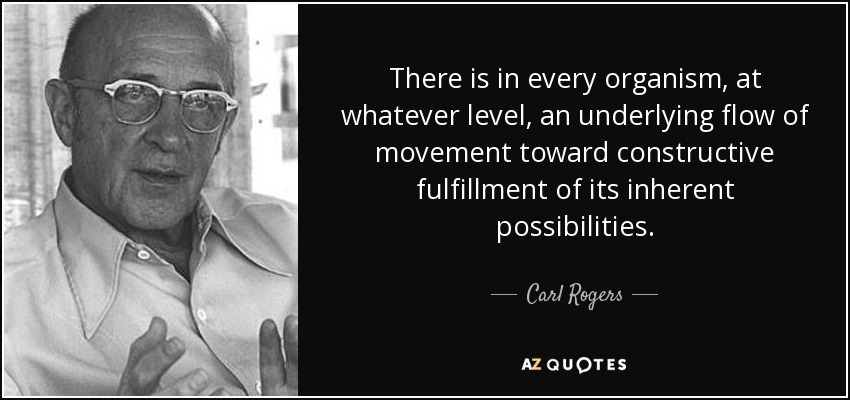
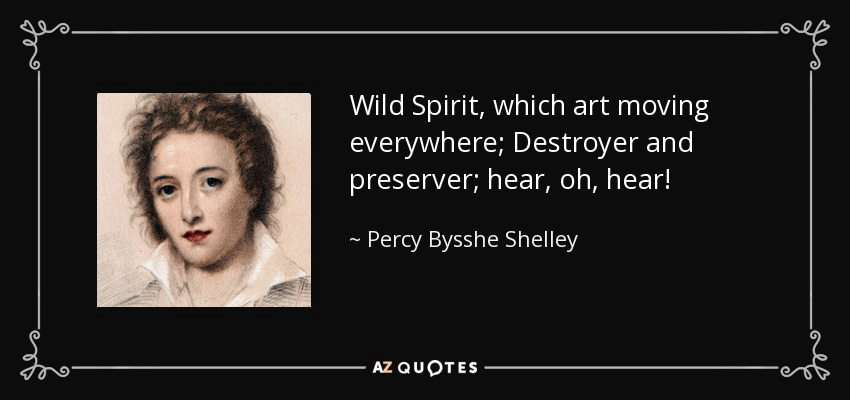
That ‘underlying flow of movement’ is not confined by the movement of fluids – it can’t be if it occurs at every level of an organism’s ‘becoming’ through growth – and turned into a notion of human fulfillment it includes a the kind of normative ethics that defines words like ‘constructive’ and defines them against a notion of destructive forces in life. But it is hopelessly over-optimistic. Even Romantic poets felt that the spirit of motion was one that had to embrace the destructive as well as creative glow – best seen in Shelley of course:
Hence note that there is a fundamental error in the tendency to imagine flow as an eternally upward and onward process that it becomes when we visualise it in graphs, as in those I use below. I am sure I remember Csikzentmihalyi as more nuanced – but maybe not (and I no longer want to reread him) – but there is a problem in humanist psychology that renders it a version of that other human science – economics – which too became obsessed with models of unrelenting growth, however dangerous in reality these models are – for often the destructive grows much larger and stronger than the creative (as in our current ecological plight). Graphs favour straight or perfectly curved lines and hence my descriptions of them will try to undermine that tendency in their graphics.
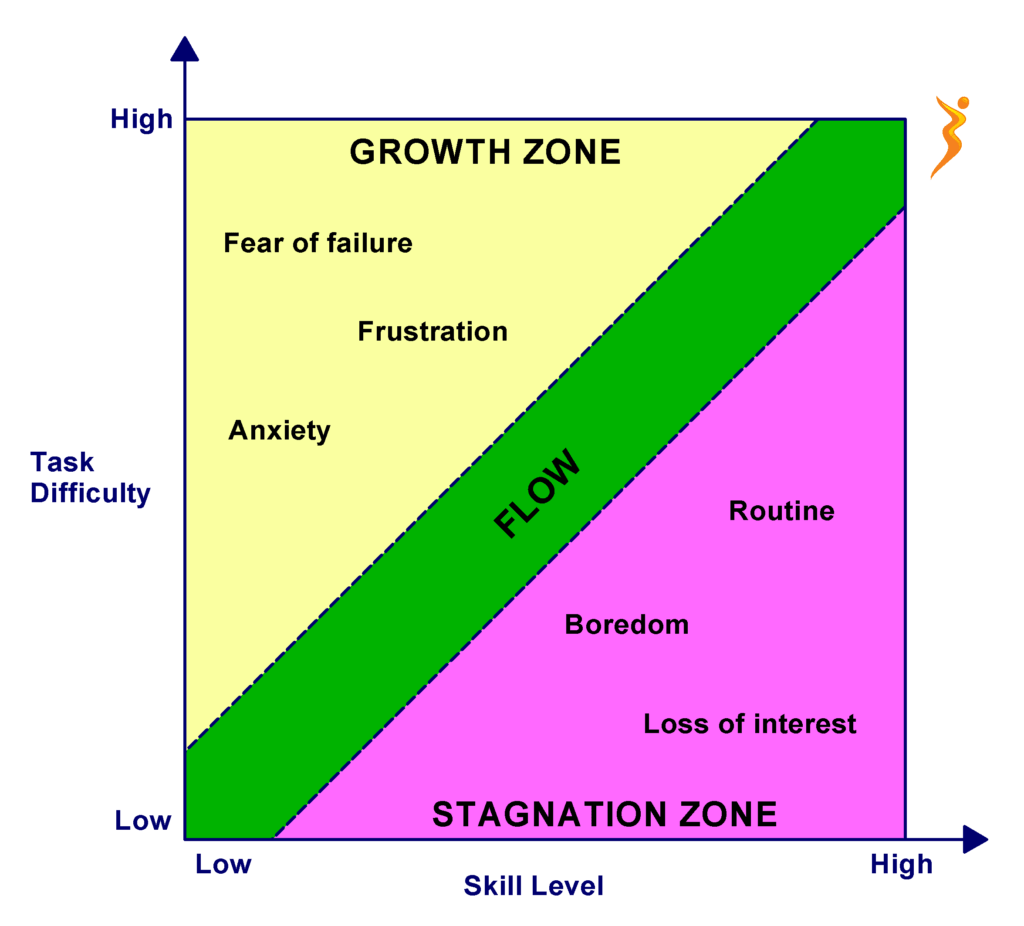
The common representation of Flow experience above imagines a river flowing between banks – each of a different nature of dangerous lands. These lands represent effects of learning. When skills increase from low to high over time, the gross area of the purple lands known as the stagnation zone increase in volume, Like all desserts, the stagnation of the well-skilled has its own symptoms of danger – the boredom over-used to life of spiritual discipline – monks used to call acedia, where skill levels get lost because, being over-learned, they have become routine. Such domains constrain flow, although they are contingent on flow which also requires askill level that rises.
When the tasks we take on in life rise in difficulty so does the volume of the chill tundra we call the ‘Growth Zone’ increase in area. Here we get overwhelmed by the fear of failure and the fear of deficiency in capacity to increase skills to meet the difficulties faced. It a world of frustration and potentially maximal anxiety. Again, this domain constrains flow, although it too is contingent on flow which also requires that anxiety be countered by learning and the experience of proficiency.
The river of FLOW needs those banks to keep it moving onward p it would not move where it not to know that it is possible to spill over into a lake on each of its banks, and in some extreme cases on both simultaneously, in that we are, in this parlous state, stuck in simultaneously ever-motivating anxiety and the slowing down of depression> there is a better representation in the graphic below where both banks between which the river flows are of a similar look – representing the negation of movement they have in common. And yet the nuance of the graphic is its representation of flow as continually cycling, even spiraling, against those banks of negation and sometime occupying them for a space before moving on.
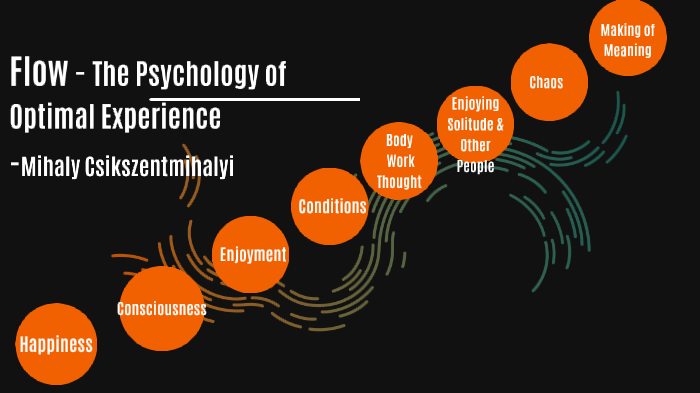
This is nearer to the meaningful nuance of the thinker Csikzentmihalyi was before he became primarily an entrepreneur (so is the USA!) . Flow would not be flow if it did not touch on both the dangers of acedia or generalised anxiety, even embrace ‘Chaos’ before to became creative of meaning, Because when we make meaning we o longer demand mere growth but sustainable growth understood as a communal goal not an individual one.
When I think back to that attempt at teaching again, I mourn social work. Contempt of learning is contempt of the people social work should be serving – a narrowing of their expectations in a world that has narrowed them enough.See the blog at this link to know why the preparation for an onslaught on benefits by a Labour Government will soon matter for linked reasons.
All for today
With Love,
Steven xxxxxxxxxxxxxxxxxx
 Steve_Bamlett_blog