


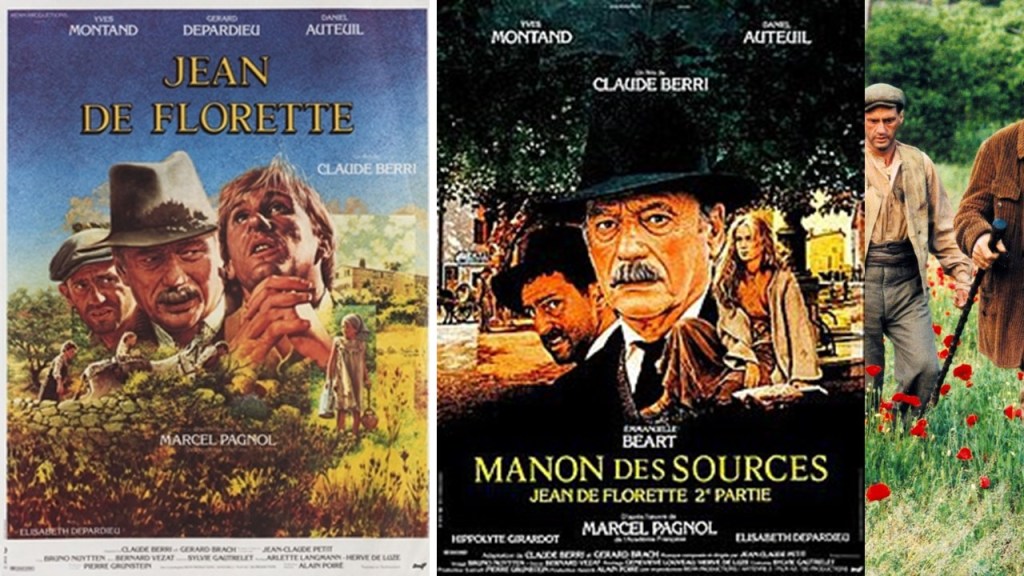
The problem with this film is that its central female character, Manon, is a kind of symbol and not a woman. The woman who I think matters in it is not her but Florette, whose life and death of repression and flight from the shame that births her son, Jean, and who generates the film’s narratives but is never ever seen. Otherwise, the whole is a study of combined sexual, political, and competitive financial obsession, often in extremely mixed forms but normally in men or driven by men. Depardieu plays his own obsessions, forever compensating for his congenital disability, as Jean, Florette’s son, with an entirely beautiful and vivacious innocence (symbolised by his scheme of inventing a life-system to breed huge rabbits for sale as meat). His daughter, Manon, becomes the symbol of that innocence detached from any apparent obsession until she learns that her father death was not an accident. Her obsession is the other half of the film’s study of obsession – obsessive attachment by her and to her father, without awareness that his themes at best as foolhardy.
But the scenes that stick are those of Yves Montand’s scheming humour in the thirst for turning land and flora into cash and the obsession that leads his nephew, played brilliantly by Auteuil, to sew ribbons stolen from Manon, once she is a grown shepherdess, into his nipples. It is a symbol of passion, red as the carnations that motivate profits but tinted by blood into incarnation through attachment of beauty’s relics by needle-craft in flesh. I could watch it over and over again, though the sixth and last time was many years ago. Is it time to watch again?
I don’t want to discuss it though. Just urge you watch it.
With love
Steven xxxxxxxxxxxxxxxxx
 Steve_Bamlett_blog