



Imagining yourself giving advice to your own teenage self is a thing more strange than we like to think. It is one of those moments when we see ourself as ‘double’, having two characters in one moment that interact with each other, sometimes in a contest of power and / or authority. There is because of that power and authority dimension something a little more than ‘self-talk’ involved in this imagination. When I studied at University College London, I was fortunate to be taught the novels of Robert Louis Stevenson by Karl Miller, whilst he was still in the grip of his book of 1985 Doubles. His study of duality covered doubles that were sometimes to be considered as two people in significant dialogue or one person conversing with self as if two people. In each case there is a contest of attitude – whether of father and son, editor and diarist (as in Hogg’s Confessions of A Justified Sinner) or creator and their ‘creation’ (as in Mary Shelley’s Frankenstein and Jekyll and Hyde). I remember a seminar where Miller spoke of the relation of the ‘malevolent young man’,Hyde, and the genial and staid Jekyll that their relationship (though they will turn out to be the same person) was seen as if like that between son and father in part. In his book, Miller writes that ‘duality’ is a mode of thinking and creating dialogue that between two component part or roles within that dialogue. The parts may ‘compete, resemble or repel one another’, may be ‘partners or enemies’ but that ‘in most circumstances, whether of conflict or accord, part and counterpart are both perceived to be true’. [1]
Taken all in all, Miller’s point is that duality is a way of seeing two interpretations of the same thing to be simultaneously true by embodying them in two personae at the same time. The double or doppelgänger tradition allows this to be expressed in those queer stories where the two persons in dialogue (of accord or conflict) can be taken as two separate persons or characters sometimes but at other times as merely one person or character . Ambiguity of thought is important and lies at the basis of how older people look back at younger selves and wonder how to instruct this other, or where parents use their children to mount the conflict between innocence and experience, engagement in experience of the following of precept or other prescribed law, regulation or custom. The father does it whilst knowing he would not follow it himself if he was his son.
Our prompt question assumes a difference in selves that might be formed of age and experience in interaction with youth and innocence. It usually imagines itself as the enactment of what is sage and wise coming from an authority (from more experienced citizen and ephebe in the last example I will look at from Wallace Stevens).The experienced Spartan citizen would not brook challenge from an ephebe, as some parents will not from their children) but nevertheless the sense that each point of voew is valid and true in some relative respect is necessary to remember in these interactions.
So how do we, in this latter age, imagine this dialogue of father and child, elder and younger, present self ans imagined past self. If you search the internet, you will find plentiful examples of this scenario. I have chosen to consider Donald Friedman’s web-page in the digital site ‘Modern Teen’. Friedman offers to a ‘a teenager looking for advice to better’ themselves ’10 valuable pieces of advice’. The ten pieces are as follows, citing their titles only, although I find it interesting that Friedman gives the caveat that his advice is from ‘someone who was very recently in their teenage years and knows the modern struggles of being a teen’.

- 1. Take Care of Your Body
- 2. Don’t Care About What Others Think of You
- 3. Get Uncomfortable
- 4. Make Good Friends, Not More Friends
- 5. Try To Understand Both Sides
- 6. Formulate Your Own Opinion on Things
- 7. Learn About Finance Early
- 8. Don’t Compare Yourself to Others
- 9. Listen to Understand
- 10. Always Ask Why
Conclusion: I think all of this advice really comes down to being self aware. The more you know about yourself, the easier it will be to make decisions, friends, career choices, and more!
Whether Friedman is still a ‘teen’ at heart I don’t know but the role he takes inevitably takes on the authority of other roles – of mentor, teacher, counsellor or parent and bases itself bnot on the proximity to teenage it boasts but to the longer perspective of later experience, knowledge and acquired values. This is not to denigrate what is said. it is to insist that this pose in Friedman is no less the playing of a role than in the case of adults, who sometimes forget that they are enacting a conflict (even if the relationship is in apparent accord. Let’s take a literary example – Polonius’s advice to his son, Laertes, when the latter leaves home for university:

POLONIUS
Yet here, Laertes? Aboard, aboard, for shame!
The wind sits in the shoulder of your sail,
And you are stayed for. There, my blessing with thee.
And these few precepts in thy memory
Look thou character. Give thy thoughts no tongue,
Nor any unproportioned thought his act.
Be thou familiar, but by no means vulgar.
Those friends thou hast, and their adoption tried,
Grapple them unto thy soul with hoops of steel,
But do not dull thy palm with entertainment
Of each new-hatched, unfledged courage. Beware
Of entrance to a quarrel, but, being in,
Bear ’t that th’ opposèd may beware of thee.
Give every man thy ear, but few thy voice.
Take each man’s censure, but reserve thy judgment.
Costly thy habit as thy purse can buy,
But not expressed in fancy (rich, not gaudy),
For the apparel oft proclaims the man,
And they in France of the best rank and station
Are of a most select and generous chief in that.
Neither a borrower nor a lender be,
For loan oft loses both itself and friend,
And borrowing dulls the edge of husbandry.
This above all: to thine own self be true,
And it must follow, as the night the day,
Thou canst not then be false to any man.
Farewell. My blessing season this in thee.
Let’s try reading that again with Frieman’s tips mapped onto it:
| Polonius in Hamlet | Donald Friedman |
| POLONIUS There, my blessing with thee. And these few precepts in thy memory Look thou character. Give thy thoughts no tongue, Nor any unproportioned thought his act. (5, 6, 9) Be thou familiar, but by no means vulgar. (2, 8, 10) Those friends thou hast, and their adoption tried, Grapple them unto thy soul with hoops of steel, But do not dull thy palm with entertainment Of each new-hatched, unfledged courage. (4, 10) Beware Of entrance to a quarrel, but, being in, Bear ’t that th’ opposèd may beware of thee. (2, 5, 9) Give every man thy ear, but few thy voice. Take each man’s censure, but reserve thy judgment. (5, 6, 8, 9) Costly thy habit as thy purse can buy, But not expressed in fancy (rich, not gaudy), For the apparel oft proclaims the man, And they in France of the best rank and station Are of a most select and generous chief in that. (10, 4) Neither a borrower nor a lender be, For loan oft loses both itself and friend, And borrowing dulls the edge of husbandry. (7, 3, 10) This above all: to thine own self be true, And it must follow, as the night the day, Thou canst not then be false to any man. (2, 4, 6, 8, 10) & Friedman’s Conclusion | 1. Take Care of Your Body 2. Don’t Care About What Others Think of You 3. Get Uncomfortable 4. Make Good Friends, Not More Friends 5. Try To Understand Both Sides 6. Formulate Your Own Opinion on Things 7. Learn About Finance Early 8. Don’t Compare Yourself to Others 9. Listen to Understand 10. Always Ask Why Conclusion: I think all of this advice really comes down to being self aware. The more you know about yourself, the easier it will be to make decisions, friends, career choices, and more! |
It is interesting to do this, but allows us to reach few conclusions except that I aim towards, which is that age and experience really want to imprint on those they counsel, their own idealised image of how they once should have acted not the pattern of their actual behaviour at the time. Both Polonius and Friedman urge self-awareness on their younger audience, as if that were a straightforward thing to do. Yet if to be your true self is to character your fathewr’s ‘few precepts’ or Friedman’s ten tips are you really acting autonomously as yourself or as prescribed by an external authority that claims to be ‘thine own self’ as Polonius does (and fathers oft do this) or offering a model for self-internalization as Friedman does.
When authority and power instruct the learner, they urge on them the model of their own authority and power and put the cost of its realisation at obedience to authoritative commands – even if called ‘precepts’ or ‘tips’. When Wall;ace Steven enacts a trainer addressing his ‘ephebe’ in his Notes towards A Supreme Fiction, he does entirely the opposite of this. He claims that ‘intervention’ which is the words of the poem is precisely not a truth to follow but an ‘invention’ or fiction:
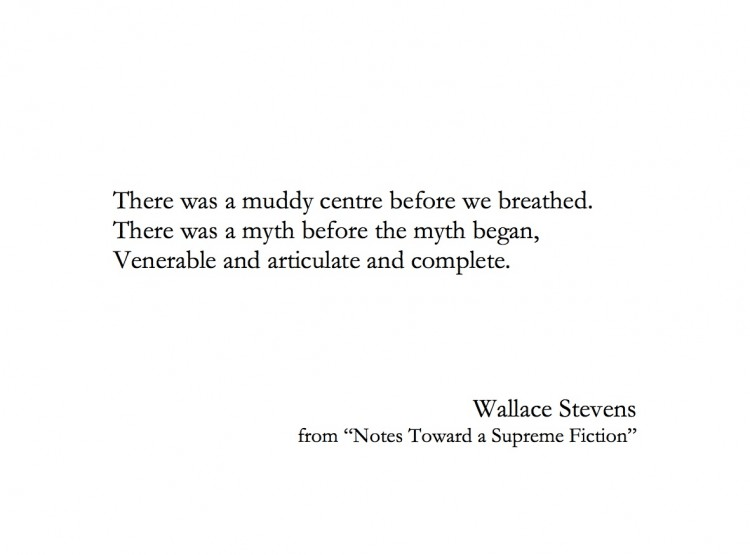
Begin, ephebe, by perceiving the idea
Of this invention, this invented world,
The inconceivable idea of the sun.

You must become an ignorant man again
And see the sun again with an ignorant eye
And see it clearly in the idea of it.

Never suppose an inventing mind as source
Of this idea nor for that mind compose
A voluminous master folded in his fire.

How clean the sun when seen in its idea,
Washed in the remotest cleanliness of a heaven
That has expelled us and our images …
I understand that Stevens is not an easy poet, but that is because he refuses to offer ‘precepts’ or ‘tips’, statements of supposed truths that will guide the ‘ignorant’ in life. Indeed, the poem asserts it is better to know your ignorance and validate it if you wish to learn rather than copy some authority or ‘source’. For there is no ‘inventing mind as source / Of this idea’ . And that mind will never be the ‘voluminous master folded in his fire’ you thought them to be but as struggling a self as you enacting a fictional role. I sometimes think of Stevens as miming the meaning of Pirandello’s play title ‘Six Characters In Search of an Author‘. Polonius believes that Laertes will gain ‘character’ by following precepts, Friedman believes modern teens do so by help of prescriptive tips. Pirandello and Stevens believe that you will only gain character by constructing it in the process of enacting what self you can be. There is no authority for that character as there is no serious author to pre-construct or predetermine your character.
Well, itt is a thought anyway. But young Stevie – no tips from me, the sage and serious Bambi.
With love
Steven xxxxxxxxxx
__________________________________________
[1] Karl Miller (1985: 21) Doubles: Studies in Literary History Oxford, Oxford University Press.
 Steve_Bamlett_blog