


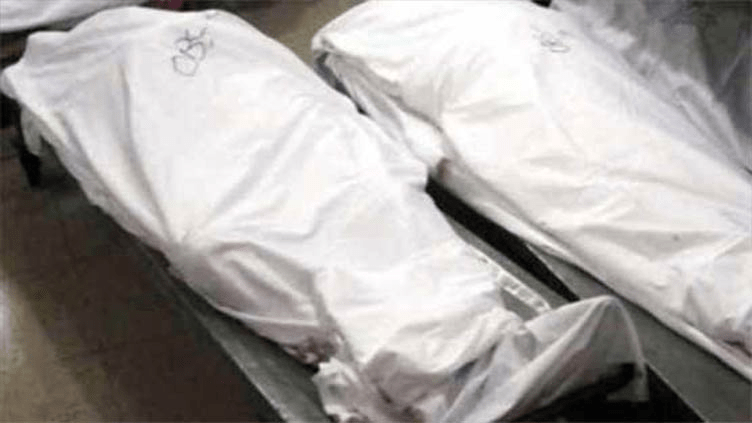
'No two corpses are the same', the surgeon,
In forensic and appropriate blank
Tone, as blank as this verse reversing on
Itself. 'They are alike only when sank
In sordid life'.
                            Yet only as a corpse
Is a body named a 'like', a word like
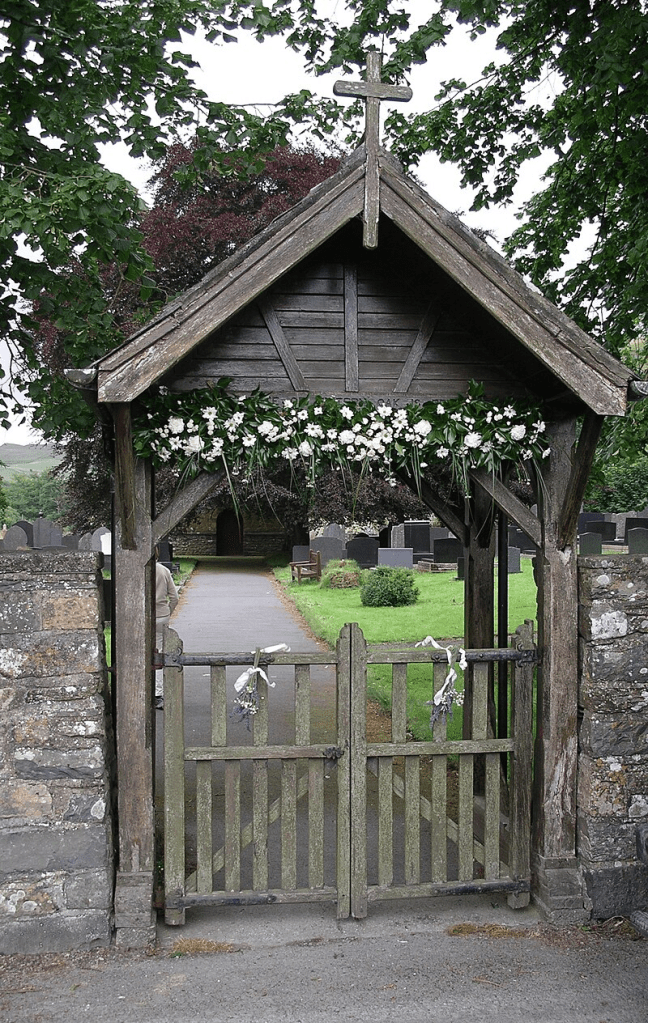
That 'lych' that names the gated part of t'porch
On which dead bodies rest, or that old Tyke
Word that provides the name of the Lyke Wake
Walk,on the which the dead were were held aloft
On tired shoulders, which bear for the sole sake
Of that dead one, whose singleness was the soft
Result of dying every day in
Ways that were their own alone in their life
While it lasted.
                What causes the chagrin
I feel, and makes the word 'like' like a knife
Or other weapon to me. Just listen
To people on the streets. as people say: 'it's like this,
Like!'. Words of indetermination glisten
As if a word that it's easy to miss
Nevertheless, intended the whole truth
That can be told and demanded no more
Elaboration. Hence every youth
Has it on their lips. Do not, though, abhor
The sayer, just the said, like .... It's a word
With no meaning divorced from the body
Of which it was once the name. I heard
Some say 'like's not a word that is shoddy
But raised in worth as basis of the use
Of simile to express the likeness
Of two things'. But,yet, similes are loose
Forms of word. A poem I know that's most a mess
Begins thus:
               My luve's like a red, red rose,
That's newly sprung in June:
                                                          But is that
Really a rose. Similes I suppose
Never fit the thing we see. Metaphor
Does it better. Take great William Blake's
Sick Rose. It makes us see that rose, its bed
Of dark secret love to show age forsakes
The beauty sprung in June:  roses are led
 To winter's tattered blight upon them.
Robert Burns sings: 'luve's like the melodie
That's sweetly play'd in tune' but yet again
Many an old man fiddles readily
With youth's innocent pay-off. All because
Youth falls for words like 'like'. There is nothing
To justify not banning that word. Jaws
Will find another word to mouth or sing.

Yet could I ban any word at all. No.
It would make me sick. And besides the Lych
Gate waits for all of us. Let us not wait
Till we feel our own still corpse-hood itch.
'Like' my own body is and so don't wait
To see it banned by pure lexical hate.
NOTES:
- The etymology of like:
like (adj.)
“having the same characteristics or qualities” (as another), c. 1200, lik, shortening of y-lik, from Old English gelic “like, similar,” from Proto-Germanic *(ga)leika- “having the same form,” literally “with a corresponding body” (source also of Old Saxon gilik, Dutch gelijk, German gleich, Gothic galeiks “equally, like”).
This is a compound of *ga- “with, together” + the Germanic root *lik- “body, form; like, same” (source also of Old English lic “body, corpse;” see lich). Etymologically analogous to Latin conform. The modern form (rather than *lich) may be from a northern descendant of the Old English word’s Norse cognate, glikr.
Formerly with comparative liker and superlative likest (still in use 17c.). The preposition (c. 1200) and the adverb (c. 1300) both are from the adjective. As a conjunction, first attested early 16c., short for like as, like unto. Colloquial like to “almost, nearly” (“I like to died laughing”) is 17c., short for was like to/had like to “come near to, was likely.” To feel like “want to, be in the mood for” is 1863, originally American English. Proverbial pattern as in like father, like son is recorded from 1540s.
Meaning “such as” (“A Town Like Alice”) attested from 1886. The word has been used as a postponed filler (“going really fast, like”) from 1778; as a presumed emphatic (“going, like, really fast”) from 1950, originally in counterculture slang and bop talk. Phrase more like it “closer to what is desired” is from 1888. [1]
2: A lychgate:
The word lych survived into modern English from the Old English or Saxon word for “corpse”, mostly as an adjective in particular phrases or names, such as lych bell, the hand-bell rung before a corpse; lych way, the path along which a corpse was carried to burial (this in some districts was supposed to establish a right-of-way); lych owl, the screech owl, because its cry was a portent of death; and lyke-wake, a night watch over a corpse (see Lyke-Wake Dirge).
It is cognate with the modern German Leiche, Dutch lijk and lichaam, West Frisian lyk and Swedish lik, all meaning “corpse”.
Lychgate in Swedish is called stiglucka, literally “step hatch”. The explanation is that the gate was split horizontally so that you could step over the lower part without having to open it. Therefore, one can also guess another meaning of lych (lyke, luke, lucka “hatch, gap”) from the Scandinavian languages. [2]
[3] The Lyke Wake Walk
Tyke is a word for a Yorkshire-person – from one tyke (me!)
The Lyke Wake Walk is a 40-mile (64 km) challenge walk across the highest and widest part of the North York Moors National Park in North Yorkshire, England. The route remembers the many corpses carried over the moors on old coffin routes and the ancient burial mounds encountered on the way; the name derives from a lyke, the corpse and the wake – watching over the deceased. Its associated club has a social structure, culture and rituals based on the walk and Christian and folklore traditions from the area through which it passes.[3]

View west from the Cleveland Way at Live Moor (near Heathwaite, North Yorkshire, England). James F. Carter – Own work: Permission details: CC-By-SA-2.5
[4] Robert Burns Red, Red Rose. Available with background in Wikipedia [4] By the way, I love Burns but not this poem.
[5] William Blake’s The Sick Rose

________________________________________________
[1] From: https://www.etymonline.com/word/like
[2] From: https://en.wikipedia.org/wiki/Lychgate
[3] From: https://en.wikipedia.org/wiki/Lyke_Wake_Walk
 Steve_Bamlett_blog