


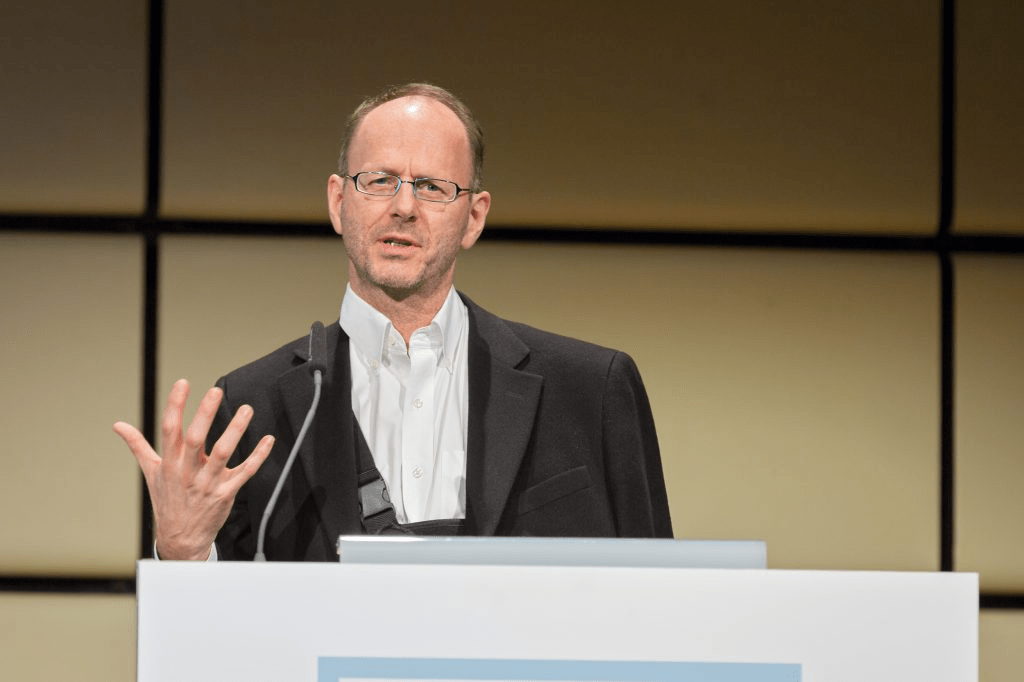
W. Tecumseh Fitch, a cognitive biologist (and, of course, an animal) from the University of Vienna, giving his keynote speech at the 2017 International Convention of Psychological Science in Vienna: ‘we really need to … recognize a very simple biological fact: It’s a truism, but people are animals, too.” Available at: https://www.psychologicalscience.org/observer/humans-are-animals-too-a-whirlwind-tour-of-cognitive-biology
Forget precedence and favour. Ask a human what their favourite animal is and they are likely to name a species of animal or go the whole hog (to abuse an animal for the sake of a human phrase) and pretend this is a question about a specific example of an animal and name their pet dog or cat. Humans like to assert that they have a favourite animal in order to deny implicitly that that they are animals too . Perhaps this assertion of right to name other animals, the gift God gives to Adam in that superb fiction Paradise Lost, is the main thing that stops us seeing that is we favour ourselves as animals far too much. For many years, the reason given for this is that human philosophy has given precedence a set of ideas about what human being is that are termed ‘exclusivist’, in a article by Alexandra Michel, ‘Humans Are Animals, Too: A Whirlwind Tour of Cognitive Biology‘ written for The Association For Psychological Science. In the history of human thought exclusivists included, quoting Fitch again, ‘philosophers like Aristotle and Descartes arguing that humans are the only animals capable of higher-order cognition such as rational thought and language’ but against these has been a parallel development of thinking Fitch calls inclusivists, naming ‘equally distinguished thinkers such as Voltaire, Charles Darwin, and David Hume arguing that it is self-evident “that beasts are endow’d with thought and reason as well as man”’.
In fact the main difference of human animals from others lies in the belief that only human animals are adapted to communicate their cognition with each other Fitch suggests (naming with Naom Chomsky the capacity for syntax as possibly exclusive to humans among its analog animals – the apes). The latter is a belief that too is sometimes condemned as exclusivist in its understanding of what communication is and its fundamental components, but though all animals may be able to make ‘choices’ of what they favour and what they don’t, and even rank them hierarchically from most to least favourite, only humans like to ask themselves to communicate to each other their choice of:
What is your favourite animal?
In asking that question, we all become Adam in the garden of Eden. and the Book of Genesis in the Bible is even more clipped and exclusivist than Milton, as in verses 18 – 20 of Chapter 2:
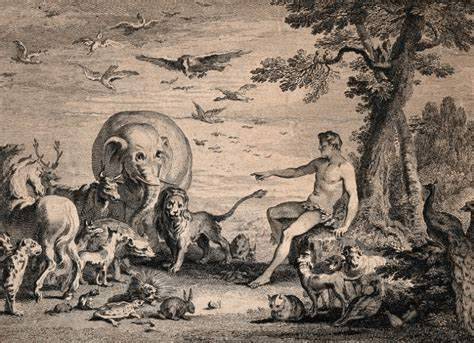
18 And the LORD God said, It is not good that the man should be alone; I will make him an help meet for him. 19 And out of the ground the LORD God formed every beast of the field, and every fowl of the air; and brought them unto Adam to see what he would call them: and whatsoever Adam called every living creature, that was the name thereof. 20 And Adam gave names to all cattle, and to the fowl of the air, and to every beast of the field; but for Adam there was not found an help meet for him.
Whilst Adam does no explicit ranking of the animals here, though suspiciously he starts with animals most easily exploited by humans later in history (‘cattle’ rather than ‘beasts’), the point is that God explicitly makes it clear that no animal can be his ”help meet for for him’. Let that favoured thing be another human – even if a ‘woman’, fit to ‘help’ but not take precedence. In Genesis then animals from the first are excluded from the very nature of being human.
But lest us return to cognitive biology. Choice is a complex operation of thought, however much it depends on bodily sensation, and all animals make choices, just as they perform other tasks thought to constitute thinking, or cognition to continue with the jargon. Fitch makes the point, as I refered to earlier anout human distinctness, or a possible case for such, thus:
Along with tool use, humans share many cognitive abilities with other species, including the formation of memories, categories, basic emotions such as anger, planning and goal-setting, and rule learning. These kinds of basic nonverbal concepts likely predicated language by many millions of years of evolution. Unlike tool use, language appears to be a trait that only humans possess. However, most of the component parts of language are shared with other species, Fitch said.
“The main difference that we have from other species is not that we have something to think about, but that we can communicate what we think about,” he said.
Although some chimps and bonobos have learned to sign or communicate with a keyboard, none have ever learned to say “hello” or to sing “Happy Birthday.” This is not because chimps aren’t smart or aren’t able to imitate, but because they have a very limited ability to control their vocalizations and mimic sounds from their environments.
Hence our WordPress prompt continues in a grand tradition of exclusivism in asking us to name our choice of favoured animal and elaborate on that choice – with reasons or other justifying extensions of our meaning. We are demonstrating our main difference from animals; ‘not that we have something to think about, but that we can communicate what we think about’. We can rank the animals and we can justify this ranking, without even having to admit that we humans are the animals we favour most, because whatever we believe if probed, our use of language makes the assumption that animals are ;other’ than humans – some ‘humans’ at least, for we like to describe people we do not like as ‘animal’, ‘feral’ or ‘inhuman’.
Since I keep reminding myself that humans are animals, I know that there are other reasons I will not nominate humans as my favourite animal. Most clearly that humans choose the path of power over other animals rather than one of communicative appreciation. we like to ‘tame’ animals in ways that make them conducive to our survival as a supply of goods, including their bodies as ‘meat’ or in back-breaking service to other human needs. Some humans go all the way to cruelty to implement and demonstrate their power, others condemn cruelty but not the distinction that makes it possible, as it does ven to humans who refuse to be domesticated and subordinated – hence the threat of humans to their own children. Lewis Carroll, the logician and writer, wrote an essay on vivisection, the use of live animals in experiments involving that that they are cut up while alive. His words are wonderful and predicted the Holocaust mechanisms that used implements used for animals – truck transport, mass slaughter in especially designed units, genetic and surgical experimentation in the interests of a master race (use this link to read his 1875 privately circulated pamphlet Some Popular Fallacies About Vivisection. Here is the last fallacy (number 13 for ill luck) he considers:
That the practice of vivisection will never he extended so as to include human subjects.
That is, in other words, that while science arrogates to herself the right of torturing at her pleasure the whole sentient creation up to man himself, some inscrutable boundary line is there drawn, over which she will never venture to pass. “ Let the galled jade wince, our withers are un¬wrung. ’ ’
Not improbably, when that stately Levite of old was pacing with dainty step the road that led from Jerusalem to Jericho, ” bemused with thinking of tithe-concerns,” and doing his best to look unconscious of the prostrate form on the other side of the way, if it could have been whispered in his ear, ” Your turn comes next to fall among the thieves : some sudden thrill of pity might have been aroused in him : he might even, at the risk of soiling those rich robes, have joined the Samaritan in his humane task of tending the wounded man. And surely the easy¬
going Levites of our own time would take an altogether new interest in this matter, could they only realise the possible advent of a day when anatomy shall claim, as legitimate subjects for experiment, first, our condemned criminals—next, perhaps,the inmates of our refuges for incurables— then the hopeless lunatic, the pauper hospitalpatient, and generally ” him that hath no helper,’’ —a day when successive generations of students,
trained from their earliest years to the repression of all human sympathies, shall have developed a new and more hideous Frankenstein—a soulless being to whom science shall be all in all.
Homo sum ! quidvis hiimanum a me alienum puto.
And when that day shall come, O my brother-man, you who claim for yourself and for me so proud an ancestry— tracing our pedigree through the anthropomorphoid ape up to the primeval zoophyte—what potent spell have you in store to win exemption from the common doom ? Will you represent to that grim spectre, as he gloats over you, scalpel in hand, the inalienable rights of man ? He wall tell you that this is merely a question of relative expediency,—that, with so feeble a physique as yours, you have only to be thankful that natural selection has spared you so long. Will you reproach him with the needless torture he proposes to inflict upon you ? He will smilingly assure you that the hyperoesthesia, which he hopes to induce, is in itself a most interesting phenomenon, deserving much patient study. Will you then, gathering up all your strength for one last desperate appeal, plead with him as with a fellow-man, and with an agonized cry for ” Mercy !” seek to rouse some dormant spark of pity in that icy breast? Ask it rather of the nether mill-stone
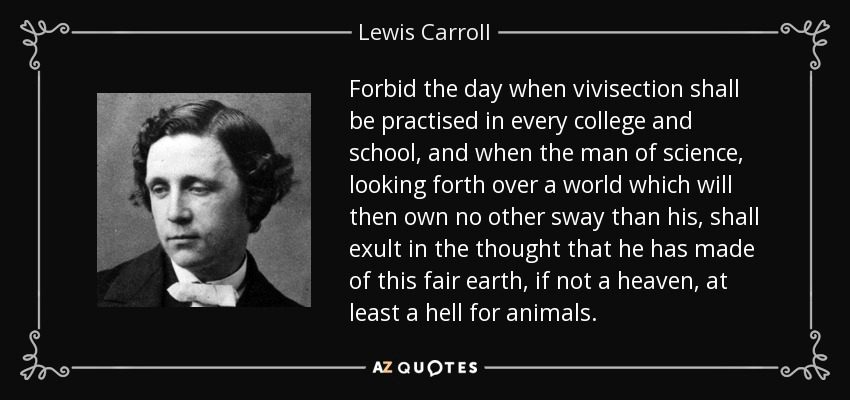
What Carroll wrote in 1875 took very little time to come true. Human animals ave been used in experiments for a ‘higher’ purpose before or since – to prove that certain mental health conditions were caused by syphilis, healthy patients from subject groups were injected with syphilis bacilli, soldiers were exposed to radiation for the purposes of understanding radiation sickness and mortality, and worse ….. Carroll is right. We discriminate between animals and humans only to collapse the distinction when our powerful hegemony over those less powerful, less worthy of survival, demands it – as we choose to see it. Meanwhile let’s choose which animal most decorates our life without threatening it. In the end we will go a long way to favour this animal but not at the expense of forgetting it is an animal and subject to our choices.
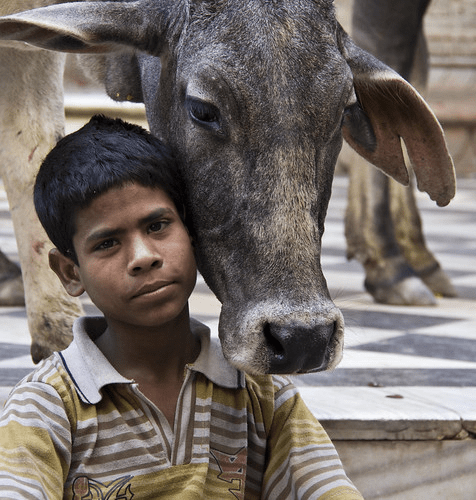
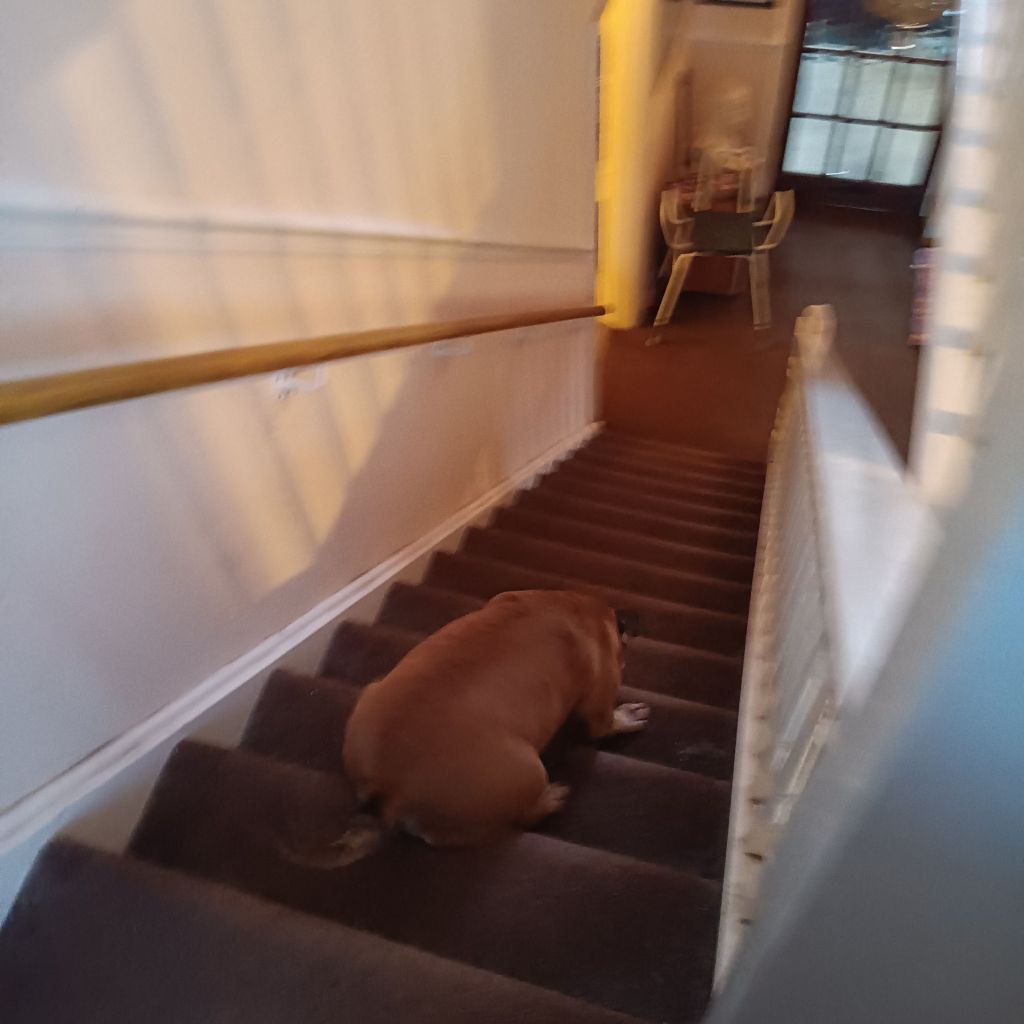
So I will not choose an animal. Nevertheless, I love it where animals are sacred. And Daisy. I love her, though she flees from my phone:
With love
Steven xxxxxxxxxx
 Steve_Bamlett_blog