The ‘gift’ is a complicated notion. It is considered as a possession by natural right, whose possession carries with it no obligation to the giver and yet is seen as something that could not be ours without someone have gifted it in the first place. A ‘gifted’ person may possess some quality or talent that seems inexplicable because it is not a quality or talent that seems to have been actively sought nor worked for by its present possessor. The gift was just there, and yet so miraculous is the fact of the possession we must imagine it as donated, free of obligation, from some original giver. The etymology of the word as recorded on etymonline.com and preceding any sense of a gift exchanged between persons emphasises quietly that very point – but so silently here I italicise and bold the statement of it for clarity below:
gift (n.)
Sense of “natural talent” (regarded as conferred) is from c. 1300, perhaps from earlier sense of “inspiration, power miraculously bestowed” (late 12c.), as in the Biblical gift of tongues. Old English cognate gift is recorded only in the sense “bride-price, marriage gift (by the groom), dowry” (hence gifta (pl.) “a marriage, nuptials”). The Old English noun for “a giving, gift” was giefu, which is related to the Old Norse word. Sense of “natural talent” is c. 1300, perhaps from earlier sense of “inspiration” (late 12c.).
mid-13c. “that which is given” (c. 1100 in surnames), from a Scandinavian source such as Old Norse gift, gipt “gift; good luck,” from Proto-Germanic *geftiz (source also of Old Saxon gift, Old Frisian jefte, Middle Dutch ghifte “gift,” German Mitgift “dowry”), from *geb- “to give,” from PIE root *ghabh- “to give or receive.” For German Gift, Dutch, Danish, Swedish gift “poison,” see poison (n.).
But, of course, the best preserved example of the notion of some ‘”natural talent” (regarded as conferred)’ is in Robert Burns miraculously giffted poem To A Louse. It is, in my eyes, the most political of his poems, for it is a satire on the manipulation of the idea of class, social grace and the elite arts. Often thought merely to satirize women, or one woman, Jenny, who seek or seeks to appear, though some fineness of dress, some sense of class superiority over others where there is none in nature, it contrasts the dress of social class to the ‘poor body’, naked but for the hair it grows upon it. It is without doubt, a misogynistic poem with constant reference to how dress and appearance clothe the sense of common sexual pleasure – the lady might hold numerous unseen in private sexual parts – the ‘plantation’ being her vaginal bush unmolested by ‘horn or bane’ (a phallic quester indeed common to Burns filthy ditties) as much as, as BBC Bitesize would have it, a reference to slave plantations in the West Indies.
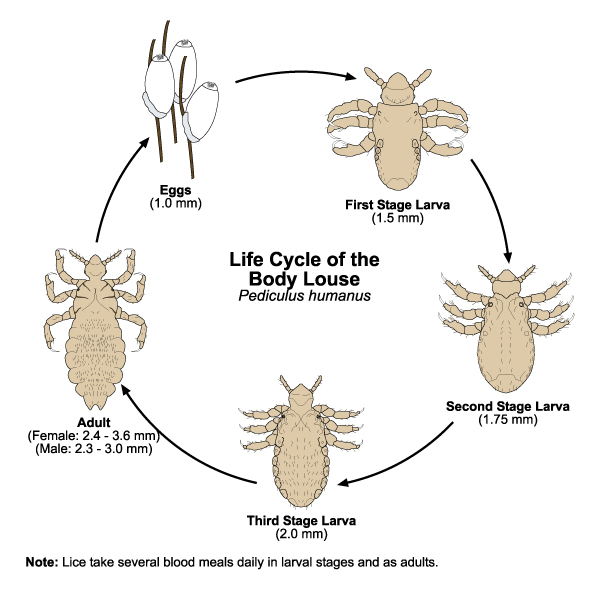
The BBC graphic aid to reading above rather sets out to obscure the poem – even reading literally the reference to ‘cattle’, which in fact refers slyly to the herds of lice that might be found on a lady if you i#uncover the ‘poor body’ from its hiding under superficial garb. But misogynistic though it be, Burns is taking aim at the hypocrisies of the rich and their wish to see themselves as other than the poor rest of us – beggars for our crust that seeing ourselves as with a ‘natural right; to wealth, comfort and visible hauteur of elegance of ‘gawze and lace’.
The louse is a fool more than Jenny is. It could live hidden from the world, feasting on ‘flesh’ but it aspires to a place where there is no food only finery that is inedible. It gropes itself up from the base to aspire to the ‘tapmost’ position. This is is much self-satire as it is mysogyny, lambasting himself for his foolishnesdss to aspire to being a fine poet in London rather than a hidden rural one in the Scottish Lowlands:
Na faith ye yet! ye’ll no be right,
Till ye’ve got on it,
The vera topmost, towrin height
The louse may aspite only to the top of a lady bonnet, but ‘men’ even Burns, leave their decent communal country politics , friend of the Revolution in France as Burns was, for the heady heights of social celebrity.The Louse has a male ‘impudence’, if feels protected by it but isn’t as Burns wasn’t in London, as Thomas Carlyle makes clear in his life of the poet. The famous lines I cite in my title are pure Scottish Englightenment philosophy:
Burns presents Enlightenment ideas while interrogating them: the lines ‘O wad some Pow’re the giftie gie us/To see ourselves as others see us!’ for example, are a paraphrase of Adam Smith in his Theory of Moral Sentiments (1759, 6th edition 1790) placed in a comic context of greed and sexual desire; … (see https://yalebooksblog.co.uk/2023/01/25/the-story-of-robert-burns/)
Read as a poem on human class vanity, the idea of the ‘Giftie’ seems central. The ‘gift’ is an attribute of seeing humanity as it is – a poor bare fork’d animal that needs food and self-respect but thinks it needs self-aggrandizement more. It pokes fun on those who substitute false values 0 those admiring of ‘so fine a Lady’ for real human needs – for food and shelter. The poem is Theist but ascends no further than ‘some Power’ who is the giver of natural gifts. And this power would displace the one that values the accoutrements of class and put in in its place some natural evaluation of humanity.
Ha! whare ye gaun, ye crowlan ferlie!
Your impudence protects you sairly:
I canna say but ye strunt rarely,
Owre gawze and lace;
Tho’ faith, I fear ye dine but sparely,
On sic a place.

Ye ugly, creepan, blastet wonner,
Detested, shunn’d, by saunt an’ sinner,
How daur ye set your fit upon her,
Sae fine a Lady!
Gae somewhere else and seek your dinner,
On some poor body.

Swith, in some beggar’s haffet squattle;
There ye may creep, and sprawl, and sprattle,
Wi’ ither kindred, jumping cattle,
In shoals and nations;
Whare horn nor bane ne’er daur unsettle,
Your thick plantations.

Now haud you there, ye’re out o’ sight,
Below the fatt’rels, snug and tight,
Na faith ye yet! ye’ll no be right,
Till ye’ve got on it,
The vera topmost, towrin height
O’ Miss’s bonnet.

My sooth! right bauld ye set your nose out,
As plump an’ gray as onie grozet:
O for some rank, mercurial rozet,
Or fell, red smeddum,
I’d gie you sic a hearty dose o’t,
Wad dress your droddum!

I wad na been surpriz’d to spy
You on an auld wife’s flainen toy;
Or aiblins some bit duddie boy,
On ’s wylecoat;
But Miss’s fine Lunardi, fye!
How daur ye do ’t?

O Jenny dinna toss your head,
An’ set your beauties a’ abread!
Ye little ken what cursed speed
The blastie’s makin!
Thae winks and finger-ends, I dread,
Are notice takin!

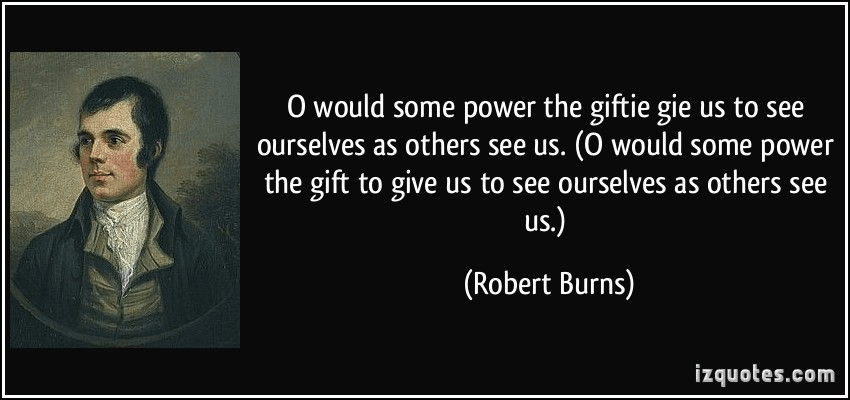
O wad some Pow’r the giftie gie us
To see oursels as others see us!
It wad frae monie a blunder free us
An’ foolish notion:
What airs in dress an’ gait wad lea’e us,
And ev’n Devotion!
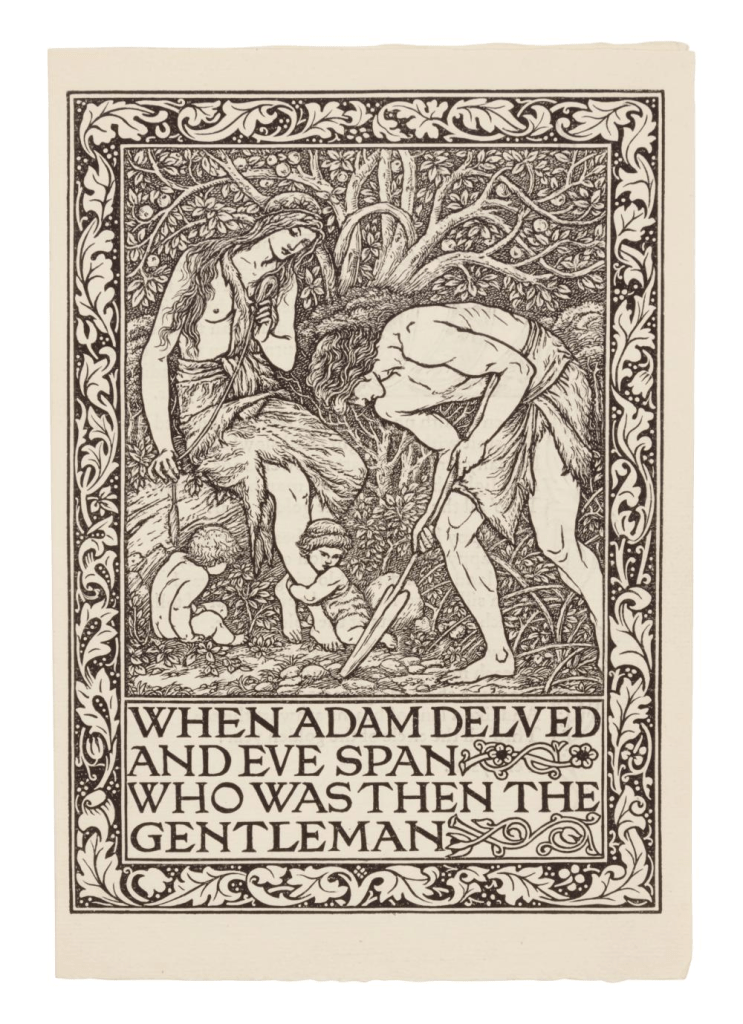
Foolish notions build into class-based systems by a ‘Man’s a Man for aLL THAT’.
A Prince can mak a belted knight,
A marquis, duke, an’ a’ that!
But an honest man’s aboon his might –
Guid faith, he mauna fa’ that!
For a’ that, an’ a’ that,
Their dignities, an’ a’ that,
The pith o’ Sense an’ pride o’ Worth
Are higher rank than a’ that.
Perhaps no-one can give us the ‘greatest gift’, for the greatest gift is to accept our communality.



 Steve_Bamlett_blog
One thought on ““O wad some Pow’r the giftie gie us / To see oursels as others see us! / “:”