


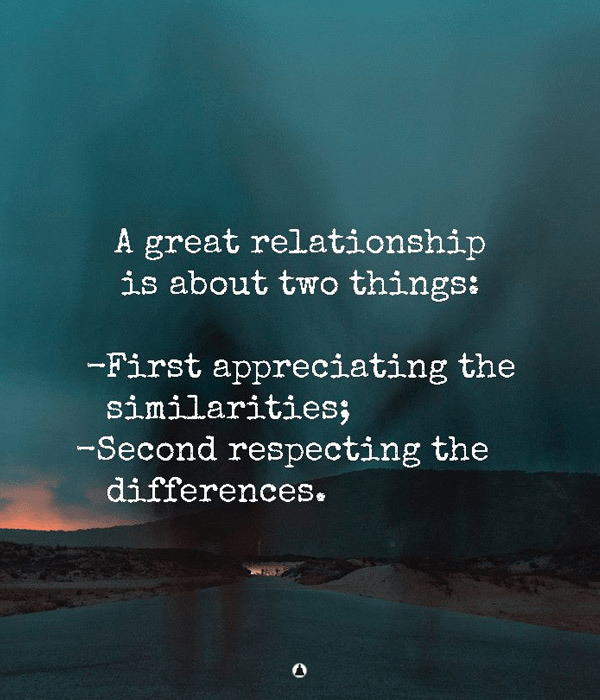
This prompt ties itself up in knots. It is the nature of WordPress prompts, so to do, in order perhaps to draw ouf variants in response, or, in the worst case scenario, because they rely on assumptions about commonsense definitions of complex words. First of all, they nearly always invoke indeterminate categories, such as ‘impact,’ to describe an effect. But that is so much less indeterminate than and more problematic term ‘relationship’. The variant meanings of ‘relationship’ as a noun are set out simply by Mirriam-Webster online Dictionary:
- 1 : the state of being related or interrelated, ‘they studied the relationship between the variables’.
- 2 : the relation connecting or binding participants in a relationship: such as: a : kinship; b : a specific instance or type of kinship
- 3: a: a state of affairs existing between those having relations or dealings, ‘he had a good relationship with his family’; b: a romantic or passionate attachment
The first meaning relates to the fact that any two or more things can be considered in terms of their mutual association or causal connection, hence the example taken is from statistical science where it is assumed that if two things are related, either as cause and effect OR by association, that relationship can be measured. But there is always a key difference between causal relationships and relationships of correlation, as this extract from a page on the statistics used in epidemiology insists.
Association does not mean causation
Causation requires that there is an association between two variables, but association does not necessarily imply causation. Association between two factors can occur both with and without a causal relationship.
https://ledidi.com/academy/the-difference-between-association-correlation-and-causation

Our prompt question assumes such a relationship, one way or another since it asks about what variation of ‘relationship’ [referring here to a status of connection other than a statistical one] is related more to positive range of variations of impact on our life that we experience. In brief, it is about the relationship [causal or associational] between ‘relationships with someone or something’ and our felt experience. But are we asking what kinds of relationship CAUSE positive impacts on on’e well-being, or what kinds of relationship best correlate with the well-being. In the second instance, we assume a two-way relationship where there is no single direction of influence. For some relationships may associate with positive impact but the supposed impact may be a factor in itself that acts on forming and changing the relationship, just as much as the relationship forms and shapes the impact. Moreover there may be other mediating shared influences that aren’t mentioned that cause the apparent relationship between the relationship type and its supposed impact.
It is clear we are already on our way to a muddle because finding ‘the relationship’ between categories of ‘relationships’ and felt experience already forces us to think of ‘relationships’ in more than one way. This is even more the case when we consider the ambiguity of the noun relationship in relation to different kinds of connection. At some points a relationship might be the name of a term to describe a family members, relations of kith and kin (parents, siblings). But they can also denote those more abstract non-genetic relationships we call, passionate, romantic, sexual or affiliation bonds of friendship.
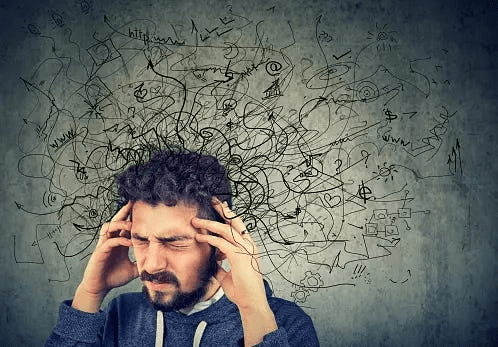
Presumably, this is one way of answering the question. because it is perfectly reasonable to say that relationships that one has chosen have a much more positive impact on one’s life than those I have acquired by accident of family bonds, or even vice-versa. In that relationship between type of relationship and its impact, there is an implied relationship between making a choice of relationship and an impact on personal well-being. But the point remains that this is not clearly the kind of answer the prompt requires.
After all, there are so many variables that have to be considered in answering it. If it asks what kinds of relationship cause positive impact, you might answer either, as examples: (a) ‘relationships where someone never contradicts or disagrees with me’. This would tell us a great deal about you, as it might if you answered instead that positive impact was caused by ‘relationships that critically challenge my everyday thinking’. Because these answers are so revelatory of either the person or the person’s construction of their ideal persona, I do not think relationships of causation are implied.
What I suspect is that the question really instead to asks about the kind of relationships that most associate with well-being but do not necessarily cause it. I might answer that loyalty was a characteristic of these relationships or dependability, but since such characteristics are often earned rather than merely recur, it is likely that the association of relationship and positive impact is a virtue shared mutually by everyone in the relationship, something like ‘trust’, ‘two-way sensitivity and empathy’ and joint learning from each other.
In effect the kind of relationship that correlates with positive impact is likely to be one where we allow mutuality of impact to be itself a relationship between the people in a relationship (spouses, lovers, friends, family members whatever). It makes sense to me then to answer:
‘The kind of relationships that have a positive impact on me are those wherein my relationship, say to you, has a positive impact on you? Until I relate to our relationship in a more equal way, I don’t deserve positive impact from it – but neither do you!’
if I wanted to take my metaphor from biology I would say that relationships often truly correlate people in true relationships when there is mutualistic symbiosis -true between persons (and not just there a matter of contingency working on evolution) as well as species (where it may be just there a matter of contingency working on evolution) .
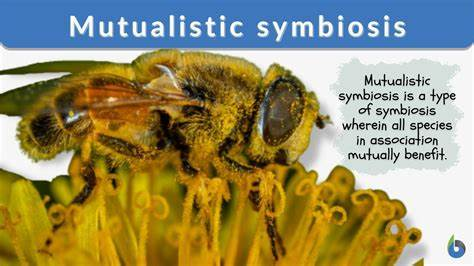
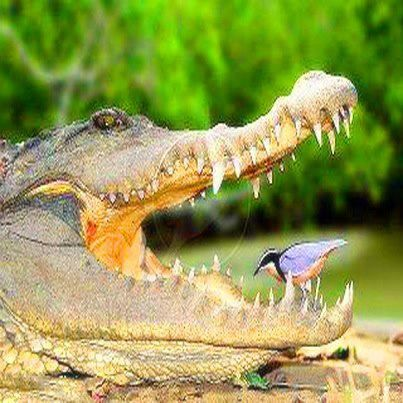
Sometimes, even in animal relationships the range of symbiosis can be startling (as below) but this image is a fine a one as I can find for the way humans might relate outside mere self-interest on the positive impact on themselves alone of relationships with others.
With love
Steven xxxxxxx
 Steve_Bamlett_blog