Do you or your family make any special dishes for the holidays?
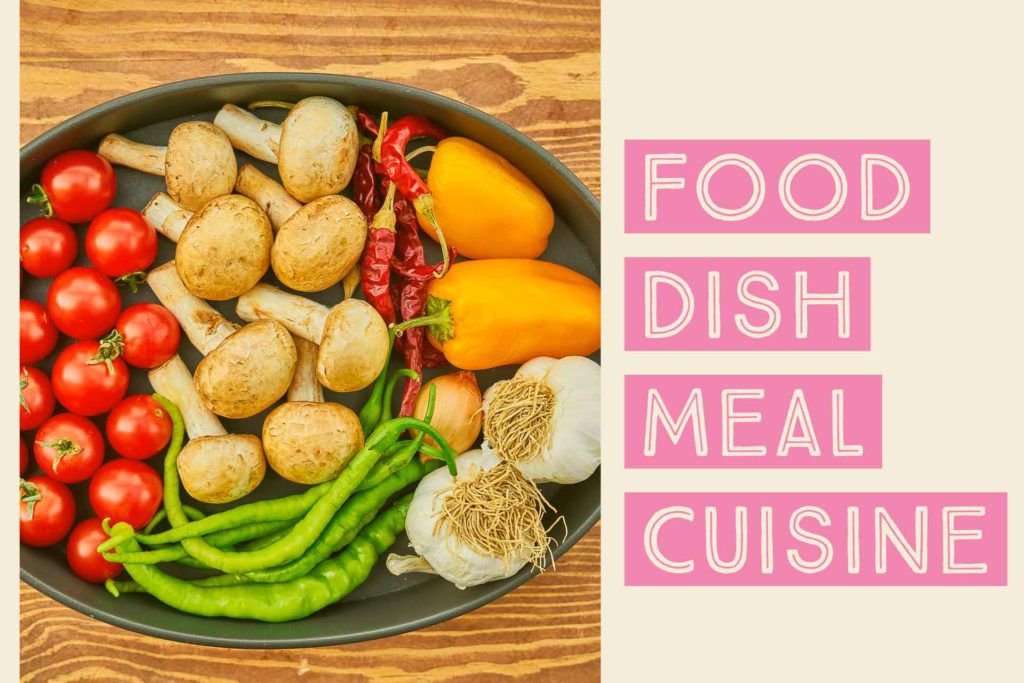
Language courses for non-English speakers often go wild in their attempts to give specific meanings to the different words used to describe the things we cook or ‘make’ and eat. But they ignore the words of a famous debate on the relationship between words and meanings, a domain of knowledge usually called semantics.
When I use a word,” Humpty Dumpty said, in rather a scornful tone, “it means just what I choose it to mean – neither more nor less.”
“The question is,” said Alice, “whether you can make words mean so many different things.”
“The question is,” said Humpty Dumpty, “which is to be master——that’s all.”

In search of an example of how some mastery over the distinct meaning of a word is sought, let’s take the short word, dish. We can stick with Humpty in order to start us off, for in some contexts, he could be the illusttration of the word’s meaning, being in some way , as an example of an egg, be it one with anthropomorphic characteristics, and the basis of a number of fishes, such Eggs Florentine.
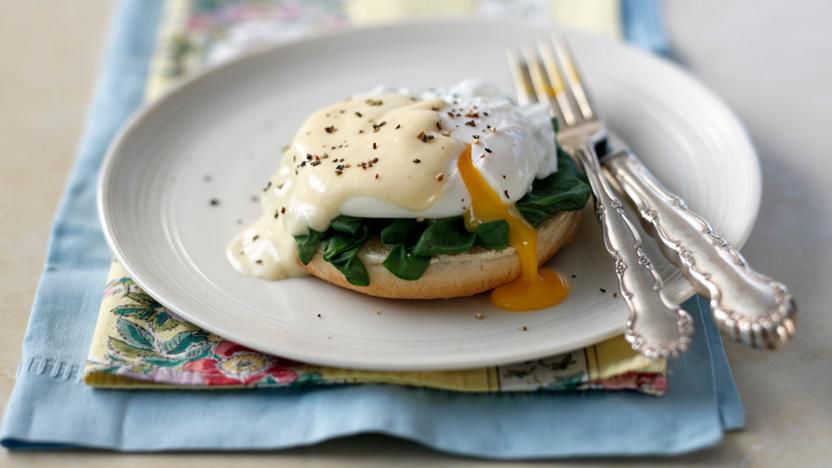
Some language school infographics use that definition to contradistinguish the word from other food names, including food itself. The latter is actetm they say just for what we eat or which is edible. A meal is a prepared set of foodstuff for consumption within a routine time sale. Cuisine, on the other hand, is the characteristics of a person, group, or nation that is distinct to them and characterises them.

But who would wish that on Humpty, who feels much more a dish of the kind when we call a person dishy, imply both attractiveness of looks and sex appeal. But how did that extension of the word into a signalman that kind of sexual attraction get extended from the word dish to mean, as it usually defined as a plate of food that has beenn prepared in a special way.
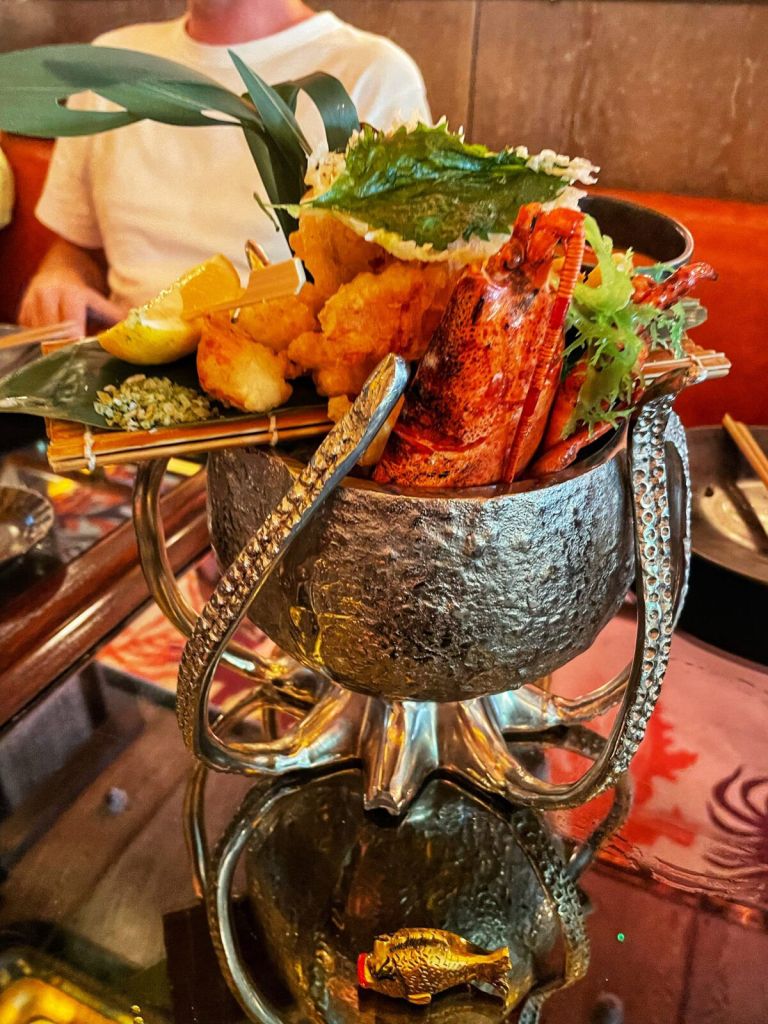
But a dish is surely not just about the special means of preparation of a foodstuff. It is about the distinctive nature of the look, taste, and savour of the food presented. It is about its appeal. How it got there from a term that usually describes a bowl of some kind in which to serve food I do not know and can proffer no story however fanciful to even half explain the association. The Restaurant Sexy Fish in Mayfair, however, makes the dish – the food and its container – sexy to the eye and our imagination of the taste combinations.
But the term “dish” as used to describe someone you ‘fancy’ surely must have borrowed its association with sexual and romantic appetite in connection to looks as well as more visceral appeal from somewhere. But words are strange. Looking for clear meanings won’t help us. The normative definition of a dish as explained by language school graphics helps not at all.
And in our chosen family, rapidly becoming just the two of us, Geoff and me, we never consider ourselves as concocting a dish for each other, special or otherwise. Perhaps the aesthetic sense of what a dish is predominantly in families that do, aiming to impress each other or their guests, rather than eating to live and savour the taste of life rather than the socual taste expressed by a dish.
With love
Steven
 Steve_Bamlett_blog