


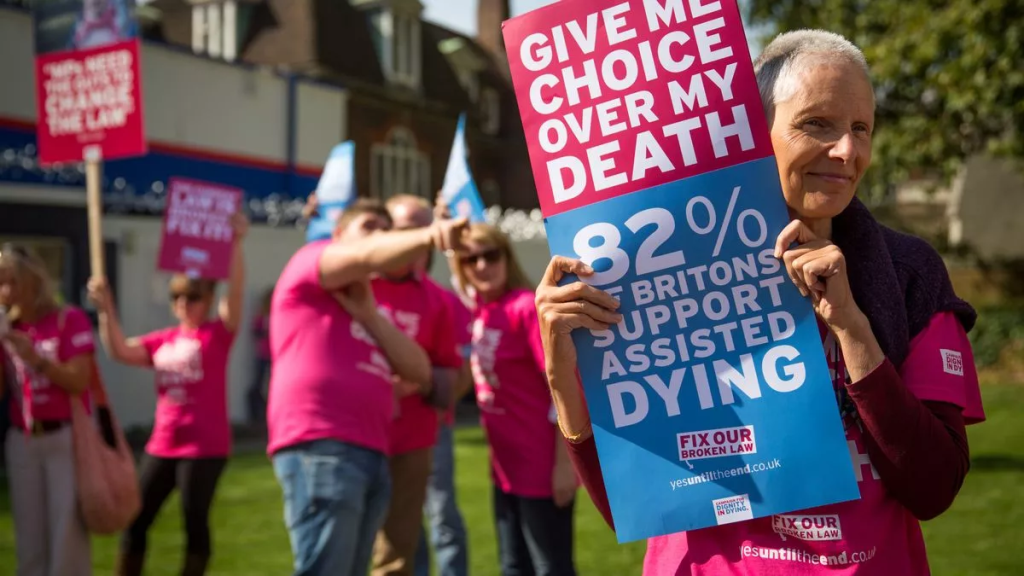
Tomorrow, the 29th November 2024, the House of Commons debate the Assisted Dying Bill. Already the media is full of hand-wringing MPs commenting on the ‘difficulty’ of the decision. We are meant to empathise but in doing so, we have to remember that the Bill is an attempt to increase the degree of autonomous decision-making people who are dying to choose between life and death as a response to pain or other kinds of breakdown in the physical and mental integrity in the approach to a death that will happen anyway but where even choices of how it happens are limited for the dying. Wes Streeting, the current Health Secretary, is a case in point. His points are worth considering, as reported by the BBC:
Streeting told BBC Breakfast on Tuesday that he was “concerned about the risk of people being coerced into taking their own lives sooner than they would have liked, or feeling… guilt-tripped, feeling like a burden”.
He also repeated his view that the palliative care system was not “where it needs to be to give people a real choice”.
Streeting believes that coercion clearly is a significant possibility and we can only assume, being the Health Secretary, he has evidence to support the view that many dying people are incapable of asserting an independent judgement on their own case. This argument has a lot of currency but, as with Streeting, it is usually expressed as an probable instances of internalised coercion rather than active coercion by others, although that latter is slyly implied. The argument goes that older people collude with their own oppression, believing they are a ‘burden’ because they absorb this view from the views of others or some ageist ideology. However, the argument is rarely then turned into an examination of why elders collude with their own social oppression and how their internal confidence and external means (independent advocates for instance) in making and applying their own decisions. They dare not since that would entirely undermine their argument about coercion. Coercion is and should be a crime ans it is as this it should be tackled and safeguarded against – in whatever kin of decision that is made.
One particular issue is mentioned by the BBC. Wes Streeting, who is, after all, in a position to change the funding of hospices as a preferred place of death, says that the funding is unacceptable but will not change that funding whilst still using hospice ideology, which was once universally against assisted death when autonomously requested by a dying person (although not now), as an argument against assisted dying. But look at the Government figures below (the full report is at the link):
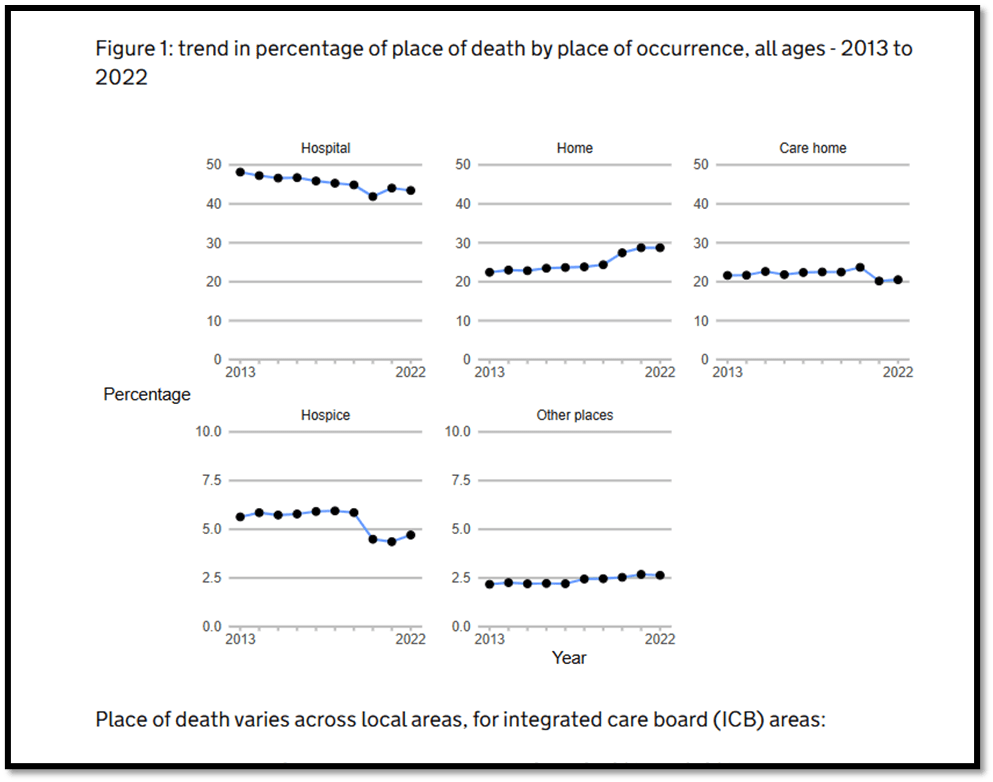
Hospice deaths have not yet reached 6% of all UK death and have fallen rather than risen recently (about 5% in 2022). Compare that with figures of those dying at home or in hospital – both institutions in which coercion is oft thought to happen. Wes Streeting cannot truly care about coercion given these facts. As a wily politician with his own eye to leadership I think he does that dying people have no voting power and hence calls by them for autonmy of choice can easily go neglected.
Parts of the disability lobby genuinely fear assisted dying ideology. After all the Nazis promoted ideas of death being the best for people disabled by inadequate social provision for their ‘disability’ in a number of ways. It is a theme of C.P. Taylor’s play Good (see my blog here). but here again the issue truly is or ought to autonomy of decision-making and bold political reform that ensures that lack of resources to live a worthwhile life does not prejudice them to chooses assisted death.
In truth MPs should not display consciences they aren’t worthy of unless they support enabling provisions for those with a disability or the dying (elders or others). The hard choice is the one they are denying to some people – those without the resources to use Swiss clinics. MOREOVER, COERCION ALREADY EXISTS IN OUR HEALTH SERVICE AND IS MAINLY TRIGGERED BY INEQUALITIES OF RESOURCES AND STATUS. I do nor personally wish to live weeks in unrelieved agony (that the hospices themselves know cannot always be addressed palliatively) if I could spare myself and other witnesses some weeks of that pain or drugged stupor. But other witnesses would not be there to coerce and are unlikely to do so in that occasion.
All my love
Stevem
 Steve_Bamlett_blog