


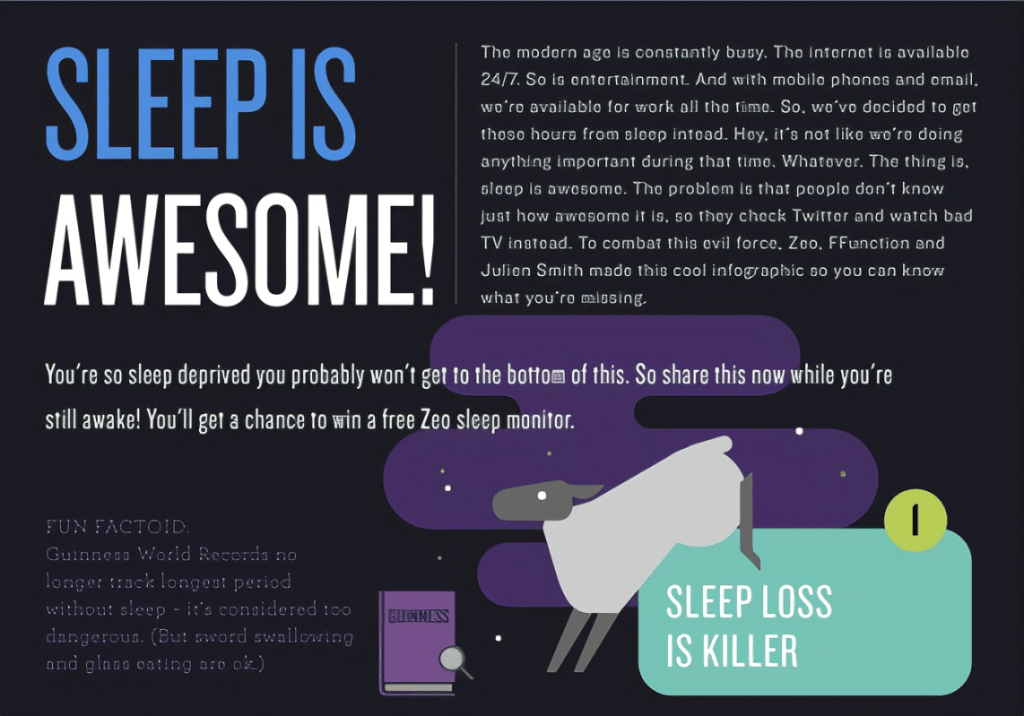
The Sleep Foundation (at this link and not related to the commercial ‘infographic’ above) gives seven reasons why we need sleep. They are given below without the trusted sources of information that their web page does have (I have given a link above) to the scientific evidence behind some of these claims. Sleep is needed, they say, in summary of their list, to service and complement various-life-and-growth -assisting animal functions organised in the central nervous and other body systems, including endocrinol messaging systems. Here are the seven trans-systemic functions supported by sleep:
- Learning and memory consolidation: Sleep helps with focus and concentration—and it allows the brain to register and organize memories—all of which are vital to learning.
- Emotional regulation: Sleep helps people regulate their emotions and better manage the physical and psychological effects of stress.
- Judgment and decision making: Sleep influences a person’s ability to recognize danger and threats. Healthy sleep supports sound judgment, good decision making, and other executive functions.
- Problem solving: Research shows that “sleeping on” a complex problem improves a person’s chance of solving it.
- Energy conservation: Sleep allows people to conserve energy through an extended period of reduced activity.
- Growth and healing: Sleep provides the release of growth hormone necessary for the body’s tissues to grow and repair damage.
- Immunity: Sleep supports immune function, allowing the body to fight off diseases and infections.
The trouble with such explanations is that assume a normative functionality such that they can be supposed to apply to every animal in existence, though directed usually just at human animals. However, most animals, and even plant life, must make ‘decisions’ about alternative responses to environmental threats and opportunities however regulated, and the role of ‘instinct’ remains problematic as located between expressions of biological reflex, biologically predetermined drive, over-learned unconscious’ response, consciously learned or consciously informed response, or something like a decision -making process that can be represented by a person making choices where paths of future action diverge and vary.
When people talk about the creative function of sleep it is usually in relation to ‘problem’solving’ – the clarification of an issue to its essence or finding a viable solution. However when about finding a creative solution, the available research is mainly about dreams in REM-sleep, the sleep stages nearest to conscious waking, wherein rapid eye movement denotes brain activation in visualization.
It is certainly true that creative imagination is hard to place easily within this list. Some artists have seen sleep as dulling some of these processes of imagining other worlds, or evacuating them from waking life, as the process involved in dreaming. This is in part the lesson of works like Thomas De Quincey’s The Confessions of an English Opium-Eater and Samuel Taylor Coleridge’s Kubla Khan, both works about the imagination conceived as drug-fuelled waking stimulation, that gets fragmented by sleep and normative recovery. Both works doubt the value of measured responses to the ongoing creative fertility of unsleeping life. In Kubla Khan, this doubt is expressed and represented by a romantic chasm’ splitting the earth upon which the Khan tries to construct a ‘pleasure-dome’.
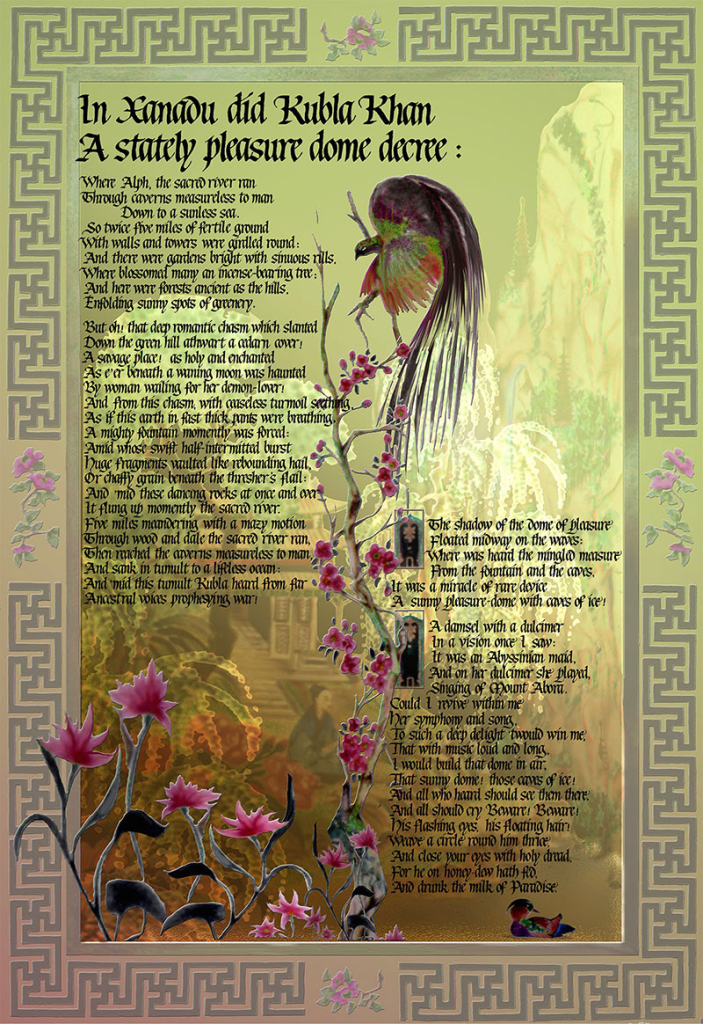
Go deep enough and there is something immeasurable and a sleepless threat (‘lifeless’ because other than life but still an active repository of threat) to the peace of men who plan to rest.
Through wood and dale the sacred river ran,
Then reached the caverns measureless to man,
And sank in tumult to a lifeless ocean;
And ’mid this tumult Kubla heard from far
Ancestral voices prophesying war!
We prefer things that sleep. Isn’t this the root of the vampire myth – the thing that wakes wherein human animals sleep, unlike nocturnal wolves (not nocturnal – though wolverines are – in fact except in Dracula) and bats?
In Chapter XVI of Dracula. Van Helsing – the Dutch vampirologist who combines pseudo-science, medicine and spiritual ritual into an odd combination of hero of the ordinary restored to its hegemony over life – aims to drive a stake through the unliving ‘Thing’ that the woman Lucy Westernra has become. However, he gives way to Arthur, her affianced lover, to drive the stake into her and put her body to rest:
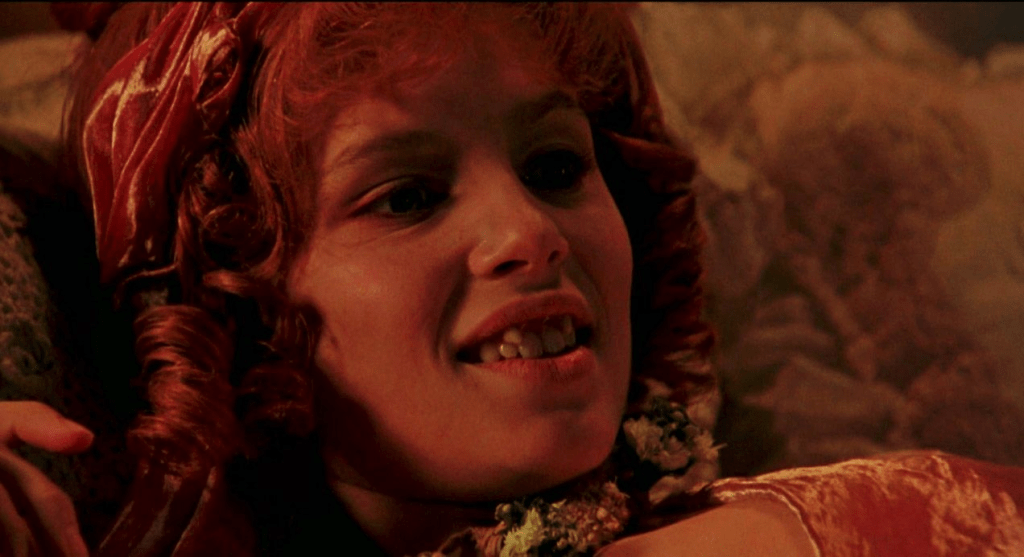
She seemed like a nightmare of Lucy as she lay there; the pointed teeth, the bloodstained, voluptuous mouth—which it made one shudder to see—the whole carnal and unspiritual appearance, seeming like a devilish mockery of Lucy’s sweet purity. ….
“Go on,” said Arthur hoarsely. “Tell me what I am to do.”
“Take this stake in your left hand, ready to place the point over the heart, and the hammer in your right. Then when we begin our prayer for the dead—I shall read him, I have here the book, and the others shall follow—strike in God’s name, that so all may be well with the dead that we love and that the Un-Dead pass away.”
Arthur took the stake and the hammer, and when once his mind was set on action his hands never trembled nor even quivered. …Arthur placed the point over the heart, and as I looked I could see its dint in the white flesh. Then he struck with all his might.
The Thing in the coffin writhed; and a hideous, blood-curdling screech came from the opened red lips. The body shook and quivered and twisted in wild contortions; the sharp white teeth champed together till the lips were cut, and the mouth was smeared with a crimson foam. But Arthur never faltered. He looked like a figure of Thor as his untrembling arm rose and fell, driving deeper and deeper the mercy-bearing stake, whilst the blood from the pierced heart welled and spurted up around it. His face was set, and high duty seemed to shine through it; the sight of it gave us courage so that our voices seemed to ring through the little vault.
And then the writhing and quivering of the body became less, and the teeth seemed to champ, and the face to quiver. Finally it lay still. The terrible task was over. ….
There, in the coffin lay no longer the foul Thing that we had so dreaded and grown to hate that the work of her destruction was yielded as a privilege to the one best entitled to it, but Lucy as we had seen her in her life, with her face of unequalled sweetness and purity. True that there were there, as we had seen them in life, the traces of care and pain and waste; but these were all dear to us, for they marked her truth to what we knew. One and all we felt that the holy calm that lay like sunshine over the wasted face and form was only an earthly token and symbol of the calm that was to reign for ever.
Lucy in true death is restored from the Thing that is clearly the sexualised writhing body of the woman as animal and full of the power of desire (‘the pointed teeth, the bloodstained, voluptuous mouth—which it made one shudder to see—the whole carnal and unspiritual appearance’). We, proper guys, have to shudder at her even as we penetrate her to restore her subservience to what woman should be in bed – asleep until we wake her. The interplay of tropes of Death as calm sleep being restored to the oversexed fantasy world here are more important than the fact that vampires do lie in a coffin to do something that looks like ‘sleep’, for they do the latter only to avoid being seen and avoid the light that might harm them if seen in the day. And in the end, we prefer things to die in pain and turn to waste, for from that we move on (‘the traces of care and pain and waste; but these were all dear to us‘).

What matters to Stoker, as he writes, is that the creative (he based his Dracula on his actor-manager boss, the actor Sir Henry Irving, to whom he was the more lowly Lyceum theatre manager in London) is that the creative power needs regulation and control – managing – and that is best done by ensuring it sleeps; not lies on only pretending it sleeps. For it can’t sleep any more than it can live (as we do at least) or eat and drink except by preying on the living to feed its resurrection of long-lasting traditions. True artists make a wasteland of ordinary life: think of Oscar Wilde’s Dorian Gray, who isn’t an artist but a deathless version of Art itself.
And the truth is if I didn’t sleep and sleep off unregulated fantasy and vision, I might create. I might!!!!!!! But that is not for many: so I enjoy my sleep.
With Love
Steven.
 Steve_Bamlett_blog