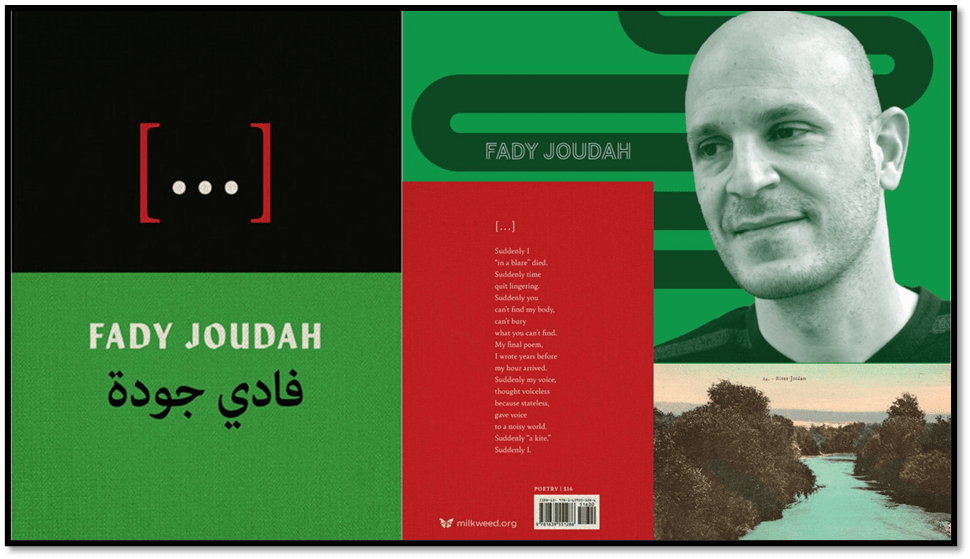
EXPLANATION FOR DOING THIS: This is the first time a prompt in WordPress has appeared for me that I haven’t ‘answered’ and have therefore been barred from answering for weeks. In truth I used the WordPress prompts, as here, to rest from the ones I like doing on books and poems – a chance to stop reflecting so hard on what I read that, frankly, exhausts me – and so it has now. I need a weekend off (so the series on Forward Poetry Prize will have to wait – currently on the wonderful poems of Fady Joudah – which is, for me, an emotionally draining read followed by even more draining reflection, dealing as it does with the poet’s reflections, indirect and therefore more disturbing) on the more than a hundred family members of of his killed in his beloved Palestine). This needed break coincides with a trip to York to see the Provincial Book Fair Association (PBFA) annual extravagant fair at the Knavesmire Suite at Your Racecourse. We are staying over at Novotel York and on Sunday we’ll see The Critic with the wonderful Ian McKellen at a Vue cinema there, and return home on Monday via the Tony Cragg sculpture exhibition currently at Castle Howard.
So this topic seemed pertinent, given a tweak or two.
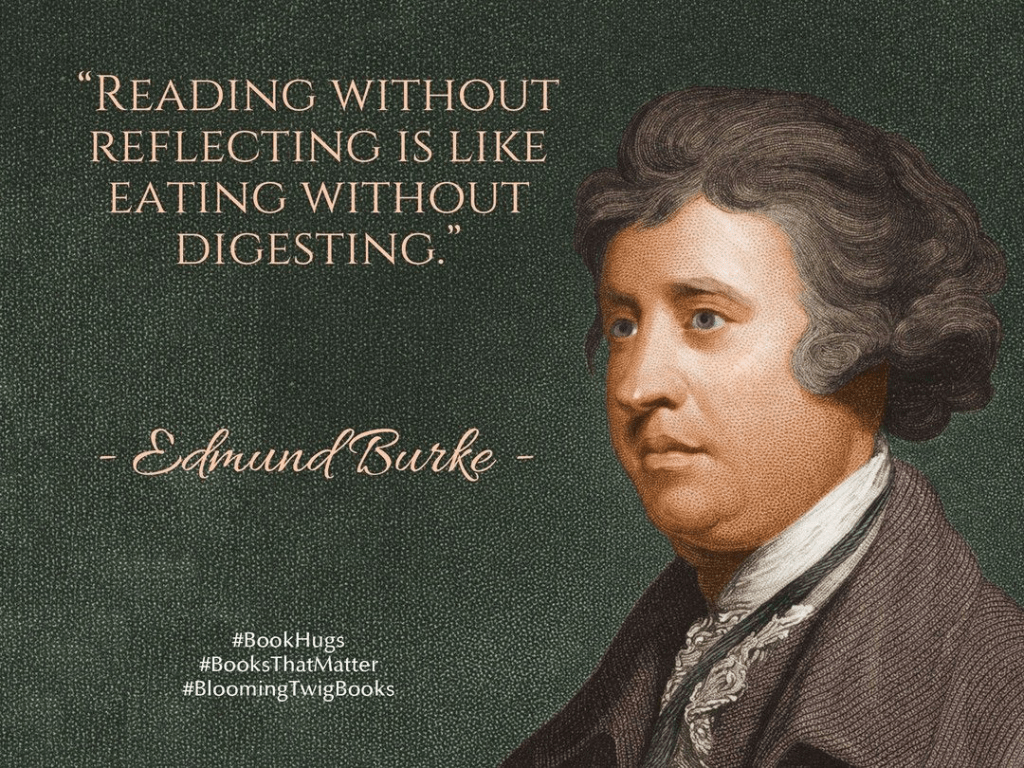
EDMUND BURKE is supposed to have said: ‘Reading without reflecting is like eating without digesting’. The attribution though is not, as far as I can find as yet traceable to any source and like many of these attributions possibly apocryphal, and perhaps inaccurate. Burke, the famous eighteenth-century Tory philosopher and statesman, is known for undermining popular assumptions with dour reflection; as in his Reflections on the Revolution in France, aimed at stemming the radical fervour raised by the works of Thomas Paine. Revolutions lead, Burke reflected to anarchy and then tyranny. it is largely supposed that the career of Napoleon in France proved Burke right.To him ‘reflection’ means turning the froth of hastily written thought into substance that as a practical use – in sustaining you. For Burke that meant sustaining the ‘status quo’ too.
But what he says is relevant for we eat for sustenance of life, the process towards which is not merely consuming food but digesting it – taking from it all the useful nutrients until what we are left with is waste for excretion. Hence his view of ‘reading’. If we munch through books, picking out those we favour for their appeal to us – whether in the look of them or of the immediate sensation of ‘taste’ they offer, then we probably receive little or no benefit, though we pass the time. Novelists can even pick out books that they consider such as waste of passed of time, or worse – the stuff of addiction’ to raise the expectations of their own novels as books to be digested for their social and personal use value: that is why in Northanger Abbey, Catherine Morland is seen to be reading the weighty tomes of Anne Radcliffe, Gothic potboilers with an unfortunate appeal to shallow psychological fantasy in Jane Austen’s mind, or Emma Bovary, in Flaubert’s Madame Bovary, reads romances that stimulate her sexual fantasy and misread the world.
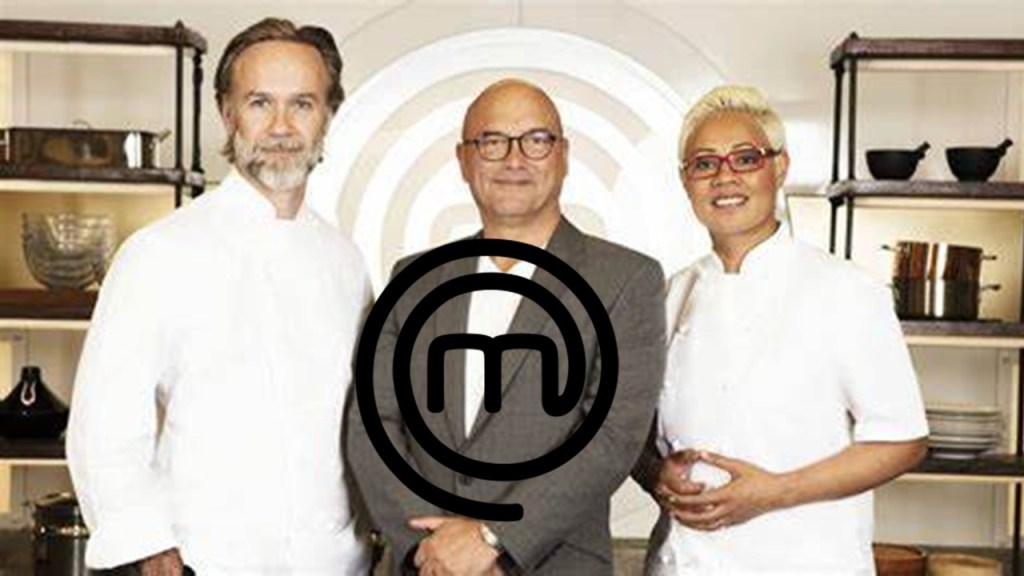
The fashion in contemporary food programmes on TV in the UK currently is for competitions which pick out food produced by processors of such (Masterchefs amateur, professional, or worse ‘celebrity’). The process involves making food look appealing and to heighten its immediate sensation of taste and flavour. We need to come back to sense of taste and flavour for that is the nub of the matter. In a TV programme we precisely miss the sensation except as reflected in expert tasters that we are watching, consuming their expert opinion of a product. In Masterchef, and its like, we are entrained to see food as the stuff of process that turns into into a commodity, a thing appreciated by a connoisseur not tasted and savoured by us ourselves, regardless of other issues – a view that leads to the obscenity of the evaluation of foods created by cruelty or suffering or regardless of whether such processes are involved. In To The Lighthouse, Mrs Ramsay cares so much about creating an impression at her dinner parties that she can order Boeuf en Daube, by her own special recipe, regardless of the terrible inconvenience and the work involved for her serving and cooking staff over three days before the dish is consumed.
To look at food as the products of digestion however – in nutrition – is to rob it of its immediate appeal (which can be for food addicts not its refinement but its base addictive components of starch and stodge) may seem a sin to our immediate untutored but probably habituated likes and, at the same time, to highly-tutored aesthetics and to the education of our ‘taste’ (even in the refined sense of the word). It could never be the whole picture but it certainly plays a part in the balance of our eating choices – even if only to avoid the effects in the body of foods bad for our digestion, I am no model here. I am an addict.
The immediate appeal, and consumability, of the Burke quotation I start with is also something of which we need to be wary. The quotation, Burke’s or not, after all is a kind of NONSENSE. It is impossible for an animal to eat without digesting unless that animal is in somehow suffering damage to its internal processing equipment. Digestion occurs not because we choose to digest or not but because it is a function of the autonomic nervous system to trigger such processes without consulting neural decision-making processes. We digest willy-nilly. The issue is not ‘digestion’ of food – which indeed justifies Burke as a person defending the need to analyse what we take in to our minds before believing it like the idea revolutions might seem a good idea . Analysis though is a choice, digestion is not. Indeed digestion is like analysis only in that both reduce complex masses to simpler elements. The point about which we need to think about our intake of food and books is not their analysis 9or just their analysis) but their ‘savour’. What do I want this last word to mean? It is a word that can’t be read without recall of ts Biblical source for English readers I think, which is the Gospel of Matthew, Chapter 5, verse 13 from his record of the Sermon on the Mount. But the meaning of the word ‘savour’ can only be understand how ‘salt’ can be an analogy for another metaphor in the next few verses of the sermon, that of ‘light’:
13 Ye are the salt of the earth: but if the salt have lost his savour, wherewith shall it be salted? it is thenceforth good for nothing, but to be cast out, and to be trodden under foot of men.
14 You are the light of the world. A city on a hill cannot be hidden. 15 Neither do people light a lamp and put it under a basket. Instead, they set it on a stand, and it gives light to everyone in the house. 16 In the same way, let your light shine before men, that they may see your good deeds and glorify your Father in heaven.
Salt and light are only of any use if they function as they should function: salt must be salty, light must be seen. In analogy then the ‘blessed’ about whom Jesus has been speaking can only be so, if they enact goodness in their lives. For Christ ‘savour’ is the effect of a thing doing what it is intended to do and which alone gives it value.
In the case of food, part of its intended function to the effects of digestion but leaves some to ‘taste’, ‘flavour’ and ‘savour’. Previously I have treated taste as an immediate and superficial thing but it is not, except when it is seen as a thing only experts can attest to as of the essence of the product rather than a relationship between the food and its taster. What you take into yourself enables your body to experience a sensation that proves its life, independent of the ‘good’ it does you when exposed to digestion. Taste is such a function – a proof of life rather than a proof of being special. People who pride themselves on their ‘taste’ often taste nothing for they turn it all into the effect of manifesting their pride in the specialness or expertise. In reading too, it is not ‘taste’ that matters, or reduving the book to its elements once analysed but the proof of life it gives. In part, I arrived at this from reading something like this in Fady Joudah, who says of reading, especially old classics whose terms are no longer current that: :
I often think that the responsibility of the poet is to strive to become the memory that people may possess in the future about what it means to be human: an ever-changing constant. In poetry, the range of metaphors and topics is limited, predictable, but the styles are innumerable. Think how we read poetry from centuries ago and are no longer bothered by its outdated diction. All that remains of old poetry is the music of what it means to be human. And perhaps that’s all we want from poetry. A language of life. (1)
To ‘savour’, even feel the ‘flavour’ of, food is in part ‘the music of what it means to be human’ too, to know there is more to sustaining life than digesting what we take in or analysing it (what Wordsworth may have meant by ‘We murder to dissect’) but to hear what feels extraneous – the effect of what is good in life itself qualitatively rather than extending its quantity by digesting it and turning it into established static wisdom like Burke. Wordsworth in the part of The Prelude dealing with his youth in revolutionary France, spoke differently and with ‘savour’ of the Revolution that Burke hated:
Oh! pleasant exercise of hope and joy!
For mighty were the auxiliars which then stood
Upon our side, we who were strong in love!
Bliss was it in that dawn to be alive,
But to be young was very heaven!—Oh! times,
In which the meagre, stale, forbidding ways
Of custom, law, and statute, took at once
The attraction of a country in romance!
When Reason seemed the most to assert her rights,
When most intent on making of herself
A prime Enchantress—to assist the work
Which then was going forward in her name!
Not favoured spots alone, but the whole earth,
The beauty wore of promise, that which sets
(As at some moment might not be unfelt
Among the bowers of paradise itself )
The budding rose above the rose full blown.
What temper at the prospect did not wake
To happiness unthought of? The inert
Were roused, and lively natures rapt away!
They who had fed their childhood upon dreams,
The playfellows of fancy, who had made
All powers of swiftness, subtilty, and strength
Their ministers,—who in lordly wise had stirred
Among the grandest objects of the sense,
And dealt with whatsoever they found there
As if they had within some lurking right
To wield it;—they, too, who, of gentle mood,
Had watched all gentle motions, and to these
Had fitted their own thoughts, schemers more wild,
And in the region of their peaceful selves;—
Now was it that both found, the meek and lofty
Did both find, helpers to their heart's desire,
And stuff at hand, plastic as they could wish;
Were called upon to exercise their skill,
Not in Utopia, subterranean fields,
Or some secreted island, Heaven knows where!
But in the very world, which is the world
Of all of us,—the place where in the end
We find our happiness, or not at all!
Of course Wordsworth found his inner Burke later and gave in to the Establishment and became what Browning called The Lost Leader. (2) But his first version of the Prelude is still full as a book with ‘savour’, that gives to its poetry what Joudah calls ‘ the music of what it means to be human’. And, believe it or not, Wordsworth used the idea of food in part as his metaphor. The ‘old ways’ are ‘stale’, to be young is to feel your life in the rays of the dawning sun as if in a ‘romance’ of attractive ongoing life.
Bliss was it in that dawn to be alive,
But to be young was very heaven!—Oh! times,
In which the meagre, stale, forbidding ways
Of custom, law, and statute, took at once
The attraction of a country in romance!
And the point of these lines is not how we digest them and put them in the context of Wordsworth’s later Tory values but how we feel the music of life and savour it. The point is after all to ‘savour not favour your food of whatever type’: ‘eating without digesting’ is impossible, although ‘reading without reflecting’ is possible: the analogy is false. But we only know food is a means to life when we savour it s effects as life – taste it and savour it for ourselves: So ‘savour not favour your food of whatever type’. Do not lose your savour but keep on acting in the world not to maintain sale old ways but to find refreshing new ones where life is shared more justly.




 Steve_Bamlett_blog
enjoy York!!
LikeLike