What strategies do you use to increase comfort in your daily life?
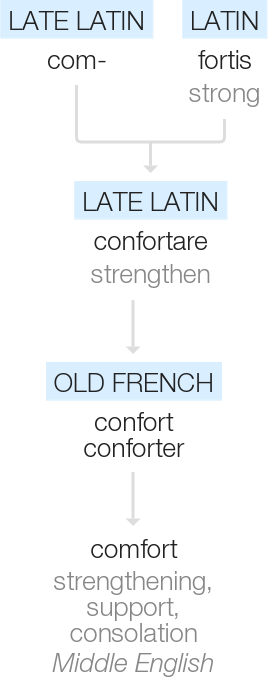
The etymology, at least, of the word ‘comfort’ is clear. ‘With strength’ is the term that indicates that a stronger person or other entity such as a state, a church, or a loving group of lower formality lends its strength to someone or something more vulnerable. In modernity, we shy at the identification of vulnerability in ourselve and of being in need of the strength of another, we fear ‘patronage’ and defend our independence of others. Hence, the tendency to mask any showing of it under anger, defiance, or a prevailing dispasson (which we call being ‘cool’) too often. Yet we remain vulnerable, some of the time, at least under the skin or material facade of ‘coolness.Therebis no doubt thT to some this is a deficiency. Note, for instance, this paragraph Inwrote about Leonard Woolf:
Woolf describes his time at St. Paul’s School where he first developed, ‘the carapace, the facade, which, if our sanity is to survive, we must learn to present to the outside and usually hostile world as a protection ….’. So far, and still at school, so safe. But the ‘carapace’ is not only hard and coarse, it thickens with age, he thinks: ‘This is part of the gradual loss of individuality which happens to nearly everyone, and the hardening of the arteries of the mind which is even more common and deadly than those of the body‘. As an introspective boy, even in teenage, he was ‘half conscious that a mask was forming over my face, a shell over my soul’. But in older age, he has already told us: ‘The facade tends with most people, I suppose, as the years go by, to grow inward so that what began as a protection and screen of the naked soul
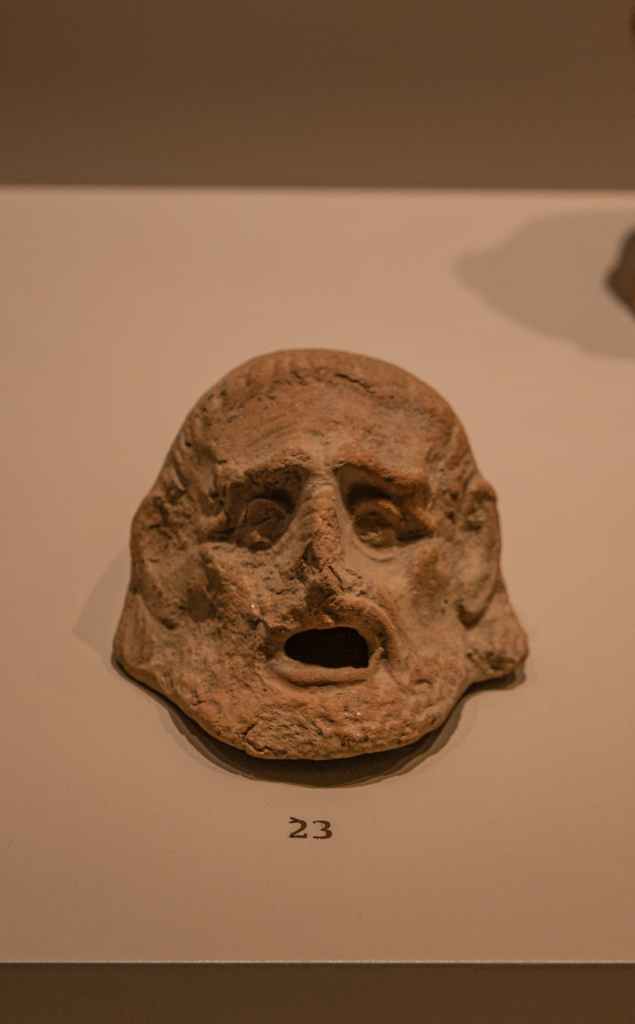
As with a beetle’s outer casing, a carapace is a suit of armour lending it strength that in a vertebrate animal is offered by the spine. We hate being someone describable as ‘spineless’ as ‘having no backbone’. Do we, therefore, make our carapace, unlike that of invertebrates invisible? We spurn support on its factitious but usually very unreal strength. We deny dependendency, whether of extreme old age, chronic sickness of body, mind, or spirit.

There is a reason for this that is in part related to the forces, which changed the meaning of the word ‘comfort’ that set in, so etymononline.com says, in 17th century English. No doubt this had much to do with the change in the notion of family and home and its association to the commodification of furnishings and domestic accoutrements fuelled by colonial wealth and trade. It must have been even more the case in the late nineteenth century where the Google n-gram charts the apex of the frequency of the use of the word – in 1880, to be precise. From there, it declined in frequency, as perhaps language focused less on the privileges of wealthy domesticity. It is on the rise again, however.
Comfort has a softer sense now, as soft as the cushions and pillows often thus described. It pads us in cotton wool rather than strengthens. It is not the consolation of philosophy admired by the medieval divine philosopher Boethius but a soft-sell of things that, for a moment, allow us to relax. We aren’t now supported with strength but something lighter, less substantial. And we fear such comfort: because it is too easily withdrawn and is perhaps unreal. Instead of lending us strength, it negates it, and we are turned from a dynamic force into supported weight.

So if I wish for a strategy to ‘increase comfort in my daily life’, I do not want to turn to the softening effects of luxurious, or even over-cosy settings for disguise my weight in resisting gravity softly, but to those who have more of the strength I lack. It is a strategy that cannot be merely a strategy for strategies are too conscious and self-regarding, it must lie in a recognition that in our diversities our strengths as beings are distributed diversity, but our needs of attachment are defined by mutuality.
If I have a strength, to support another with that particular strength must also be to share it. Likewise, mutuality sets up expectations that the other will have strength to shore me up in areas were I lack the, let’s admit it, ‘specific vertebrae in my moral, emotional.or spiritual backbone.I find, as perhaps wr all do, that sharing of that sort gets rarer more often when vulnerability gets more demanding of the other’s fortitude. The dependencies of ill health or declining abilities in ways that seem more global in age, though of course, never totally do, sometimes make one feel that friends lack the will to stay friends, or to manifest it, that health and care institutions decline irreversibly with their increasing commodification of what care means.
Communities on which to rely, where strength is shared in a communitarian ideal, also dissipate as we seek individual comfort for one’s self more than seek to share strength in our groups of many people and things. Neighbourhoods are no longer the definition of whom our neighbour is, and even Good Samaritans are rather rarer than when Christ instanced them, though tbey exist, the despised communitiez that turn to help us shennour supposed equals prefer distance and to walk on the other side of the road.

In truth, there are no ‘syrategies’ of which my poor ego has in its resources to return true vomfort of communal support. Such communities are killed politically and in the mass and will resuurect only politically and in the mass also. They are not utopia because they must and will be situated in place and time. They are not born or paid for by growth, as is the diminished Keynesian version of modern care, but live in bonds sought and consolidated with our own and other people’s diversity. They will eschew any attempt to equate comfort with things money can buy or which can be evaluated only in self-interested exchange of goods. THEY WILL EQUATE STRENGTH WITH LOVE.

So forget strategy and vomfort as a function of things and ghdir branding and marketing, think of social grouping, and minds that change together not in mutual self-interest but mutual love and care where vulnerability is owned and shared alongside strengths of all kinds.
With love
Steven xxxx
 Steve_Bamlett_blog