What are you most worried about for the future?
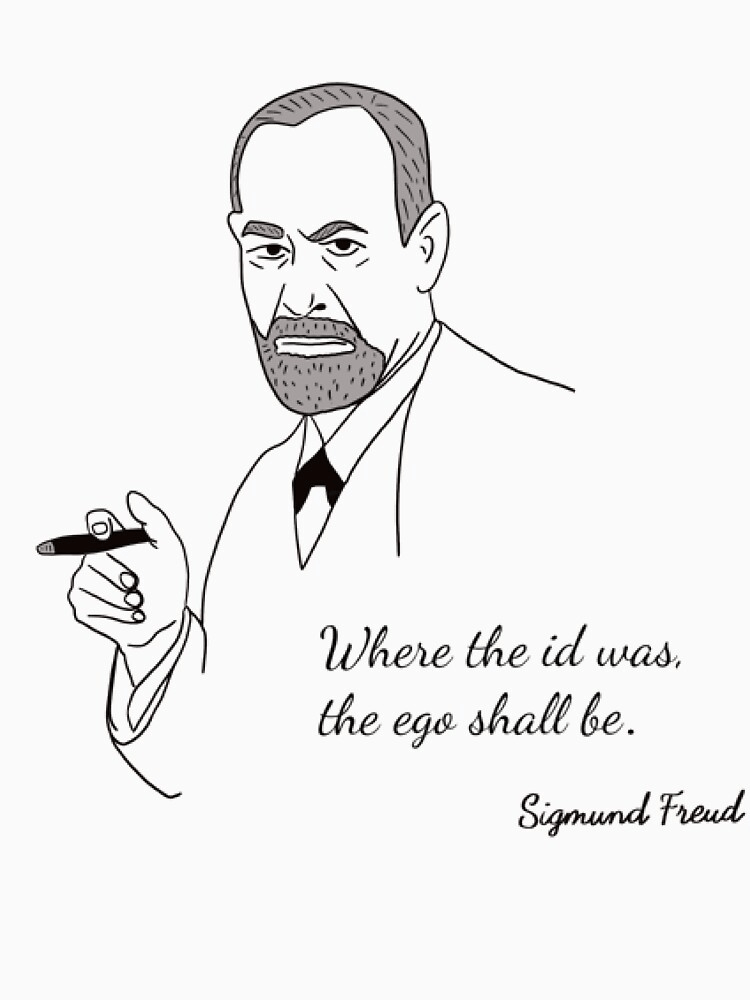
‘Wo Es war, soll Ich werden‘ is one of the most famous summaries of the role of psychoanalytic treatment by Sigmund Freud and in the James Strachey Standard Edition in English of the works of Freud is translated as “Where id was, there ego shall be.”, It has always puzzled people why Strachey chose to translate the words ‘Es’ and ‘Ich” for Latin equivalents for the plain English versions ‘It’ and ‘I’. Freud intended that psychoanalysis, by unpacking the stored memories of a past that had become unduly dominated by unspoken and more pertinently ‘unknown’ impersonal desires (the ‘It’ indeed), could in the future bestowed by a psychoanalytic present be both spoken and appropriately owned by an ‘I’ now in charge of itself, or at least more so than previously.
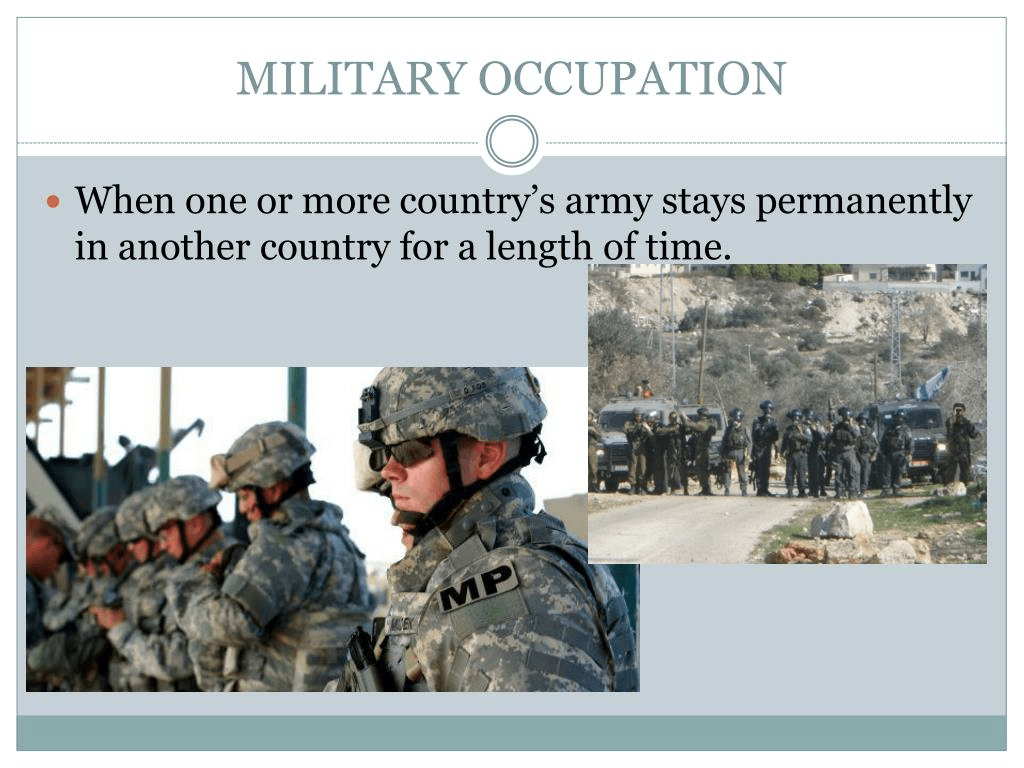
In Freud, psychological functions are said to ‘occupy’ concepts, such as the future, as an army occupies a land it has not previously owned or settled. Military occupation is one of the associations of the word ‘Besetzung‘, the word actually used by Freud includes the idea Peter Gay insists of the occupation of land by an army, though it had other associations. That association with occupation, Strachey again chose to avoid by the uses of an Anglicised term from Greek, cathexis.
The future is like an unknown territory, whose unrecognised natives (the ones we fear or even openly choose not to know) are never to to be looked in the face with open eyes as themselves, and their autonomous rights respected. Instead they are either subjugated, or exterminated if beyond the pale of our limitations or they refuse to comply, in the manner of the state of Germany in 1929 in the Sudetenland or the state of Israel in Gaza now. The ‘I’ is as busy an agency as an occupying state, and it uses a set of weapons to prosecute its purpose. These things are not tanks or bombs but things likewise deadly to the ‘unknown’ (especially those things you CHOOSE not to know) in the future: namely weapons we name ‘plans’, ‘projects’ and strategies. It hates not to know what might happen, and when it feels that the future is open rather than enclosed by its planning, it responds with angst (‘anxiety’). Good futures are one’s you own, the Imperialist and defensive version of the ‘I’ thinks, like the ‘prospect’ of your landed estate or the ‘project’ you sign off on as a complete vision of what you will allow to happen in the future (if you can) or the plan you put your stamp upon.
Hence the future must never, we think in the normal course of things, be an It, an ,’Other’ that does not recognize our dominion, but an ‘I’; something in which our own agency has the upper hand. Hence what I ‘worry about’ in the future must be the uncertainty of it, the fact that what it contains is unknown like the contents of what philosophers of science and knowledge call a ‘black box’. but ‘worry’ in itself, not even expressed as ‘angst’, be necessarily a thing that only frightens us. The internal mechanics of anxiety – the anatomical and biochemical exchanges in the body systems working in concert – are not unlike those of feelings we consider positive, such as excitement that we feel to be involuntary or the close attention to unforeseen opportunity. The future can excite for the same reason it makes us afraid.
That we all know this is the one thing certain, as is the doublethink that we prefer to highlight the negative rather than the positive, or even the neutral and dull, in the ‘unknown’ or the future. We worry often in order to prompt us to ‘plan’ our future even more: using projections and forecasts, so that, we tell ourselves, we can respond appropriately. Most often we react defensively rather than appropriately. Defensiveness is, of course, another shoring up of the ‘ego’ or ‘I’, often a building of defensive walls around a very inadequate core of being – one liable to kill itself by its own fears than to heal and move forward and embrace necessary change or to plan not just to change the external world but itself in preparation for that new world.

Hence in an important sense what ‘worries me about the future’ is our tendency to valorise ‘worry about the future’ over any attempt to see ourselves as we are, naked and afraid of things that we might embrace in positive change, like that expressed modestly by the Green Party in our current election. I remain a socialist for that reason, aware that the subjective thing that chooses defensive and reactionary responses to the future is lesser than that which hopes by concentrating on the changing all negatives that threaten the chance of a future – like environmental decay and the primacy of self-interest. I cannot. like the present Labour Party, mask the tendency in human psychological structure reactionary nature under a rhetoric of under-resourced ‘hope. I want to like those who attempt to bring about a manner of living wherein communal sharing rather than selfish holding onto ‘things’ is the norm under which we march into the futures as a liberating force. Let’s be suspicious of personal growth that is, in fact, stasis masked by selfish materialism. No wonder we worry! Hope as to be hope for the yet unknown that it is our duty to facilitate.
With love
Steven xxxxxxx
 Steve_Bamlett_blog