List three books that have had an impact on you. Why?
The last three books I read might as well be the list of books I offer here. For if they did not have an impact on me, in truth, I can’t have read them. That may not always be the fault of the book because sometimes I can be incapable of reading. Those times are defined by an inability to encounter the words, and sometimes the graphics, in the book, in a way that meets them half-way and interacts with them. Without such interaction, the process excludes the manner in which thought, emotion, passive, and active bodily sensation make the words live in the space between you both.
This prompt question then is for me about what ‘reading’ is, not just the quality of books, though that matters too. Some books do not even want you to interact with them, rather they are things you consume; the ‘fondant fancies’ of the embodied mind. These are commodities that merely pass time and are remembered no more than in that the time they took to scan through is time now lost to you. It is the difference of the passive ‘remembrance of times past’, in Moncrieff’s lazy translation of Proust’ s novel title as if Proust were like the Shakespeare sonnet raided for those words. But what Proust is likd is nearer to the literal translation of his French title. Reading Proust is an active engagement to the core of book and reader, like the words In Search of Lost Time‘. Active search of ‘temps perdue’ leads to the recreation of those times as something meaningful to your present and future – what Proust knew as ‘time regained’.
I think I blog on books in fact, not to convince anyone else to read the books that engaged me with the reasons why, but to ensure that they have engaged me – such books can be said to have read you as much as you read them.
So why not list those LAST FEW BOOKs.
ONE: Last night I finished a book on Rainer Werner Fassbinder, Ian Penman’s book of 2023 called Fassbinder: Thousands of Mirrors, published by Fitzcarroldo Press in the UK, Semiotext(e) in the USA.. It is a book that has allowed me to reread my past in watching Fassbinder films, which I love as Penman does,thrilling to the stills that Fassbinder’s films are so good at creating (as he rightly says, but also the past in which I engaged with them such that they have, I believe, helped interpret the time through which I lived and continue to live. It recalls stills like this;
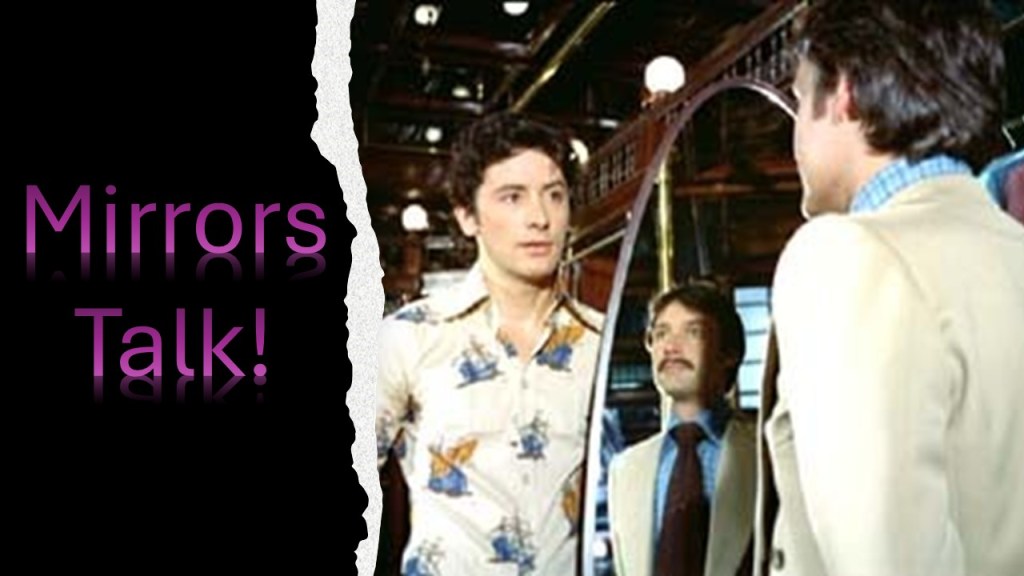
This still is far from still although it is a very flat conversation indeed (mirrors and image -bearing surfaces are literally flat). However, it has depth in our response to it. It is a response that only works when we engage, remembering through and feeling with it, the moments in which self, other, and mirrors engage each other in recording and assessing our looks nd looks atveaxh other, our gaze. In that exchange, something like desire may live too, though desire may be locked away from deeper engagements we call love. On the other hand, it may not, as in Fear Eats The Soul by Fassbinder.
It is the kind of invitation to the experience I, and others, bring as readers, that makes the title ‘Thousands of Mirrors’ meaningful. But the book lives too, in my life, because it interprets my experience – past, present and to come no doubt, making it live again or creating the possibility of it living in the future. Read experiences can differ very little from rhose within life in the raw: experiences of love lost for instance or love affirmed, or both. This book recalls other books like Matt Colquhoun’s wonderful Narcissus in Bloom (read my blog at this link).
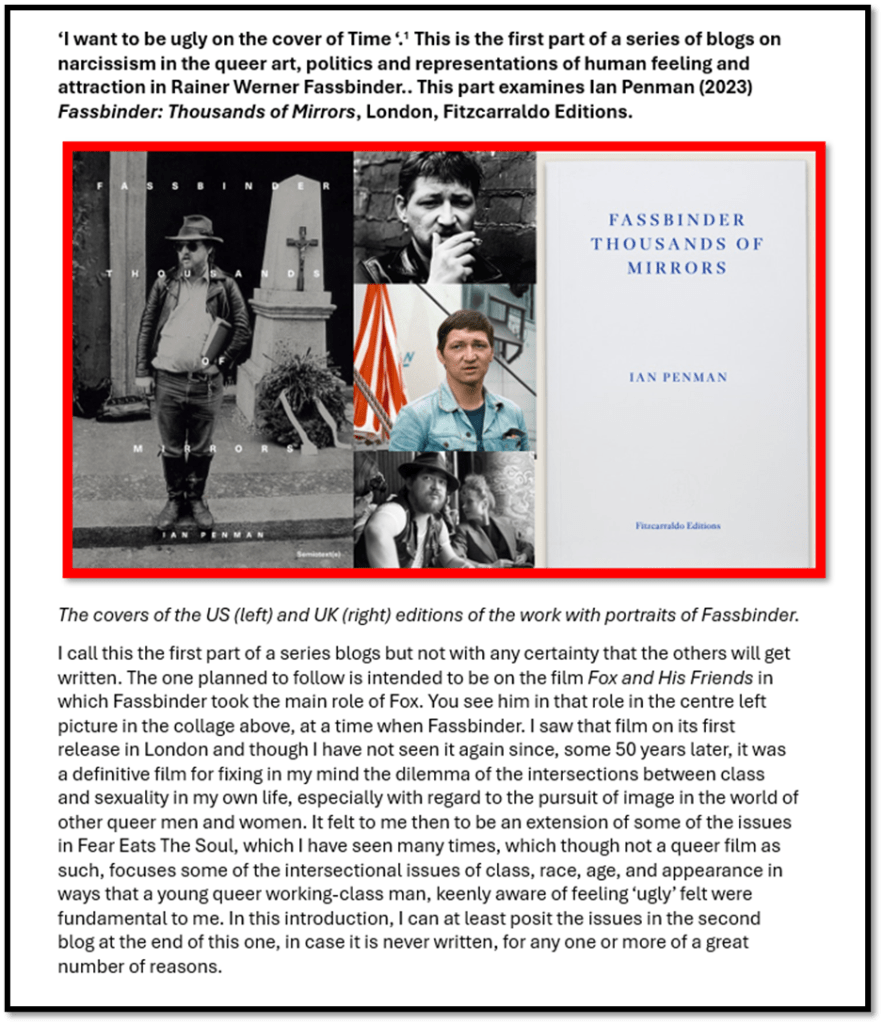
I have started my blog on the Ian Penman book aided by reviews in The Los Angeles Times and, especially, Jacobin, for the latter article, by William Harris, situates it in the history of my conjoint reading and experience – like the impact of Stuart Hall, The Birmingham Centre for Contemporary Politics and the then Marxism Today of Martin Jacques on my politics and life generally. But it is also about growing up queer in a heteronormative and homophobic society we still inhabit but which was much worse then, that developed feelings in many gay young men of being trapped in the necesity of cultivated appearance and the fear of ugliness. I have started my blog, but it needs time and daring. Here is the rough draft of my beginning:
The next book on my list was the one I blogged on before that and the blog will speak for itself.
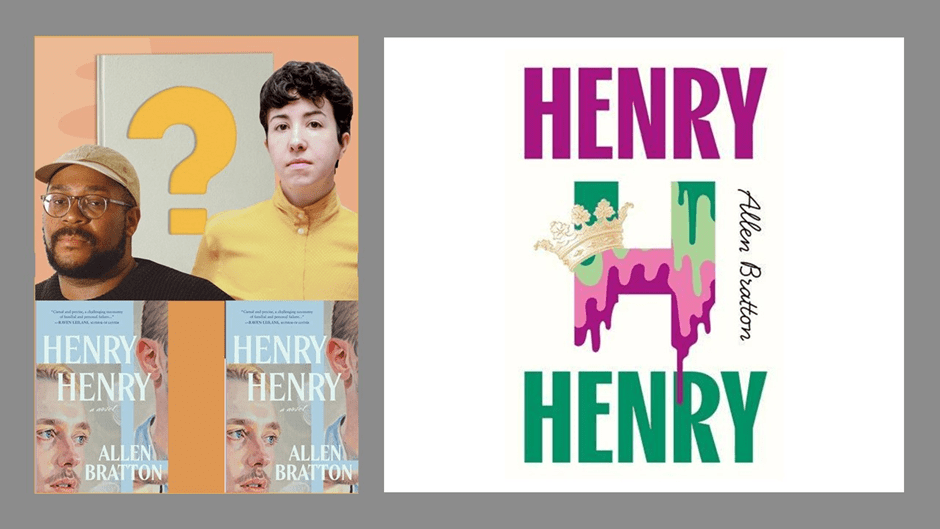
TWO: I blogged on Henry, Henry, a novel by Alan Bratton. See the blog at the link below. This book recalled my ownnobsession with Shakespeare’s Henry IV Part One since I read it at O level and ever after, using it, for instance, as a text, when I lectured in Literature to give to a visiting group of Russian learners in the 1990s. I remember especially the moment when I insisted tonthe Russians that Henry’s wish in the play’s first lines for a time in which it is possible ‘for frighted peace to pant’ mirrored the creation of Falstaff, a fat man forever running and panting from violence he sometimes incited.
It was clear to me that 1 Henry IV mattered too as a book that between us, Bratton and myself, tried to make sense of as men growing up queer, though my experiences matched those of the novel’s protagonist, Hal, not at all. There were moments when I sensed I had a bit of his Jack Falstaff about me, though. Here is the blog via a link on this sentence.
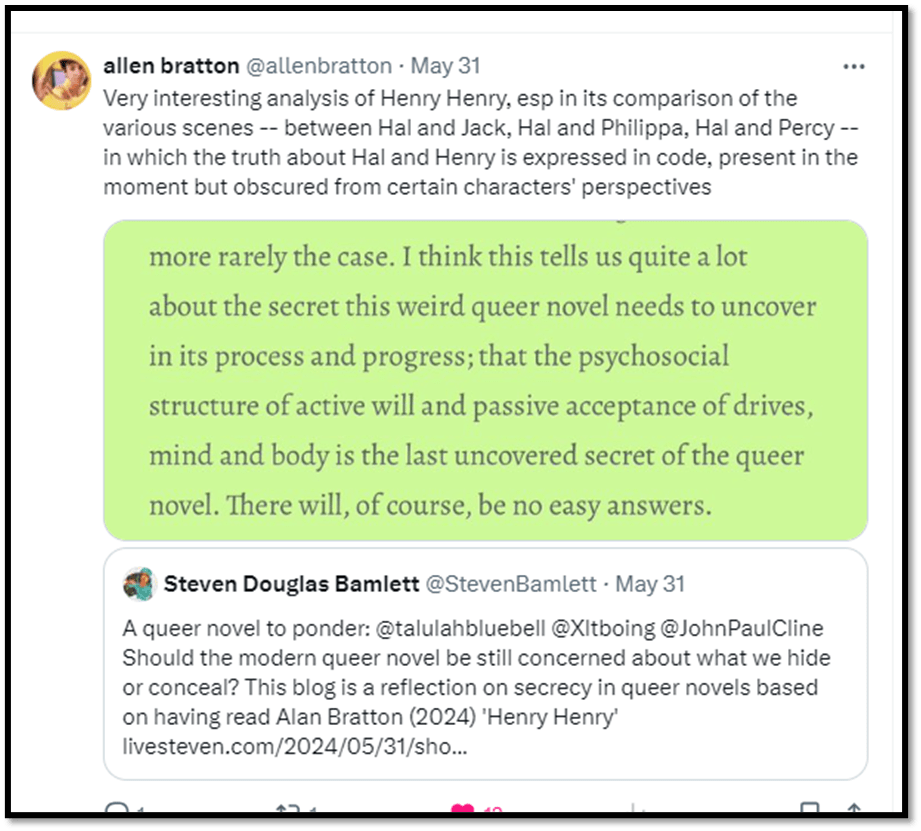
Alan Bratton is a debut novelist, and sometimes debut novelists respond to you before they become too famous or busy to dare or nother to do so. Alan did on Twitter. Thank you, debut maestro!
And then the blog before that comes up with my third impactful experience as a reader.
THREE: Olivia Laing (2024) The Garden Against Time: In Search of A Common Paradise, London, Picador.
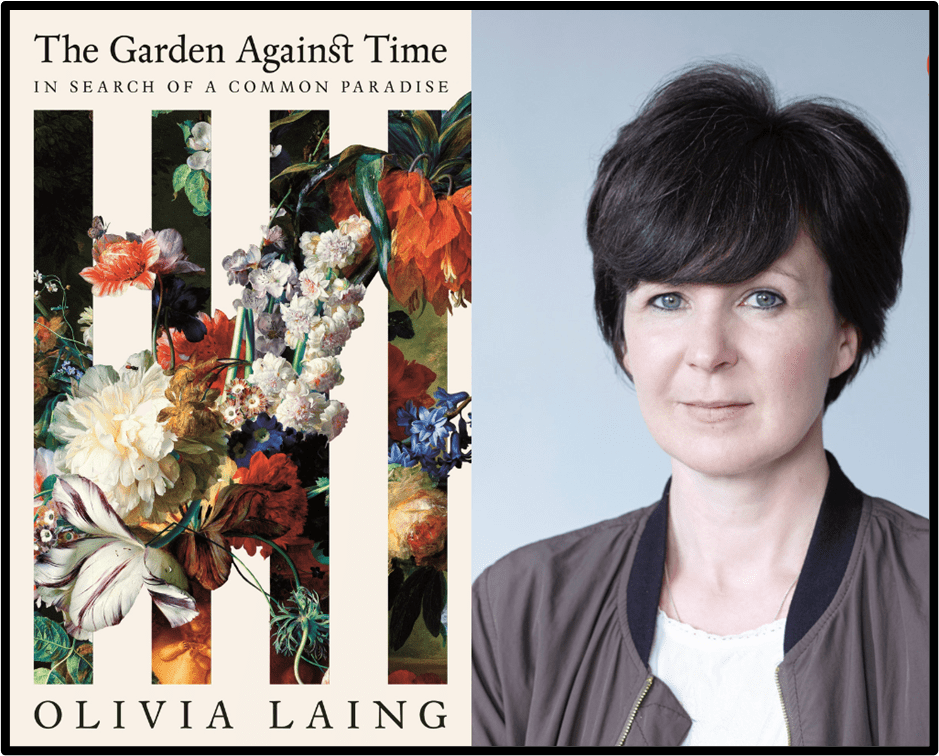
I am a great fan of Olivia Laing, so when I say this book had an impact on me I am probably remembering her whole oeuvre that has made experiences of transitory and enduring mental health issues, alcoholism and absorption in art easier to understand. My blog can be read at this link sentence.
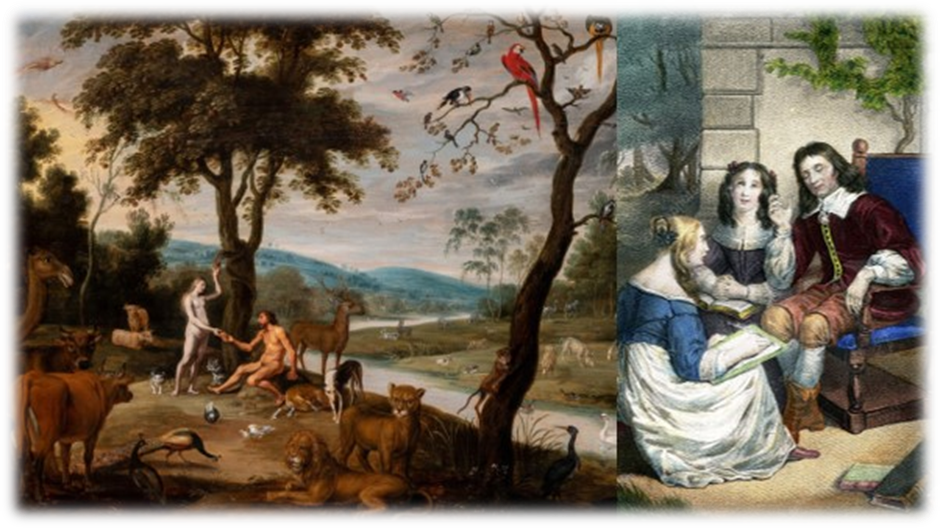
One reason I am a great fan may be clear in the blog, for Olivia Laing engages with great books in ways in which Ibtried to define as the only way of truly reading above, whether that be a gardening manual by a late queer gardener from Sissinghurst Castle Gardens, Milton’s Paradise Lost, with its restorable Garden of Eden, or Derek Jarman’s Modern Nature (and of course endless wonderful lyrics recalled from John Clare). But think about this: Milton, though blind, read his Paradise Lost and imagined naked working perfection therein:
So maybe the Fassbinder blog will be tomorrow. If I can? If I dare?
With all my love
Steven xxxxxxxx
 Steve_Bamlett_blog