


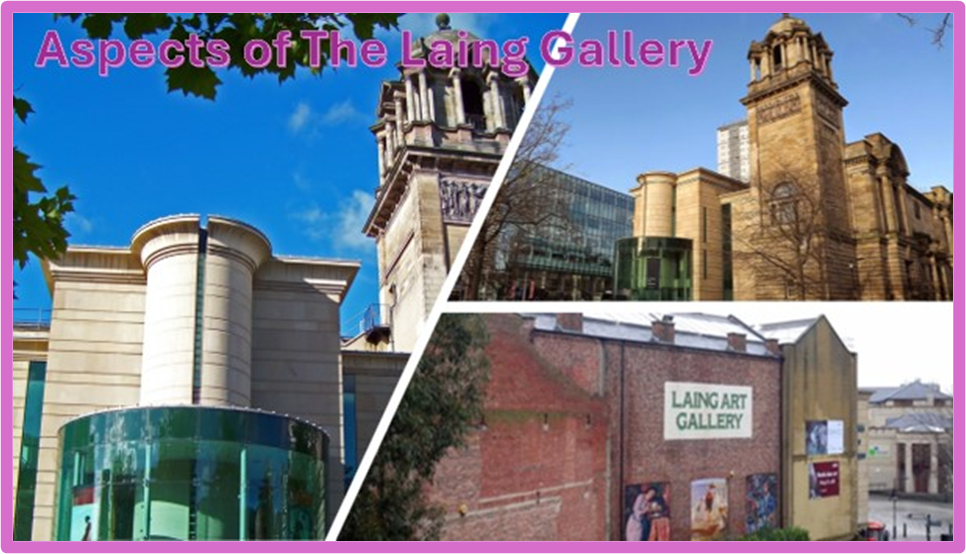
A ‘rolling description’ is where I post early on the day of an event and keep updating it as the experience I am trying to recount occurs. It is now 6.30 a.m on the 28th May and I am looking forward to friends Rob and Linda Goffee arriving(about 11 a.m. we think, to leave for our trip to Newcastle-upon-Tyne to see the new exhibition at the Laing Gallery. Last night I read up about the exhibition and collected together the preparatory information for the event.
Visiting The Laing Gallery, Newcastle-upon-Tyne, to see Turner: Art, Industry & Nostalgia, featuring The Fighting Temeraire, visiting from the National Gallery, London on Tuesday, 28 May 2024.

Today we visit the Laing Gallery in Newcastle-upon-Tynes with our good friends, Rob and Linda. The exhibition has been compiled around a visit to the Gallery of J.M.W. Turner’s masterpiece The Fighting Temeraire. The exhibition runs until the 7th September. Luxe Magazine online offers the rationale for the exhibition for Tyneside. They say:
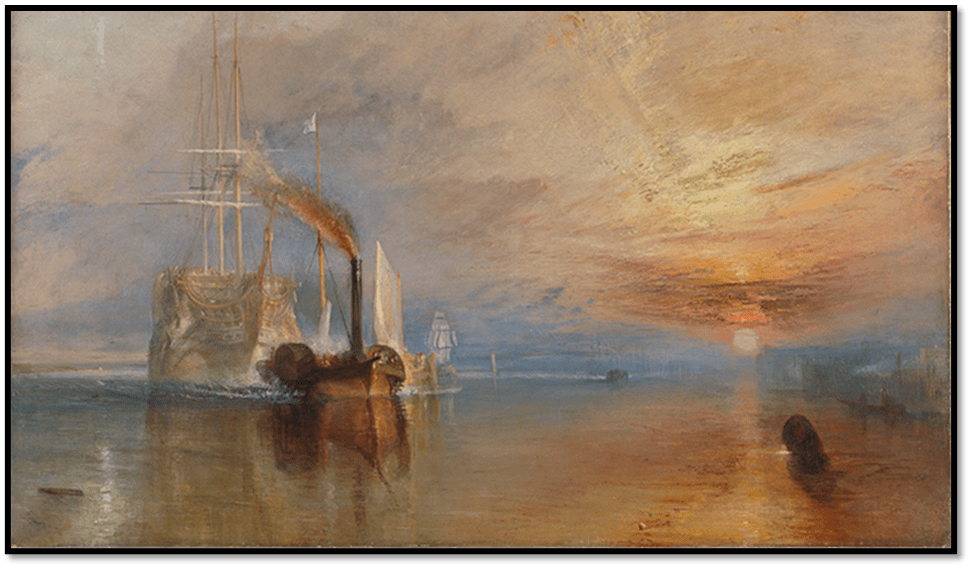
The Fighting Temeraire, regarded as one of the artist’s best-known works, is a tribute to the ship HMS Temeraire. It played a distinguished role in Lord Nelson’s victory at The Battle of Trafalgar in 1805.
The painting shows the final journey of the ship as it is towed along the river Thames by a modern paddle-wheel steam tug in 1838, towards its final berth in Rotherhithe to be broken up for scrap.
While Turner may not have based his steam boat on a specific vessel, it is particularly pertinent to the North East and its industrial heritage that the two steam tug boats that pulled the Temeraire in reality – the Samson and the London – were manufactured on Tyneside.
The Gallery have complemented this star exhibit with other works. This is their rationale for building around a themed exhibition they entitle: Turner: Art Industry & Nostalgia. I am not sure yet whose nostalgia is implied. Is it that modern technology represented by the tugboat in the picture is creating the sense of a past fading from memory, much like the ghostly representation of the old British fighting sail ship. Or will it be about the nostalgia in the North East for the period where the nation turned to Tyneside as one its major makers of ‘modern’ marine technology like the Samson.
Here is the continuation of description of the show as the Laing want it to be (the paragraphs from Luxe above are in fact from the Laing website too and are followed by the paragraph below). The inclusion of Chris Killip, a favourite of our regions nostalgia for its working and working class past might suggest that this will at least in part cover the self-reflecting nostalgia of the region.
In addition to bringing together over 20 works by Turner, Turner: Art, Industry & Nostalgia includes other important pieces by artists including Tacita Dean, Chris Killip, L.S. Lowry, and James McNeill Whistler. The exhibition will be displayed across two of our galleries on the first floor, with sections exploring Turner’s life and career, the role of the Temeraire itself, Turner’s depiction of steamboats and industrial subjects, and the continuing story of the industrial landscape in art.

It is a neat trick for curators, in this case Lizzie Jacklin, Keeper of Art at the Laing, to shift the emphasis from technological inventions, such as the steamboat to the landscapes that Turner is famous for, and will allow the Laing to show some of its own great landscapes, often nostalgic themselves for a pre-industrial Norther powerhouse feudal in origin). In the trailer advertising the show the curator says that the exhibition does segue into dealing with the effects of industrialisation on pre-industrial landscapes. It justifies them starting with, as it says too on the trailer with Turner’s picture of the feudal powerhouse Dunstanburgh Castle.

I suppose one ought to expect rather loose connections between many of the artworks on show, given that the ones I have already outlined have already been so loosely connected together by the Laing already. That could cteate a huge range for visitors seeing a great many more networks of association between the paintings for themselves. I hope this happens in my case. I will report back as I go, taking and sharing pictures where it is permitted. Honour to the The Fighting Temeraire. See you in the flesh soon!
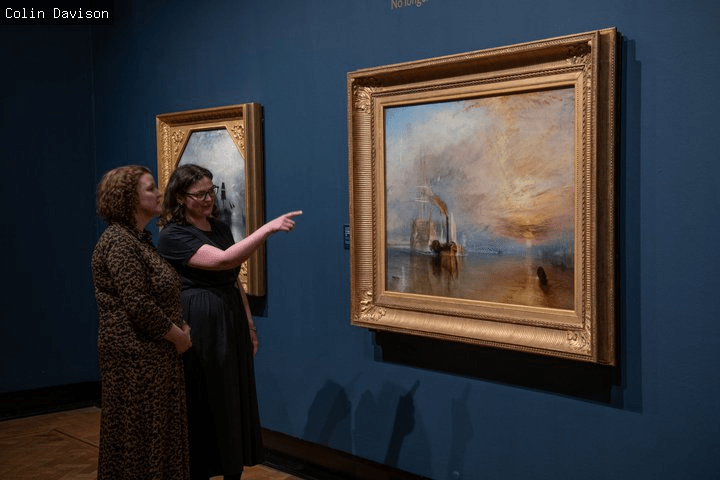
Above is Lizzie Jacklin, Keeper of Art at the Laing, pointing out the features of the painting. A ‘tug’ on the heart. Coming in close is the ghostly past. See you in Newcastle.
On our way in Rob and Linda’s car.

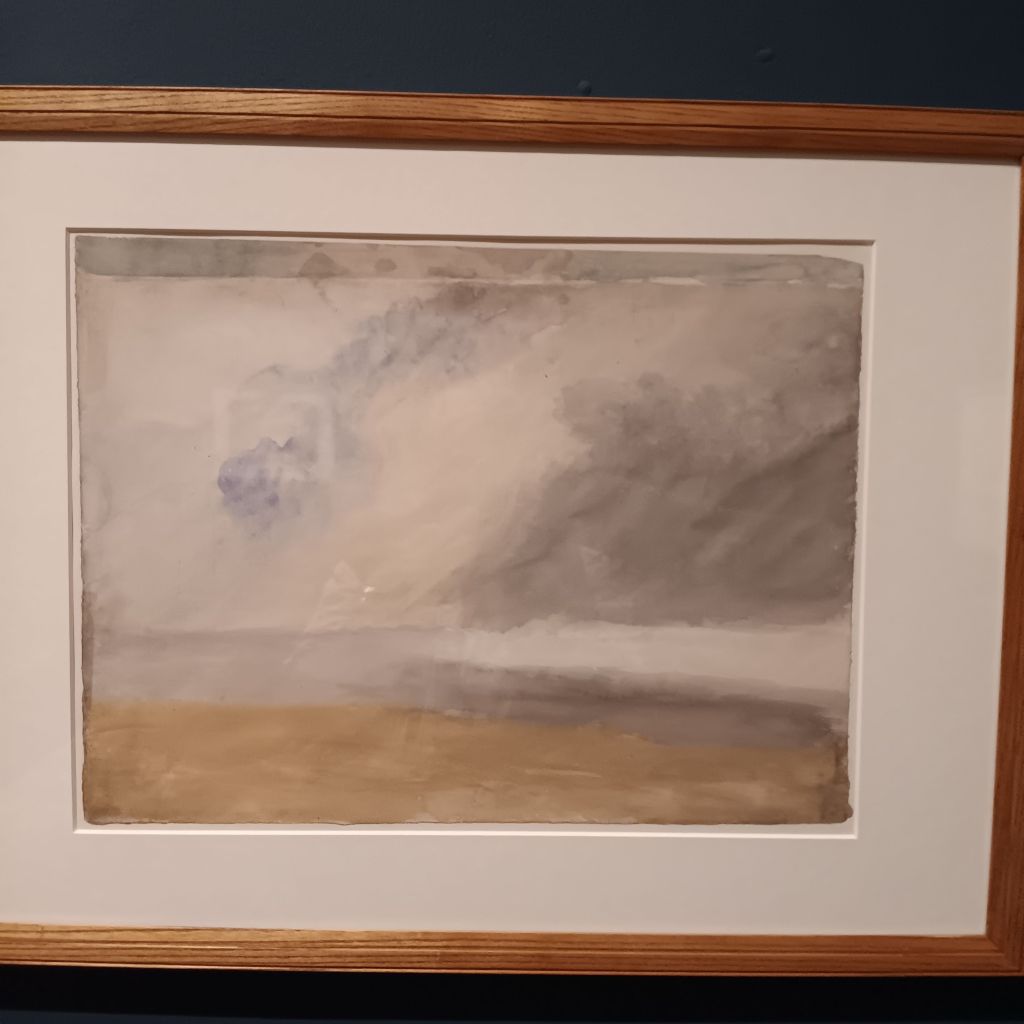
, and, of course, even the studies are magnificent like this early study of the atmospherics of Tynemout. It all seems to suggest Turner grasped place first by situating himself in the imagined space of the universals of nature:
Much of the exhibition tells the story of The Temoraire, particularly at Trafalgar. Turner’s scene is rather overpopulated for one whose figures always seem to me to not really believably part of the place and space they inhabit.
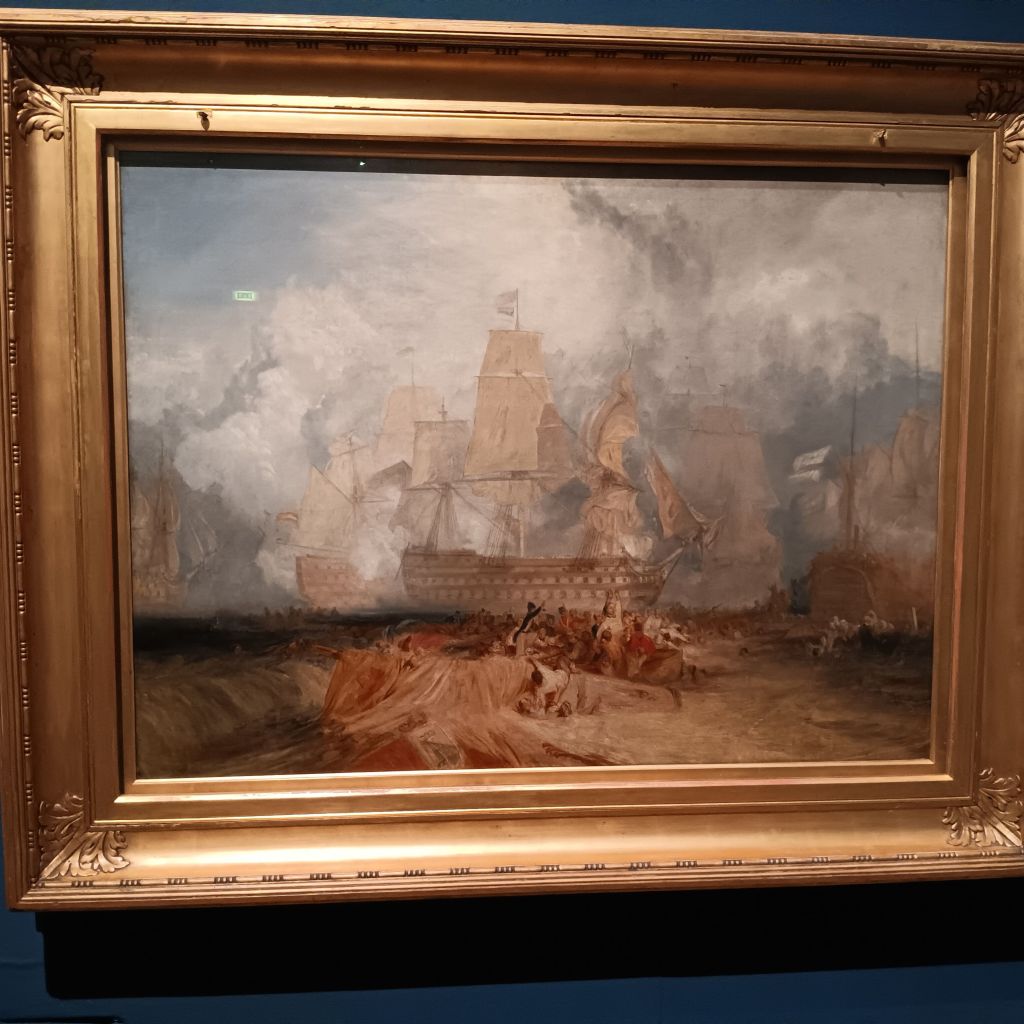
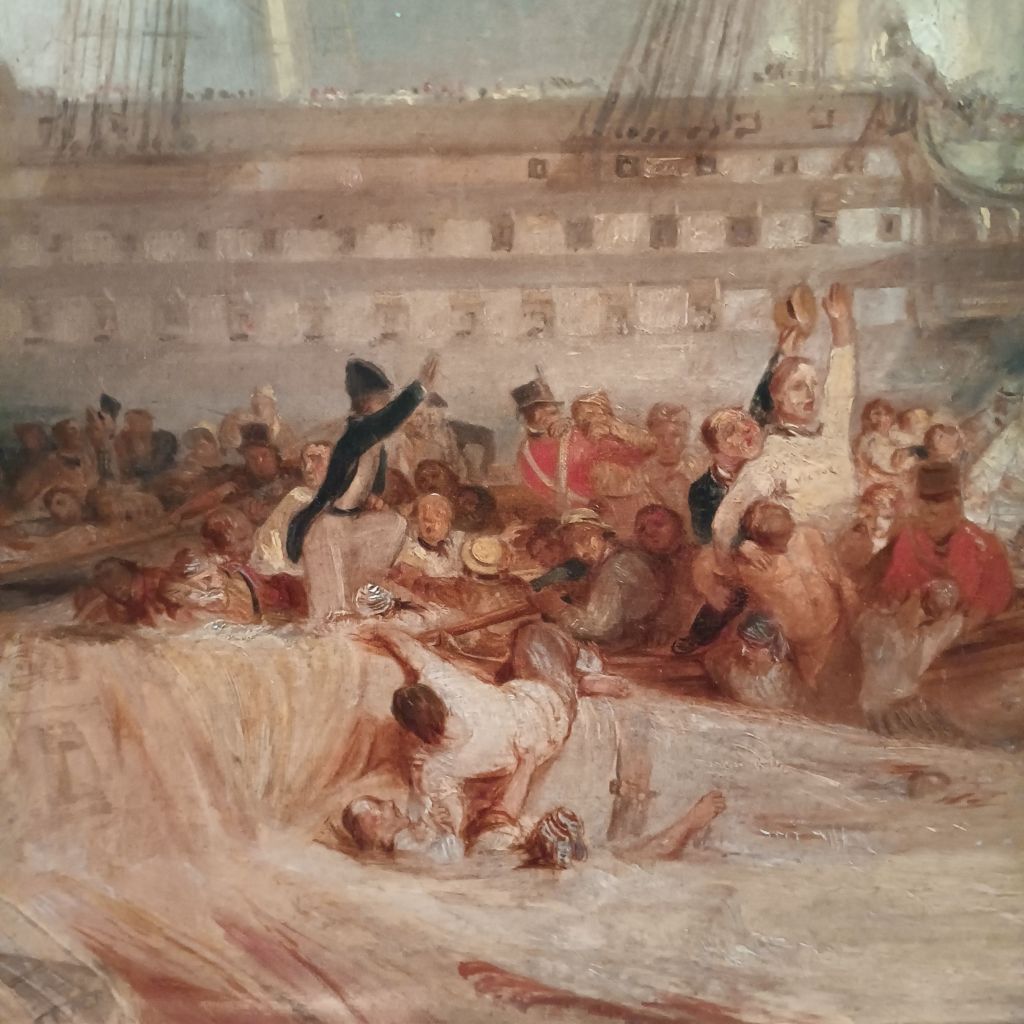
He is better, I think, at the wider more generalised emotion than drama. Hence the wonder of his pictures of the death of ships from the past, with the boldness of industrialisation playing its part.
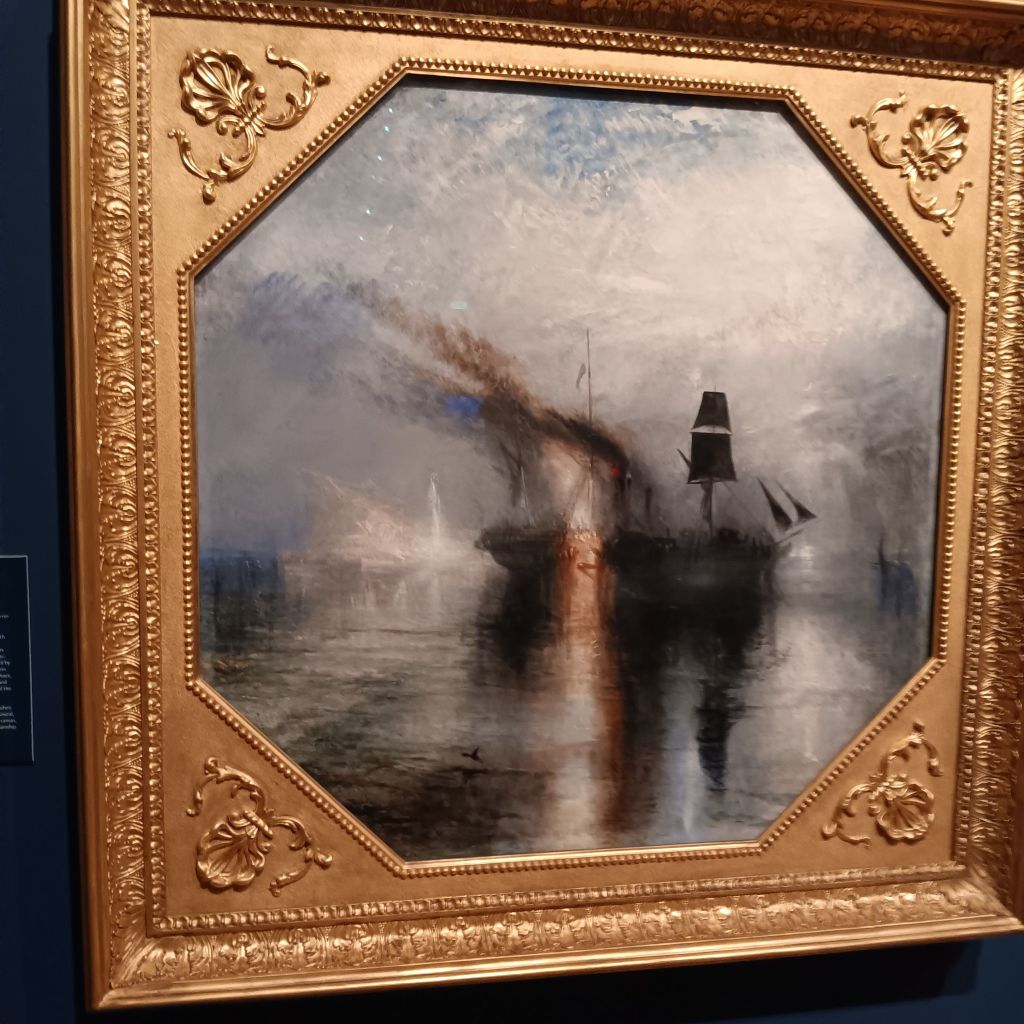
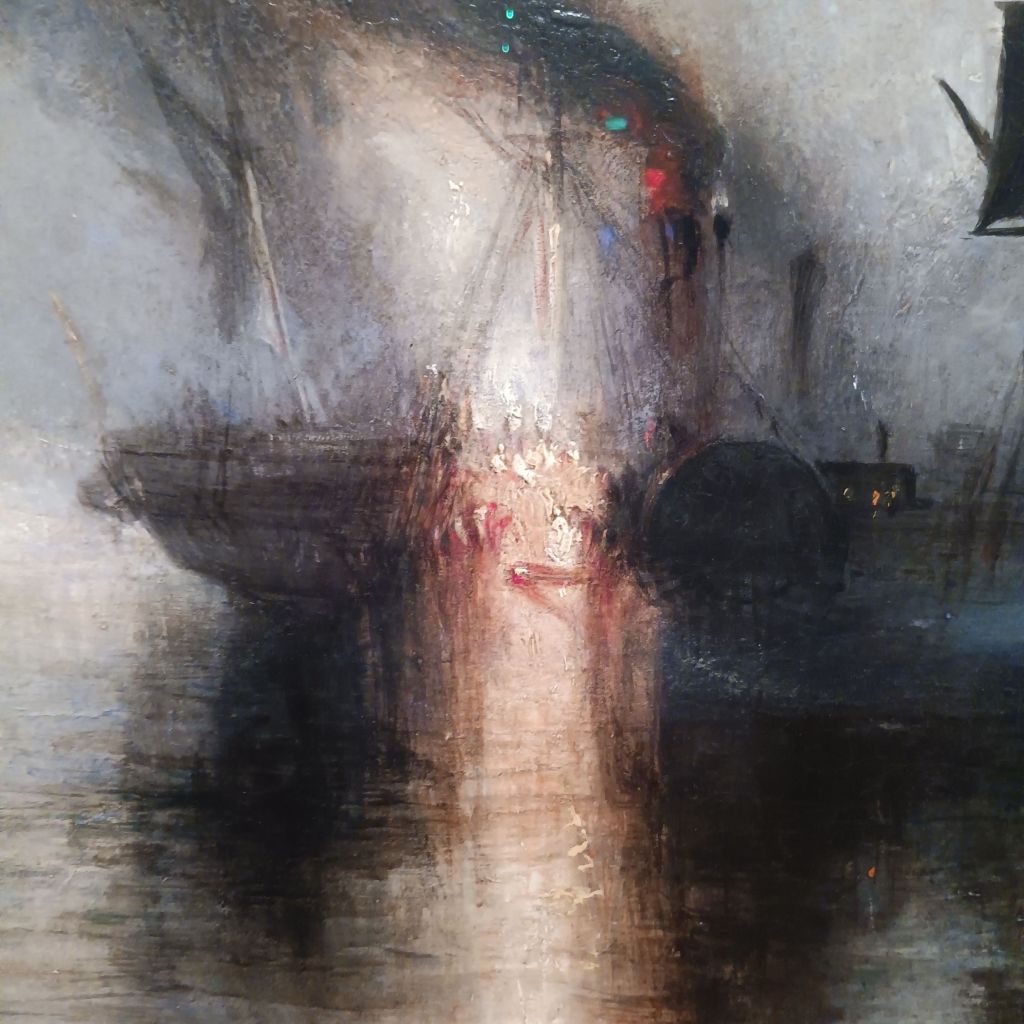
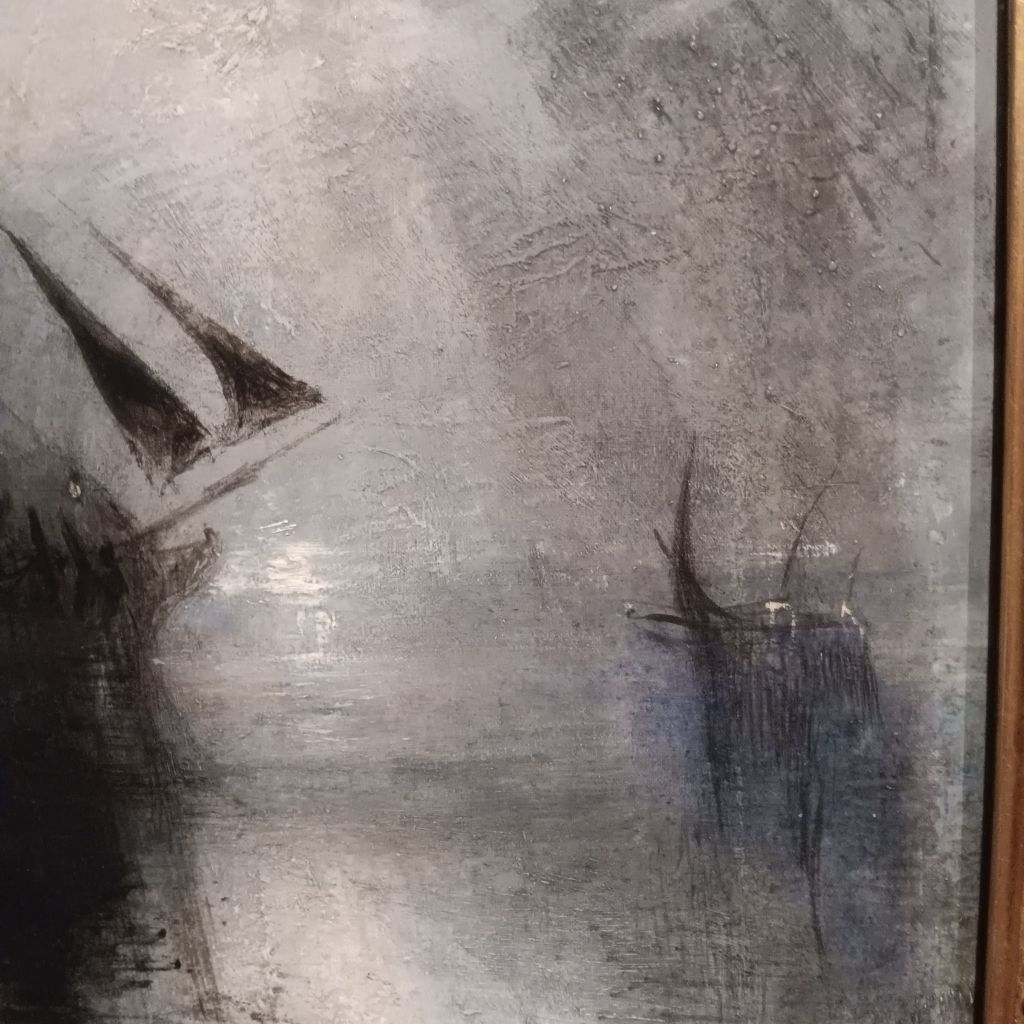
These are intensely moving, almost apocalyptic moments.
The exhibition supplements with local nostalgia, and I was most pleased to see the pithead, once near to me by Tom McGuinness
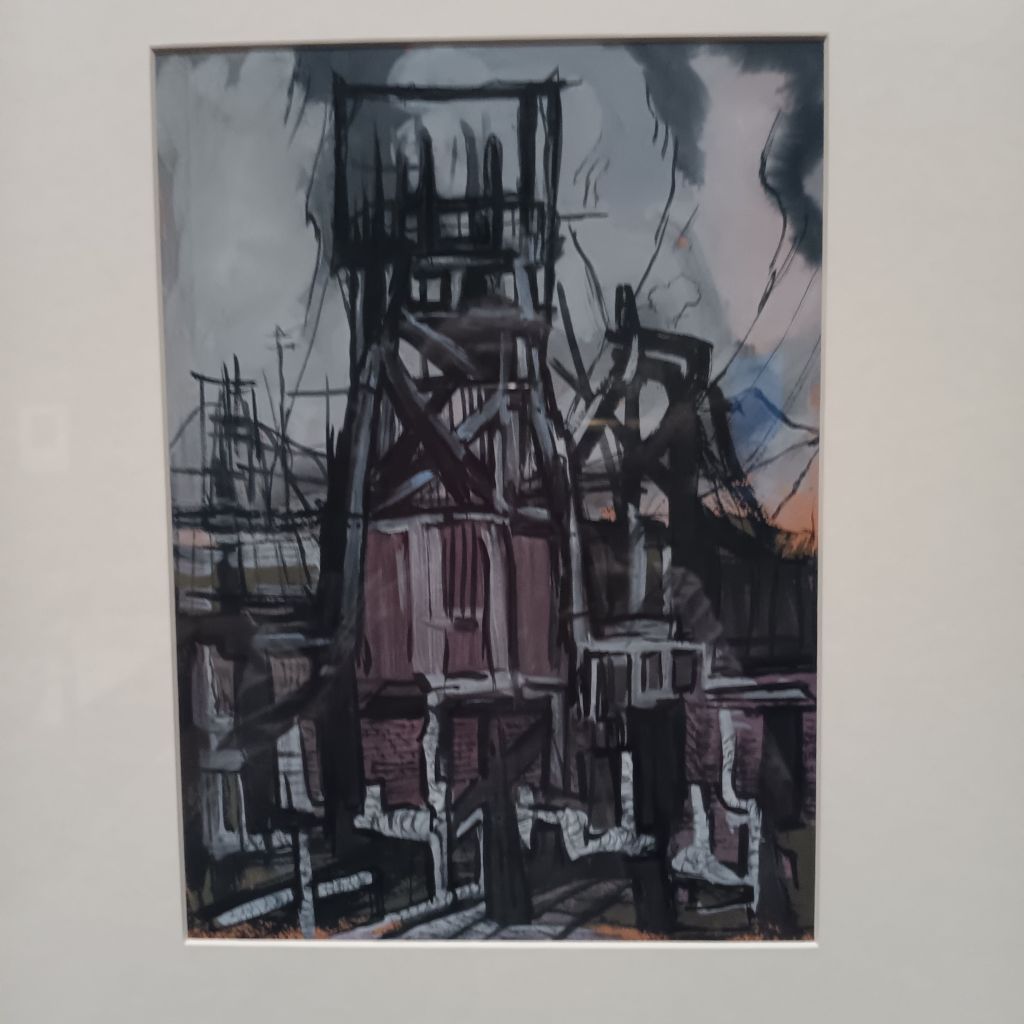
Something like this, once it has gone, can not be wished back, but how monumental it is. The Killip picture I referred to above is in the exhibition, but how much more telling when near to the same scene with shipmaking in the Tyne gone, and the streets themselves under demolition.
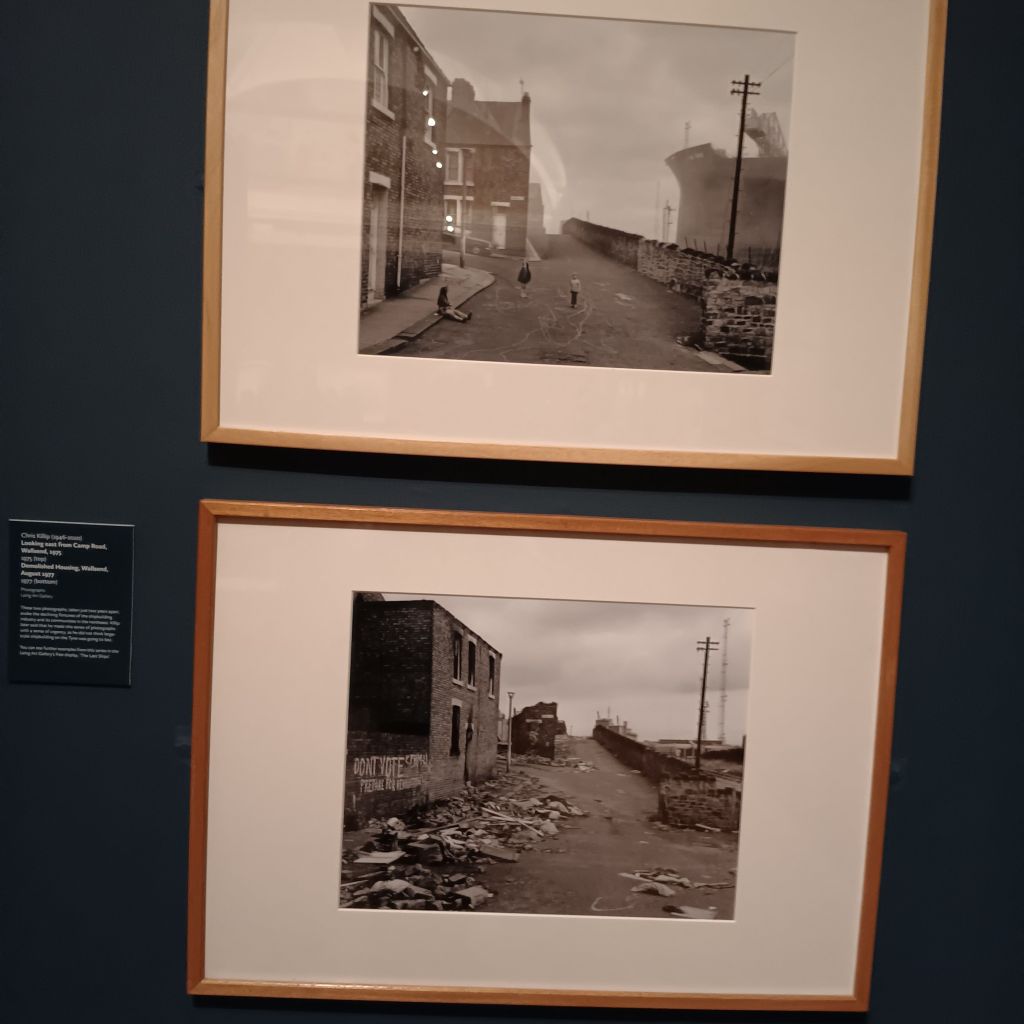
Of course, we do not want them back, but oh, what forms of life have we lost in the impotence of desire for what a whole people loved as well as were constrained by.
Too tired to write further. Bye.
—————————————————-
Much love
Steven xxxxxxxx
 Steve_Bamlett_blog