



“Strictly speaking,” said Mr. Strict DyasDust, who spent his life correcting others, “this question is nonsense because it uses the word ‘practice’ as a verb whereas it is only a noun. Ask me, if I practise religion, or do not ask at all”.
In the UK there probably are people who still care about the appropriateness in British culture, as mediated by the received practices of a language considered to define ‘British English’, of spelling the word ‘practise / practice’ in a way that focuses its use in a grammatical sentence (respectively as verb and noun). I am not one one of them. I remember though the words ‘practice’ and ‘practise’ being constantly corrected in my prose as a learner throughout school and university, some people taking the correction almost to the point of a ritual of a religion they are practising. I expect this happens much less frequently now since the spelling distinction of the word when used as a noun or verb is absent in American English. Since American English is probably the most powerful of forms of the practice of English globally, there is a silent agreement, I think, not to notice what once was considered a gross error in British Education.
The word(s) are used a lot in professional training and I remember the staff of a Social Work Department I used to lead being totally divided (in a university Department that rather liked to practice divisiveness) around the issue. Currently, it is no doubt common for tutors to pass over silently a sentence in a learner’s essay that reads thus: ‘It is important to apply an appropriate social work theory or set of theories to your practise’. When I trained, tutors bore a red pen to cross through or circle around the word ‘practise’ in that last sentence and write in the margin: ‘PRACTICE. The word you should be using is a noun, not a verb!!!!!!’ Now, as I type this, the US spell-check default in WordPress now marks PRACTISE as a spelling error, since to the USA, the word does not exist spelt thus. As the standard of the global internet no-one differentiates the reference to a thing or an action, or in grammatical terms a noun or a verb woth tespect to this lexical item. The purists in the UK justify the continuation of the differentiation as an important way of teaching the grammatical and ontological questions.
Here is how the dictionary makers deal with the issue. Here is the Collins Dictionary online:
What is the difference between practice and practise?
In British English, practice is a noun and practise is a verb.
1 used as an uncountable noun
Practice involves doing something regularly in order to improve your ability at it.
Your skiing will get better with practice.
He has to do a lot of music practice.
2 used as a countable noun
A practice is something that is done regularly, for example as a custom.
Our usual practice is to keep a written record of all meetings.
The ancient practice of yoga is still popular today.
3 used as a verb
If you practise something, you do it or take part in it regularly.
I had been practising the piece for months.
His family practised traditional Judaism.
In American English, the spelling `practise’ is not normally used. The verb and noun are both spelled practice.
I practiced throwing and catching the ball every day.
Does it matter? Possibly not, but I think there is an interest to be had in making the distinction before I answer the set question. Clearly, the US prompt-writer used the word as a verb. There may be more clarity in a sentence though that goes something like this and uses UK conventions: ‘Though the practice of a traditional High Church Anglicanism with its rituals and symbols mattered to the people of High Netherworld, most of the congregation accepted how the young queer vicar who was now their minister practised a rather eccentric and singular version of their habitual liturgical practices’.
Again WordPress puts a curly line around ‘practised’:

It is unlikely then that the distinction of noun and verb as spelt differently will last with such defaults of correction. And there is something to mourn here, because the spelling difference does allow us to mark legibly (in a word and a common ‘law’ regulating a word) the difference between the prescribed form of following a religion and our own individual or cult manner of following it in our own way.
Very strange individuals like myself who believe in the matter represented by religion without any faith in its conventional requirements, like belief in God or substitutes for the same (Satan and their crew (or any other pantheon of polytheistic religion) being more incredible to me than the unitary Higher being urged for my belief during my youth). Nevertheless I find the practices thrust into my attention of selfless love and ethical action compelling even when I fail to practise them in the real world – hopefully that alone might make me a better person than I might have been.
As I write the TV downstairs is reporting the arrival of the Church of English minister, Paula Vennells, to the inquiry regarding the scandal at the Post Office in the UK. She, at the pulpit, practised as if she believed in the practices of the Church. She dressed appropriately on a Sunday as Reverend Vennells, mounted alone a high pulpit, spouted the liturgical forms, and performed the rituals demanded by the practice of Anglicanism. No doubt, she also followed English grammar ‘religiously too, carefully differentiating the spelling of ‘practice’ and ‘practise’ in her writing.
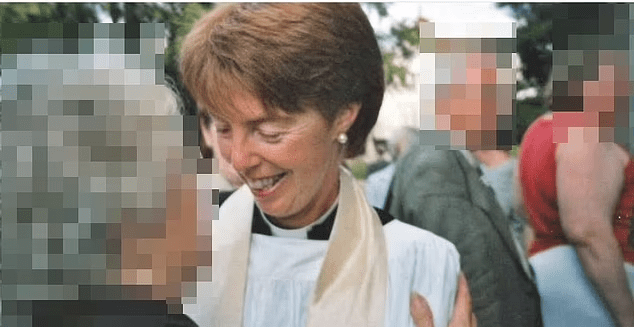
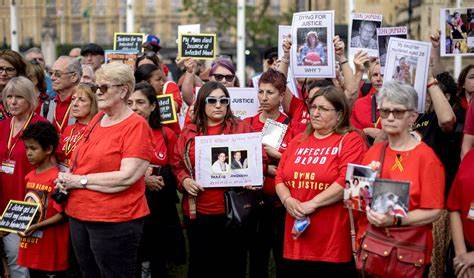
However in holding the highest Office in the Post Office she spent public money of people she knew to be innocent in order to justify the harassment and persecution to the point of imprisonment, humiliation, physical illness, and alas, suicide. Her practice in that role was no doubt no different than that of other Chief Executives in such over-mighty roles – think of the Infected Blood scandal. I suspect both scandals are not isolated.
During my working career I never found an institution – in social work or teaching – that did not practise lies of some sort in the conduct of their business and rationalisation of behaviours below an acceptable ethical standard – ones that caused hurt to others whether by virtue of protecting people who acted in error or deliberately in their own self or institutional interest regardless of others. Yet all these defended themselves as working within established practices of their vocation or business. Thus, Paula Vennells – the scapegoat of a system – will become an object of hate, for that is how institutions practise to protect their habitual practices.
Does she deserve it? I think yes. There is no excuse for not practising what you preach and she preached a religion of the practice of good will and communal love whilst swallowing up huge salaries and bonuses for doing a job she knew to be not only badly done but immoraly done. However, who will escape whipping in our flawed system of hierarchical capitalism. We are all responsible for this, just as Benjamin Netanyahu is not solely responsible for turning the practice of a venerable religion into an means of conducting a genocidal war against those who were not responsible for undoubted atrocities against Jewish people. For the people Hamas targetted for revenge on October 7th are also not responsible themselves for the Nakba.
To answer the question (‘Do you ‘practise religion’?) spelled in the way I spell it, means I have to think about the difference in my own actions – things I do that require verbs to express them – from the belief, ethics and liturgical practices of any or all of the religions I respect (things that need expressing in writing as nouns). I have to respect all authentic and sincere practices in order to respect others, whatever my private beliefs.

But practice of religion that is nominal (in ways other than just being a name or noun) is the personal action of ‘someone who practises behaviours and used words that are knowingly deceitful and, worse, harmful to others.’. The first principle in medical ethics is: ‘First do no harm’. Is that the practice of the medical practitioners who gave infected blood knowingly to orphans as an experiment in social healthcare. Beauchamp and Childress outlined four principles in medical ethics, including the one above (non-malificence in the jargon). The following research is chilling when you think about what it says about practioners talking about what their practice is and how it differs from observed ways in which individual healthcare individuals actually practise. See this, for instance, from researcher Katie Paige in 2012:
People state they value these medical ethical principles but they do not actually seem to use them directly in the decision making process. The reasons for this are explained through the lack of a behavioural model to account for the relevant situational factors not captured by the principles.
In effect what Paige’s conclusions amount to to is that that a practice in ethics can be defined, but that does not necessitate that anyone will practise according to those definitions during the making of an ethical decision, and those decisions are legion in medical practice. So do I practise religion. – only those parts of it that I can truly, authentically, and sincerely practise (and the spelling matters!).
All my love
Steven xxxxxxxx
 Steve_Bamlett_blog