How do you feel about cold weather?
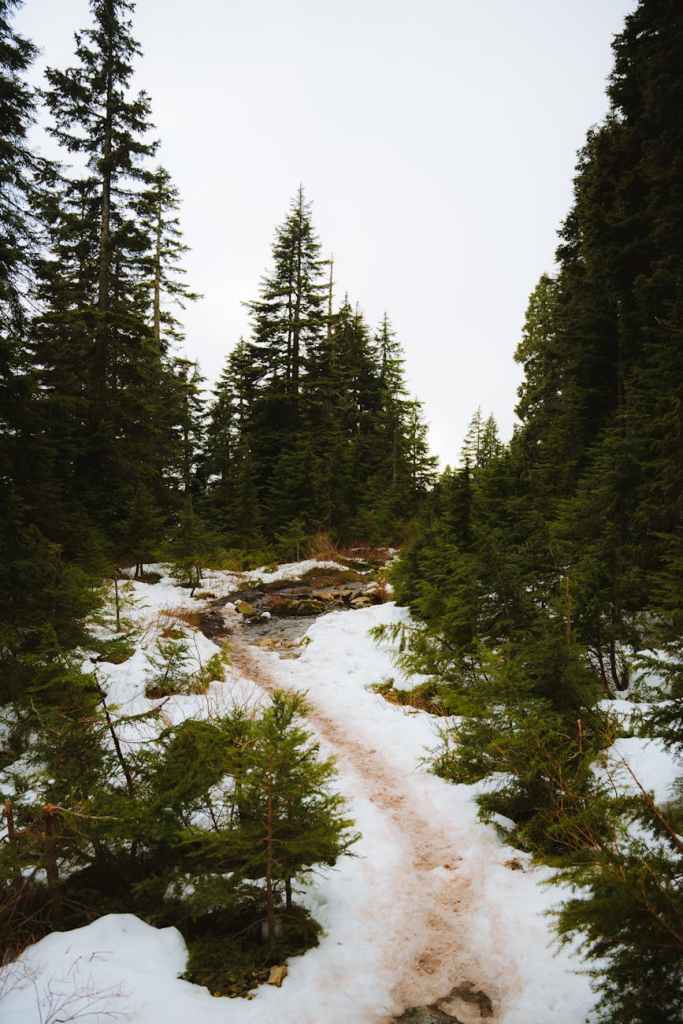
Snow, snow, snow
is how the snow speaks,
Is how the page reads.
Snow, from Simon Armitage’s (2020) Magnetic Field: The Marsden Poems London, Faber & Faber.

It must be different reading Simon Armitage’s poem Snow outside on Pule Hill near Mardsen in Yorkshire, inscribed in stone, than in a book. And maybe even outside the ambient weather will make the sensation that reverberates inwardly within a reader differ in terms of its real or metaphoric temperature. That is until they touch the stone face of the inscribed stone, which always feel cold throughout the year, day and night..
Snow is another cold surface, and words written in it, in the end, always revert to a more fluid state like the snow itself, which is perhaps why it feels like a blankly repetive page.

However we think about it, cold weather is rarely a condition we can sustain for long because we, as atm-blooded animals, long for warmth as our own internal resources get exhausted, which, in the cold, they do more quickly unless replenished by food-fuels. We think of death itself as cold, as cold as the memory of feeling my Dad’s feet as he died and his hands shortly after his feet as the icey feel spread upward. It seemed necessary to feel his loss through these objective tests, the cold approach easing the horror of cold flesh and a cooling heart, never to be again grasped in warmth.
In The Dubliners, snow, and the cold associated with it, is used as an extended metaphor in order to create a romance from the circumstance of a character reading a phrase in newspaper that the ‘snow is general all over Ireland’. From that, it spins a narrative means of generalising the importance of loss, mortality, and the pain of resistance to this general end of all lives in a definition of love mixed with loss. Al this emerges out of the idea and image of falling snow.
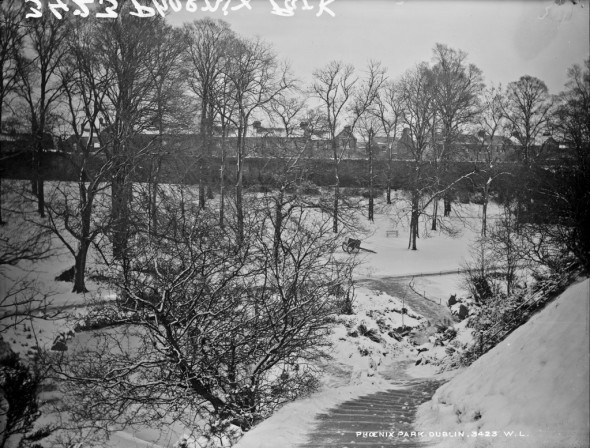
Yes, the newspapers were right: snow was general all over Ireland. It was falling softly upon the Bog of Allen and, further westwards, softly falling into the dark mutinous Shannon waves. It was falling too upon every part of the lonely churchyard where Michael Furey lay buried. It lay thickly drifted on the crooked crosses and headstones, on the spears of the little gate, on the barren thorns. His soul swooned slowly as he heard the snow falling faintly through the universe and faintly falling, like the descent of their last end, upon all the living and the dead. (my italics)Quotation taken from: https://medium.com/drmstream/snow-was-general-all-over-ireland-the-last-paragraph-of-joyces-the-dead-48b08b4c3b1f
This passage attempts to use snow and the surface cover it provides to connect and generalise Irish history and geography. It operates almost like a magical incantation by repetitions of words that tend to musical rather than intellectual sense – the repetitions of the word ‘falling’ and ‘softly’ tending to smother the hostility in terms like ‘dark mutinous’, ‘crooked’, ‘spears’ and barren’ and the sense of Armageddon in the phrase, ‘their last end’. It is as if the violence of Irish history and mythology (perfectly symbolised in the contents preserved in the peats of the Bog of Allen) and the stretch of its geography (maybe also symbolised in the Shannon waves) could be covered up and softened by the general visual effect of snow falling universally across it. Whether this is as fanciful as other readings of the last paragraph of the story, there is no doubt that the passage invites such generalisation in symbolic, or, for some people, epiphanic modes.
So when I feel cold, it may be that I feel cold because we ovrlearn the association of stilled life, even by degrees, in the thing that makes us feel cold. But its association to the loss of human emotion and attachment between humans is more mysterious. Therein cold, like snow, can often cover a heat we can no longer handle and, therefore, hide away from, whether of physical passion or love. It is a thing of varying depth, adopted lest we melt at all our visible surfaces and dissolve in the magma of passion.
So, how do I feel about cold weather? I don’t know how or whether I feel. But I suspect the frigid cold of my responses potentially covers, more or less successfully, some awful sense of loss, of feelings that is the very essence of feeling I can’t or won’t dare show, either from conscious or unconscious prohibition.
When I am cold
the world feels  old;
My heart's in hiding!
The train buffered at a siding.
All my cold love,
Steven xxxxx
 Steve_Bamlett_blog