List your top 5 favorite fruits.
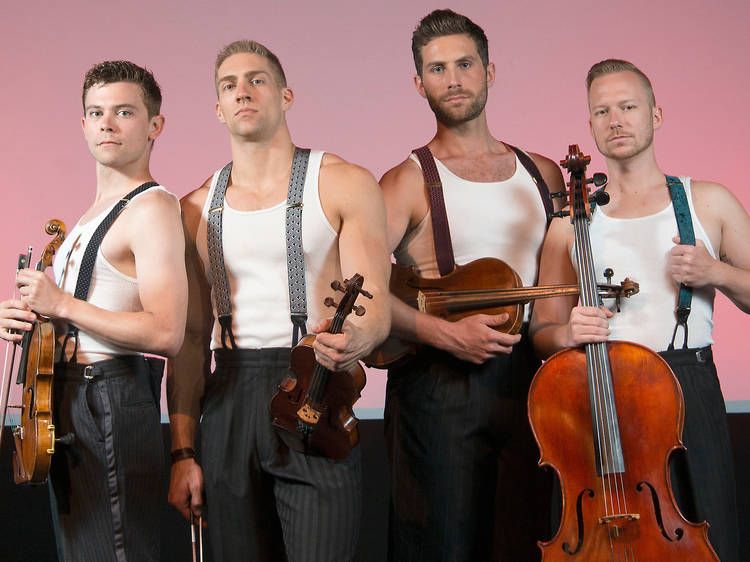
To imagine a quintet of beautiful guys playing strings, you only have to look at the string quartet, Well Strung, and place amongst them the best person to interview them. Let’s go for Andrew Scott for only the intelligence of a great actor might do to bring out the person in each of these men. After all, we would not want to objectify them, would we!?!?
Since the 1990s first reclaimed the word queer used as a slur against gay men, the word fruit has had a similar history.
Joseph Lamour wrote a rather beautiful essay in the digital magazine Bon Appetit in order to show how growing up queer on a Haitian fruit farm owned by their family diversified their sense of themselves and made it richer. It’s clear that words don’t always act in the way some speakers intend them to do. Lamour’s essay title gives that away: “How a Gay Slur Became a Luscious Part of My Identity: My Haitian family’s ancestry is deeply rooted in fruit, and so is my queerness” [June 22, 2022 https://www.bonappetit.com/story/accepting-the-word-fruit-identity%5D
Owning the Slur might mean owning the reasons why it became a Slur. Lamour says:
The evidence for fruit being used as a slur, specifically to insult gay men, was first documented in the early 1900s,” says John Kelly, senior director of editorial at Dictionary.com. “Around this time, ‘fruit’ was also used to refer to both an ‘easy victim’ and a promiscuous woman.”
The ownership of softness and vulnerability is a mile away, of course, from the hard butch image of the name and sartorial look of Well Strung, you might think:

But maybe that is an illusion they play with. After all the words ‘Well Hung’ are not the only phrases their name connotes with. Being ‘highly strung’ refers to another reminiscing slur on gay men, and my own joy in the queer movement has always been in its subversion of sex/gender assumptions. They are implied not only in the name ‘fruit’ as a slur but in its positive adoption in Polari, the early form of British queersoeak. Here is Wikipedia:
In Polari, fruit means queen, which at the time and still today is a term for gay men and can be used positively or negatively depending on the speaker, usage and intent.[17][18]
Several origins of the word fruit being used to describe gay men are possible, and most stem from the linguistic concepts of insulting a man by comparing him to or calling him a woman. In Edita Jodonytë and Palmina Morkienë’s research On Sexist Attitudes in English they note “female-associated words become totally derogatory when applied to males”[19] and “[W]hen language oppresses it does so by any means that disparage and belittle.”[20] Comparing a gay man to fruit, soft and tender, effeminate, like a woman has possibly gained near universal use because both LGBT people and fruit are found nearly everywhere.[21] In One of the Boys: Homosexuality in the Military During World War II author Paul Jackson writes “a number of words that originally referred to prostitutes came to be applied to effeminate or queer men – “queen, punk, gay, faggot, fairy, and fruit.” [22]
Is it all in the attitude behind a word’s usage? Not always, of course, as the fate of the N… word reminds us. However, the reclaim of softness and vulnerability both from the presumption that it is a slur and from binary sex/gender assumptions is as vital as the trans debate in queer communities and one of the basic issues in non-binary identity. The right to be passive and sensitive is a right for everyone. It is one some anti-gender warriors disclaim and use to justify their bigotry, and its tendency is to oversimplify even the roles of women because historical convention has overemphasised the passive and soft and gentle as female-only traits. They aren’t, but a woman without those traits is probably as damaged as is a man without them, though there are considerable more of the latter in the status quo as an inheritance of patriarchy.
Well Strung deliberately confused those codes of soft as female and hard as male in their choice of presentation, though, of course, they centre their advertising images by the two most enmuscled of their team (probably much to do to selling to the fashion of current queer homormative male audiences). String instruments are already culturally feminised. This group wears that as pat of its sex/gender bricolage.
Oh, but don’t forget I need five. Maybe Andrew Scott then. He can be as moody as he likes. X

But let’s end with an admission. I have only just discovered it, but I only had to cross the border to Canada to find my five fruits already formed as one, in Manifesto.

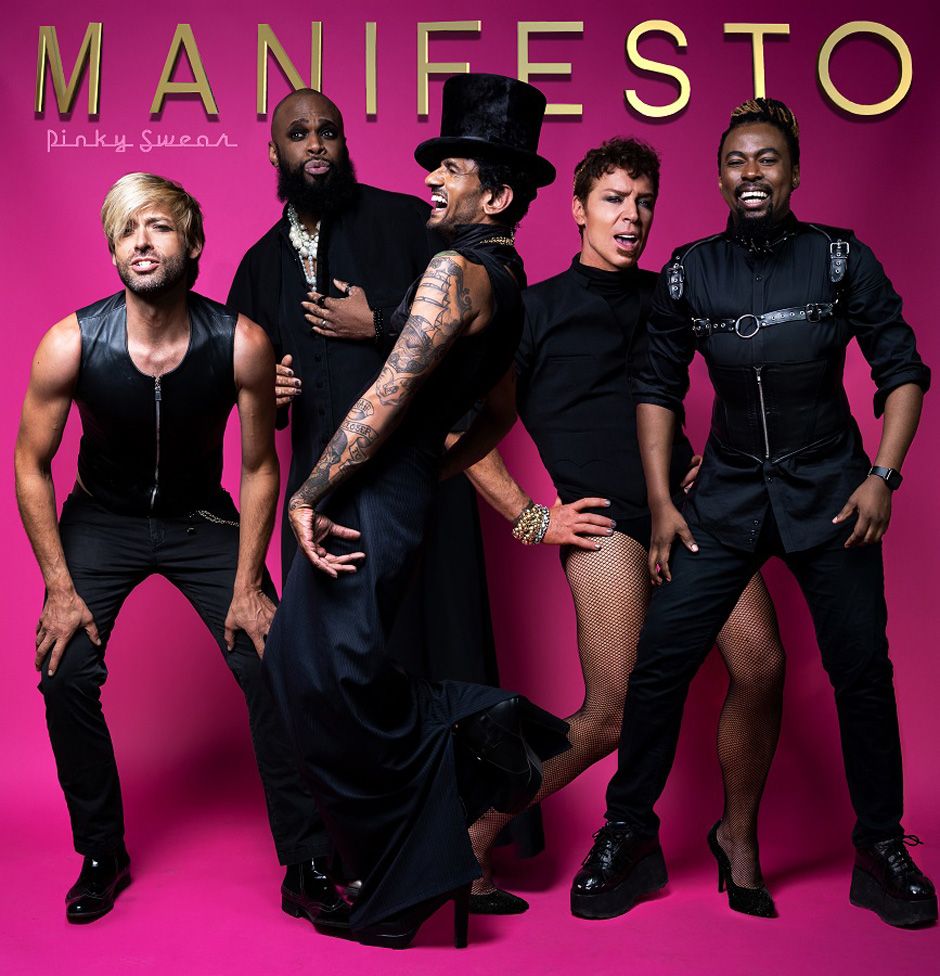
We could go forever.
With love
Steven xxxxxxxx
 Steve_Bamlett_blog