


I thought with this one, I might not want to interrogate the prompt question asked but I find I cannot do so with the question: ‘Do you have a quote you live your life by or think of often?’ In general I hate the idea of life quotes and their command on social media – short axioms taken out of context from texts and often invented or apocryphal are not guides to living your life generally, though Rilke certainly treated the words of his once master, Rodin, that way, making the ‘quote’ his own once in German not French: ‘Du musst dein Āndern leben’.

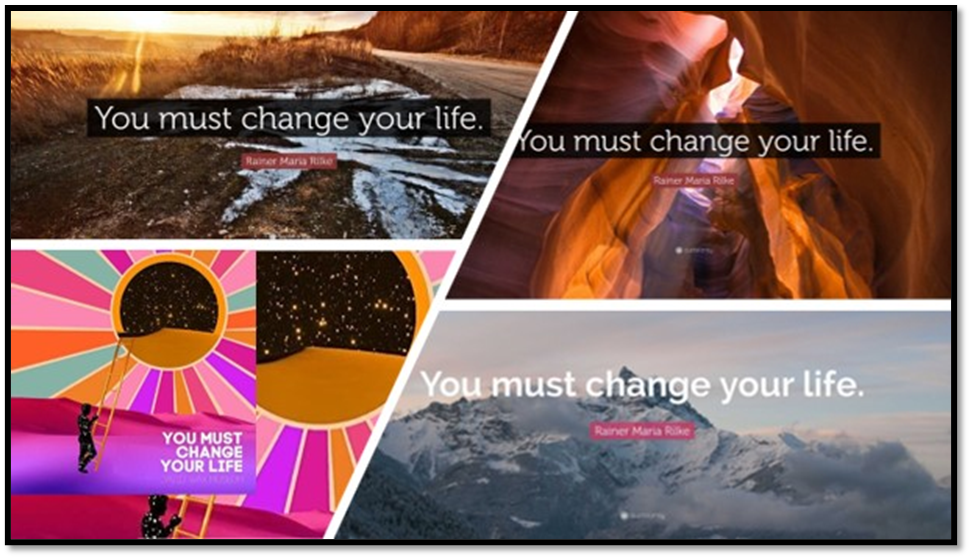
In English ‘You Must Change Your Life’ has a less awesome ring to it now because it is so abused in Quote-Finder images and axioms, where pictures tend not only to stereotype the possible meanings of the life injunction but soften the awe Rilke felt attached to it by transferring its meaning to escaping a rut, stopping or aspiring to a greater growth, however grandiose or fantastical the imagery used;
Lots of ‘quotes’, as it were enter my head all the time, though oft it is memories of Shakespeare or Wordsworth or Shelley but never as guides to ‘live my life’, and though I think of them often, they more often animate strong feelings that associate them with somethings in life I am passing through or some truth I want to learn. Of the latter the best is Auden’s Lullaby:
Lay your sleeping head, my love,
Human on my faithless arm;
Those two lines teach more of the acceptance of the non-enduring in love that feels at the moment that it ought to be endless than any I know. What passes, leaves or is faithless can pass with love too. But they are too complete to guide me, too finished a statement to guide me when in uncertainty. Then I turn to Whitman, whom you often think of as of full of certitude as he is of magnitude in that quotable moment opening Song of Myself:
I celebrate myself, and sing myself,
And what I assume you shall assume,
For every atom belonging to me as good belongs to you.
But not that, for suddenly I remember the Calamus poems, those moments where Whitman explores what is soft and vulnerable in him. Then he seems more like the Auden but more querying, more uncertain (as if uncertainty were more important that a celebrated clarity of thought and feeling). Here is my favourite. Try and see, I think, if it guides me:
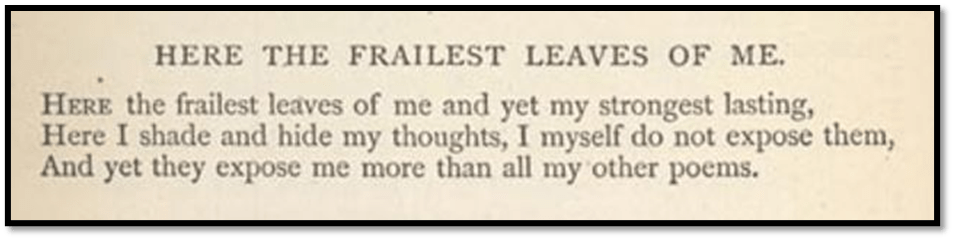
You cannot live your life by the words and rhythms of Walt Whitman, especially those beautiful poems called the CALAMUS cluster. However, they offer a way of handling the relationship between the things we hold private and those we dare make public in a way, however shaded or obscured, yearn to full exposure of that not under the awful spells cast by the ego, with its love of display of the essentially inauthentic. This poem is not offering the whole body of Whitman but a few soft tender leaves. His complete work he called Leaves of Grass but here the leaves are those in their fresh vulnerability. To see them you have to look a little deeper and handle them and the ground they stand in more carefully. This feels the more wondrous in that the Calamus poems often celebrate the phallus as a strong instrument. This was suspected when he wrote them. Hear, for instance James Miller on the poems. He is good though I part his company when he tries to see the poems as merely comparing heterosexual love and manly love considered as friendship, for the point of all comparison in Whitman is the blending of each into each – the lack of distinction between love of men and women in comradeship of bodies (for an earlier blog on Whitman as queer poet see this link)
Originally entitled “Enfans d’Adam” in the 1860 edition of Leaves of Grass, this cluster of poems celebrating sexuality was called “Children of Adam” in 1867 and thereafter. The poems, openly “singing the phallus” and the “mystic deliria,” were too bold for their time and often got Whitman into trouble. His relationship with Emerson cooled after he refused Emerson’s advice in 1860 to drop the sex poems; in 1865 he lost his job in the Interior Department in Washington for writing “indecent” poems; and he had to withdraw the 1881 edition of Leaves from publication in Boston when the Society for the Suppression of Vice found it immoral.
On conceiving the idea for the “Children of Adam” cluster, Whitman jotted in a notebook: “Theory of a Cluster of Poems the same to the passion of Woman-Love as the Calamus-Leaves are to adhesiveness, manly love” (Notebooks 1:412). Whitman appropriated two terms from phrenology to distinguish the two kinds of relationships he describes here: “adhesiveness,” or comradeship, and “amativeness,” or heterosexual love.
Miller, James E., Jr.. “‘Children of Adam’ [1860].” The Walt Whitman Archive. Gen. ed. Matt Cohen, Ed Folsom, & Kenneth M. Price. Accessed 25 April 2024. <http://www.whitmanarchive.org>.
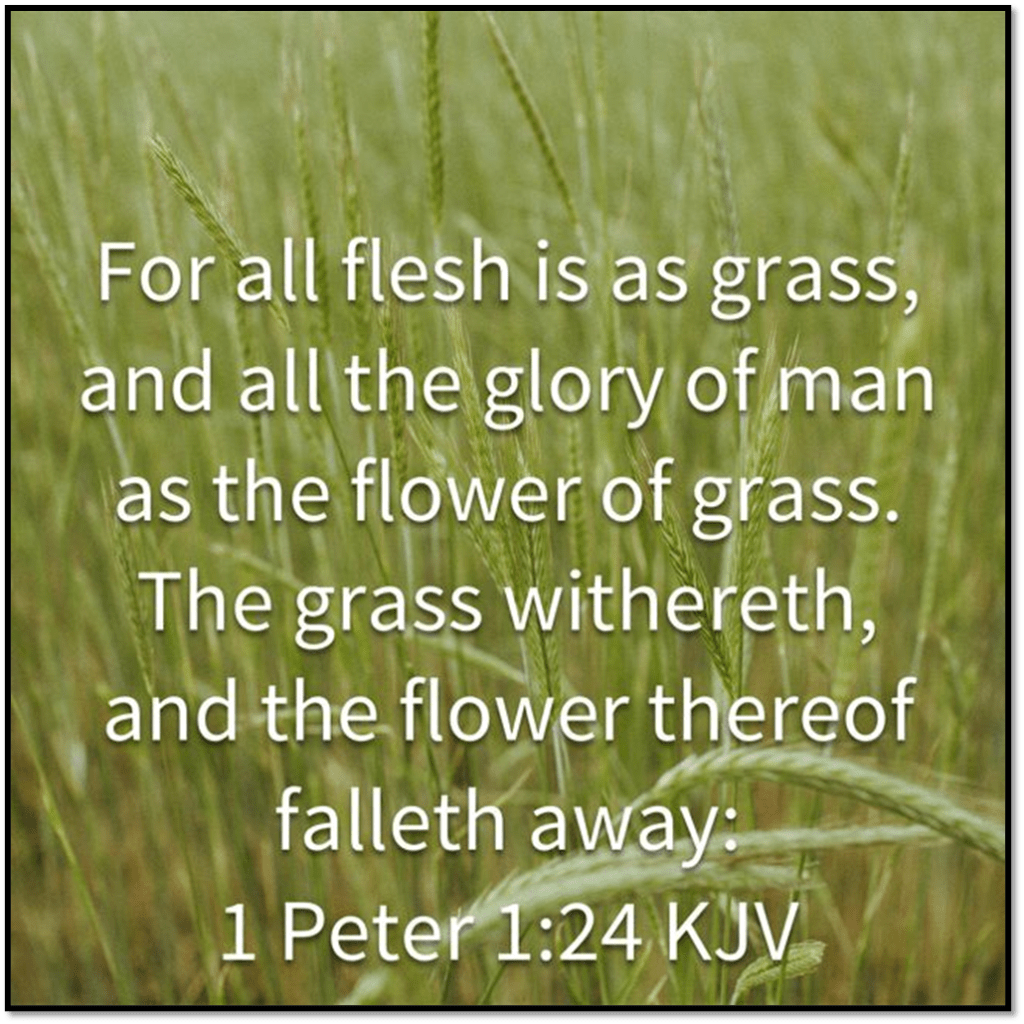
Leaves of Grass may be the emblem according to Isiah in the Old Testament and bruited again by Saint Peter in the Gospels, but to Whitman flesh, vegetation and that which sprouts in fertile amativeness is holy. And it is vulnerable not only because fresh shoots crush easily under the foot that oppresses them but because people, Like Isiah and peter tell false and partial stories of their wonder and beauty.
Whitman offering his ‘frailest leaves’ is offering that which only fades if you treat it ill or talk it down from the glory it holds. It may live and die, but it returns again in profusion and mounting beauty. Hence the real nub of the first line here is that between ‘the frailest leaves of me’ and the fact that though frail they are ‘my strongest lasting’. Some texts hyphenate ‘strongest-lasting’ but that is a mistake, for just as frail is modified and metamorphosed y strong as a descriptor so are the association of ‘leaves’ (that which goes away, passes or is faithless) by the word ‘lasting’, helpfully alliterated. Likewise the fact that Whitman must censor or encode his thoughts in imagery (‘shade and hide my thoughts’), he does so in a way that cannot but ‘expose’ them to view. For, they are not about Whitman, the ‘I’ who acts or the ‘I myself’ who is passive to their exposure but about what ‘they’, what these leaving-lasting, frailest-strongest, (faithful-faithless) emblems tell us about Whitman, the ‘me’ now the object not subject of the discourse. :
HERE the frailest leaves of me, and yet my strongest lasting:
Here I shade and hide my thoughts—I myself do not expose them,
And yet they expose me more than all my other poems.
Calamus is the most phallic of grasses, its sticky fertile horn escapes from the tender leaves that hide it. In a sense there is pornography in its ‘exposure’ of itself, but only if that is way your mind tends – to secrete and hide it from public appreciation. For Whitman it was as essential to ‘manly love’ as are all the other trappings of comradeship.
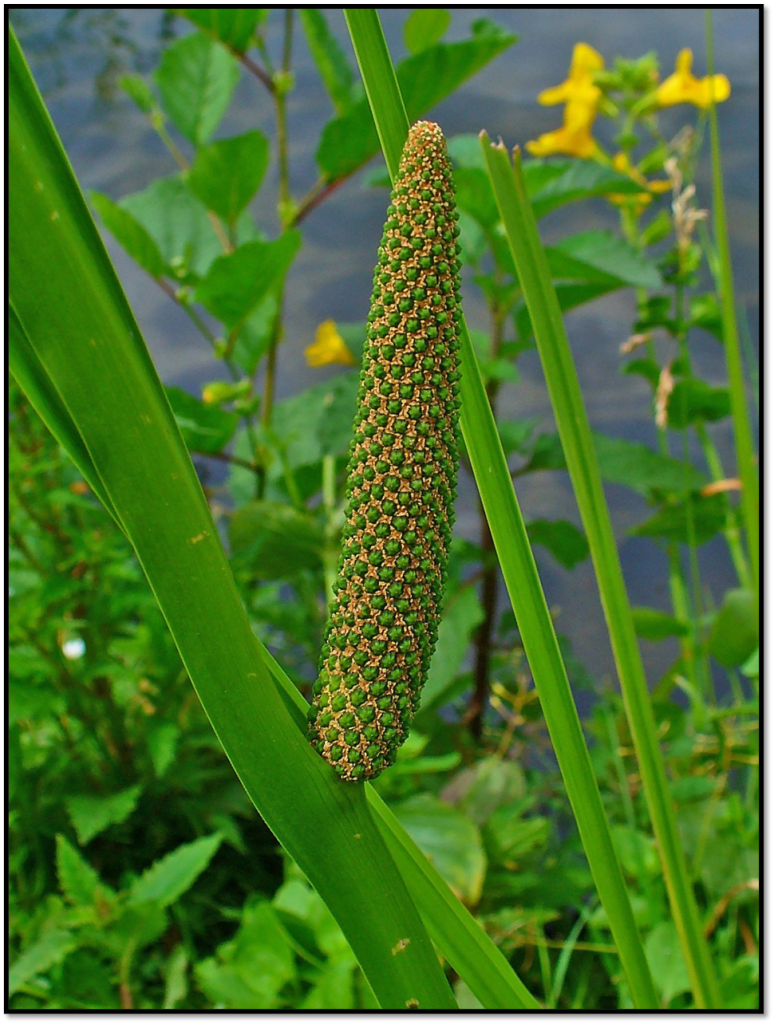
But I do not return to this poem to render it into queer male propaganda and feel there is a danger in the worship of the phallus as the meaning of ‘manly love’ – the cornucopia or horn of plenty celebrated in Greek and Latin pre-Christian celebration.

The beauty of what is in Whitman is not the strong and overlarge, but the ‘strongest lasting’ and that is not a matter of superior power or quantitative plenty but of appreciating the ‘frail’ as strong, that which must leave and shrink from us as we would an arriving guest, or potential lover. It is about turning exposure from boastful display (what we see in the perverse forms of ‘self-exposure’) to what is found to be beautiful because it cannot help but be there and be what it is, in whatever quantity or quality. The teal problem Whitman exposes is that when we celebrate ‘myself’ or ‘sing the body electric’, we too often exclude certain selves from having worth or certain bodies from being seen as charged with power.
Whitman is the most democratic of poets still I think and if I wanted a guide it would be he. But guides cannot be taken piecemeal – in phrases, axioms and ‘quotes’ (or not those alone and without contexts) or not those alone for they have their use in passing by them as tokens easy to remember of a more great wholeness behind them. We want them to strengthen us when vulnerable and even to show that the vulnerable is not the most despicable or shameful of our states. Whitman knew it was all about the kind of love we share – whether in sexual contexts or otherwise. When it becomes all about myself, it becomes instinct with exclusion not inclusion. Now that may be an aspiration not a truth but not a bad one.
With love
Steven xxxxx
 Steve_Bamlett_blog