Jot down the first thing that comes to your mind.
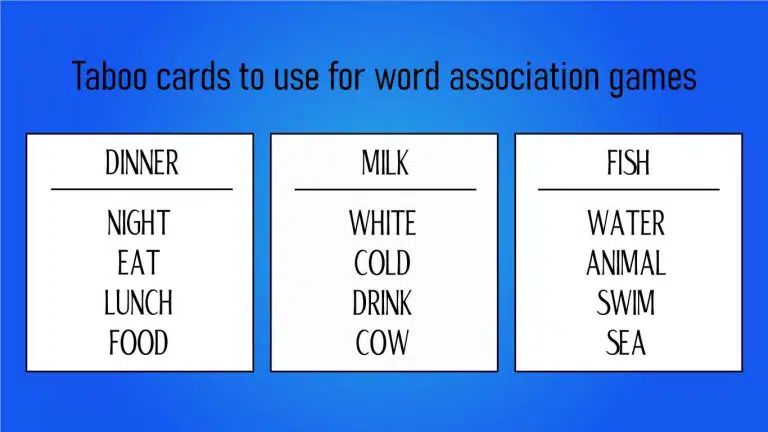
The ‘first-thing-that-comes-to-mind’ game is one sometimes used in psychoanalysis to find out how symptomatic connections might occur in the mind that reveal something of how that same mind is structured. Since minds are wily and use both conscious and unconscious filters to hide thoughts felt not to be public, the game uses strategies that attempt to curtail any of the secondary editing or censorship minds use to disguise thoughts of which they feel ashamed, or which they feel they OUGHT to feel ashamed about, emerging.
Of course, this kind of game in psychoanalysis requires a prompt that is not asking for the intellection of a ‘suitable’ answer. The problem is, of course, how you define ‘first’ in a bald prompt like that given today, and this is why this particular question could not be used itself in psychoanalytic associations. Ask it and the respondent has to decide to start a search of their mind, to determine what is there and when it was there; an activity that, in preceding any things appearing in the mind, is of course prior to those things. It hence comes first, and the question becomes meaningless and not purposive. People will only jot down what they feel to be auitable to their audience and which pose no danger or risk to the jotter.
Let’s say that in another way. We are stymied with a question with no way of answering it that hasn’t been over-processed from the start. Instead of jotting down the first thing we think, feel, or sense, we are launched into a process of conscious or semi-conscious selection. We choose on the basis of how we want ourselves to appear in the answer.

Hence in psychoanalysis, word association is about the first thing to associate with a previously unrevealed word: “When I say the next word, I want you to say the first word that comes to mind, answering immediately”. Even then, the psychoanalyst will assume that the first word will be consciously processed and hence edited, and try to evade any really revealing associations the respondent mind actually made, especially if nearer to unconscious association, but was too ashamed or frightened to use. You have to wear down the chances of editing to increase the chance of authentic associations being made.
Hence, criticsl psychoanalysis uses a string of associations. The first word must trigger another, that second one yet another, in quick succession. The aim is to outwit the process of secondary editing so that we reach the actual deep network of unconscious associations that might lie at the root of a respondent’s deepest, and most openly unacknowledged (even to themselves) anxieties about their relationship to self and others.
Hence, here, in this WordPress prompt, I don’t think anyone will truly jot down the first thing that ‘comes to mind’. And, if they do, it will be so because they know, in the deepest sense of an unconsciously held belief, that the meaning of their response, at a personal level, remains unintelligible to others. So give me a prompt, or the first thing I think of will be a safe prompt, one not too revealing in its answers. Isn’t an observation a better prompt? Isn’t art with its multivalence of possible suggestions better still?
Next to me when I wrote this was a book 📖 I bought yesterday on the History of Queer Photography. Here is its cover:

I picked it up and opened it, apparently randomly. What emerged was an old documentary photograph by Alvin Baltrop (1948 -2004) called River Rats II. It is meant as a documentary photograph of a queer male cruising ground on the West Side of Manhattan amongst the decaying wooden river piers. I had seen it before. I knew it was an aestheticised take on real life, but what it prompted was hard to take. For it is all intent on playing games with illusions of projection. And it suggests the hidden whilst revealing some of it. The hard thrusts of the decayed wooden poles and the nudity of the young men, apparently sexual in intent from the context but not looking so here. Of the men assembled, apparently above a wood pile though that is, in fact, a trick of the camera angle chosen as reproduced in two dimensions, those projected poles.

The first thought is about the violence indicated by the jagged mouth of the broken wooden pole rising to meet you. The men lounge between things that seem hard and vicious, things, unrelenting in their inferred message of how time passes without regard to the permanence of things and disregarding whatever capacity to endure i.permsnt things already have: things like sea trade piers, the wood they are fashioned from, the soft bodies that hide away amongst them but here triumphantly on display. The men here are mainly young Black men. Was that part of Baltrop’s mission? Because, after all, black queer men were more invisible than most other queer men in the period’s mainstream media and addressing this blank mattered.
I learned on reading afterwards that this photograph was about the response of New York to the advent of HIV/AIDs in many complex ways. With a prompt like this, though, providing there was no prior searching for background data or immediate reflection, what are the first things in my mind? They are something like the paragraph above, I think. But then what really comes first? You tell me. I will lag behind reflectively. SINCE THE FIRST WILL BE LAST.
With puzzled love
Stevie xxxxx
 Steve_Bamlett_blog