


Let’s reshape this question, for ‘goals’ are not sacrosanct nor good in themselves but only in their ultimate purpose. and saying ‘no’ may be a defiance of what is good, true, and in the interests of higher principles than self-interest. Today, the self-help and self-care (in truth better named the self-interest) industry will be out in force over this question. I am not, however, denying that saying ‘no’ isn’t important, but it ought to be guided by human values, not ‘goals’ for self.
Saying no is a skill that will be essential in challenging unhealthy habitual behaviours or demands made by self-interested agencies – which sometimes includes the self-care-for-profit commercial nexus. This link in this sentence connects to a viable case for saying no in the interests of health in self and community. Let’s try instead: “How often do the things you say “no” to actually define your unspoken goals?”

One in three children under age two in northern Gaza are acutely malnourished. Photo Courtesy: UNRWA
And then take another step. How often do you not speak your goals because they are in truth ethically indefensible, however they might be defensible by might? The ‘saying NO’ mantra is too often the MIGHT MAKES RIGHT mantra, For instance, just now the Israeli government is saying NO very forcibly to intergovernmental action against starvation in North Gaza organised by the United Nations, an organisation Israel this very day is representing as biased to terrorism.
The goals of the Israeli government are claimed to be the elimination of terrorism – its likely goal however, in the light of the present scorched earth military policy, is that of resettling and colonizing the Gaza ‘strip’ (as it calls it to avoid legitimizing Palestinian interests) in the model of Zionist policy. Prior to the Hamas atrocity, Gaza was being turned into a virtual prison for the wretched. We only need to take this one example from today’s news to contemplate whether saying ‘NO!’ is always about goals one is proud of, or goals that one actually declares in public, and that represent humane values that are inclusive rather than exclusive.
There is, of course, a truth in the fact that self-care is not always self-interest. It is a popular meme in the charitable and state ‘helping’ industries to shout out: “How can you help anyone else if you can’t help yourself?” Keep reading that oft quoted statement over however and see whether, as I do, you see that is logically incoherent and suppresses too many unstated aims that prioritize the already entitled over those without entitlement to even the crumbs left from the table of well-paid professions and jobs, for which qualification too often excludes a value-led set of principles.
To create a culture based on saying NO is important in assisting those without power in resisting those with relatively greater power, like children or otherwise ‘dependent’ groups subject to the demands of the entitled. It is invaluable in resisting child abuse as one arm of education of the young, but even here, it is insufficient, It pretends that the no of the powerless is equivalent in effect to the NO! of the empowered by possession of resources, status, and defensive/offensive weapons.
Certainly, the people of Palestine never found that to be the case. Of course, that did not justify the actions of a terrorist militia group in Israel. But in context, how relevant is that to a policy that argues that retaliation to a terror action should include the military use of the targeting of whole populations by creating a vastly enlarged state version of TERROR. And let’s be clear, some Jews too worldwide think this of the Israeli government, too. The charge of antisemitism has become a tool of power against calls for justice for Jews and Palestinians instead of an identification of what is truly evil in such undeniable antisemitic racism.
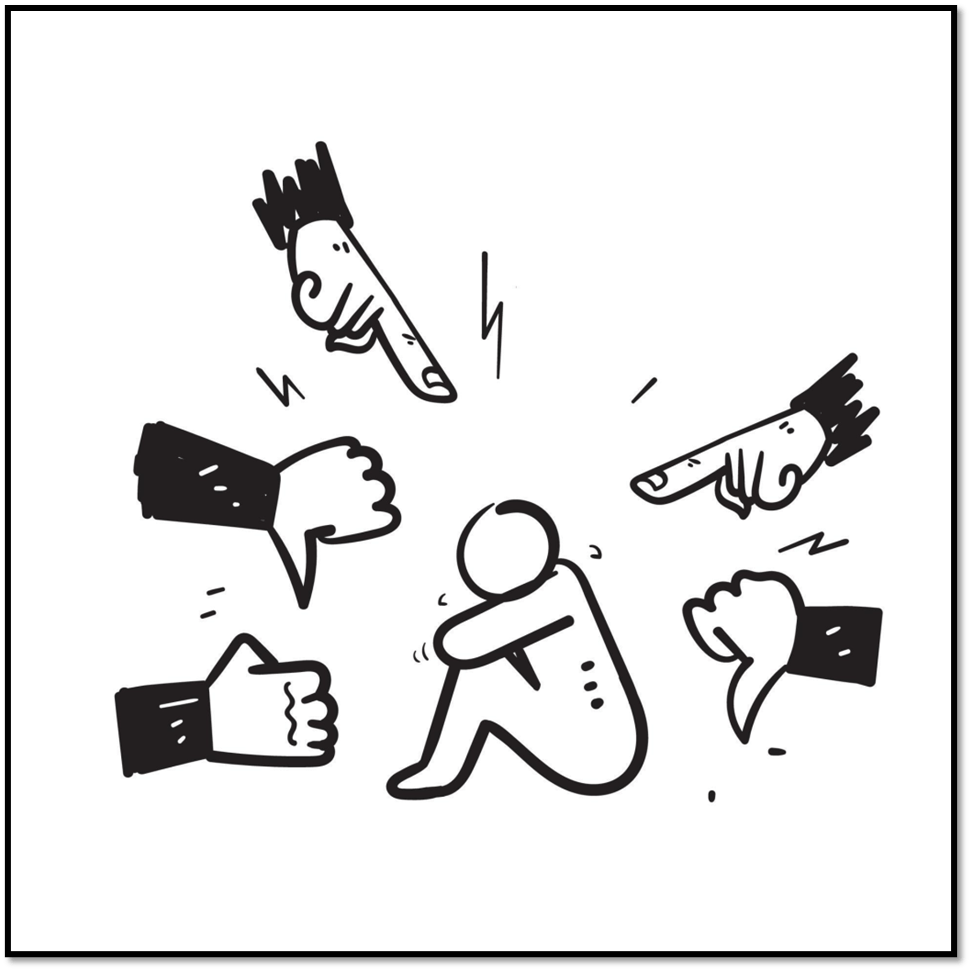
The ‘no‘ of relatively and absolutely powerless persons and groups is not heard, as rape and bullying victims would tell you – though they don’t because it brings on more bullying or shaming. The NO! of the powerful become itself so often a means of further exerting ones power – one exerted in social benefits policy and gig-economy industries it is sometimes state-sponsored violence, as the films of Ken Loach show, such as I, Daniel Blake tell us and Sorry I Missed You.

We have to beware the self-help slogans! In my experience they are used more to justify current entitlement and its preservation rather than the empowerment of the disempowered. You can only empower the disempowered by supporting their power to say no when necessary with resources of education and materials. And even then, though no is response that is not yes, there remain far less blunt tools of not saying yes that could achieve win-win solutions rather than winner and loser binaries. If we are really interested in seeking goals that benefit all, we will learn that YES/NO is yet another harmful binary in our armoury of unhelpful binary categories. Responsiveness can be more elaborated and mutually empathetic. It can make understanding each other spread rather than build defensive walls and instruments of offence to shoot over them.
With love
Steven xxxxxxxx
 Steve_Bamlett_blog