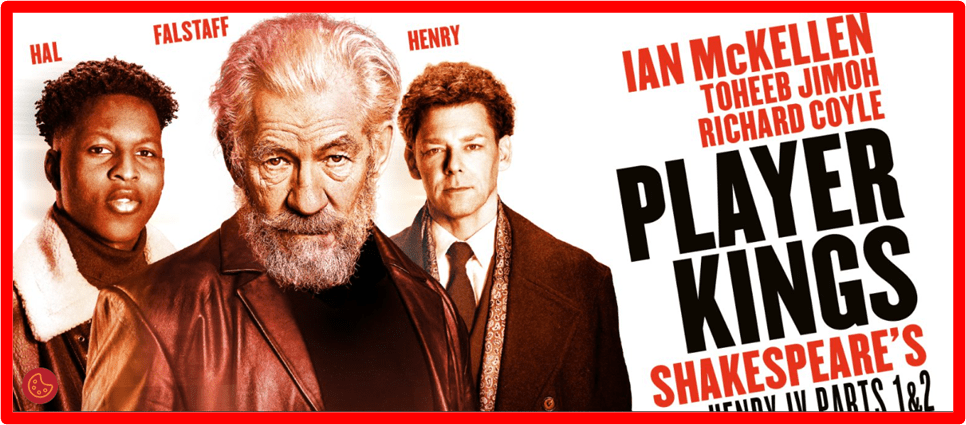
This blog is a preparation to see Player Kings at Manchester Opera House on Tuesday 19th March 18.30 with Ian McKellen, surprisingly, playing Falstaff. Will this production release Shakespeare from the heteronormativity that still tries to strangle in its cradle the appeal to an exceedingly male communal radicalism (with nasty bits like misogyny mixed in) in his work. I shall see! It would be a bold move and it would not spoil things for me if I’m wrong, but it’s worth hoping for.
‘For women are shrews, both short and tall.
Tis merry in hall, when beards wag all,
And welcome merry Shrove-tide! Be merry, be merry!’
(2 Henry IV, Act V, Scene 3, c. line 30ff.)
When Falstaff hears Justice Silence drunkenly sing this song in Part 2 of King Henry IV by Shakespeare he says: ‘I did not think Master Silence had been a man of this mettle’. Elizabethan bawdy is often non-binary in terms of sexual play, although ‘beards’ here may refer to a woman’s genitalia (and certainly not its meaning in pre-liberation gay slang as a woman who covers for a man’s true sexuality) as well as a lot of ‘lusty lads’ present without women (either way of course it is hopelessly misogynistic). I thought I knew these plays like the back of my hand – I studied Part One of Henry IV for O-level, a searing and often off-putting experience, but it is Part Two, in particular, that plays so strongly with ideas of what it means for a man to select a man for some purpose.
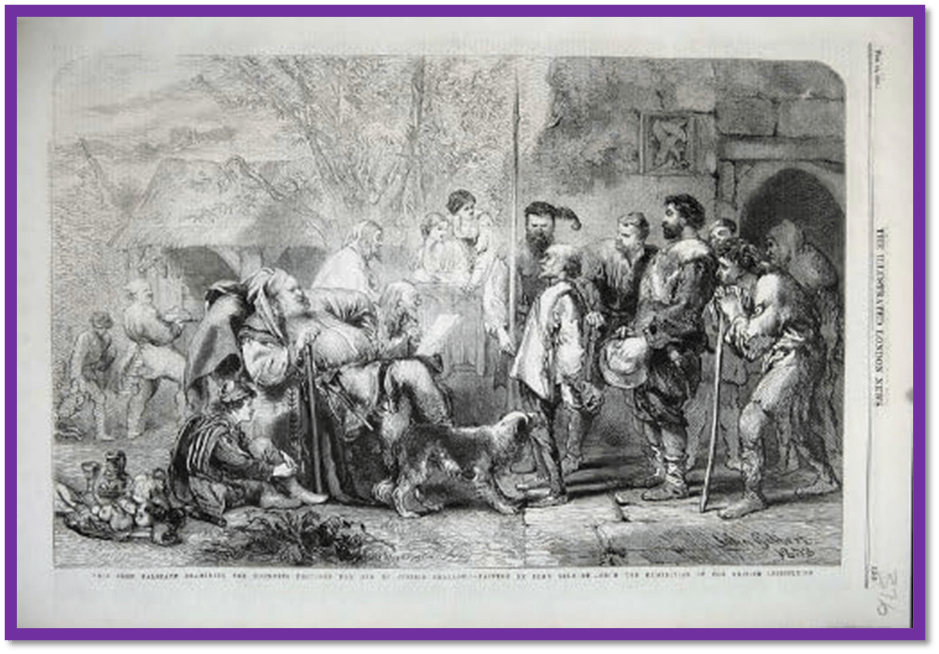
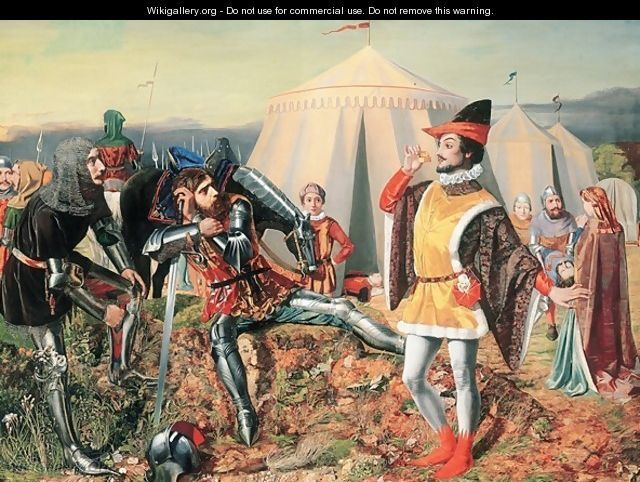
Take the scene where Justice Shallow is involved in order to ‘prick’ men for Falstaff’s troop of soldiers, commissioned as he is to go with such a conscripted band of men to join the King’s troops in order to quell a Rebellion in The North of England aided by Scotland. Pricking is literally a means of recruiting men to fight for the crown (or their landowner acting as a Crown agent in the case of the rebellious Northern earls represented in the play) for these were raised initially at local level. Indeed, the ‘pricking ceremony’ still existed under Elizabeth II to describe the monarch’s selection of High Sheriffs and relates apparently to the use of a needle to unchangeably mark the documents needed to list the eligible for selection to indicate final choices. It, no doubt, is a remnant of a larger system of ‘pricking’ of conscripted serving soldiers by inadequate people like Justices Shallow and Silence (the names are a give-away). The Tudor Group describes the process thus on its webpage and the second paragraph here almost fully describes the scene of recruitment in Act 3, Scene 2 of Part 2 of Henry IV:
When conscripted troops were required, it would come as a warrant from the Lord Lieutenant of the county, the local sheriff or justice would provide a selection of ‘volunteers’ from which an appointed captain, sergeant or corporal would choose the required amount as specified on the warrant. Obviously the justice would ‘encourage’ undesirables and wastrels to be chosen.
In companies or bands ( approximately 100 men ) levied for service abroad an allowance was given for 4 gentlemen volunteers.
However, Shakespeare never uses the word ‘prick’ or ‘pricked’ innocently and in this scene it references queer as well as heteronormative uses of ‘pricking’, as in Sonnet 20, with again a misogynistic view of ‘biological’ women (those with a vagina):
In Act V, scene III in Part Two of Henry IV the soldier recruited, Mouldy, resists this ‘pricking’ for Falstaff’s conscripted band of soldiers by say he is already ‘pricked’ for his ‘old dame’s’ use, where the play on use, husbandry and ‘undone’ is intended: all the terms are used in many plays – ‘done’ and ‘do’ notably by the ‘bawd’ in Measure for Measure, Mistress Overdone: ‘Overdone by the last’ says Pompey Bum, the Overdone house pimp speaking of his lady’s many husbands. Mouldy says:
I was pricked well enough before, and you could have let me alone. My old dame will be undone now for one to do her husbandry and her drudgery line
(2 Henry IV, Act V, Scene 3, line 113f.)
It also plays on the word ‘prick’ by invoking the reputation of tailors for impaired masculinity and readiness for sex with other men, whilst referencing the fact that pricking literally referred to the use of a needle select names;
FALSTAFF: What trade art thou, Feeble?
FEEBLE: A woman’s tailor, sir?
SHALLOW: Shall I prick him, sir?
FALSTAFF: You may; but if he had been a man’s tailor he’d ha’ pricked you. …
…
Prick the woman’s tailor: well, Master Shallow; deep, Master Shallow.
(2 Henry IV, Act V, Scene 3, line 150 – 154, 161 – 163)
Being pricked
The belly laughs expected from pricking him ‘well’ and ‘deep’ will have much to do with the how much of the stereotyping of both Justices Shallow and Silence as expert in selecting or pricking men is made quite overt in any production of the play. I have never myself heretofore seen that emphasis in a production, though it is a noticeable aspect of the play’s motivation – Londoner theatre-goers wanted to see Falstaff’s false dealings with his selected soldiers that occurred in Part One again and see it a bit more broadly painted in the sequel than in that play. We know Shakespeare was under this pressure for at the end of Part Two, he has to promise that we were not done with Falstaff and his ‘bawds’ (boys in drag it has to be remembered) – Mistress Quickly and Doll Tearsheet – yet and that they would appear (in order to be finished off) in Henry V.
Shallow is described by Falstaff, from that time when allegedly he knew him in the Inns of the Court, as a man inclined to a street associated with brothels and whores (Turnbull Street, now Turnmill Street). However, his references also play with queer innuendo, as if Shallow’s sexual tastes were as omnisexual as Shakespeare’s: he is ‘ever rearward in the fashion’, and never seen but once in the tiltyard and ‘then he burst his head for crowding among the marshal’s men’ . Yet before he gives this last cited soliloquy, Falstaff gets himself in Shallow and Silence’s best books by praising them for their skill in pricking the best men, asserting that obviously deficient characters like Mouldy, Feeble, Wart, and Bullcalf, picked by Falstaff show that good knight looks below the mere appearance of a good man to the ‘spirit’ of why they were chosen -as ‘food for powder’, as he says in Part One. However, his description of what a good man might be seems calculated to raise a laugh about the Justice’s skills and perhaps a hint of desire:
Will you tell me Master Shallow, how to choose a man? Care I for the limb, the thews, the stature, bulk, and big assemblances of a man?
(2 Henry IV, Act V, Scene 3, line 255ff.)
This of course coming from an old very fat man in whom it is well recognized, as a strange phenomenon, by Poins, ‘that desire should for so many years outlive performance’ (2 Henry IV, Act II, Scene 4, line 260)
Of course we have to take into account the fact that Shakespeare was satirising how the self-interest of Justices actually lead to the recruitment of inadequate soldiers, but my feeling is that Shakespeare was open to the polysemic in nearly every context – and knew that pricking men was a rich seam of experience in Elizabethan London and was not confined to ‘specialised’ populations (for the category ‘homosexual’ did not exist) and to the world of a wide range of sexual options – for men at least. I can’t imagine anyone writing that sentence for Falstaff that did not appreciate male anatomy down to its ‘big assemblances’. Shakespeare too, of course, romanticises the potential of sexual love between men and this quality marks the lover in The Sonnets out from the sexual pragmatism of the Justices Silence and Shallow, so played upon in Silence’s ditties – where sex with men is akin to eating when women are ‘dear’ (still valued but too damned expensive to keep):
When flesh is cheap and females dear.
And lusty lads roam here and there,
So merrily,
And ever among so merrily.
The meanings here are not unlike Falstaff’s rude explanation of Prince Hal’s liking for his comrade Poins’ ‘weak mind and able body’ with a longing to ‘ride the wild mare with the boys’ (2 Henry IV, Act II, Scene 4, lines 246 – 234).
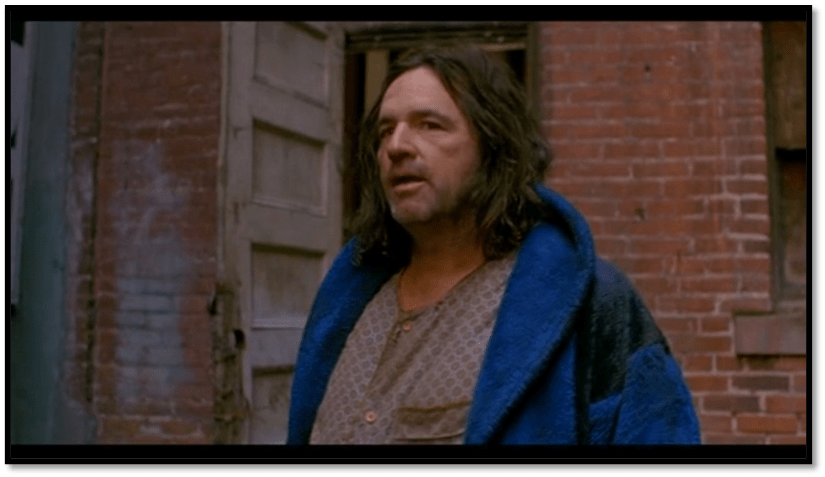
But all this can be cast aside, for I cannot see exactly how an amalgamation of both Parts of Henry IV in one evening performance could also take in this smuttier side of Falstaff, in Ian McKellen’s somewhat slimmer person, next Tuesday when I watch The Player King. This is not because the potential of queerness in the plays has not been exploited before – a significant section of the 1991 film by Gus Van Sant My Own Private Idaho uses the context of Part One to dramatise the relationship of the gang of street hustlers in that film and their pimp Bob Pigeon, as John King tells us in a written version of his podcast on the web:
Gus Van Sant’s complex mixture of various registers of dialogue makes it not that surprising when, a half hour into the film, Bob Pigeon, a latter-day avatar of Falstaff, shows up using a debased version of Shakespearean verse.
This is an especially loose adaptation, one that is bold in its weaving in and out of Shakespeare’s text.
When Prince Hal wakes Falstaff, and Falstaff asks the time, Hal says,
What a devil hast thou to do with the time of the day? Unless hours were cups of sack and minutes capons and clocks the tongues of bawds and dials the signs of leaping-houses and the blessed sun himself a fair hot wench in flame-coloured taffeta, I see no reason why thou shouldst be so superfluous to demand the time of the day.
In Van Sant’s idiom, it goes,
Why, you wouldn’t even look at a clock, unless hours were lines of coke, dials looked like the signs of gay bars, or time itself was a fair hustler in black leather… isn’t that right, dude? There’s no reason to know the time. We are timeless.
The hijinks of this band of miscreants in the jangled aesthetics of Van Sant’s film seems especially appropriate somehow, and perhaps this is what allows us to lose ourselves in the story, and feel closer to its spirit. (Some of Shakespeare’s tavern scenes are, truth to be told, a bit stiff.)
I do not expect such freedoms to be taken unfortunately in Manchester and by Robert Icke’s adaptation and production of Player Kings. After all, the title gives a clue to the favoured approach – the Player-king being the actor that comes to Elsinore to enact Hamlet’s extempore drama The Mousetrap (as he once calls it) showing the murder of Old King Hamlet by his brother. It is likely given this to focus on the plethora of enactments of kings in the text of the plays. Even at the end of the second play, who the King actually is queried as Pistol (for once not involved in a discharging pun on his name and sexual prematureness) says to Shallow’s demand to know news of the court precisely because he is ‘under the King, in some authority’ (never one not to get in a near queer joke): ‘Under which king, Besonian?’ (1 Henry IV, Act V, Scene 3, c. line 113). The term Besonian, that might at the time have been recognised as a slur on Shallow’s class and status of command pretensions, makes the point that the king is a role enacted over time by more than one person, and that recognizing a king from him that enacts a role of a King is not always easy, especially for a beggarly Besonian. From early days, Falstaff constantly tells Prince Hal, and of him, that he wears his heir apparent garters too consciously, for he ‘will not stick to say his face is a face-royal’ (I Henry IV, Act II, Scene II, 2 Henry IV, Act I, Scene II).
However, that theme of impostors as kings, or kings with an impostor syndrome, is peculiarly Shakespearian, notably in Macbeth where even masculinity is an enactment. The play concerns a king who half believes himself that he is not only a usurper of the crown held by Richard II but unfit for it (as Clarence says: ‘His eye is hollow, and he changes much’). Hence that very moving scene (2 Henry IV, Act IV, Scene V) when Henry IV is carried to bed in a faint, though still talking but perchance to die, with his crown on his pillow, only to awake finding it gone – taken prematurely by his son Prince Henry, who claims he though the old king already dead and thus requiring him to source it as a theatrical prop to bemoan the weight of kingly authority on frail flesh.
This theme (that might be called the ‘Uneasy is the head that wears a crown’ theme (2 Henry IV Act II, Scene I, 31) is also about the fact that a king, no more than the actor that plays him, is often no more than what the ‘Chief Justice’ calls the ‘image of his power’ than the embodiment of it. Thus royal retainers differentiate the king in role from his individuated embodied person (an idea sometimes called the King’s Two Bodies). As King Henry V first assumes the King’s clothing he talks of it as a thing of appearance and performance: ‘This new and gorgeous garment, majesty / sits not so easy’ until he ‘will deeply put the fashion on’ (2 Henry IV, Act V, Scene II, 79, 44 & 52 respectively). And various people impersonate King Henry IV at the end of Part One, as a ruse to keep his body safe from adventurous rebels like the Scottish Earl of Douglas who speaks of; ‘Another king! They grow like Hydra’s heads’ (I Henry IV, Act V, Scene IV, 24). And counterfeit kings are kings enacted, a role Hal begins to play in that ‘became like a prince indeed’ in Act V, Scene II of 1 Henry IV (line 60). Some people act like they are King already of course, when they are merely leaping up to the crown they think themselves fit for, like the heir to the rebel Northern earl, Northumberland, Harry Hotspur, whom Douglass calls ‘the king of honour’ (I Henry IV, Act IV, Scene I, 10).
Henry IV, as father is beginning to understand when finally questioning Hal about the company he keeps and see the likeness to his Machiavellian self. Both know how it looks for a king to be in that company) in the scene when they discuss the way a king acts to be recognised (but not over-recognised and thus ‘common-hackneyed in the eyes of men’ – line 40 in 1 Henry IV, Act III, Scene 2). We hear Hal meaning to dispose of Falstaff soon at the end of the very first scene of the trilogy of plays in which he appears:
By so much shall I falsify men’s hopes; And like bright metal on a sullen ground, My reformation, glitt’ring o’er my fault, Shall show more goodly and attract more eyes Than that which hath no foil to set it off. I’ll so offend to make offence a skill, Redeeming time when men think least I will.
(1 Henry IV Act I. Scene ii.189–195)
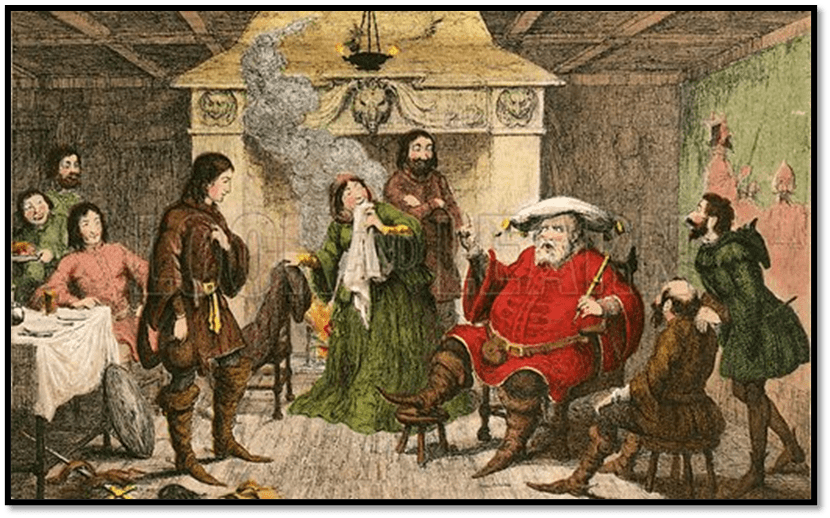
But clearly important, as it was in My Own Private Idaho, is the fact that being a Player-King becomes a way of negotiating friendships and love as something strategic rather than belonging to our necessities and feelings, a thing hustlers must learn well. This is exactly how Falstaff and Hal use the exchange of roles of monarch and heir apparent as they play together, ‘as like one of those harlotry players as ever I see’ says the boy enacting Mistress Quickly (I Henry IV, Act II, Scene IV, 391). This interchange of roles between King and Prince is meant as a rehearsal or pre-enactment of Hal’s upcoming interview with his father. Yet in their exchanges both discuss how each desires the relationship of Henry and Falstaff to grow and/or wither (in appropriate terms like deposition and banishment) that exactly mirrors the event at the end of Part Two in which Falstaff struggles to believe he has been banished never to come nearer than 10 miles to the person of Henry V, so great is his belief in his young man that he knew could never betray him. Of course the audience know – from the offset for Hal tells us in his first soliloquy – that he will betray Falstaff (even before Henry IV does. I believe Shakespeare knew this highly comic scene, Falstaff crowned with a cushion, was in a much deeper sense one about the tragedy implicit in male relationships wherein masculinity is inevitably defined by ruthless self-interest.
There is a truth after all in the words that if you can ‘banish plump Jack’ then you ‘banish all the world’ (line 474) potentially merely for the sake of putting on the ‘image of power’ and enacting it. Hal allows Falstaff to look ridiculous attempting being an actor in ‘King Cambyses’ vein’ (another player King of the Elizabethan theatre like Marlowe’s Tamburlaine– line 383) in order to tell him, when they have exchanged roles, that he is to him (liking aside – for that remains if buried) ‘worthy, but in nothing’ (line 453). From King to nothing is not unlike from nothing to a King as every usurper or counterfeit King knows – hence the impostor syndrome. But in relationships this strategic thinking is just cruelty.
However, we would be wrong to see Falstaff as the lovable and innocent rogue only as the Victorians did and as perhaps Anthony Sher did. He abuses poor men that he presses into his army and does not grieve that their bodies fill a pit as well as any other bodies, he fails to see the value of the emotions he feels other than as route to so much sack and capons. His sin, even I think in Shakespeare’s eyes who was ever a merchant-adventurer of the theatre, is that he thinks life is one long holiday for his subaltern class of under-aristocracy that served the King. Thus Hotspur, a man’s man, sees an impertinent courtier, using every feminising put down he can find:
He was perfumed like a milliner; And ‘twixt his finger and his thumb he held A pouncet-box, which ever and anon He gave his nose and took’t away again; Who therewith angry, when it next came there,365 Took it in snuff; and still he smiled and talk’d, And as the soldiers bore dead bodies by, He call’d them untaught knaves, unmannerly, To bring a slovenly unhandsome corse Betwixt the wind and his nobility.370 With many holiday and lady terms He question’d me; amongst the rest, demanded My prisoners in your majesty’s behalf. I then, all smarting with my wounds being cold, To be so pester’d with a popinjay,375 Out of my grief and my impatience, Answer’d neglectingly I know not what, He should or he should not; for he made me mad To see him shine so brisk and smell so sweet And talk so like a waiting-gentlewoman380 Of guns and drums and wounds,—God save the mark!— And telling me the sovereign’st thing on earth Was parmaceti for an inward bruise; And that it was great pity, so it was, This villanous salt-petre should be digg’d385 Out of the bowels of the harmless earth, Which many a good tall fellow had destroy’d So cowardly; and but for these vile guns, He would himself have been a soldier.
1 Henry IV, Act One, Scene III, 361ff.
The speech above, by the man’s man Harry Percy or Hotspur, is how the rather Puritanical rebels (most in fact were Catholics in the Elizabethan rebellion that is its analogy in the play) describe King Henry IV’s court in the model of an unfairly treated Castiglione. And indeed Worcester says that this Bolingbroke who became Henry IV is so because we made him so and he only oppresses us for our labours to create a court that talks ‘like a waiting gentlewoman’ in Hotspur’s very masculine words, with its distaste for ‘holiday and lady terms’. But Worcester does this by almost describing Henry Iv as if he were FALSTAFF. Here is Worcester, speaking openly to Henry IV:
Our house, my sovereign liege, little deserves
The scourge of greatness to be us’d on it,
And that same greatness too which our own hands
Have holp to make so portly’.
I Henry IV, Act I, Scene III, 10ff.
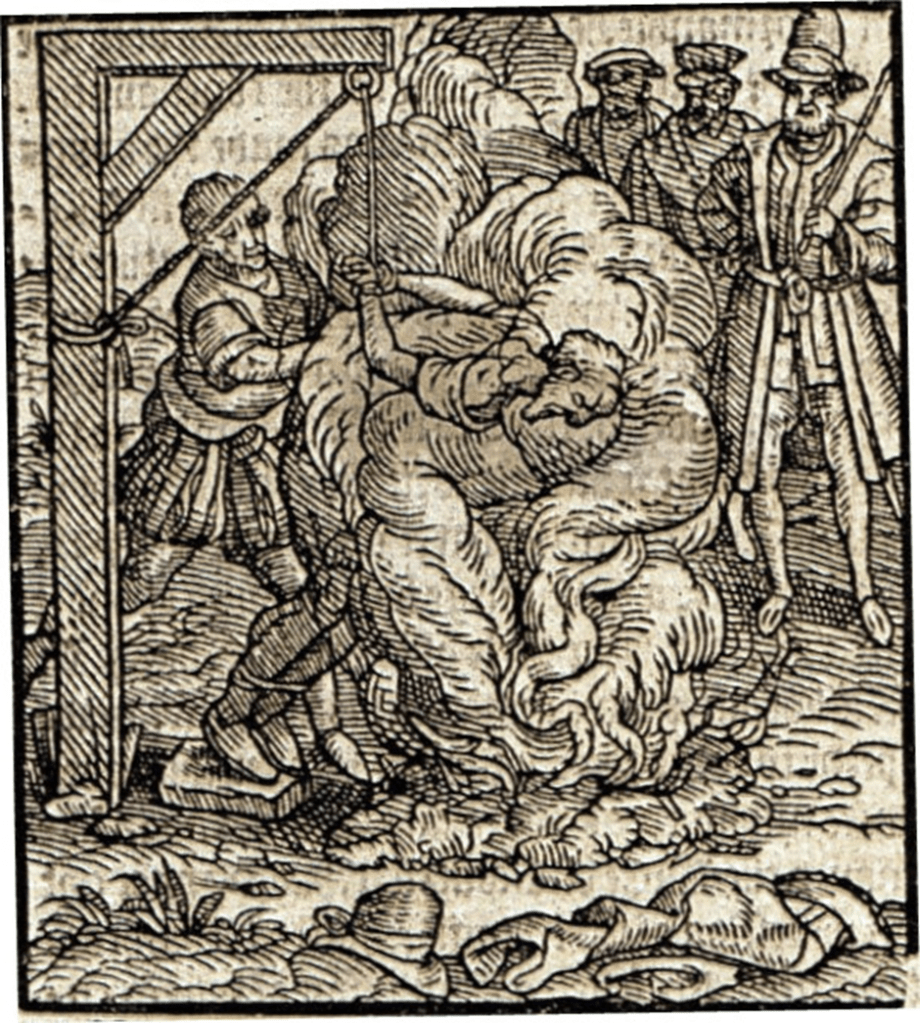
‘Portly’ is a strange choice of adjective in a play often mainly remembered for being about a fat man who drinks sack (a form of port). Unless of course that the whole is a warning to those who ‘play the King’ that the dress, custom and manner of playing the role are as subject to the power below that maintains them as to a supposed divine right from above. If a revolution were to take place, it would need to depose the idleness that lives a holiday on the work of others as does Falstaff too just like these kings grown fat on the labour of starving men like Mouldy, Feeble and Wart, sent as ‘food for powder’, whilst the rich are hedged by security. Shakespeare knows Falstaff perhaps should be seen as a parasite, not the‘ Lollard martyr’ his model, Sir John Oldcastle was, and thus seen perhaps by the poor who listen to the Epilogue to the Henry IV plays. In 2 Henry IV, he has his ‘Epilogue’ say: ‘Falstaff shall die of a sweat, unless a already be killed with your hard opinions’ just before mentioning Oldcastle’s martyrdom for religio-political beliefs in the communality of people (2 Henry IV, Epilogue, 30ff.).
Sir John Oldcastle being burnt for Lollard heresy and insurrection. First published in Holinshed’s Chronicles (1577).
The truth is perhaps hat aristocrats are parasites, without the great principles of Oldcastle who was horribly executed (as above) despite his friendship with the real Henry V. I will die believing Shakespeare was with the Lollards at heart, a canting socialist, a friend of the ‘many’.
But I have no idea how any of this will translate, if at all, into Robert Icke’s Player Kings. I am so excited that I will see it on Tuesday evening. Ian McKellen has hinted why he has so long resisted the role and why he chose this script at his venerable age to come to it for his debut in the role. He said to the BBC:
“Ever since, the plays have been among my favourite Shakespeares, although through the years I’ve resisted offers to play John Falstaff. Robert Icke’s ingenious adaptation was irresistible.”


 Steve_Bamlett_blog
4 thoughts on “This blog is a preparation to see ‘Player Kings’ at Manchester with Ian McKellen playing Falstaff. What should I expect?”