


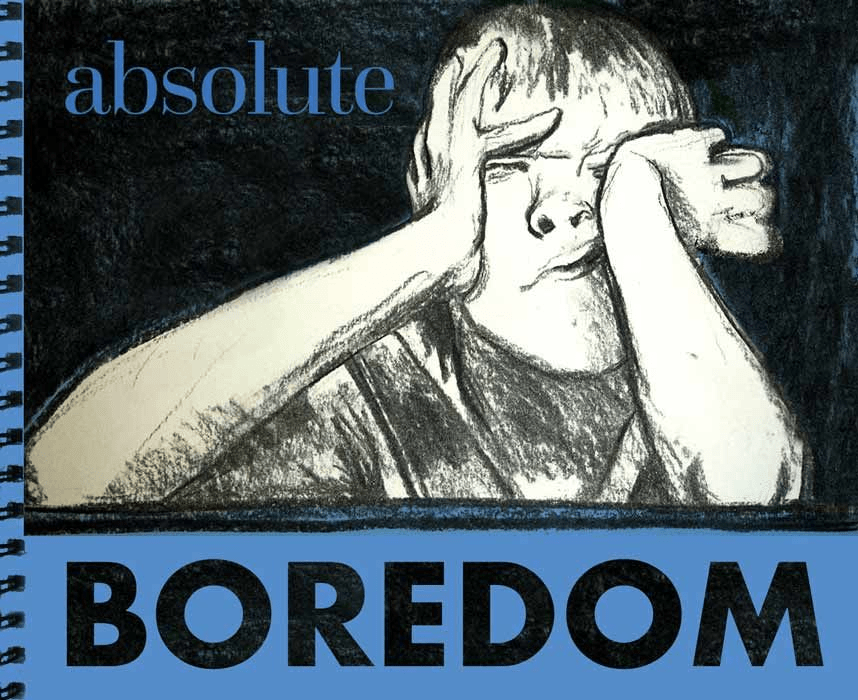
We are all bearers of our own contradictions. I am a desperate believer in the danger of the concept of elitism, yet I dislike the drive to blame élites (the word derives from the French meaning to select or sort out from the mass) – especially intellectual élites – for the malaise of the modern world amongst the Neo-liberal right. To believe thus is to destroy the meaning and true practice of education, whether self-education or its institutional forms. Admittedly the institutional forms have been a drag on true learning too often, and a mechanism for maintaining the status quo, even in the very construction of rigid views of what is worth knowing and the forms in which it can be known. For instance Latin and Greek became truly DEAD languages when schools used them as a gateway to learning that were scaffolded by ideas turned solely into non-significant study of grammar as a set of prescriptive rules, and poetry solely into a highly quantitative metrical analysis.
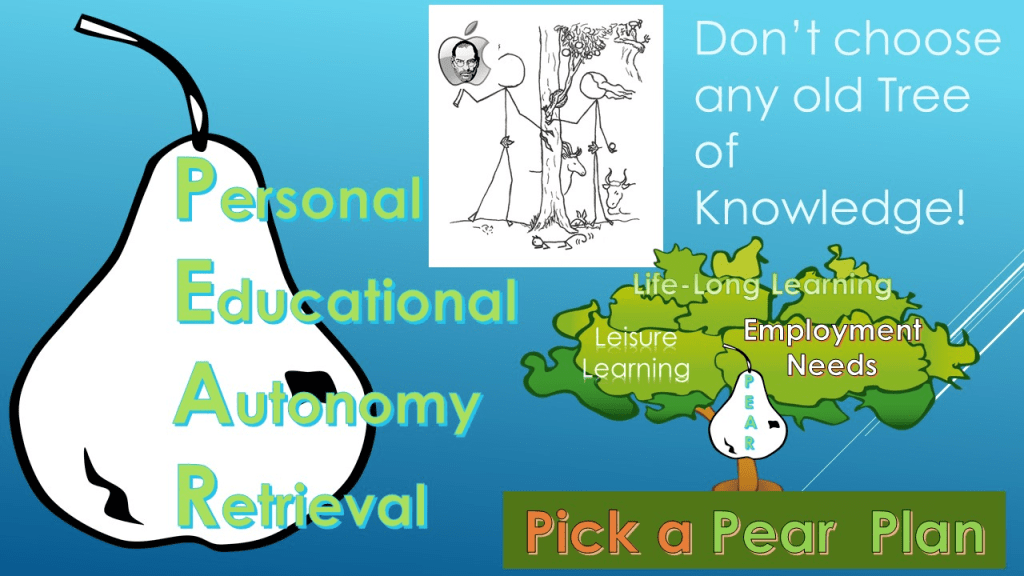
But boredom in schools is usually a boredom based on the incapacity of teaching and learning systems to be flexible and open, disguising their true intent (in the heart of the malignant teacher) to bolster power over people looking for liberation from that power. Hence my long interest in the power of true release of non-reductive personal autonomy in learning (see my collage below created for an exercise in a Remote and Distance Learning MA, which encouraged personal learning – unlike most of the ‘Open’ University).
Nevertheless the desire to create a raised standard for everyone inevitably meets challenge. People blame ‘long words’ or complex ideas for fostering elitism. However, in truth, such tools may be the only access to true equality, though not its measure. Of course, learning is a challenge. It creates a difficult ‘threshold’ to cross, but thresholds need not exclude forever. The notion of ‘Keep It Simple’ has been to the expense of education and an understanding of a world built of interacting systems, each complex enough. ‘BITESIZE’ learning may help growing minds but often today the learning has remained BITESIZED. Some kinds of learning are forever masticated (mouthed in fact) and more rarely digested, sifted and sorted – for some of the learned material always must be waste material, better excreted.
In 2008, Lee Rourke created a list of ten books that spoke of the meaning of boredom, from a base philosophical position in the philosopher Heidegger and existentialism, but decided that the interesting thing about boredom is whether we accept it as being fundamentally a kind of ‘apathy’ to the world (to be embraced) or a prompt to fight against that apathy in the ‘will to meaning’. That latter had its dangers in Heidegger (Nazism), but I think I prefer to see that will to meaning as a will to learn on what action to take, why, and how. Here is Lee Rourke, anyway:
“Boredom has always fascinated me. I suppose it is the Heideggerian sense of ‘profound boredom’ that intrigues me the most. What he called a ‘muffling fog’ that swathes everything – including boredom itself – in apathy. Revealing ‘being as a whole’: that moment when we realise everything is truly meaningless, when everything is pared down and all we are confronted with is a prolonged, agonising nothingness. Obviously, we cannot handle this conclusion; it suspends us in constant dread. In my fictions I am concerned with two archetypes only, both of them suspended in this same dread: those who embrace boredom and those who try to fight it. The quotidian tension, the violence that this suspension and friction creates naturally filters itself into my work.”
‘Lee Rourke’s top 10 books about boredom’ in The Guardian [Mon 16 Jun 2008 00.00 BST] Available at: https://www.theguardian.com/books/2008/jun/16/top10s.boredom
He misses out a more a more common reason for saying we are ‘bored’: the fear of challenge to which we feel ourselves unready – and the base fear of failure. Both can be reduced to fear of enforced confrontation with ‘agonising nothingness’, a perception of the meaninglessness of base routine. However, challenge is the basic issue in true education – ensuring challenge remains whilst we attempt to take away the ugly masks it wears in an attempt to warn frightened learners away.
We need a word though on those more profound analyses on boredom. Here is the psychoanalyst Bruno Moroncinci in 2018, summarising his academic paper thereon:
______________________
According to Otto Fenichel, boredom is the sign of a conflict between the Id and the Ego, between the push of the first to reach the goal of our drives and of the second to inhibit them—an unstable equilibrium between movement and calm, frenetic agitation and catatonic immobility. This thesis provides the interpretive key to two of the most important concepts on boredom of this last century: (1) the concept of “deep boredom” elaborated in 1930 by Martin Heidegger in the text of his lecture on The Fundamental Concepts of Metaphysics. World, Finitude, Solitudes, and (2) the concept of boredom as “stiffened restlessness”elaborated in good part in the 1930s by Walter Benjamin in the section of Passagen Werk in “Boredom, the Eternal Return”.
According to the Heideggerian analyses, once boredom becomes “deep” and embraces one’s being in its totality, it reveals itself as that sort of basic emotional situation capable of awakening us to our authentic temporality, finally freeing ourselves from that empty and repetitive rhythm, from that “boring” space that, not by chance, we are constantly seeking to chase away. From Benjamin’s perspective, on the one hand, boredom is the subjective reflection of that eternal return of the same which time had become after the revolutionary defeat; but, on the other hand, in so far as it is the expression of a conflict, it is also an innovative energy potential ready to rupture. If boredom on the one hand is the inhibition of the drive goals, it can also, on the other, halt the repetitivity of time and indirectly favor revolutionary change.
“What struck me above all was that I did not want to do simply anything, although I desired eagerly to do something (…) between these frenzied bouts of boredom…” (Alberto Moravia, Boredom).
Bruno Moroncini (2018) ‘The Time of Repetition and the Time of Suspension for an Historical and Political Understanding of Boredom’, Summary: in ‘The European Journal of Psychoanalysis’ (Vol. 5, No. 2, 2018) Available at:
https://www.journal-psychoanalysis.eu/articles/the-time-of-repetition-and-the-time-of-suspension-for-an-historical-and-political-understanding-of/#:~:text=According%20to%20the%20Heideggerian%20analyses%2C%20once%20boredom%20becomes,chance%2C%20we%20are%20constantly%20seeking%20to%20chase%20away.
________________
That is a forbiddingly scholarly summary, nevertheless it rings bells with Lee Rourke too, though we are less clear in Rourke how he gets to his position on the tension between two positions on boredom – active rejection thereof in a kind of politicised transformational active learning, the end of which transformation is liberation of a world from unnecessary bondage to old idea serving only the few, OR morbid acceptance and relaxation in rigorous versions of the Status Quo (Trumpism, the wrongly named Neo-liberalism or its tendency is illiberal, Nazism).
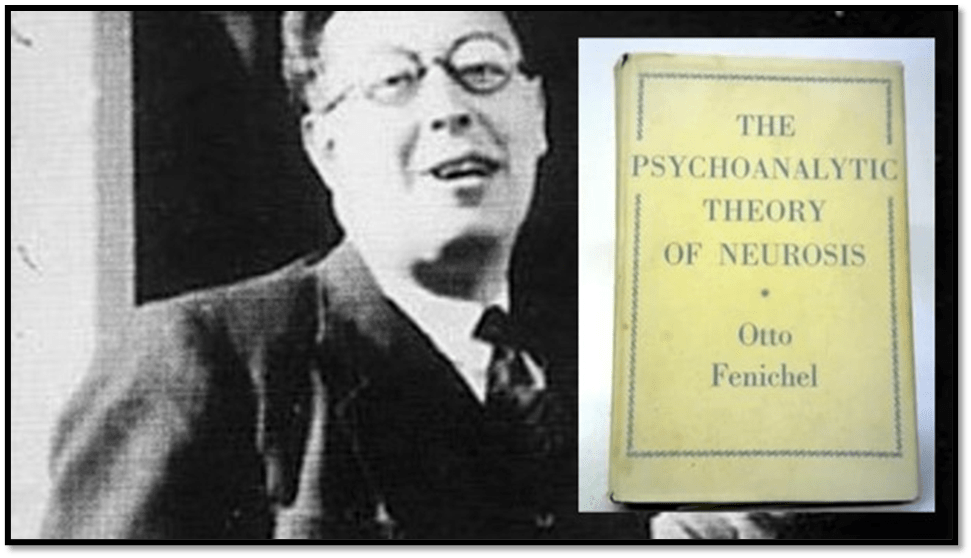
And I think Moroncini’s reference to the Marxist psychoanalyst Fenichel instructive. Forget for a moment the invocation of the Id and the Ego (which are developments from Freud’s melancholic versions of the same) and think of what Moroncini sees them as: names representing energies that operate or not in relation to a response of ‘being bored’; “between the push of the first to reach the goal of our drives and of the second to inhibit them—an unstable equilibrium between movement and calm, frenetic agitation and catatonic immobility‘. The id is liberatory, but only as a drive, and we need to release that drive in ways that frustrate the Ego and, in doing so, to make solutions unsettling and radical rather than those of the lazy cognitive miser.
Boredom is little more than a mix of frenetic agitation and catatonic immobility. Both arise from deep ignorance of self and the meaning of interaction with others, oft from self-sacrifice (willed when it pays large amounts to the benefit alone of socially mobile if spiritually immobile individuals, unwilled for most of the working class working in the interests of the few). If we truly thought of those things: then socialism would not be the hard thing it is to either achieve or persuade people that it requires achieving. Nevertheless when the largest party of Labour becomes the mover for un-radical boredom and stasis (better though it might be than Tory mechanisms of unadulterated self-interest), boredom might be our lot politically (in a very deep sense) for a long time to come.
With love
Steven xxxx
 Steve_Bamlett_blog