Describing Lou Reed’s response to an interview in ‘one British magazine’ around the time of the artist’s 60th birthday, Will Hermes say: ‘Reed brusquely parried questions involving his history (“I’ve lied so much about the past I can’t even tell myself what is true anymore”),…’.[1] This is a blog reflecting on Will Hermes (2023) Lou Reed: The King of New York Viking, Penguin Random House
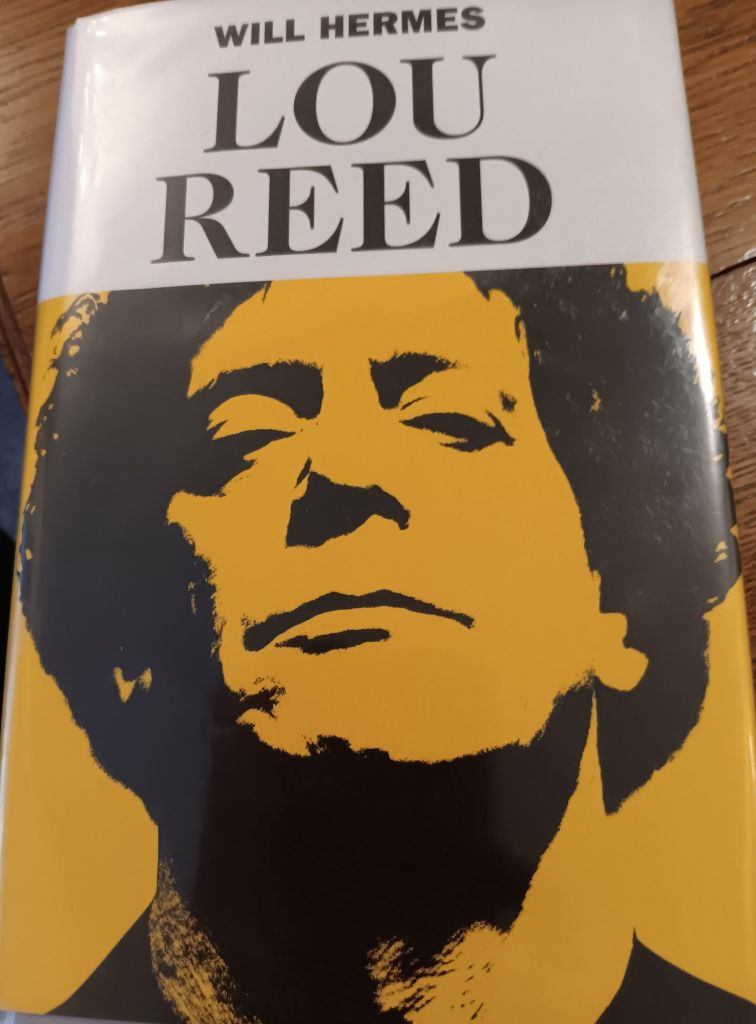
Why would I, in particular, write on Lou Reed? I have no knowledge, skills (and perhaps not even the appropriate values) that would enable me to make an assessment of his music? People who have those very things have already praised this biography. Even in the Gay and Lesbian Review, which you would have thought might have reflected more on the contribution to queer culture (which is there in all its contradictory plenty in the biography), John R, Killacky sets out only to praise the qualities of any solid biography, rather than a queer one, in this substantial book: a reverence for the music, ‘filled with riveting backstories and sympathetic analysis of the songs’ on the one hand, and the exposition of ‘the harsher realities of Reed’s life’ including ‘the abusive behaviour driven by his personal demons’, on the other.[2] Killacky’s assessment seems correct but it doesn’t draw out the chaos in the book’s underlying character portrait (fragmentary as it requires to be) where we balance between the oft misogynistic toxic heterosexual masculinity and the professions of queer identities, always in the plural, characteristic of Reed’s continual playing of ‘Lou Reed’ roles and the enactment of characters from his narrative lyrics.
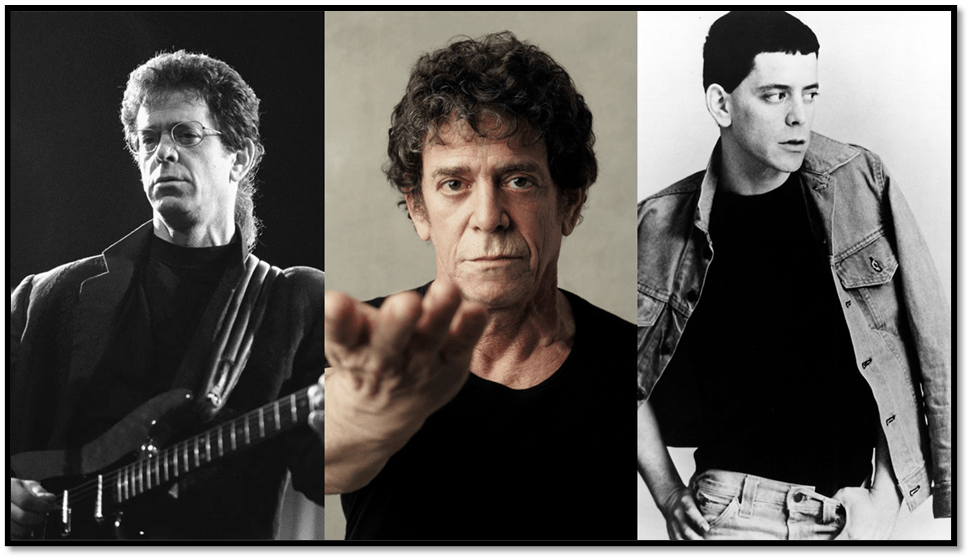
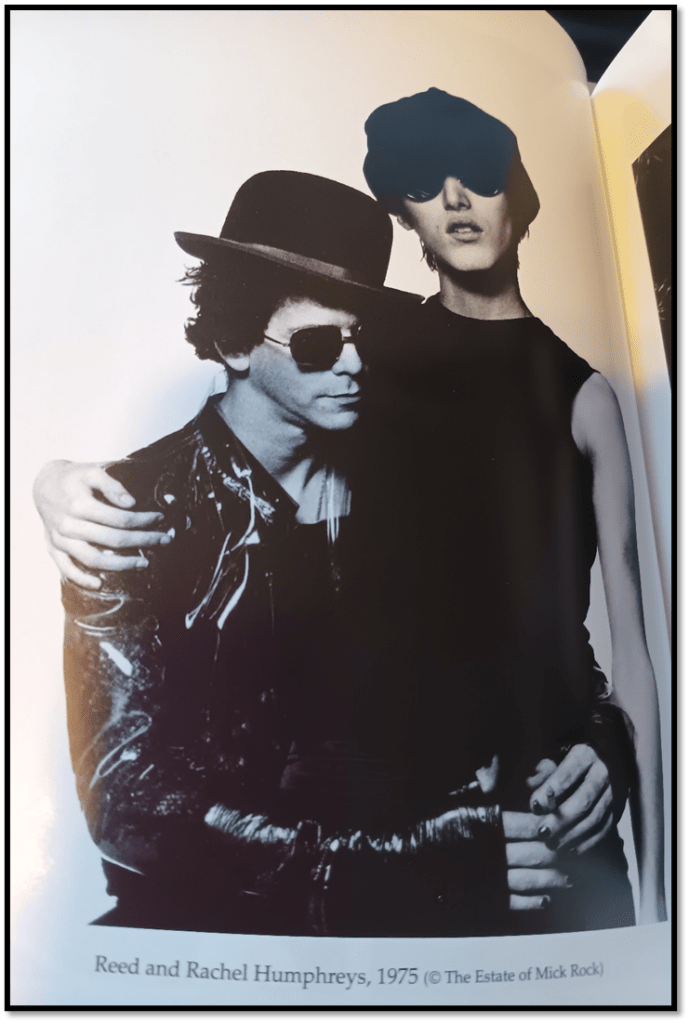
And I think that Hermes’ undoubted qualifications for writing this, as Killacky calls it, ‘delightfully deep dive into what looks like a canonical legacy’ are clear, as are his attempts to constantly favour and champion positively queer readings of ambiguous behaviours and marriages as he describes them. And despite the violent misogyny in his relation to at least two of his wives, and the charming beauty of his relationship to his last wife, I think I wanted to know more about his relationship, fairly long lived with the trans woman, Rachel Humphreys, with whom he partnered, as if in marriage in the 1970s, of whom Reed ‘used gendered pronouns interchangeably’ for ‘Rachel went by “Richard” and “Ricky” on occasion’.[3]
In a life in which the genderqueer has one of its earliest and deepest iconic manifestations (in comparison, say, to the rather shallow stream of these, with its eye always on fashion, in David Bowie). I would have liked more reflective material on the nature of his trans empathies, alliances, and identifications. I loved however that treatment of his queer and libertarian activism, temporary as it often was, such as the period around 1985 (circa pp. 336ff).
I think Hermes might too have things to say worth saying about the complexities of quèr history, apart from his references to the urgency of sexual diversions in Lou’s life and the predictiveness of that life of twenty-first century revaluations of sex/gender. For instance, I have often tired of the attempts by Julie Bindel to retell the history of gay and lesbian liberation as exclusive of trans issues, this book makes it quite clear that the Stonewall rising was a rising that had the defence of trans values at its centre and as the sole emblem of its statement of a strategic of challenge to the heteronormative in the fact of queer visibility, for it was as much challenging the homonormative, the closeted ways in which ‘gay and lesbian’ identities hid behind the supposed biological immutability of the sexual binary, as the heteronormative.
Hermes’ account, for instance, demonstrates that the trigger to the rising against police defence of homophobia was its use of ‘masquerade laws’ aimed at those who were genderqueer, even if only in their choice of clothing. An alliance of the queer clientele of the bar and others:
… fought back against a police raid at the Stonewall Inn, a gay bar in the West Village at 51-53 Christopher Street. Owned by the Genovese crime family, it’d been a fairly safe space for the homeless young genderqueers who hung out there, who might be otherwise arrested at any moment on the street for a perceived violation of the city’s antiquated “masquerade laws”; … they’d been repurposed, alongside other laws, to harass the gender-nonconforming.[4]
However, despite this, Hermes cannot really make any great advances of our understanding of the ‘genderqueer’ in Reed himself. But then I wonder if good well-researched and ‘balanced’ biographical writing could ever get to ‘understand’ the life of Lou Reed or, in the end, the significance of his/their art? Maybe the debt we owe Reed’s memory is that he made it known that there never was a ‘perfect day’ for any manifestation of love or human significance – no, not ever!, though it is important to assert there was (see by the way an earlier brief blog reflecting on that beautiful song at this link)
I suppose I felt that queer histories still need more meticulous telling that avoids a fall into any of the binaries of the heteronormative, that constantly raise issues of whether a person is truly male or female, straight or gay, even strictly definable as either trans or cis, for each of these binaries have admitted variations in lives as they actually have been lived. And there will be no such exploration that convinces until we drop another popularly set of binaries that especially characterise discourse about biography and autobiography: those of objective / subjective, fact / fiction and even truth / lies.
Queer culture, and the queer community, need, in my view of things at least, such a manner in dealing with ancient archetypes of divine creation and creativity, notably in the archetype of Orpheus, whose historic reappearance are so beautifully told in Anne Wroe’s lovely book, Orpheus: The Song of Life. In detailing the various versions of his life, she moves from the sexual fluidity of the stories of the singer favoured by the Greeks for whom the Eurydice part of the myth was just another story of a lovelorn dryad like Narcissus’ Echo, to those stories from Rome and thereafter who made the story of heterosexual love with Eurydice central to the myth. Even the however, there was a tendency in later lyricists to see Eurydice not as a woman pet se, but the feminine resident in male interiority where that interiority exists, which in poets was thought to be absolutely the case.
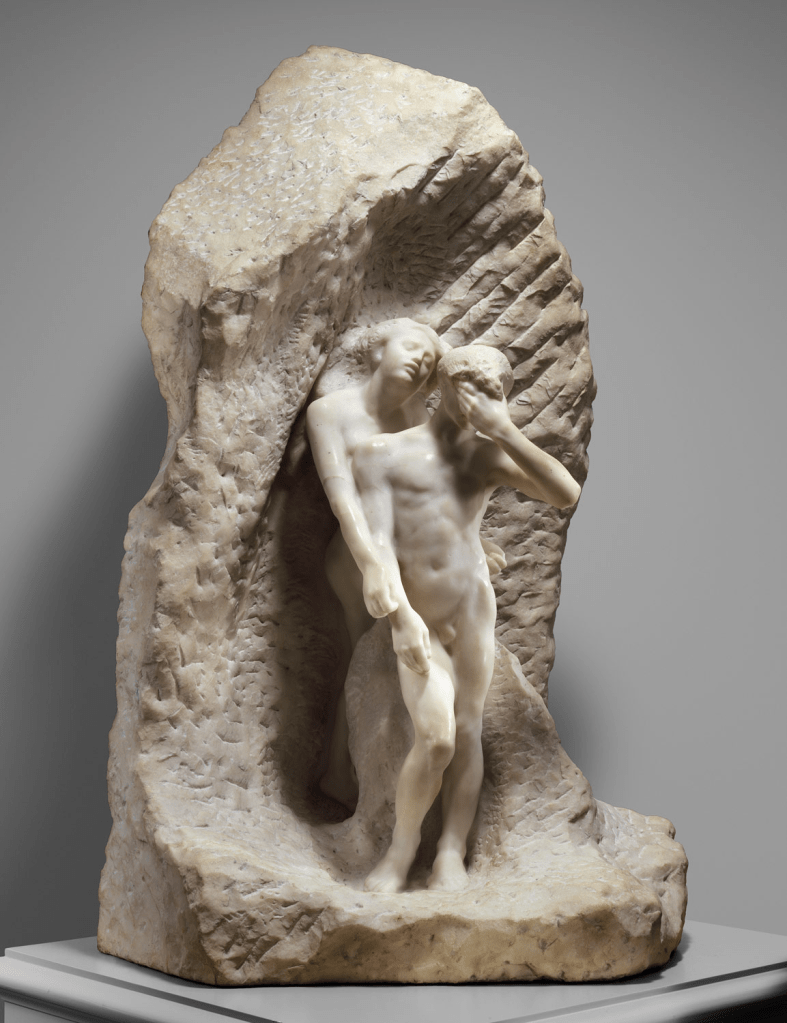
Rodin’s ‘Orpheus & Eurydice’
Thus Wroe cites Rilke:
Look, inward man, look at your inward maiden,
her the laboriously won
from a thousand natures, at her the being till now only won,
yet never loved. [5]
Wroe also cites Calderón in the seventeenth century who saw this feminine aspect of his Orpheus even earlier than Rilke: as a representation of that vulnerable and weak secondary ‘human nature‘ that even a demigod such as Orpheus might call ‘into life’ as necessary to and as a validation of his male divinity.(6) Camille Corot, who claimed his visionary painting was guided by Orpheus. For all, there are commonalities with Jungian archetypes, where animus, a male principle of life is balanced by anima. Here is Wroe’s account, beautiful in that it imagines human nature has no being until called forth by a divine and intelligent love of Rilke seeing Eurydice
…, curled within himself, as in a tree. She was an ‘almost girl’, ein Mädchen fast: his Vera, hovering between life and death. …// Eurydice had slept thus, the poet’s own anima, or feminine soul, entranced by th visible and sensual, never wishing to be woken. (7)
All manner of metamorphosis of shape, nature and being has symbolised itself in myths of the shapeshifter in many cultures. Yet when we find it in Lou Reed we pathologise it rather than see therein the modern Orpheus who is a Transformer, still a shapeshifter whose multiple selves (often created as different identities that cross into each other) defy boundaries not only between male/female, straight/gay but also truth/lie binaries.
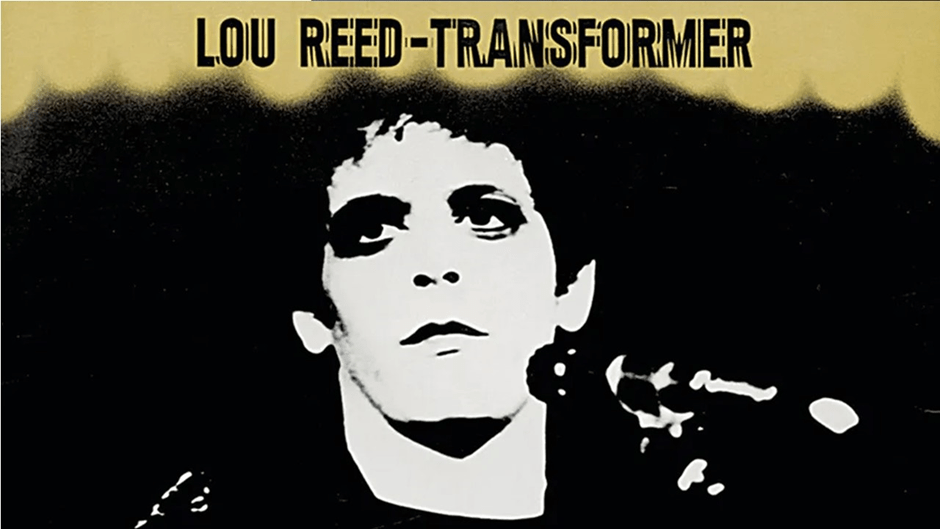
Hence, I think the issue I have with the way Hermes implicitly interprets the quotation from Reed in in my blog title: ‘Reed brusquely parried questions involving his history (“I’ve lied so much about the past I can’t even tell myself what is true anymore”).’ Is this really ONLY a strategy of parrying questions because, as Hermes says and demonstrates the truth thereof, that Reed was very suspicious of others attempting to construct his life? I think it raises the same issues as those raised by other artists who invoke Orphic identity in the poet, the sense that life is infinitely more complex than the blunt tool of binary distinction can ever be used to fashion a model of it.
Like other examples I cite above, Reed thought his autobiography was his work, lyrics and music, and I do not think that the issue of their incoherence as a statement of unitary identity at all contradicts that fact as Hermes hints it does. Reed certainly experienced nearly every way in which identity can be interpreted as fragmented and split (and not just split in two) from his early psychiatric hospitalization by his parents to the flip flops of his sexual / romantic relations between variations along the interacting scales of male and female, straight and gay, love and hate, peaceful jo and violent negativity. He accepted that Warhol called him Lulu, though he was shocked to find that Warhol presented him so negatively in his diaries as Hermes shows us, when these diaries were published after Warhol’s death.
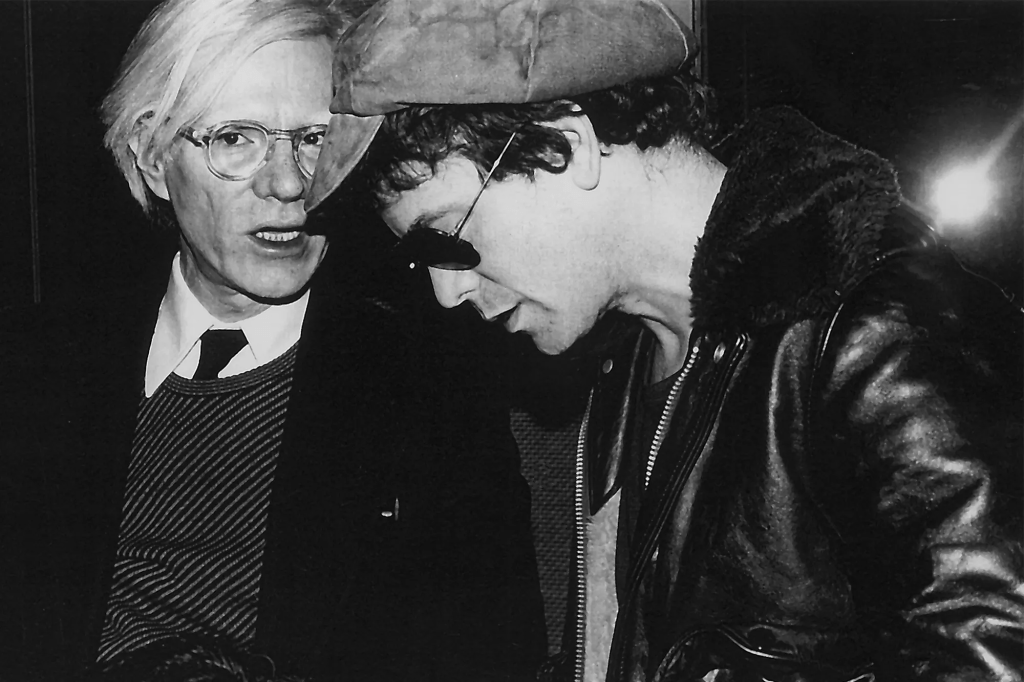
It is probably correct to not forgive Reed as a person for his abuse of people who loved him, once liked him or even just worked well with him (notably John Cale, though the latter’s homophobia when Reed gave him ‘sexual nudges’ seems to warrant some tension). That is especially so when his misogynistic domestic violence was used to create his narrative lyrics. His wives never quite appreciated that and o talk that ‘artists’ use life differently will wash. But messy lives is the theme of queer history as well as part of the deft boundary-crossing in artistic form, charcters and stories.
I think queer ‘history’ or ‘art’ that looks for perfect role models rather than experiments in living with contradiction fails to take the complexities of life seriously. Lou Reed matters because the contradictions between different categories used to describe him are the contradictions we all live within and must negotiate. His way of living these experiments does not seem one anyone should, or truly could, imitate (though people try to) but was an example of how a true creative artist negotiated them and then shared them with us because he was an artist. The fractures in between Reed’s personae, on stage, in the content of his lyrics and in sequences of his life performances, are fractures in the culture that some people live for us, as he did. Hence his true fascination with people who weren’t friends but other examples of living contradiction between their perception of complexity and the contemporary society’s self-serving neglect of that complexity – people like Candy Darling, who Reed iconised in Candy Says, and even Andy Warhol, whose significance reed seemed to understand better than Warhol himself.
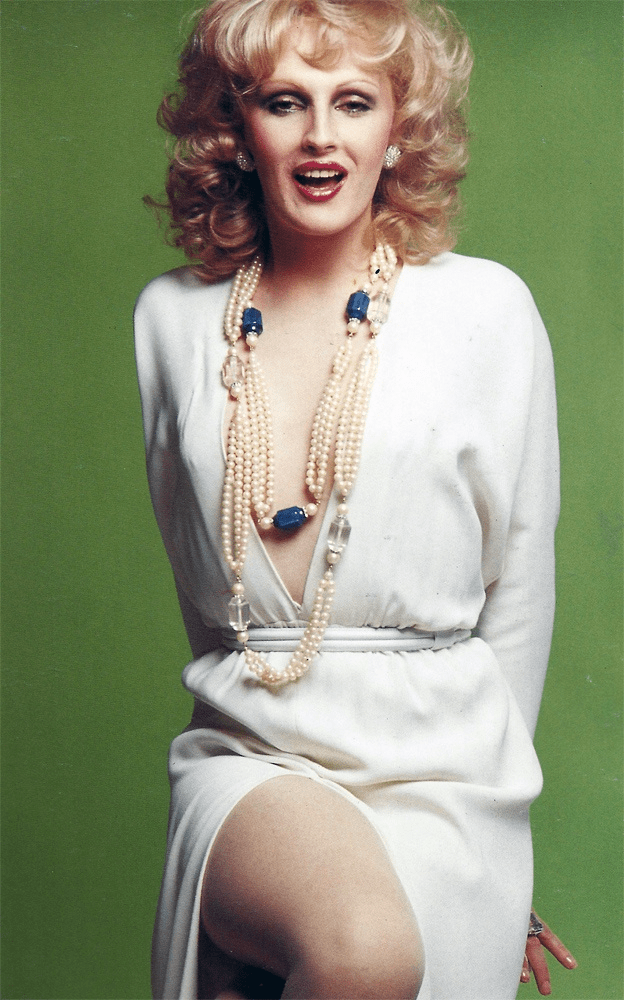
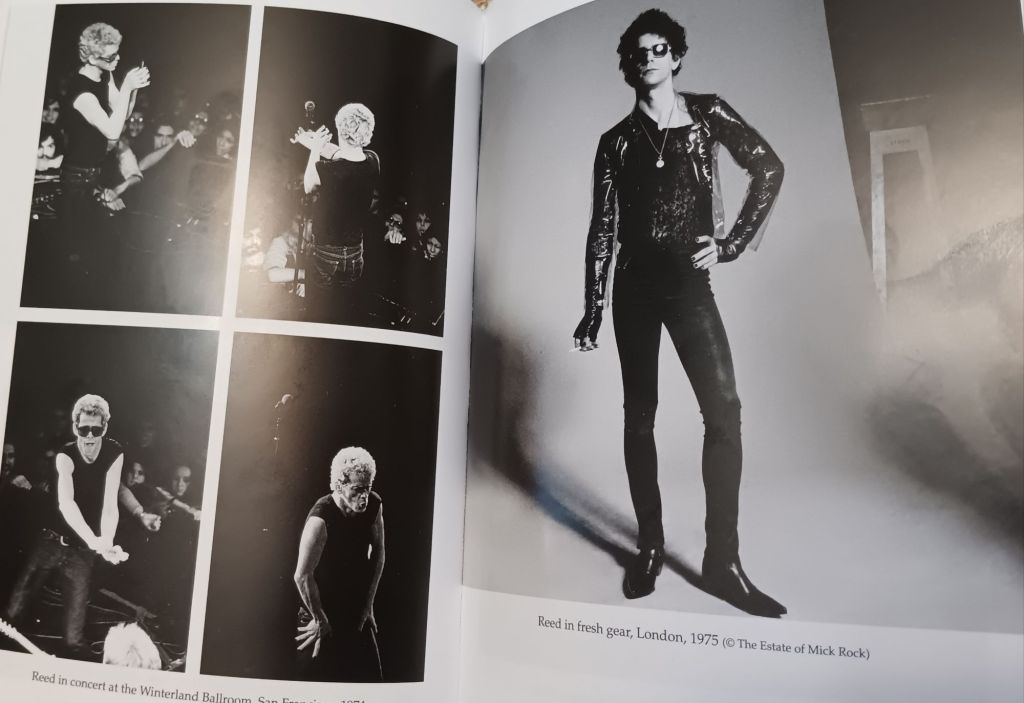
When Reed spoke of his distaste for the character “Lou Reed’ he felt other confused him with, he could have meant ant number of Lou Reeds as well as all the characters of his narrative songs, plucking ‘their eyebrows along the way’ but I think he knew this multiplicity was the cost of his creativity and not just the effect of alcohol and amphetamines. indeed much of the latter activity seems to me like the self-medication of a brain too active at too many synapses. continually wondering whether uppers or downers will best deal with the mess of what they were, these personae all embedded in Lou Reed, a barometer to his times but a failed strategist. Other ‘heroes’ of the time: Bob Dylan and David Bowie for instance were much more strategic in their ability to taste the times and hence their ability to ride on the crest of waves rather than being mangled whilst absorbed in them like Reed. And hence the stink of the fashion house in Bowie, who tried, Hermes shows, to get Reed to pull himself together, to Reed’s enormous anger.
I loved this biography because it is an excellent and scholarly biography but it is not the analysis of queer history we need now. That would stop fussing over medicalised categories and look at how people live between the categories, and ‘between the acts’ as Virginia Woolf tried to do. It is then a bit wasted on me because I do not know how to judge the songs or even the lyrics as I think Hermes does. But, as a book that recalled elements from my life memory set and explicated them differently, in the culture in which they belong and to which I feel alienated at those times, it is excellent. Nevertheless, it is not a book I will read again, nor do I need it as an academic reference (that world is past for me) so it will go on Ebay if my husband does not want to read it. But it is a beautiful book about a beautiful but oh-so-flawed star (but then I can’t judge that). Do read it;
All my love
Steve xxxxxxxx
[1] Will Hermes (2023: 407) Lou Reed: The King of New York Viking, Penguin Random House
[2] John R, Killacky (2024:6) ‘Poet of a Generation and its Misfits’ in Gay and Lesbian Review 30th Anniversary Issue Supplement, (Vol. XXXI, No. 1) 5- 6.
[3] Hermes op.cit: 251
[4] Ibid: 174
[5] cited Anne Wroe (2011: 105) Orpheus: The Song of Life Kindle ed.
[6]ibid: 106
[7] ibid: 106 – 7.


Nice post 👍
LikeLiked by 1 person
Thanks
LikeLike