Can you share a positive example of where you’ve felt loved?

I have avoided this prompt for a while, because it ties itself into too many knots. I can’t read it without an alternative mirror question ringing in my head:
Can you share a negative example of where you’ve felt loved?
The proposition underlying the first and second question is the same logically. They imply surely that in some ways having felt loved could elicit a range of types of interaction that could feel extremely negative, extremely positive or somewhere in between. However, this proposition is only absurd on the first embarrassing introduction to it, for few people cannot have experienced feeling very negative, or less than positive at least, about love professed to them by one person or another. Certainly, some of us too will have been on the end of someone that we have loved intensely demonstrating to us that they feel our love for them to be a burden or worse.
Sometimes, we have just bear the fact that it can be hard to receive love as to give it for those people and retreat to a safe distance, if the urgency of one’s feelings and inner compulsions to that recalcitrant other allow you that luxury. Sometimes, one must just wait.
Feeling loved then is not so simple as our miserly cognitive processes would prefer us to think that it is. It certainly sustains, as my husband’s love for me does, for it is always wanted. For this felt love my heart sings unaided in his praise. In less trustworthy hands professed love also destroys if it is wanted too much.
Not that feeling unreturned love is wasted: the love of others is precious, even for those who don’t want it. When the energy of love surges, wait patiently because, like the pool of fluid libidinal energy Freud suggests it is, its object will eventually be revealed to be NOT the one you thought he was that you loved but some ideal of otherness that you feel you need, or have, in your survey of your own past lacked or ‘lost’.

And should you feel the love of another to you has negative effects, the same may be true. You see in that person something you have ever feared or wanted to escape from or fight against. Even if that is so, it behoves you to leave that love behind ethically, not strand it in the wake of your fight-or-flight energies. And when it has positive effects it equally behoves you to engage it with the knowledge that some of that love is not the product of knowledge or feelings or sensations raised by that other but by their enactment of the way the ideal object your unfulfilled needs would act in your imagination.
You need, I imagine, to keep struggling to decouple the real person from that wished-for ideal object. Give each phenomenal object, the real person and the idealised imago in your heart, its own space to live – the first in a world that sustains him independently and your only chance of receiving sustained love from him and the second in a place where it becomes your chance of attaining independent self-worth. For such images of needed love are probably the product of some inner splitting of one’s need for being loved by yourself and that part of your self capable of unconditional love of self.
What follows hence goes wild with inner fantasy and private meanings. Read on only if you dare
Let’s face it, love is rare enough, and indeed its scarcity is our guarantee of its reality independent of its naming in discourse’, which happens all the time and wantonly in all kinds of contexts and often in very mixed-up forms. And maybe love is elusive and always a thing yet to find or refind. I get that sensate and felt thought in poetry sometimes. Sean Hewitt has recently reminded me, not in person but in my reading the loved ideal behind his recent poems, in a new volume, Rapture’s Road , that the greatest poem I know in English is probably one I quote in full later by Thomas Wyatt.
He is a poet so sublime ( I mean Wyatt but perhaps Hewitt too) the tyrant Elizabeth I had to execute him rather than allow him to follow ideals she found treacherous, or at least a threat to her authority. He pursued ideals like perfectibility that real tyrants know to be a chimera that they merely act out for their own selfish reasons.
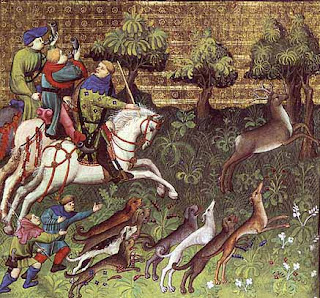
Enjoy the poem:
Whoso list to hunt, I know where is an hind,
But as for me, hélas, I may no more.
The vain travail hath wearied me so sore,
I am of them that farthest cometh behind.
Yet may I by no means my wearied mind
Draw from the deer, but as she fleeth afore
Fainting I follow. I leave off therefore,
Sithens in a net I seek to hold the wind.
Who list her hunt, I put him out of doubt,
As well as I may spend his time in vain.
And graven with diamonds in letters plain
There is written, her fair neck round about:
Noli me tangere, for Caesar's I am,
And wild for to hold, though I seem tame.

Wyatt loved justice like he also loved people. They are both ideals to pursue as a hunter pursues a Deer. The Deer, of course, rightly feels that being pursued by Wyatt may not be a positive experience. One may end up from her point of view, the venison on his table rather than the object of his constant idolisation.
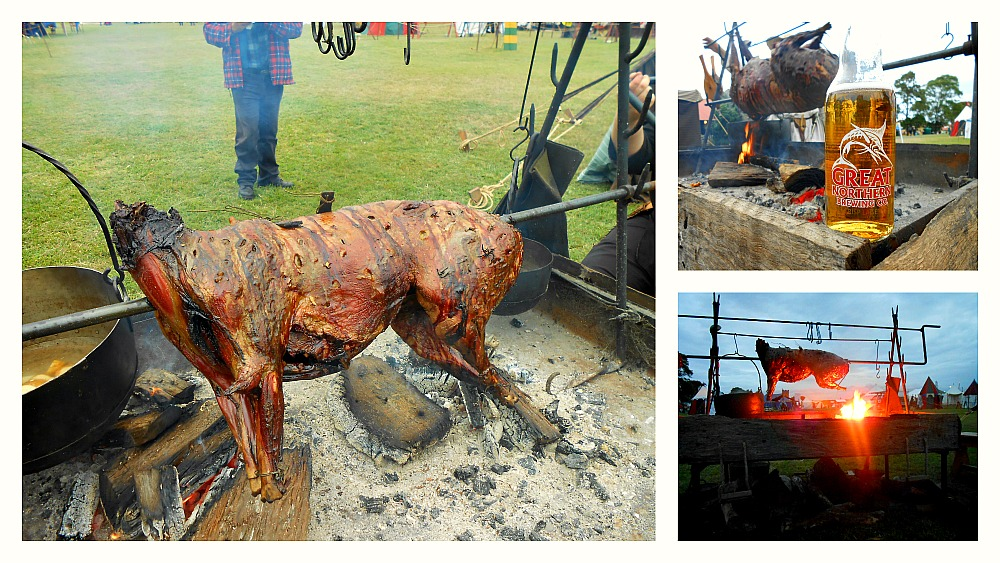
From the Deer’s perspective, Wyatt’s love is a burden and she asserts her wildness. It is no surprise that men like Wyatt end up in the Tower of London waiting for the chop. We are sad mixed up people. No wonder tyrants continue to rule over us:
‘Sithens in a net I seek to hold the wind’.

What a great line of poetry that is!
With love
Steven xxxxx
 Steve_Bamlett_blog
One thought on “Hard-felt thoughts on hard-felt feelings.”