


I truly write for myself most of the time, I claim, and most often there there is no intentional untruth or even known self-delusion in that statement. Not reading, and now writing about my reading, has become a need – to evidence, as I have always put it that I am learning and growing in understanding, improving emotional and sensory as well as cognitive literacy. I want so much to be able to still say, though I do no job that requires me to do so any longer, that I am STILL learning and can STILL evidence it. I think all that is the case. But alongside that I sometimes feel – and it’s mainly a private feeling – that either the struggle I show in trying to think things through has not been heard even if its product has been noticed. It is not what I say I want heard but the fact that that my attempt to speak was a valid one, and expressed a conflict that extends deep into me, my nature as a person in a way that others recognise in themselves: to that point where ideas, feelings and sensations mingle. It is a feeling that I have had no answering response to the struggles I felt in saying what I said I want I think, even the comforting touch upon them of a mind sensitive to its importance to me. The longing for validation is a deep feeling that is more animal than human. It is not about receiving agreement but a sense that one exists in a space that others inhabit too, where things matter beyond the everyday, though rooted in it. It is a feeling that is visceral as well as mental.
I don’t think it is ever to be satisfied, for when we feel it most is when we fail to hear the responses to us people make. Sometimes it takes little. The other day I came across a reference to an exhibition I visited years ago, whilst I was beginning to experiment with blogs in the Open University. I give the text below. But what warmed me was that this reference (the webpage is at this link) actually mentioned that experimental blog – one I had put online with great caution and trepidation.It didn’t say much but it put the blog in a list of other writing that gave a sense, even if an unprovable one, of a kind of collaboration and togetherness. Here the list is, from the piece:
The exhibition was reviewed in The Spectator, Yorkshire Post, York Press, Art Fund, The National Student, Nouse, Aesthetica, The Victorian Clinic, The Yorker, the Norman Rea Gallery Blog (run by students at the University of York), RobinInce’s Blog, Clara Williams Brinquez, Steve Bamlett’s Blog (The Open University), and The Vision.
https://yahcs.york.ac.uk/collaborations/exhib-fl/
And then I thought of all those lovely people who regular return some greeting to my expressions, showing that they want me to know they know they care whatever their criticism of what I have to say. I would give a list but I daren’t ask their permission to publicise their private kindness. So, they know who they are. With all love. Hugs.
And for the old blog:
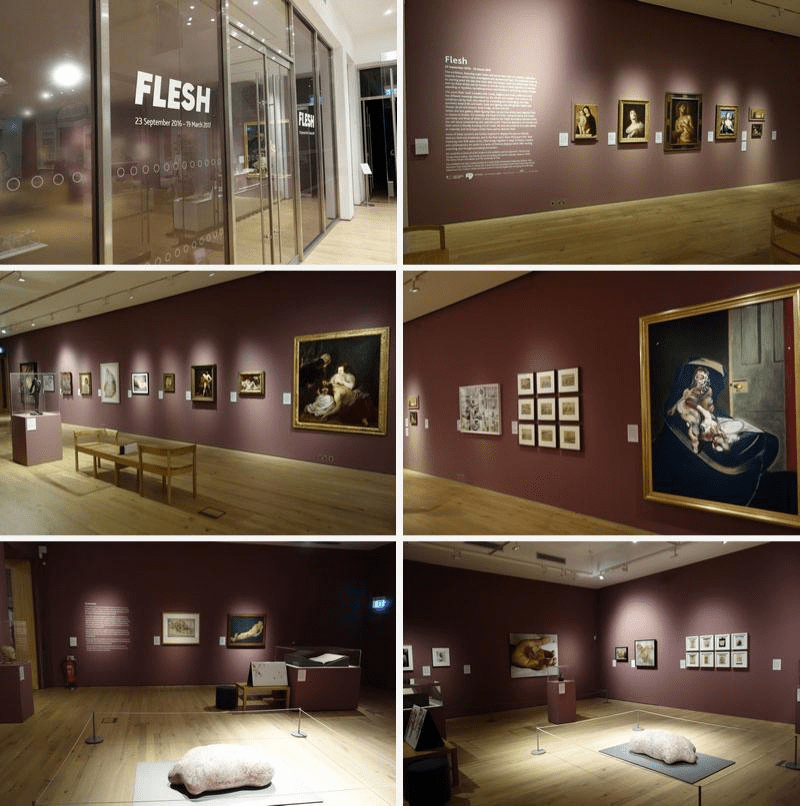
Flesh – Exhibition York Art Gallery visited 05/01/17
Friday, 6 Jan 2017, 08:55 (in the Open University site)
Visible to anyone in the world
Edited by Steve Bamlett, Friday, 6 Jan 2017, 08:56
Flesh – Exhibition York Art Gallery visited 05/01/17
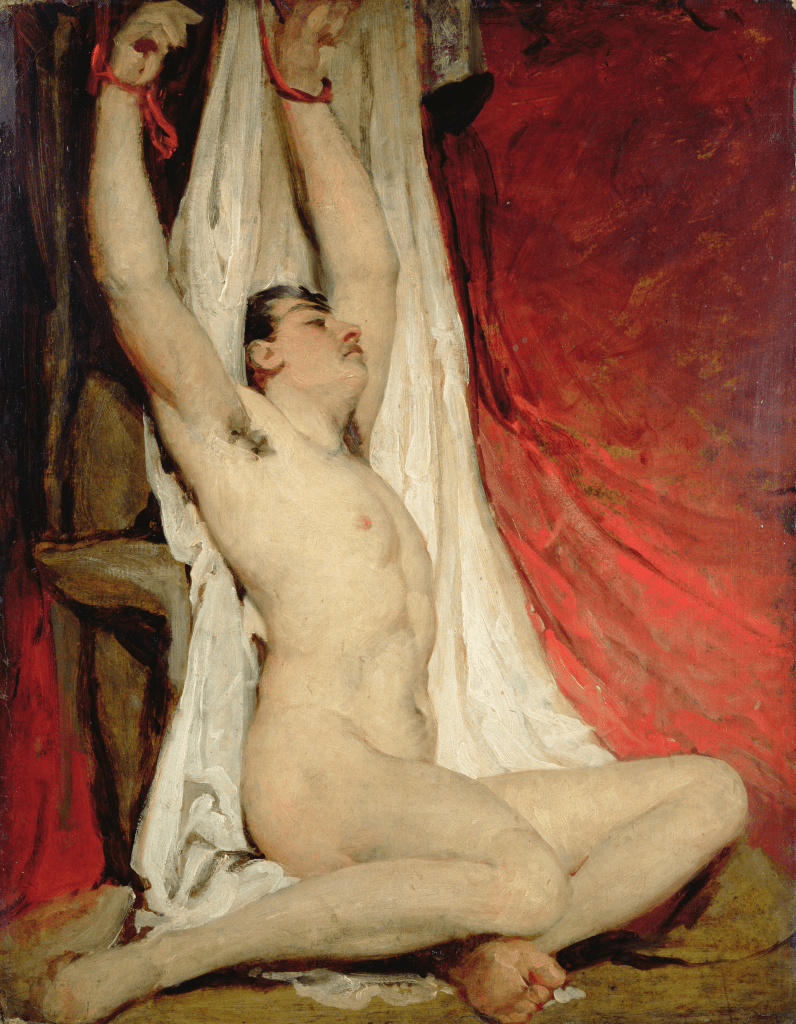
I suppose you visit exhibitions such as this drawn by ‘great’ names, and indeed the exhibits by Rubens, Rodin, Bacon, Lucian Freud and Kneebone are all worth the entrance fee. However, I came away with largely surprised by the work of William Etty, particularly the exploration of skin, ‘race’ and sexuality in some featured pieces. Suddenly the Etty world of doughy white ‘female beauties’ that I wrongly associated with this artist, and wrongly disliked him for, were put into a rare and radical context. One piece shows a nude male tied by the hands (somewhat decoratively), from a high studio scaffold such that, the information given on the wall tells us, Etty could help the model to display the fall of flesh over the torso, under such restraints of pose, in ways impossible to unaided attempts at the pose over the durations possible for life-modelling. Yet here is a painting that recalls the homoerotic material in Caravaggio more than any other one might see. Yet divorced from the underpinning of a story of significant torture, such as the Christian stories offered earlier artists: what remains is a study of flesh itself as an empty container for meanings that are uncomfortable but pressing and necessary.
This exhibition explores the use of flesh as a signifying model across multiple domains and potentials for meaning. Flesh as the material of predation – meat – and its meaning determined by drives within predation (whether as commodity offered to the appetite for food or erotic fulfillment), or flesh as that commonality which makes our mortality bearable and bounded (a common vulnerability). If all ‘flesh is grass’, flesh ties us to death and yet sublimes within itself the potential for massive non-corporeal meaning and attempts at transcendence.

Etty’s nude wrestlers contrast black and white skin and flesh in a moment of male combat where other meanings emerge – even changes in skin colour as a white man’s embrace recolours the skin of an encircling arm (a trick of light or of meaning). We see all that differently again in a wonderful study of male flesh in animated combat in Steve McQueen’s Bear (1993) where every meaning and attribution of the significance of flesh is dramatically tested as action morphs into aggression and predation but remains formally a kind of balletic dance, as light turns flesh colour and surface into many forms, merely by the act of looking from multiple perspectives.
Sometimes flesh is the material of art – the patches of preserved skin from convicts bearing tattoos etched by needle or whatever sharp (or blunt) instrument that the prisoner could procure and then suddenly flesh that is on the cusp between life and death becomes to bear meanings that inevitably evoke iconic representations of metaphor of flesh as animal and human. Flesh in decay or in consumption be an animated. The animated videos showing the decomposition by maggots of a dead hare twists that body into wondrous shapes but this is recalled in the painted series of the death and decomposition of a high-class Japanese woman in a series of paintings in another room.
The still life corpses of Dutch art of the everyday get recalled precisely by a manufactured corpse of a deer, in which its potential to be embodied humanity often gets realised as we wander round it. The otherwise difficult-to-watch video installation ‘Meat Joy’ shows naked volunteer actors demonstrating fleshly manipulations as on the cusp of animal and human, drive or sublimation, sex as conjoined with predation or empathy or both together.
A tile-wall erupts into monstrous life only to display ambiguous signs of death and deindividuated and uncontained fleshly parts (Adriana Varejão Green Tilework in Live Flesh 2000)
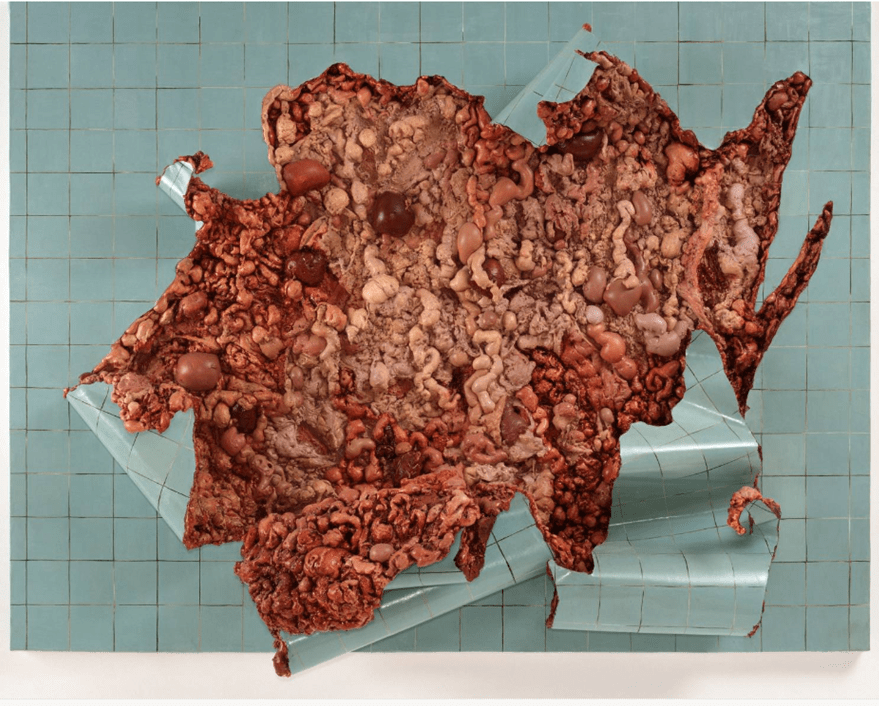
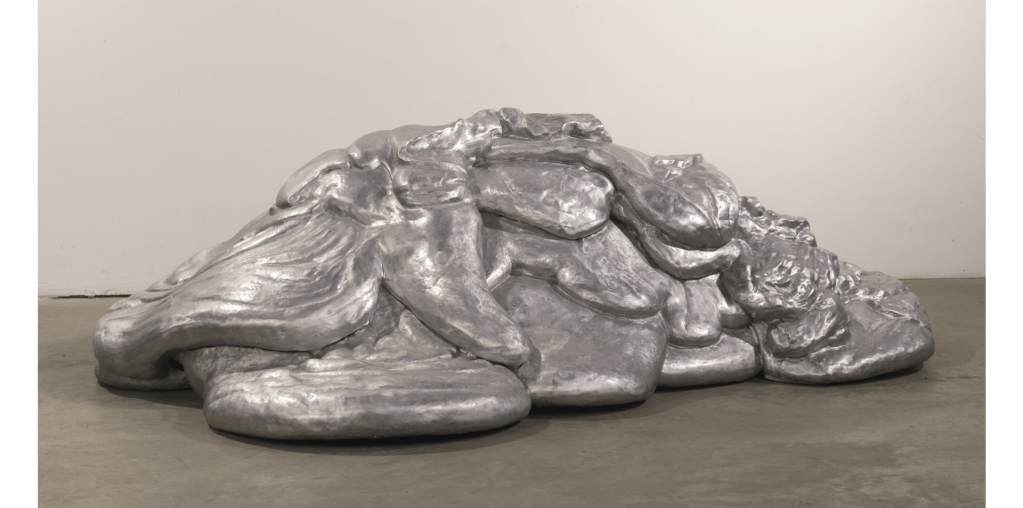
This is an image that contains reference to the complex mix of the means of sustaining life and losing it (messily in both cases). And then flesh and fat abound in images. There are potent images here of how these ‘ideas’ (of the fleshly and the fatty) are linked in socio-cultural and aesthetic configurations – although very unstable ones, where the definition of beauty and its opposite are in play, sometimes joyfully (as some may feel about Rubens and Benglis’ ‘Eat Meat’ – a mass of fatty fluid flesh on the floor styled in bronze.
There is SO much more to say but see it – PLEASE. It is mind-changing, which is perhaps to also say flesh metamorphosing.
All the best
Steve
_______________________________________________________________________________________
Well, there’s that piece rescued from destruction, for its time in the OU open files must be nearly drawing to a close.
All my love Steven
 Steve_Bamlett_blog