


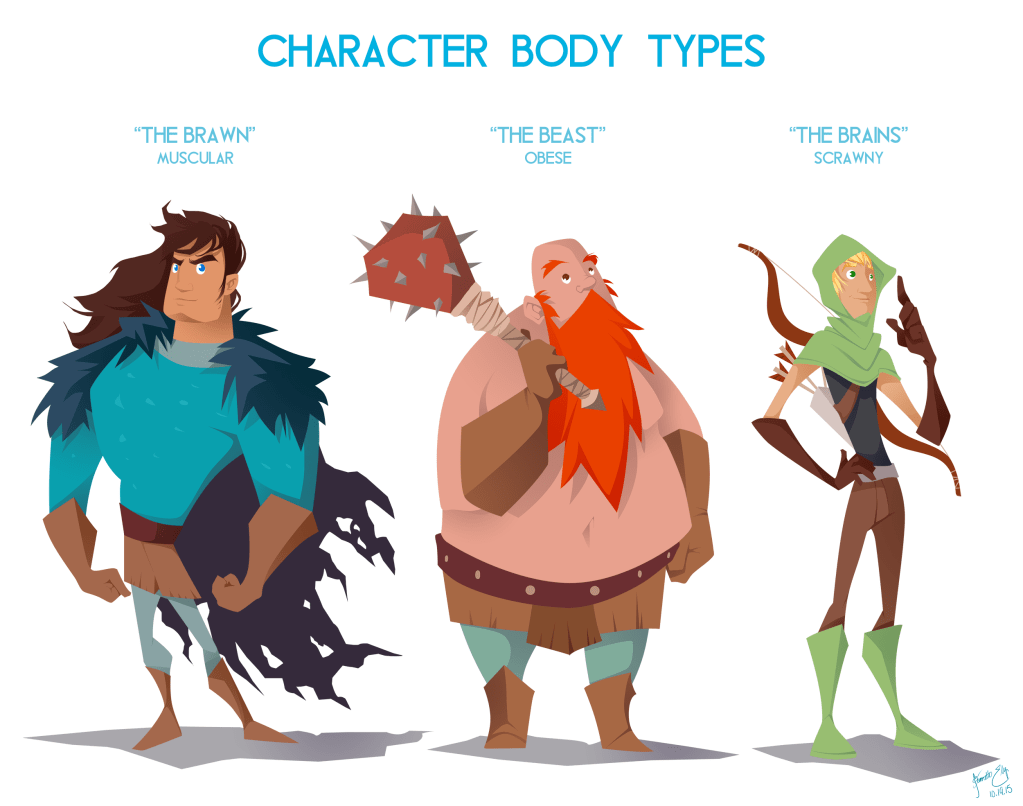
A ‘judge of character’ is a tautology. Sometimes we go to great lengths to harmonise the various supposed signals of the notion of character, as we adjudge it, to persons, assuming for sake of control of a world that can seem to be unreadable, I think, that we can even assume a correspondence in inner and outer manifestations of character (appearance and trait typology), as in the cartoon below.For a ‘character’ has already been judged in order to be understood as such.
Consider then now the various ways in which the term can be described, even in a dictionary such as in the online Mirriam-Webster at https://www.merriam-webster.com/dictionary/character, of which I cite the definitions only of a noun, since this is how the word functions in our question:
character (as a noun) – the definition defines it separately when used as an adjective or verb:
(I) a : one of the attributes (see ATTRIBUTE entry 1 sense 1) or features that make up and distinguish an individual (This is a side of her character that few people have seen). b(1) : a feature used to separate distinguishable things into categories also : a group or kind so separated (advertising of a very primitive character) (2) : the aggregate of distinctive qualities characteristic of a breed, strain, or type (a wine of great character) (3): the detectable expression of the action of a gene or group of genes c : the complex of mental and ethical traits marking and often individualizing a person, group, or nation (the character of the American people) d : main or essential nature especially as strongly marked and serving to distinguish (Excess sewage gradually changed the character of the lake).
(II) a : someone who appears in a book, movie, etc. : a representation of an individual personality in a fictional or dramatic work (a character in a play; the novel’s main/lead/central character; a minor/supporting character; fictional characters; a cartoon character (… spends her days scripting stories for an entertainment company about background characters in video games.) b : the personality or part which an actor recreates (an actress who can create a character convincingly) c : an avatar in a video game (There will be a bevy of cosmetic items to purchase …, allowing players to totally customize their characters …—Michael Kelly) d : characterization especially in drama or fiction (a novelist good in both character and setting) e : PERSON, INDIVIDUAL (a suspicious character) f : a person marked by notable or conspicuous traits (quite a character)
(III) : moral excellence and firmness (a man of sound character)
(IV) a : a graphic symbol (such as a hieroglyph or alphabet letter) used in writing or printing, b : a symbol (such as a letter or number) that represents information (mathematical characters, also : a representation of such a symbol that may be accepted by a computer), c : a magical or astrological emblem d: : ALPHABET, e (1) : WRITING, PRINTING e(2) : style of writing or printing (You know the character to be your brother’s?—Shakespeare) e(3) : CIPHER, f : a conventionalized graphic device placed on an object as an indication of ownership, origin, or relationship/
(V) : REPUTATION (The scandal has damaged his character and image).
(VI) : POSITION, CAPACITY (his character as a town official)
(VII) : REFERENCE sense 4b
(VIII) : a short literary sketch of the qualities of a social type
Of course definitions have a limited use – some of the above for instance might be said to be easily ruled out but even that cannot really be allowed because we don’t don’t really know the full context in which this question is asked. But even given this, it is clear that only one set of its meanings is ‘character’ free of prescription – of a judgement about it that precedes it, and that is those set of meanings under point IV : which treat of its denotation of a graphic symbol used to represent something else, such as a sound in the formation of a word in language or quantity in mathematics or to substitute for a word or number. But even then, it can be used to denote a stamp of ownership (IVf.), which certainly is a kind of judgement on the thing thus stamped or branded.
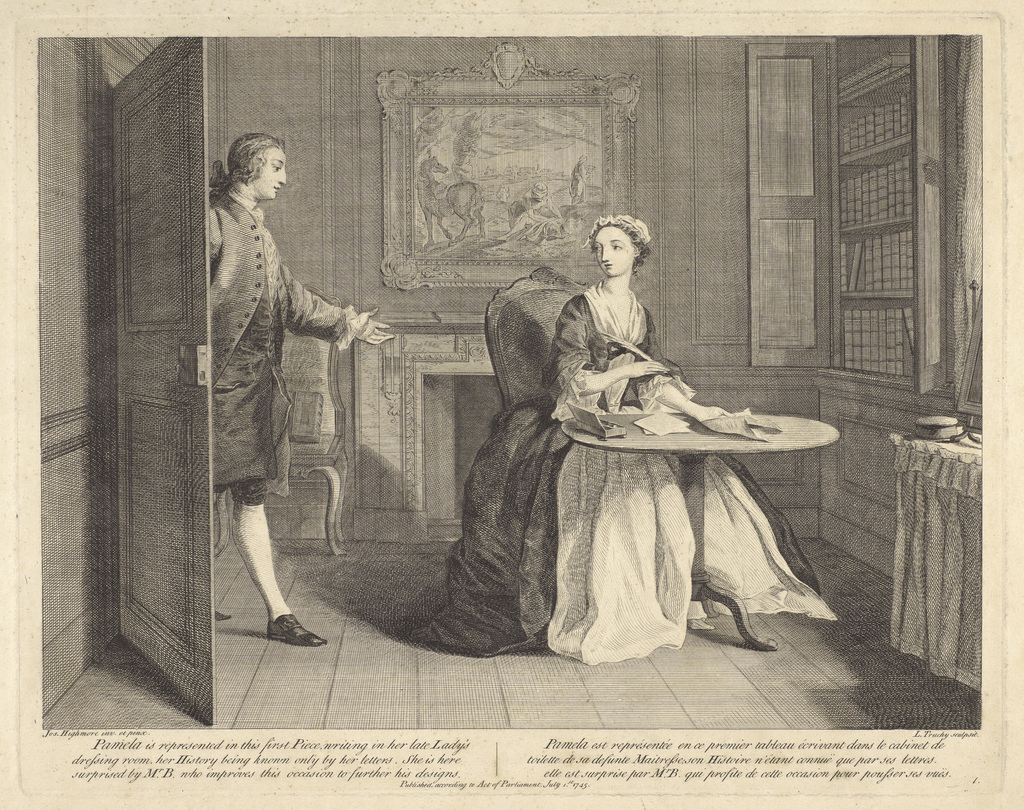
As the name of a job reference in the eighteenth century, its denial or bias could ruin lives – a point often played upon in Samuel Richardson’s novel, Pamela, where the eponymous servant-girl cannot leave the employ of Mr. B., her employer without a ‘character’ but to get one must give way to his lust for her and, in her judgement, and with the word used in a different sense, lose her own moral character. To play such games with a ‘character’ in a novel was a conscious act in Richardson’s part to show how wide-ranging the power of the novelist is in creating ‘characters’ out of mere symbols in writing (that is, of course, out of ‘characters’). Indeed the only source of freedom that Pamela gets is that she can write ‘character’ judgements of her own – using her quill to write in ;characters’ you see – and that is why Mr B. triesso hard to stop, and if not stop be the sole rader, of her written characters.
The point is that character, even outside of novels, is a construct of the person based on a kind of judgement of them; not just moral judgement (but often including that for some judges, especially those sitting in a seat of authority in legal proceedings) but even in the process of exerting the power to select what qualities most or best represent a person in order to describe them. So what does a ‘judge of character’ judge – for we do know that usually they are only considered good at this if their described assessment of a character proves to be consistent over time and place.
However, to expect consistency over space, time and situation is hardly a realistic or even fair expectation. Change is probably I think the only consistent quality of persons. Even loyalty, or consistency of attitude or view, is only such in the light of considerable revision of the circumstances of the object judged and consequent re-affirmation (or not). If that object is a person how much less can we expect consistency and deny change – which we might also describe as growth, decline or reformulation. Persons have agency in ways characters do not because anything inconsistent is described in the latter as being ‘out of character ‘. However, let’s face it, only by being out of character does a person grow, develop, or even reduce or regress (in short change) and realise their freedom and autonomy as persons.
Those we tend to name a ‘good judge of character’ are persons whose assessment of someone, at some level of allowable change prescribed, does not significantly change and whose assessment is not proven wrong by some event or expression of the character they are judging. A good ‘judge of character’ is one who chooses a good employee who stands the test of time in their job, or does the same in relation to choice of a partner, spouse or friend. Very often the reason the character thus judged does not change, or appear at least to do so, is because the judge has, by virtue of their authority or power or both some control over the person judged (as their boss or controlling partner by virtue of some inequality).
Hence, the usual discord of relationship breakdowns or disputes on the loss of a job for numerous reasons. Hence too the terrible ambiguities of being a service-user of a service with the capacity to make powerful descriptions of you, such as services in health, especially but not only mental health, education or counselling. Being a patient, student or client can be a very constricting role. Hospitals nowadays have signs requesting: ‘please be a patient patient’. If you stay in role, that is you stay in character, you might get a service consistent with that role, although it may not be what you want or need at that time.
We are trapped, that is, by good judges of character. Sometimes that is not just by ether keeping a partner or spouse, or maintaining engagement with a patient or client in some cases, for life (or the course of treatment) but by changes in power that give a partner the power of exit and the choice of leaving without explanation. I think this is part of the complexity of the issue. To be a good judge of character’ is to be correct in your judgement over every circumstance that might vary over space and time.
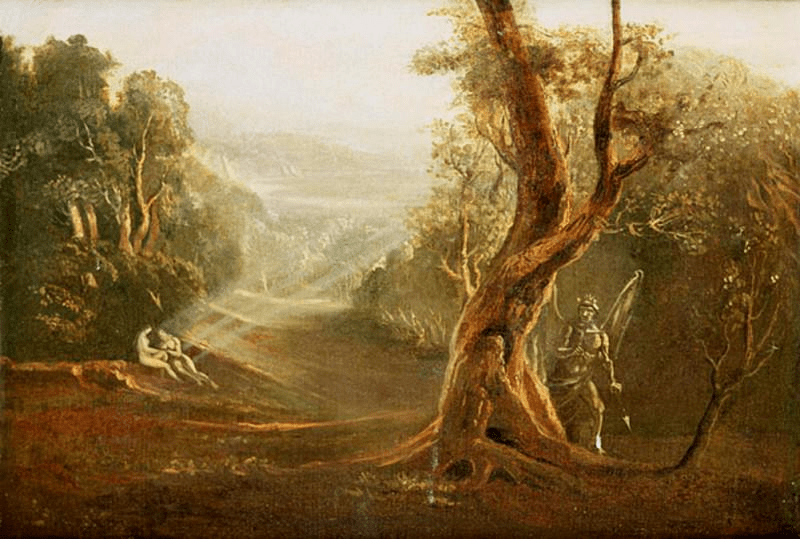
Looked at abstractly this isn’t, ethically speaking, a thing we should want, or will in the end be to our comfort to want, at least over the long term. When someone dies, there are rich layers of the experience of ‘letting them go’. One, and the most basic, is the letting go of the power to be the arbiter of their staying or leaving. The same is true of relationship breakdowns. And yet again it is in Milton’s Paradise Lost, in that primal moment where Adam has to make a judgement of Eve’s ability to make a judgement of the character in which guise Lucifer will appear before them. But he does not say, well he almost does in facr but he does not IMPOSE that view, “I am a good judge of character, and you, Eve, do not have the character to see and judge situations where you are being tempted because you are not a good judge of character’. No. He lets human history have its sway hence forward and says:
But if thou think, trial unsought may find
John Milton Book 9 ‘Paradise Lost’ in https://genius.com/John-milton-paradise-lost-book-9-annotated
Us both securer than thus warned thou seemest,
Go; for thy stay, not free, absents thee more;
Go in thy native innocence, relie
On what thou hast of virtue, summon all,
For God towards thee hath done his part, do thine
In brief he says, you are own best judge of your own character. There are prescriptions even in our new world but you know what they are. It is yours to choose a way forward, for that is the price of ‘freedom’. Being free of each other’s prescription and control, and even God’s (that supreme authority) might be worth it (almost existentially necessary) and expressed in one of the finest ever iambic pentameter lines of verse: ‘Go; for thy stay, not free, absents thee more’. However much patriarchal religions demand men be the ultimate prescriber, and maintainer, of female character (for women and the intersectional marginalised are the usual victims of such prescriptions), at least Milton, in this primal moment for humankind, opted to represent freedom and ‘letting GO’ of the other. Adam may be represented as being a ‘good judge of character’ but Milton does not facilitate Adam asserting his supposed rights as a ‘good judge of character’ over someone with clearly represented poorer judgement. Eve is not made subordinate to his power (that was – as the poem and Bible tells us – was God-given) have over people. Her right to speak and to act autonomously and alone (even if her arguments are false and over-estimate her self-knowledge and knowledge of others) is not shown as deniable. Her rights remain intact (as in the principles of Milton’s Areopagitica and his On Divorce more specifically). Indeed, ultimately the whole of Paradise Lost can be read as a story of whether God or Satan are the best ‘judges of human character’. Its moral as a poem can be seen as – though even William Empson in Milton’s God failed to take that step and stuck with William Blake’s view (that Milton was of the ‘Devil’s party without knowing it) of the issue: be free of both if you can is my reading of this. Ultimately, as W’H. Auden knew, to be a good ‘judge of character’ is the way of the TYRANT: to know human character like ‘the back of your hand’ is oft to substitute power for the appreciation of PERSONS, and ultimately their right to life at all, let alone autonomy.
He knew human folly like the back of his hand,
W. H. Auden’Epitaph on a Tyrant’ (1940) available: https://libquotes.com/w-h-auden/quote/lbi6t7u
And was greatly interested in armies and fleets;
When he laughed, respectable senators burst with laughter,
And when he cried the little children died in the streets.
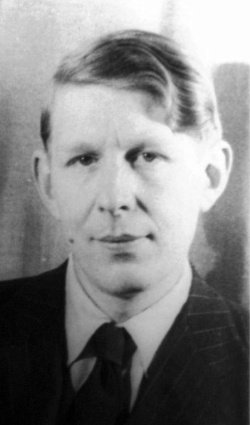
To want to judge is always suspect. Though we must – too often in a world where deception is king and has become a governmental and economic principle (the rule of Capital) – we need that space in which we let persons ‘go’, even the person we or more likely ‘character’ we THINK and JUDGE ourselves to be, who oft has ‘rarely known’ themselves, like Shakespeare’s King Lear.
With love and Go now ….
Steve
 Steve_Bamlett_blog