That was a place. If I was a good-enough writer or painter I could recreate it in ways in which its ‘placeness’ found itself in a much larger context. But I am not an artist. .
That was a place. If I was a good-enough writer or painter I could recreate it in ways in which its ‘placeness’ found itself in a much larger context. But I am not an artist. <sigh>. (My title is an edited quotation from my text below, in want of other inventive power.)
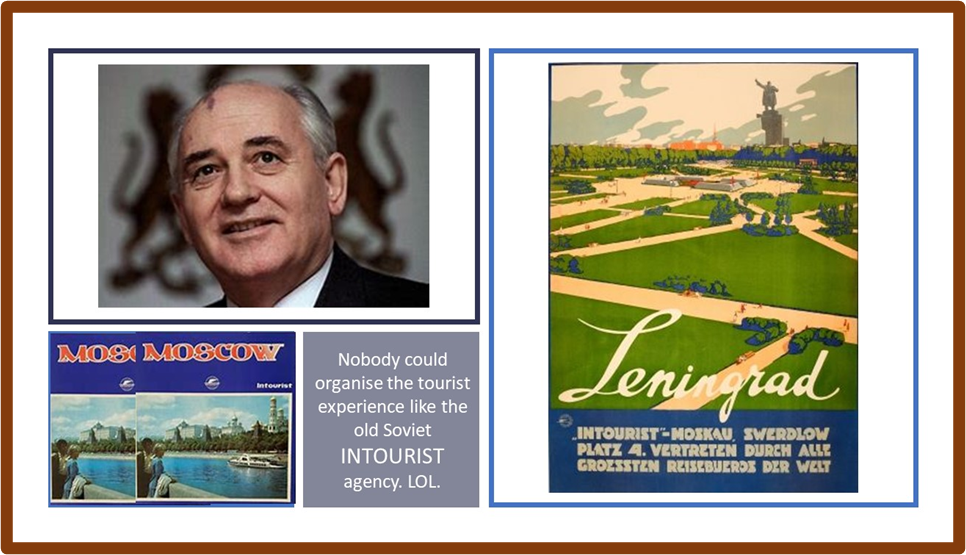
At first blush I go through my episodic memories of my time on earth and unearth mental pictures of spaces that passed across my vision or in which I have holidayed or stayed on business or for an educational experience or event. To visit a place of course isn’t the same as inhabiting it. In the latter, our stay is not only usually longer but it is so qualitatively different we name it a home or perhaps even (once it is set in the sufficiency of the things important to you in, and surrounding, it) as ‘a world’. And as I mulled all this over, I wondered if the word ‘place’ really conveyed the memories of visited locations. Did I see or sense Moscow and the city then named Leningrad (now renamed by the old Imperial name, St. Petersburg, again) when I visited them during the Gorbachev era in any significant way to allow me to evaluate it, even on a highly subject scale of liking it enough, or more than others to name it a favourite or potential favourite?
At an earlier point of my life, say in my 30s, I would have had no difficulty with this question for I would have plumped straight away for the harbour in Chania on the North-Western shore of Crete. But, and here’s the problem I read some time ago a new life by Ian Collins of a painter I love, John Craxton. I read it for a blog I wrote in part (one linked here).
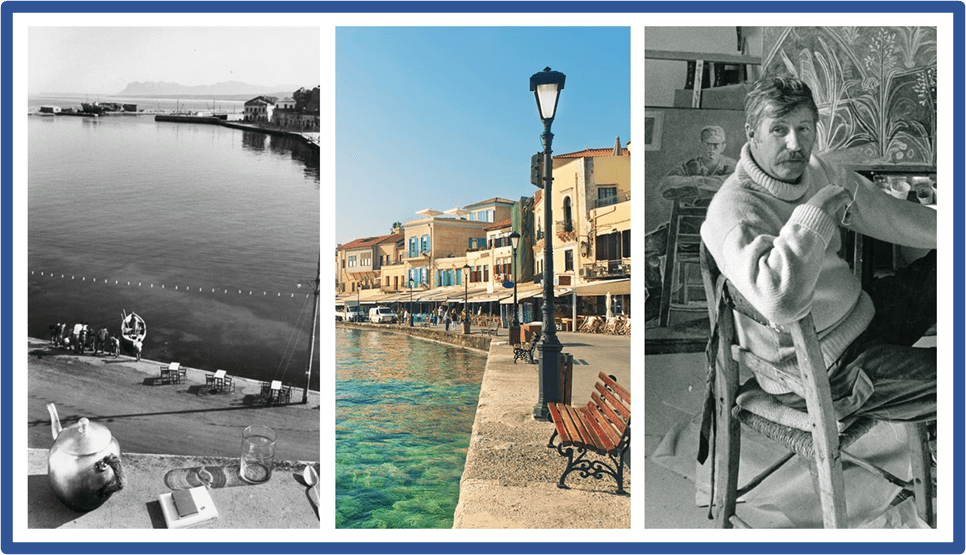
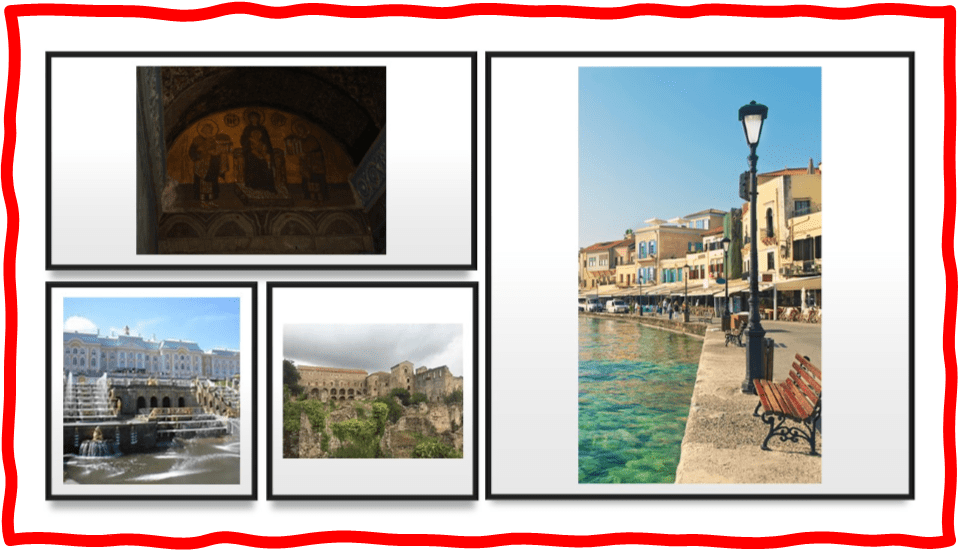
I learned in this book that Craxton once lived in a flat in the same harbour in Chania in Crete. That the harbour was once a magical place, having visited it well before it was a tourist site, began to fade from memory . After all, all I remembered was the space around a beautiful scene, various impressions (some quite alien and exotic to my norms and expectations of space as a very young man). I realised in contrast how much more ‘placed’ that space was for Craxton when he lived there. It was, for a considerable period, his chosen home in Greece, where he stayed mainly in Chania, whose art gallery owns 100 of his wonderful paintings. The period can be dated: from the ‘first opportunity he was given – in May 1946 – (when) he landed in Greece and initially settled in Poros. Until his death in November 2009, almost all of his art focused on the life, light and landscapes of Greece’.[1] Hence, when I look at the detail from photographs collected around Craxton’s life at Chania, collected for the collage below, only the middle one is familiar to my living memory – and is so, through a haze that the vanity of tourist experience brings, for the photograph is used as an advertisement for Olympic Holidays.
The first photograph detail is a view actually from the window of Craxton’s flat with the setting of his breakfast on show, including his fabulous English teapot. In the third he is sitting in a taverna on the water front but surrounded by pictures of his own that he was presumably sharing with the locals and visiting sailors, who were his main voluntary models, and sometimes, it would seem, his sexual partners.
When I say Chania harbour is a ‘place’ for Craxton in a way it was not for me, it is because, I think, I am pondering the fact that tourism is a strange phenomenon (something Henry James and E.M. Forster are both expert at evoking in their different ways in novels), even when involved in business trips. The tour-maker or tourist is really more a ‘space-traveller’ than a person intent on getting to know, really know, a place, for they must in order to really live in it and as part of it. For the latter involves knowing the way in which space is turned into a place by longer familiarity. Repetition of some experiences happens in frequency and it involves some habituation to a place’s aesthetic effect, that would have awed a mere visitor. However, the repeated experience also becomes something that opens up new ways of seeing what you now think is not just the same thing seen each and every day. This has somewhat to do with the fact that a place is a social space – where interactions with others, with a range that spans between merely looking at one extreme to interactions much more intimate, transform what is seen. If I knew a ‘place’ I would be able to recreate it in the light of those richer sensations that have interacted with associated emotions, thoughts and extended narratives. Such stories are extendable as well as extended too at the level of our expectations, hopes and fears. Of course, I would never paint the life of Chania harbour as Craxton did and not just because I cannot paint like him or perhaps at all.
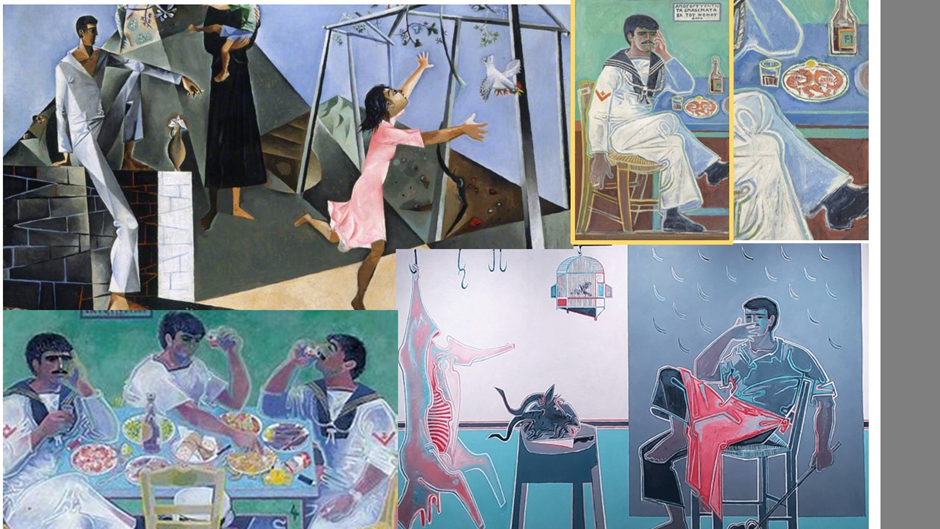
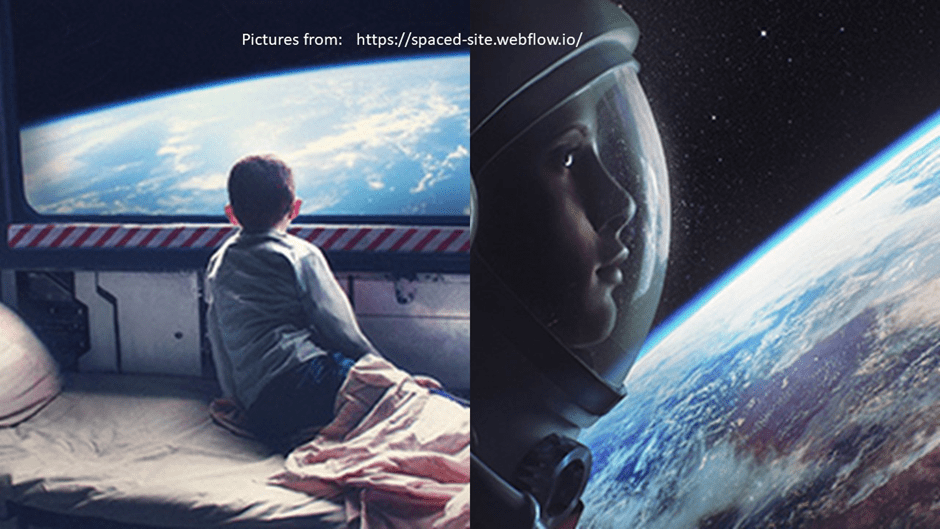
In these pictures a ‘place’ is created of events from memory, interaction and contingent emotional changes in its experience by individuals and groups and the cusps between them. It involves the social and solitary and experiences of reflection and reflexion between these two . It involves eating, drinking, and for Craxton usually smoking. It involves close attention to details that matter to one in the people or locales – Craxton’s interest in large masculine hands and feet is always noted, in the way light and shadow falls and then interprets a scene, in the meaning of pose and gesture. The butcher’s hooks, his pet bird and the beheaded hanging corpse of a goat giving poignancy to how that man holds an implement of his trade. This is place – not just a space, whereas my impressions could never be more than those that pass across the visor, or the window of the space-ship, of the space-traveller.
But, as I thought that, I also remembered that once in a MOOC (Massive Open Online Course) ran by the New York Museum of Modern Art (MOMA) I had some thoughts about space there, which I simultaneously blogged (it passed the course). The full blog of SPACES / PLACES: Assessment (submitted to MoMA course on Modern Art & ideas) is available at this link. Here is a relevant part of the instruction, somewhat edited and with added illustrations:
I’ve always been intrigued by the terms, space’ and ‘place’.
Places are spaces with other qualities, like names & meanings. These bind us to them, lending us their security at what can be the prices of entrapment in a fixed identity or over-localised constraint. Here I consider their relation to art.
Space is a concept related to both infinite expansion and enclosure in a boundary or frame simultaneously. In painting it suggests a flat surface in two dimensions, which sometimes thickens in mixed media like collage. But even in painting, space is not only framed by two material dimensions but also optical illusions of depth, which might be regulated (by perspectival illusions) or merely subjectively layered by colour contrasts.
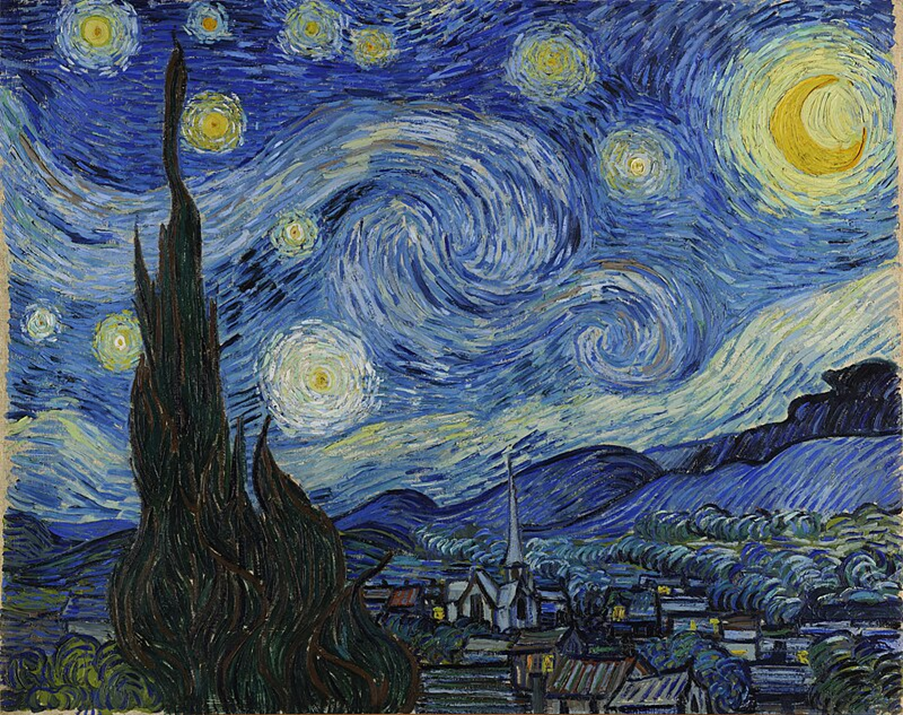
A small section depicts a place in reserved space that we might think of as provincial Saint-Remy. The town is only a set of straight lines and contained shapes, but its surrounding is not that place but space itself: space that extends from the cypress in the picture plane to the mountains and beyond. For a moment, as you look at it, refuse to see the skies above the town as a projection of Van Gogh’s inner conflict and pain. Why isn’t turbulence here seen as not pain but merely unconstrained pleasurable play on two-dimensional and in the illusion of three-dimensional space, or an even more contradictory way moving the eye from its tense wish to find deep space in a flat one? To me it celebrates space. We lose the sense of spatial perspective around the town and see the play of paint on a flat surface, mocking the supposed solidity of Saint Remy and displacing it with arabesques and rococo swirl. These dynamic brushstrokes and marks increasingly lose any sense of trying to imitate reality as they swell and flow multi-directionally because somehow the illusion of seeing a space moving from front to back no longer holds. So the cypress tree dances with the sky and queries the sense of solidity that must be felt inside the houses of comfortable Saint-Remy.
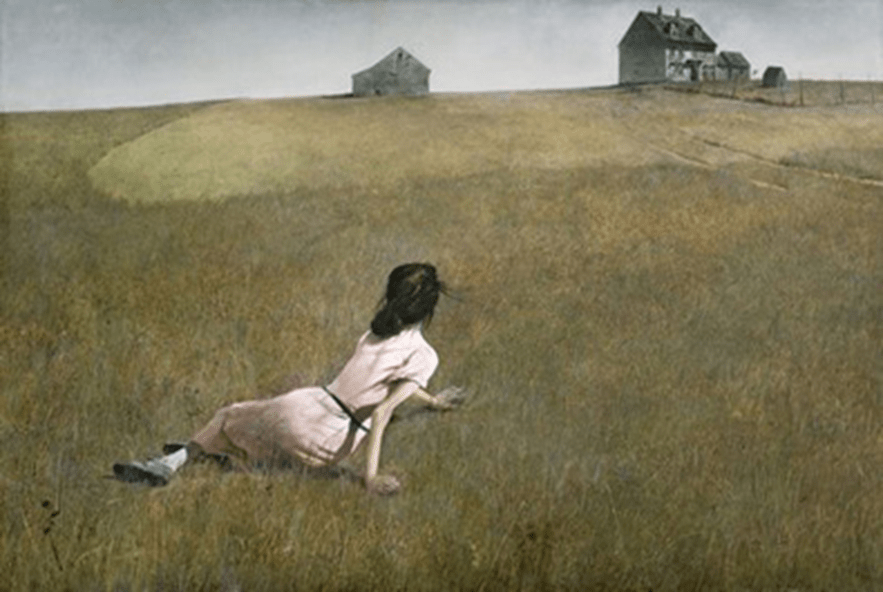
When we see places as spaces, they become disturbing because free space makes us insecure: perhaps any sense of freedom must be insecure. When Rachel Whiteread makes an empty interior space solid – as in House – she shows us that a place is a monument to something we think we are not what we can be. I think something similar goes on in Wyeth’s Christina’s World.
Home, constriction and enclosure – neatly packaged on the horizon – drowns in space that defies conventional perspective. Looking from a worm’s-eye-view, as we seem to do at the base of the picture frame, we would never really be able to see the exaggerated expansiveness around Christina – nor its intricate patterns of colour. Space expands to accommodate the viewer’s eye as it travels up from that grass – and is beautiful, hopeful and fearful.
This is a very different take on the comparison of the terms space and place, but it is immediately reconcilable with what I say above, in as far as discourses with different purposes ever can be, if we remember that ‘places’ do not have to have positive association in the way they largely do in the case of Craxton spoken about above. The bourgeois pretensions of Saint-Remy must have been felt and sensed as restrictive and constrictive to Van Gogh, in ways that an escape into playful ‘space’ that art allowed such a wonderful feeler/thinker/re-creator-and-maker as he. For Christina something similar is true, except that this painting, in my old reading of it, with which I still concur invents world-space of great magnitude around a ‘place’ that constricted her, and not just because her mobility was compromised, not least by the ways people then felt of assisting those with a walking difficulty – by carrying them and placing them. The painting still makes me shudder.
So there is my problem with this question. Places are not open to visitors or tourists, for the place cannot be contextualised in psychosocial interactions that combine outside and inside in a consistent way. We are never really placed on holiday except in a dream of ‘places’ as the tourist superficially creates them from expectations, contingencies of a short-term sensations of it and selective and sometimes limited memories. I remember then spaces, like the harbour at Chania or the Summer Palace at the then Leningrad, with its gold statutes encased in wooden ‘coffins’ to protect them from Arctic cold and wet, the vision in match-light struck by a local guide in a-usually-unvisited Byzantine Chapel on the Peloponnese where parts of a fresco in wondrous colour flitted across my eyes, the sparrows living on our window sill in a small hotel next to Mystra, on the way to Sparta. I can enjoy all those commemorative impressions. If I graded them it would be to tell you more about me and my changing range of modes of perception as I changed in my own space-time continua of life than of the places.
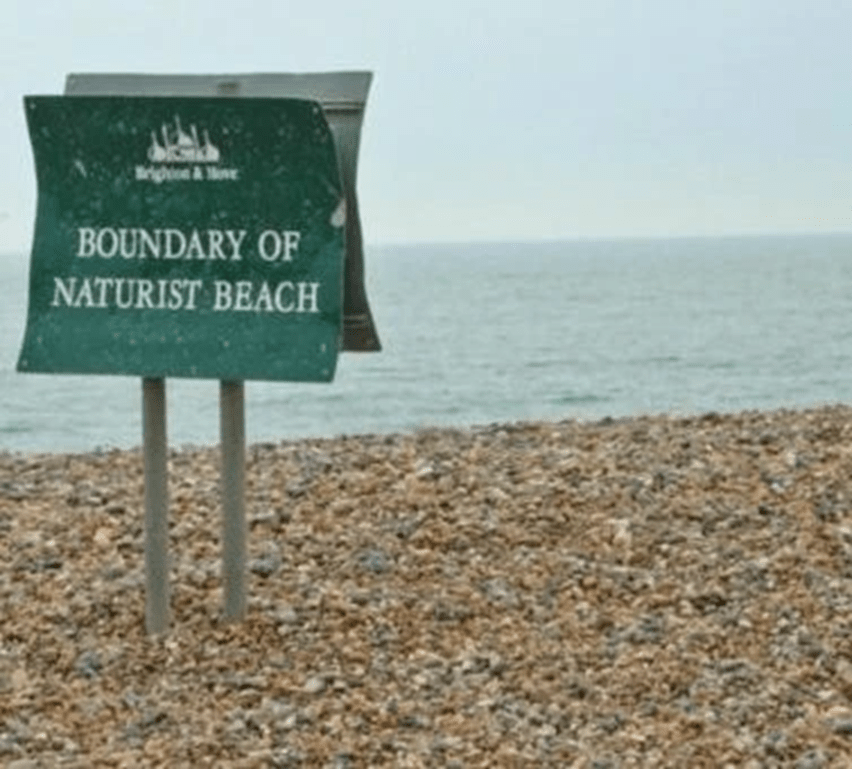
I have nothing against taking part in the latter project but it would take too long and risk embarrassment. For I think I remember of holiday impressions best a visit to a beach with my now husband in Brighton where I learned that love is complex, not just emotionally but in terms of the relations of body/mind and a range of contexts. The place, it was a beach just for gay men, which existed then and may still do (it is advertised on the web) in Brighton at least, but it stands out because it interprets a change in the space-time conception of our long relationship, a moment of reorganisation that still matters to me – not because things are the same now in all respects (could they ever be) but because this space on a beach, the steps up from it to a raised top, (perhaps a cliff wall) and the journey back to a flat we loaned from a friend, who was in London, and who died of AIDS soon after. So much was learned. That was a place, If I were a good-enough writer or painter I could recreate it in ways in which its placeness found itself in a much larger contextual space. But I am not John Craxton, Van Gogh, Andrew Wyeth or E.M. Forster (who did this in Maurice, prompted by a touch on the bottom by George Merrill, the working-class lover of Edward Carpenter) – and never likely now to so aspire to their skill and creativity of recreation.
3 thoughts on “That was a place. If I was a good-enough writer or painter I could recreate it in ways in which its ‘placeness’ found itself in a much larger context. But I am not an artist. .”


 Steve_Bamlett_blog
3 thoughts on “That was a place. If I was a good-enough writer or painter I could recreate it in ways in which its ‘placeness’ found itself in a much larger context. But I am not an artist. .”