Who is the most famous or infamous person you have ever met?
Daily prompt

Emily Dickinson is quite ‘somebody’ nowadays. I haven’t met her though I read her work frequently and THAT IS A KIND OF MEETING. I think it is unlikely that you, dear Reader (surely there’s one of you! La!) have met her either, for she died in 1886 and besides was a American poet and I have never been to the USA though you may live there. In twentieth-century USA, Andy Warhol (whom I haven’t met either though he lived when I was younger) once pronounced that ‘In the future everyone will be famous for fifteen minutes’, which became one of his most infamous and long-lived bon mots, if indeed he said it. But if you take those facts together, they suggest an irony: that fame is as much about the endurance of one’s name as the distribution of it among an audience.

An audience that forgets you fifteen minutes after it first heard of you, is unlikely to award one fame. Warhol knew that. He wanted to make fun of what people mean when they think they want to famous, or, worse, meet somebody ‘famous’ or’infamous’, in the hope that some of the FAME might rub off on you like glitter from a drag queen’s ball-gown. And no, this isn’t the time to tell you how, as a young gay-libber I once confronted Lily Savage as she stood on the bar they used as a stage in that public house in The Vauxhall Tavern in London in the 1980s (I think) and said she was debasing women. Oh, the silliness of youth.
And Emily Dickinson knew that. I name my blog after one of her poems – here it is in full:
I’m nobody! Who are you?
Are you nobody, too?
Then there ‘s a pair of us — don’t tell!
They ‘d banish us, you know.How dreary to be somebody!
How public, like a frog
To tell your name the livelong day
To an admiring bog!
Isn’t Emily using the same paradox as Warhol. She is probably, other than Walt Whitman and for many she is greater and more rightly famous than he, the most famous of north American poets, if not for this poem particularly. However, in life, she was not nor did she seek publicity and we know her now because of posthumous publication of her work. In her life, Wikipedia says, she published only 10 of 1800 poems and hence safely comes to the conclusion that, ‘Little-known during her life, she has since been regarded as one of the most important figures in American poetry‘. If fame is wanted, then we had better be clear that it only means something if you can want and envisage it at a time when you yourself cannot enjoy or BASK in it. Hence, the search for fame in one’s own lifetime is, in Dickinson’s view, no better than telling ‘your name the livelong day’ to an audience not worth much, ‘an admiring bog’, as a ‘frog’ does (she wittily imagines). In another poem she hints that fame whilst you live (that ‘livelong day’ which, may turn out not to be NOT all that long after all) is unlikely to last without killing you with the demands it makes on your resources:
Fame is a fickle food
Upon a shifting plate
Whose table once a
Guest but not
The second time is set.
And likewise ‘the famous and the infamous’. Unless you make your presence felt and reward the fame with some good of your own you may end up a ‘loser’ in history – as Christine Margaret Keeler, showgirl, found and many another young person sacrificed to the sexual appetite of the supposedly great (think of the many young men courted by rich stars like Liberace or Rock Hudson – see my blog at this link . By the way I do think Rock is great in his own way although perhaps I don’t think Liberace is!. Like Emily Dickinson in the last poem, I found I never got invited to meet the great twice, though like the rest of my year at University College London we swooned over the presence of Stephen Spender and A.S. Byatt as teachers.
Coming from a working-class family in the West Riding of Yorkshire, as it was then, it seemed unlikely anyway that fame might stick, and I, like most young people then, had not picked up the fact that fame is not just a matter of luck, though it it sometimes plays a large part. Even as a socialist, heroes of fame or infamy that are politicians of that persuasion do not necessarily have a fame that lasts long. I remember as a Labour Party member being invited with my husband to meet Neil (and Glenys) Kinnock (he the then Leader of the Labour Party, possibly nearly forgotten now) by our constituency parliamentary candidate, Ann Keen. Little did I know that this meeting was at the expense of getting my trust as the next delegate for the constituency to go to Conference, for both wily politicans were planning the reversal of policy on unilateral nuclear disarmament in order to move the party further to the centre in the wake of an election. But that is another story, merely to illustrate how meeting fame or infamy can cost you dear – as it did in my later reputation (a kind of fame) in our Constituency Labour Party (CLP) where I was the then CLP Secretary.
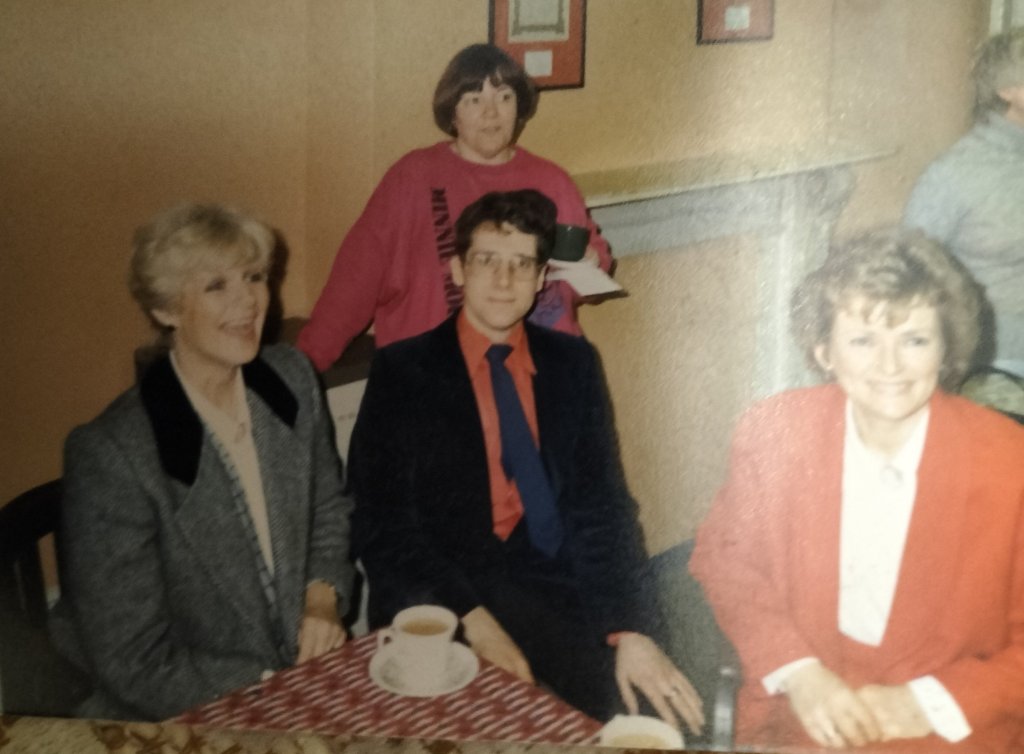
In front, Ann Keen, later MP of Brentford & Isleworth, and health team minister in government, me (so young) and Glenys Kinnock. Vanessa behind, dear friend, was the paid secretarial assistant of the CLP Secretary.
In the end, I think I as a person of fading self-esteem somehow resonated with Gray’s Elegy in a Country Churchyard which sang that some ‘rustic moralists’ (of which I find myself one – certainly my accent suggests this I have been told) have a tendency just ‘to die’ with very little with which to fill the place that others fill with ‘fame and elegy‘:
Perhaps in this neglected spot is laid
Some heart once pregnant with celestial fire;
Hands, that the rod of empire might have sway’d,
Or wak’d to ecstasy the living lyre.
….
Full many a gem of purest ray serene,
The dark unfathom’d caves of ocean bear:
Full many a flow’r is born to blush unseen,
And waste its sweetness on the desert air.
…
Their name, their years, spelt by th’ unletter’d muse,
The place of fame and elegy supply:
And many a holy text around she strews,
That teach the rustic moralist to die.
https://www.poetryfoundation.org/poems/44299/elegy-written-in-a-country-churchyard
I suppose in the end, Gray is saying the same thing as Emily Dickinson. All you can do in truth is die. For fame, if that is what you want, only follows on afterwards in response to a body of work that lives on whilst you and your decaying body, which, like that of John Brown, ‘lies a-mouldering in the grave’. We all die, and if posthumous fame is not your bag, then settle for working to achieve the delight of having the power to invite people into your presence – or just forget them when they no longer amuse you.
But let’s take another case. What if you, living in the seventeenth century, had been asked to pass the time with Artemisia Gentileschi. She was so famous (and infamous in some circles as an independent woman of strength and status) everyone who was someone wanted that, but after her death fell out of fame. The story of that decline hereafter is told in the blog at this link. Here is a bit of it starting with the fact that:
… Baroque artist Artemisia Gentileschi (1593–1656) struggled to carry this accolade through to the modern era. Though she is greatly revered by today’s artistic establishment, her journey towards acceptance has not been uncomplicated. Undeniably due to her gender, her legacy has faced many obstacles which delayed recognition for her artistic talent and contribution to art.
In recent decades, there have been strides towards acknowledging her place in art history thanks to feminist scholars, a growing literature, and retrospective exhibitions. But I would argue that the struggle for appropriate recognition is not over.
She’s described as the most celebrated female artist of the 17th-century but Baroque artist Artemisia Gentileschi (1593–1656) struggled to carry this accolade through to the modern era. Though she is greatly revered by today’s artistic establishment, her journey towards acceptance has not been uncomplicated. Undeniably due to her gender, her legacy has faced many obstacles which delayed recognition for her artistic talent and contribution to art.
In recent decades, there have been strides towards acknowledging her place in art history thanks to feminist scholars, a growing literature, and retrospective exhibitions. But I would argue that the struggle for appropriate recognition is not over.
theartstory.org/blog/artemisia-gentileschi-the-long-road-to-recognition/
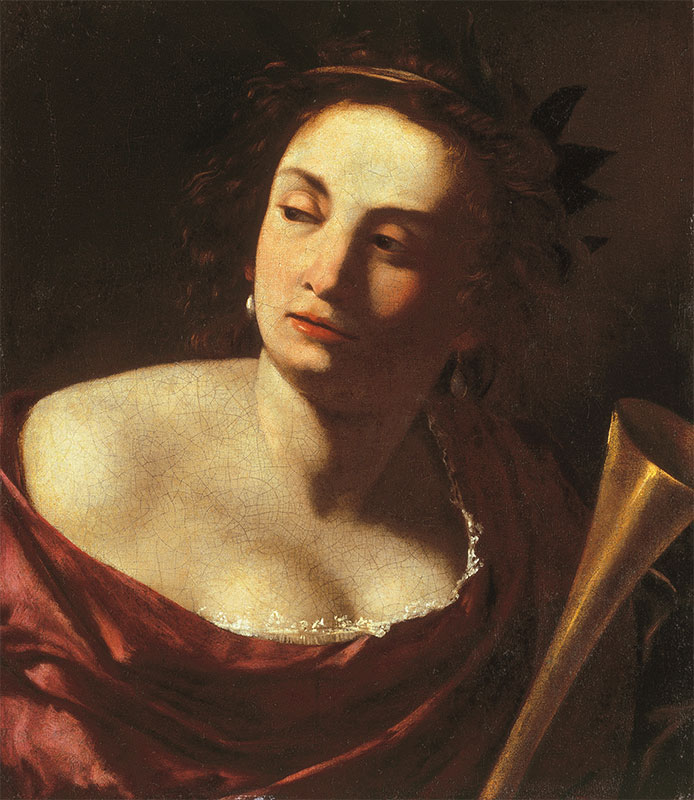
Did Artemisia, having suffered some neglect from men in her lifetime, including the massive disrespect and vileness that was RAPE, suspect that death may rob her of the fame of her ‘livelong day’ whilst know she was no ‘frog’, however much her contemporary admirers might have been an ‘admiring bog’. I suspect that she was thinking of who she would most want in her company when she painted her Allegory of Fame:
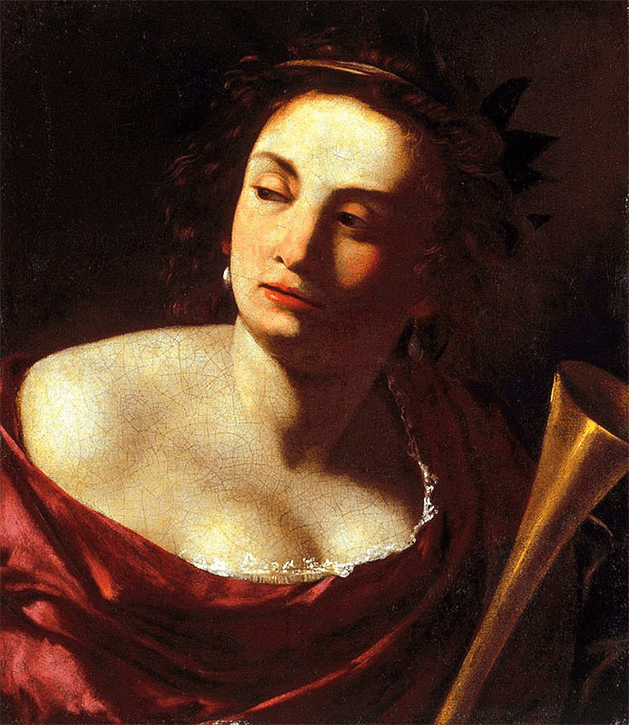
Allegory of Fame by Artemisia Gentileschi ca. 1630-1635 By Artemisia Gentileschi – http://4.bp.blogspot.com/-MOma2vNu6bA/T4cAnhXphLI/AAAAAAAAC6o/koMRP19dH1c/s1600/Artemisia+Gentileschi+allegoria-della-fama+1630-35.jpg, Public Domain, https://commons.wikimedia.org/w/index.php?curid=47164754
It may, if you had the talent of Gentileschi, be necessary to trumpet your own praise where an ‘admiring bog’ of patriarchal art-critics through the whole discipline of art history fail to recognise it because you are a woman and celebrate the frankly womanly in yourself and other women without recourse to sexed-and-gendered contradictions (at least as much as males did). Art historians though, even feminist ones, can be so fuddy-duddy. Here is a discussion of the painting by a student, Rachel Done, which reproduces much of the ‘fuddy-duddy’, which hopefully gave her a good mark, but also has something very beautiful and perceptive to say about this painting.
Due to its size and composition I think that this was part of a larger composition such as Peace and Arts Allegories. It is problematic to label this piece as an allegory of Fame without knowing the larger composition. A point to consider is that in Artemisia’s oeuvre, whenever she has painted a solitary figure, she has left enough iconography to identify the subject. Unlike Artemisia’s contemporary Elisabetta Sirani’s Allegory of Fame, Artemisia’s piece does
Done, Rachel, “An Argument and Survey on Artemisia Gentileschi’s Allegory of Fame” (2018). Student
not have adequate iconography to go off on to identify the subject as an allegory of Fame. That being said, it should be noted how dramatic and unique the composition of Allegory of Fame is, if Fame is truly the subject. Most depictions of this subject are active and are in the act of announcing fame. The tilted head and pointed gaze, the horn not quite close to her lips suggests that the figure is waiting for an outcome- as if to see who will become famous. This is further evidence that this is an Artemisia painting since her paintings often depicted the quiet tense moments either before or after action.
Research Symposium. 5. Available at: https://pdxscholar.library.pdx.edu/studentsymposium/2018/Presentations/5
It is of course interesting that the painting may not be of ‘Fame’ at all because, as Rachel rightly says, the degree of conventional iconographic identifiers usual for the period is absent. But I suspect Rachel feels that she has to say all that stuff about anomalies in the look of the painting for the period but that she still believes, in her heart of student hearts, that Artemisia is doing something only a very self-aware genius could do, which is to paint out of a different mode of establishing meaning – the mode of drama and empathy with an emotional and intellectual attitude necessary for a great woman liable to be neglected. I love the idea that this woman is ‘waiting for an outcome’. It is as if she (Fame or FAMA) is the person Artemisia needed to listen and look at her, confident in her qualities as a woman artist as Fame or FAMA is in her realistically womanly being. She is the ideal friend at a party. Artemisia is visited by Fame herself, who does less to establish her own name and status, as an allegoric ideal, than she does to look askance in admiring love of the artist who has made her. You are brilliant Rachel Done, even if I get you wrong.
If I could meet another famous or infamous person, it would not be to feed like a vampire off their lifeblood, in the hope I will ingest it, but to assist that person to have confidence in themselves during the dark times. I think the woman in the painting The Allegory of Fame is precisely that person for Artemisia: beautiful and sensuous, with a sense of genuinely flattering mystery that suggests only you, Artemisia, – a woman like me whispers FAMA – has that with which to fulfill my being: FAME for us both: FAME! WE’RE GONNA LIVE FOREVER.

But, my famous friends, lest I bore myself as much as I may you, it’s time to slip away and let ‘the curfew toll the knell of parting day’ (thanks Mr Gray! – ‘just leave the world to darkness and to me’ please as you go).
All my love
Steve
 Steve_Bamlett_blog