What skill would you like to learn?
If you search the internet for the term ‘passive skills’, the likelihood is that the majority of returned sites will be on the use of the concept in computer gaming (they were on Bing anyway). These skills have a dark side: in their purest form we compare them, or even see them as the equivalent of the branch of mathematics used to aid decision-making and employed often in the the analysis of competing interests between ‘gamers’ in international cold (or even hot) wars. They can be seen as essentially based in the strategic planning of competitive situations which might ascend to strategies of global domination or the tricks of ‘diplomacy’aimed at achieving the winning position even in a nuclear war (at least they are seen as such in sci-fi).
The facts about game theory change as a brilliant (and accessible) article in BBC NEWS online said. It was an article focused on the diplomatic approach of Yanis Varoufakis, when he was finance minister of a radical left Greek government but who was also a learned student of game theory as well as economics. Here is an extract and its accompanying photo-illustration (given an introductory position in my quotation) from that article:
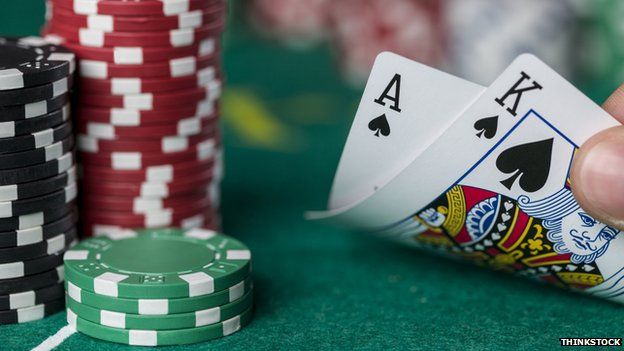
Some of the first codified uses of game theory were in war. Both the British and American military used early computers to run models that would utilise game theory to help commanders decide whether, where and when to attack the enemy.
Since then, the concept has evolved. As [Rakesh Vohra, an economics professor at the University of Pennsylvania and senior member of the Game Theory Society]. explains, “when game theory was first born, there was a group of people who thought that if we build a model large and complex enough and we crank that handle we will know what to do.”
That was seen as too ambitious, and the theory has changed. “Instead what we’re trying to do is inform judgement,” says Vohra. “We cannot tell you what to do, except in very limited circumstances. But what we can do is tell you the important things you have to make a judgement about. In a complex world where there are many things you have to pay attention to, this is still enormously useful in terms of focusing your attention.”
The concept is not solely based in conflict and combat, though – it can also help co-operation. “In a zero-sum game, you can think about chess, where one person’s win means immediately another player loses,” argues Schweinzer. “There are other games like joint production. If the two of us write something together, we can both gain from that. There’s no winner and no loser, but the act of playing together generates something we can both benefit from – a win-win game.”
Ethicist Carissa Veliz, of the Oxford Uehiro Centre for Practical Ethics, agrees. “While game theory may appear to be essentially about situations involving opposed self-interests, it needn’t be.
“Selfishness need not be among the assumptions of game theory.
https://www.bbc.co.uk/news/magazine-31503875
For digital game players however, I suspect all the requisite skills, active and passive are a version of the kind of game theory that is not based on reflective co-operation but on the old winner-loser models, with few win-win situations. One frustrated player asked this question 4 years ago or so: ‘In a computer game, why do they call a skill which is always on as “passive skill”, whereas a skill which needs user’s operations as “active skill”? The questioner was NOT satisfied by the answers they got but they are clear in allowing us to see that ‘passive skills’ are not those where the gamer has to ACT (even by clicking a mouse) whereas the passive skills represent the effect of reflection based on past learning by experience and modify your actions whilst being inactive in the obvious sense (for nothing has been done or enacted). They represent the ‘learned’ in the learner, essential learning from the past that have changed the nature of the gamer’s decisions and ongoing actions permanently. They are used in this way in chess too.
But I don’t find this definition as useful as all that and to extend it, I looked to its use in a site of how we learn language(s), whose definition I cite below:
What Are Passive Skills?
https://www.languagesoftware.net/blog/developing-passive-skills-in-language-learning/
In language learning, passive skills consist of listening and reading, as opposed to the active skills of speaking and writing. It’s, basically, those skills where you don’t need to form sentences yourself. Instead, your work consists of trying to make sense of what’s said or written down.
It is obvious I think that the two meanings of ‘passive skills’ are related, for listening and reading can consolidate as learning just as the fruits of active learning do (learning by doing the thing you want to learn). The stress rightfully put on active learning however as a result of the more prominent learning theorists since Piaget may have overshadowed in schools the need for passive skills too, learning when the motor system is inactive. In fact, if we trace the means by which we learn back to neural connectivity and plasticity its fairly clear that the terms active and passive are as meaningless as most binary distinctions since the external evidence that nothing is being enacted does not equate with the absence of neural activity and the reformation of synaptic connections and effective change of the internal structures which represent learning and in future further facilitate it.

Though then this means that it may be fruitless to try and preference passive learning skills in listening and reading from active ones involved in doing (for isn’t reading and listening a form of ‘doing’ anyway except to the external observer without means of empathy), I think current ideologies too often preference and validate continual activity as the means to success – the ongoing sleepless (almost) activity that takes too little time to co-operate by listening to others or reading in a way that does more than just reinforce old learning. Mrs Thatcher used to boast she needed only 4 hours sleep. It showed.
Reflection is valorised in some professions like social work largely because of the work of Donald Schön (https://en.wikipedia.org/wiki/Donald_Sch%C3%B6n) and, in particular, his book The Reflective Practitioner. This book used a distinction that refused to give credence to the passive / active binary (so often used to consolidate other fallacious binaries such as those of sex/gender stereotypes) naming the acts of reflection necessitated he felt in any human practice of Reflection-on-Action and Reflection-in-Action. Both related and both had systematic connection, whilst the latter examines critically past actions and builds what we have heretofore called ‘passive skills’, the latter does the same in the process of action. It is a much more time-constricted action and it necessitates some erroneous learning (and bad outcomes for the person using one’s services or purchasing one’s product) that may have to be recognised as trial-and-error learning in reflection later. But it like reflection-on-action re-configures the internal structures we variously call our learned cognitions, schemas and scripts and enables more efficient future learning, even on the job.
We can lose such learning of course from its lack of ongoing use. But losing some learned behaviour is desirable (however the learning was gained) as behaviourists like Seligman recognised in their theory of ‘learned helplessness’ to explain depression and how it might be treated. Both the science through which that theory was ‘proven’ based on how dogs learned or not to avoid the pain associated with a floor that sent electric shocks to their paws and used in treatments involve cruel regimes, and treat evidence of habituation to pain and the consequent inhibition of behaviour to match it as proof of it working rather than of the experimental ‘subject’ having learned even more helplessness and conforming to another’s prescription in lie of their own empowerment being facilitated. Forgetting is unlearning and even motor systems can forget their over-learned practices in time, such as driving. But we need to unlearn the Thatcher message – sleep is not wasted time nor is listening to others with a different perspective and class or other interests and neither is reflection-on-action. To be given a task and to go at it immediately is usually a false economy, and to keep acting is to stop doing sometimes. It is not only that we need to ‘relax’ as the saying goes but to unlearn the perspective on life that is all about ‘moving on’ without knowing how to look back. Actually Lot’s wife (https://en.wikipedia.org/wiki/Lot%27s_wife) did not turn into a pillar of salt, though bitter religions say so,she is still whooping it up at Sodom in between rebuilding a juster city from the ashes of a corrupt one that is open to all without exclusion.
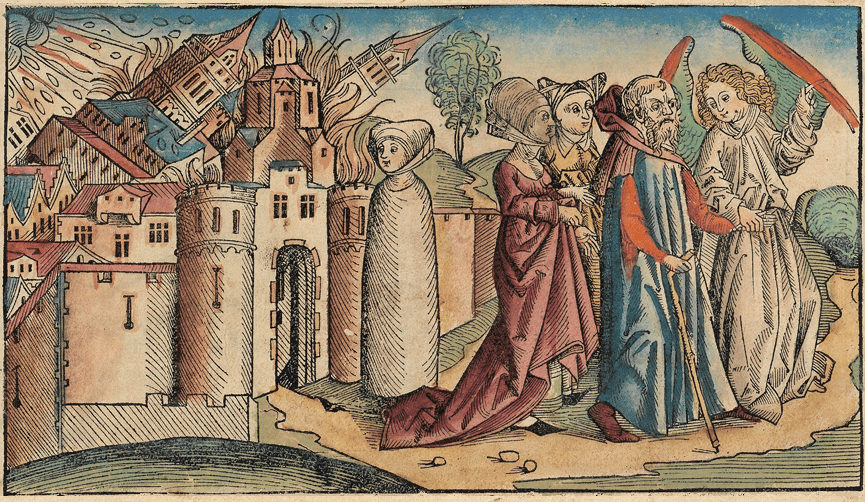
Lot’s wife (center) turned into a pillar of salt during Sodom’s destruction (Nuremberg Chronicle, 1493).
All my love
Steven
 Steve_Bamlett_blog