What’s the best piece of advice you’ve ever received?
Perhaps the best advice about how to act next in any complicated human situation is to be wary of acting in the way you are told to act, however respectfully one listens to and hears out the advisor. Keep in mind too that the advice will always make assumptions about the nature of persons, the value of learning from human situations and interactions and the kind of outcomes that are essential or desirable. In all of these ways and more, it is highly unlikely that the advisor has the requisite open-minded and open-hearted knowledge, skills and values to really have worthy advice to give. Much of the worst advice however starts with the advisor confiding that that: yes, they are like that too or that happened to them too or people do that to me too so I …. There is usually far too much ‘I’ in all this to be useful to ‘you’, and almost without variation too little, if any, imaginative apprehension of a world that isn’t lived according to prescriptions and conventions that may themselves be inappropriate or have a tendency to bad outcomes. For to want to give advice (especially when that is given almost without pause from hearing the story of another’s life-story or part thereof) is anyway to have a certain obtuseness and resistance to experience that you have neither had, nor are capable of imagining and a greater overvaluation of one’s own achievements as a lodestone to guide others.
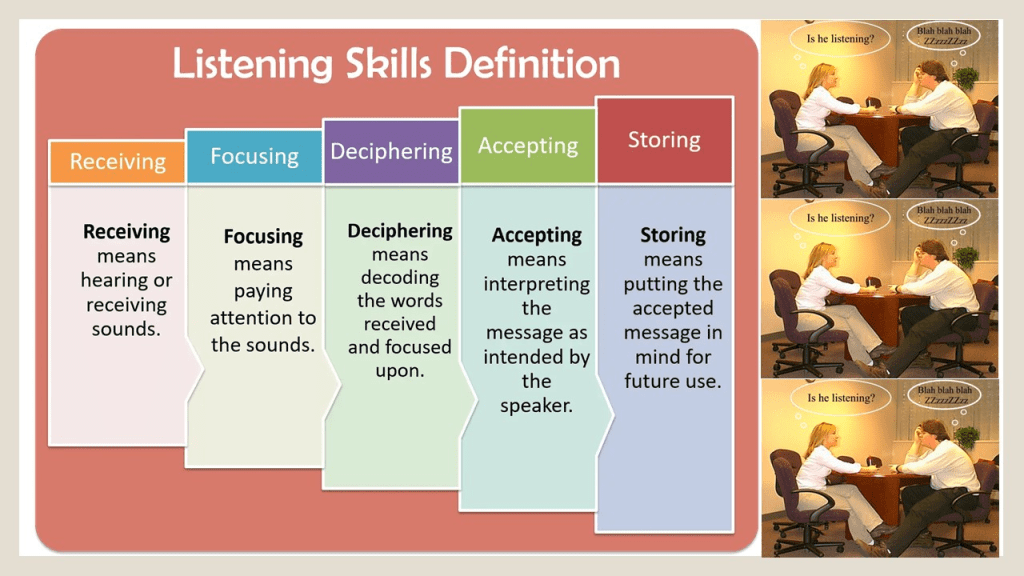
A good listener usually knows that the process of thinking out solutions acts as a barrier to further listening and is usually attentive to the noise of one’s own self-importance or determination to a pretence that one cannot oneself have acted erroneously and perhaps selfishly to ‘get where one is now‘. Of course, it is equally true that I could be saying to you, ‘I didn’t get where I am now without knowing NOT to take advice‘. But the words that rush into my head as I see myself type that is: ‘But exactly where are you?‘. Those words could equally be swiftly followed by: ‘And is where you are a place and in a space that you wish for that struggling other who has confided in me?’ The answer, every time, to the second question has to be a resounding NO!
Not that I despise the space and place in time in which I am currently resting, but that it is one that has niches, walls and doors and paths within it that only I may find to be of value as either guides to action or ways of learning, unlearning and re-learning. And sometimes, since for me ‘learning’ is paramount, that alone is the object not success in business, career or achievement of status. Failure is such a path sometimes and is more fulfilling than a success defined by any other cognitive schema or script that I might have been pursuing, or following the advice of, at the time.
And another point is paramount. If I am static in a space or place, that really is only because I am pausing or resting there, for their is no real recipe for being, only one for continual becoming, and not one that is imagined to have a goal, or ONE goal at least, for to have MANY possible goals seems helpful to me, when I remember that it sometimes helps to feel one has some limited control over, and agency in, the trajectory of one’s life-course. But, if I can, I let that ‘control’ and ‘agency’ always remember that is limited by external contingency and the results of learning I had not foreseen that I needed. That is really the outcome of Oedipus Tyrannos and King Lear, for example.

Becoming or ’emergence’ are things that are never really complete and when they seem so they are the outcome of a great deal of what Sartre called ‘mauvaise foi‘ (‘bad faith’) or, worse (since often used for selfish ends, equating with the person-product of commodity capitalism) conscious self-delusion on the part of the person who thinks themselves the ‘completed article’. And, that isn’t either because of some ideology of self-improvement, or realisation that is the sequential and linear progression we sometimes get the impression of in the humanist psychodynamic thinkers like Carl Rogers or Csikszentmihalyi (https://en.wikipedia.org/wiki/Mihaly_Csikszentmihalyi), or BETTERMENT. The best models of living are recovery models and, if they move upwards, it is only in a spiral form with continuing ups and downs these models call relapses. But even those models are ‘medical models’, stuffed full still with the view of life as illness or ‘cure’, illth or wealth, illness or disease, that they think they are improving upon, with their vague redefinition of the fully healed or cured self as ‘transcendence’, Joy (‘flow experience’ in Csikszentmihalyi) or ‘synchronized stability’. However, I am not saying we have nothing to learn from such models.
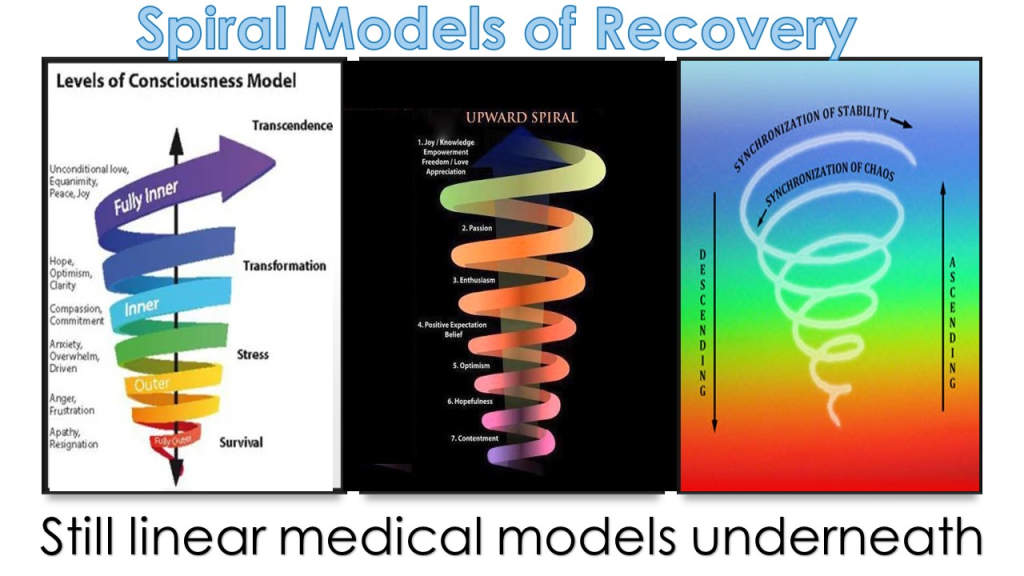
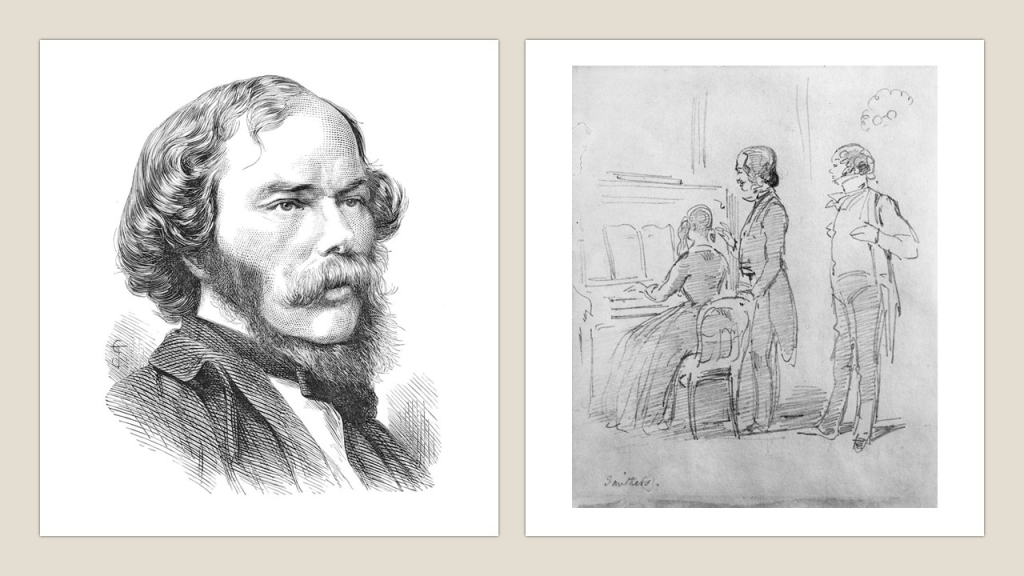
The third of the spirals in my collage uses some elements of emergence theory from philosophy but is still hampered by an idealist notion of gradual improvement or betterment, which is at least better than that very disabling view that some people have that the best response to stressors that change you is to ‘get back’ to some past ideal. But the important aspect of emergence is not the direction of change it portends but the fact of change, not only in the product but in the components and component causes of that change so that each changes in relation to changes in the components with which it collaborates. This is the key to collaborative change theories and is why old institutions find such difficulty in responding to them, as psychiatry in its dinosaur aspects does to the demands of people who have survived its systems (thus far at least). The best definition (even Wikipedia thinks so) is that of George Henry Lewes in 1875 and it shows just why George Eliot continued to love that old curmudgeon till his death. He says that in emergent change:
… with emergents, when, instead of adding measurable motion to measurable motion, or things of one kind to other individuals of their kind, there is a co-operation of things of unlike kinds. The emergent is unlike its components insofar as these are incommensurable, and it cannot be reduced to their sum or their difference.
That quotation, as much in Lewes with his immersion in challenging European philosophy, takes some understanding, but I comfort myself that it links to the notion in systems theory that change in any sub-system entails change too not only in the whole system but each of the sub-systems as well – they learn (or adapt into) co-being (to coin a phrase) from their experience of collaboration and cooperation.
Thus beware of advice. It will describe some position or role in life adopted by the advisor but will not or at least (the chances are very small given the complex mesh of coordinates in which as networked beings we differ from each other) help you as a scripted plan for change. Of course, the desire to change has to be there but even desire is malleable. They used to tell an old joke in social work training: ‘How many social workers does it take to change a light bulb?’ We are expecting as the joke question is asked yet another put down to my old profession. But the answer given is: ‘One. But the light bulb has got to want to change!’
Okay, we used to say that in the old ways when we assessed by the criteria of available service rather than need (although my experience as an advocate is that much remains the same in mental health services) but the myth of the person who is in readiness for change as against those not, is a reductive story of work as a helper of people in some kind of distress, for desires of all kind (even the ‘want to change’) are malleable and open to influence, not only in their objectives but in their visibility and accessibility. To leave people in distress because they are not ‘ready’ for you is to overvalue your present advice and not to listen to uncover, for both helper and helped, the sources of desire to change into some less stressful resting position.
Moreover, these solutions only emerge cooperatively. When it comes to merely taking a prescription, being TOLD what to do, most people, to be frank, are unready, and I think such resistances are in part hopeful responses if interpreted in a framework of how emergence from one state to another actually occurs.
Okay, so you may not agree. With that I don’t mind. But let’s talk if we can. I promise you: as a person talking person-to-person I don’t always talk as I do above. LOL.
Love
Steve
 Steve_Bamlett_blog