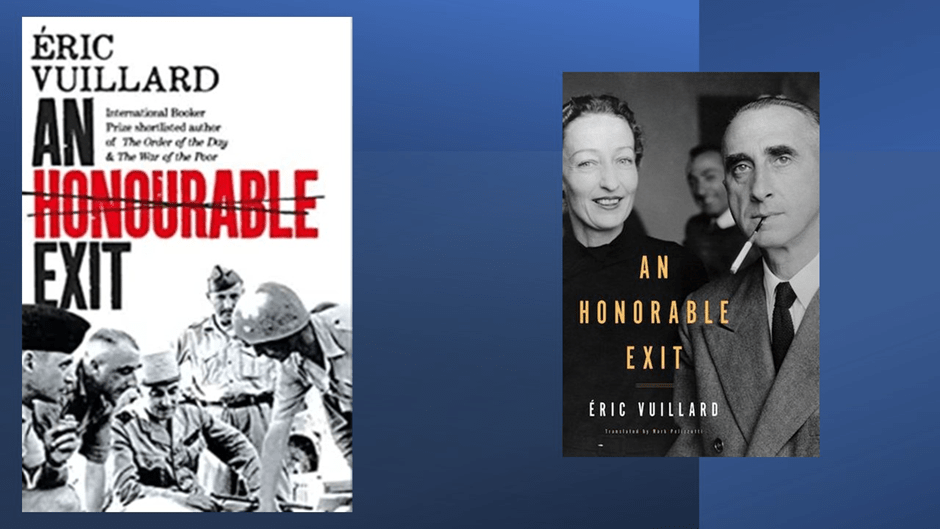
Honour and the triumph of Western capitalism over ethics and the value of life in An Honourable Exit. A reflection on Éric Vuillard [trans. by Mark Polizotti] (2023) An Honourable Exit London, Picador. @EricVuillard
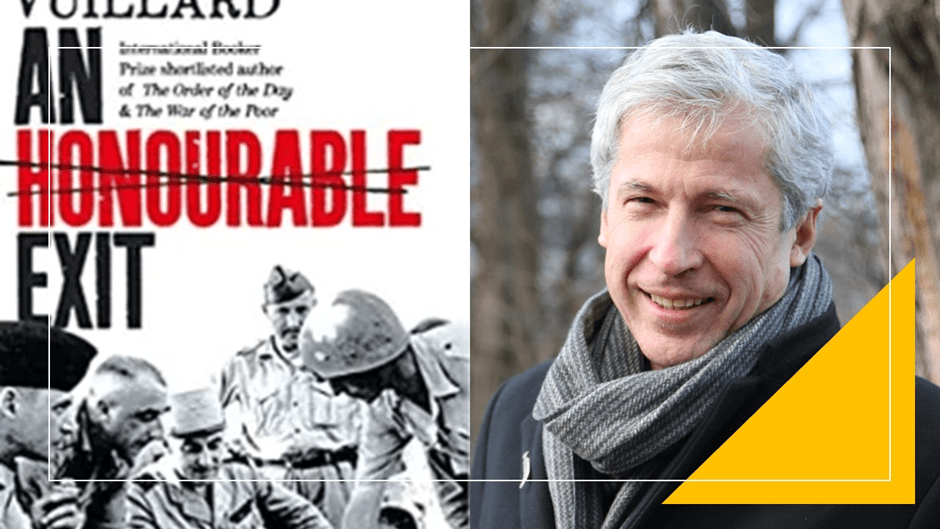
This book followed Vuillard’s novel of historical analysis based on the life of Thomas Munzer and the socio-political complexities of religious wars, The War of The Poor. My blog on this is available at the preceding link. Both books were longlisted for the International Booker Prize in consecutive years. This one should have won it.
I think there is little point in attempting a review of this book in terms of the political history that it unfolds in narrative episodes and through recreations of real people in imagined form. I don’t have the knowledge of the history for one thing. Second, I recognize that this job has already been done by the astute Thomas Filbin, who fills in the relevance of the story to later American history. I recommend his review enormously, available at this link or that in the footnote below.[1] My concern is with the sub-textual interest in this book from Vuillard about the role of writers on the left of analysing the history of capitalist imperialism and the corruption of power at specific moments of historical crisis. I could not have a better start on this than in reflecting (a little) on the role of François Mauriac in French writing, although I will only address this directly after making some points about the kind of writing we have in this novel.
At a crucial point in the obvious beginnings of the failure of French colonial strategy in Vietnam, Vuillard tells us (in part through the consciousness of a guilt-ridden banker, Émile Minost, President of the Banque de l’Indochine) about the writing on French Indo-China by Mauriac. Minost was alone among the Board of his bank in continuing to read Mauriac’s articles following the writer’s shift to the support of international left-wing causes. This passage hangs uncertainly between being a report of Minost’s point of view and an interjection from an omniscient narrator (an effect Vuillard often exploits).
Despite Mauriac’s huge talent, despite his honesty in turning away from his political camp for the benefit of truth, which is perhaps the hardest sacrifice of all, once his intelligent and acerbic pen changed sides and bravely condemned torture, police violence, and the occupation of Indo-china, they stopped reading him.[2]
This uncertainty in the point of view of an author’s narration is a perfect way of conveying the guilt, here necessarily intuited in Minost, which may, we hope at least, have sometimes afflicted the powerful actors who colluded in the maintenance of aggressive imperialist interests against the common will of a subjugated people and which Vuillard evokes in many of the real actors in this historical tragic-farce that was the war in Vietnam. As Vuillard reminds us constantly though the French and Americans suffered losses (estimated at 400,000 casualties in his end ‘Note’), this has to be balanced -if balance is ever the right word – against on ‘the Vietnamese side … at least three million six hundred thousand dead’.[3] Of course we cannot KNOW that Minost felt the historical guilt, as a Catholic, of his collusive major role in these deaths, or that he even may have done. Vuillard chooses to tell his story as a novel precisely to help us think about these possibilities and/or counterfactuals in history.
However this kind of intuition, unique to the novelist as the wielder of one kind narrative methodology, occurs frequently in this novel. People think and say things they dare not articulate and which are by nature derived counterfactually. When delivering his speech, for which he would be at first scapegoated into infamy and later (once everyone became aware of the nonsense of imperialist aims in Indo-China) applauded for his insight, the French Prime Minister (from 1954 to 1955 but in this moment on 19 October 1950 but a Deputy of the house), Pierre Mendès France is imagined as visibly transformed by the complexity of his warring thoughts.
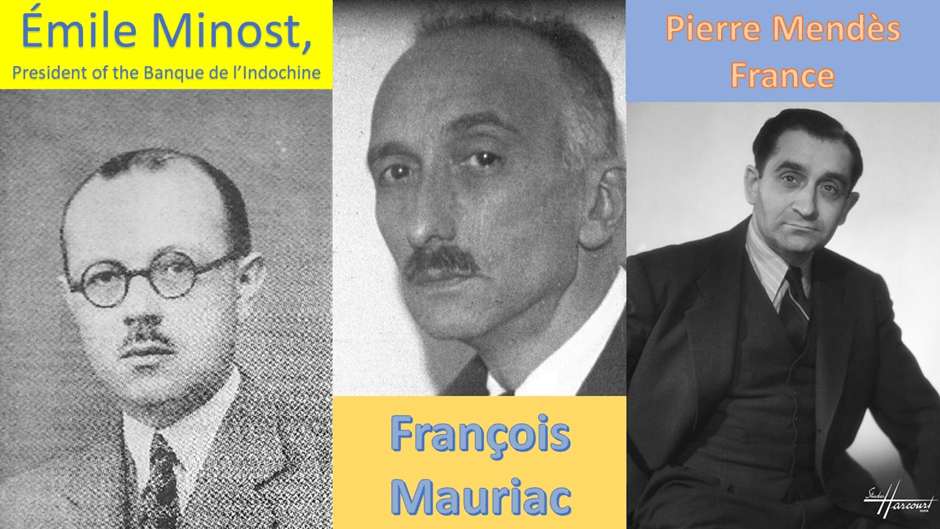
His other face appeared. That serious, seemingly split face, the one we’ve been familiar with ever since. The face with its raised eyebrows, doubtful and exposed. It’s so difficult to describe a face, a mix of flesh and thought. In Mendès’s face, there is something reassuring and worried, fragile and cartesian, tough and hesitant, which accounts for its charm. And when someone speaks the truth – in other words, gropes in the dark – you feel it.[4]
More plainly in an earlier generalisation (‘A face is always a deformity. Our ideas disfigure us’)[5], Vuillard insists that thought becomes embodied or incarnate in persons as a mixture with flesh and that when truths are found, our faces often ‘split’ between our loyalties to our old ideas and associations and new ones; ones that change the world as we know it. Thus split is Deputy Mendès at this moment of crisis. His face at that moment is ‘wide open’. his talk changes how he looks ‘as if the expression “the people’s representative” sometimes actually meant something’.[6] The moment of transformed perception of the body is not always one of enlightenment. Earlier in the book, telling the story of another debate in the French Assembly, Vuillard wittily describes, as if he were Dickens, the Assembly President but also Major of Lyon (under Vichy too), Édouard Herriot, unbuttoning his jacket in the manner of ‘businessmen and politicians’. Having made himself free, what ‘emerged from his prodigious indolence’ was ‘the full grandeur of ‘his enormous girth’: a ‘vast corpulence’ that the narrator latter characterises by its disordered over-self-satisfied thinking ‘filled with nebulosities and obscurities, twisted’.[7] Never has a fat man served better to satirise the entitled of the status quo, and for a moment (but just a moment – for have you seen me!) I forgive this terrible use of ‘fat-shaming’. Herriot too is ‘split’ but in a satirically comic way:
Paraphrasing the separation of Church and State, they say that in Herriot there was a separation of brain and stomach, separation of municipal spirit and municipal carcass. … / … It’s hard to imagine the number of bodies a man like Édouard Herriot left in his wake, how many corpses. How many colleagues executed and careers throttled, for this one fat slob to climb the steps of the Lyon city hall and install himself on the throne for half a century.[8]
Art serves political satire here but we have to remember that it also serves political hope in the beautiful portrait of truth emerging and revealed in a man’s body in Mendès France. The nature of that art explains itself a bit more, I believe, in the wonderful and much longer portrait and role of the right wing militia-man (trained by allegiance to Franco), Henri Eugène Navarre (31 July 1898 to 26 September 1983). You can see him on the left in the collage below (as shown at the time on the cover of Time magazine together with images of the infamous entrenchment he lost to the Vietminh at Dien Bien Phu (the bottom right one from a movie)).[9]
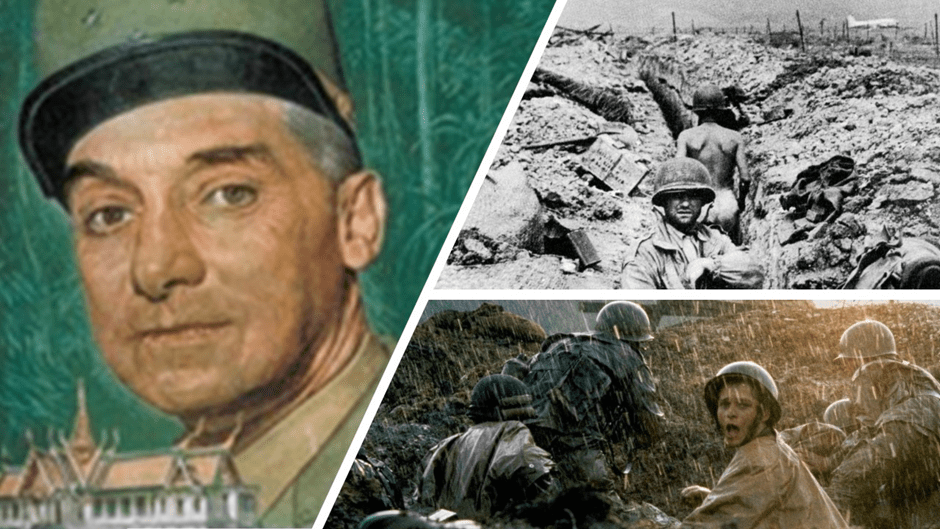
Navarre, Vuillard says, is difficult to describe. But then aren’t real people always thus? We are told he was ‘learned, caustic, self-assured and cold, or so they say’.[10] That ‘so they say’, however, is extremely telling. And Vuillard explicates why he might have said this soon afterwards:
But who was Navarre? I don’t know; no one knows, however many documents letters, notes, books, and photos we might have. Even if we’d lived in the same cell with him for thirty years; even if we’d been his father, son, or wife; even if we’d been Navarre himself, we still might not know, or at least not know enough. An entire book wouldn’t suffice to explain all the lineaments, hesitations, dejections, frustrations, and bizarre obstinacies in a single day of Henri Navarre’s life.[11]
Now, having read this, Herriot might have said; “ain’t fat old quisling mayors also due some benefit of the doubt about who they really are too”. But then novelists (the very best like Dickens and Jane Austen) have always blended cruel satirical stereotypes for a political or social-ethical purpose with more rounded beings, coaxed by the way they are written into our sensitive critical apprehension. Vuillard does this, I believe, to give some leeway for empathy for a man whose decisions were both dogmatic and contradictory, sometimes at the same time. In some ways Vuillard lets him off the hook by saying that there was in Navarre something of a construct that was only explicable in terms of the precise moment of history in which he lived, and he says it by calling the man ‘fucked up’ unequivocally at the same time:
A commander in chief is a blend of misplaced honour, small grievances, great pride – like the rest of us, basically – but all of it stuffed into a uniform, kneaded and moulded, concealed, fucked up with outmoded values that we now have a hard time understanding or even identifying.
In my mind, this is true historiography, almost a sine qua non of understanding before we try to comprehend any ‘real’ historical figure, who, at the time, was as likely to be as much a fiction built of ambient social cognition as anything we can truly call ‘real’. It is a generous understanding that few historians have the generosity to make (some like David Starkey have none of that quality at all). And that mix of the ‘fucked up’ and common littleness of soul is needed when Navarre is described facing his defeat; it is a defeat he ought, after all, have been able to foresee (because if you dig vast military resources including personnel into an entrenchment then you are very likely to be encircled and the ‘enemy’ victorious).
The chapter ‘Telegrams’ is a wondrous thing, showing his mind not only split but fragmented in the wake of humiliating defeat brought about in part by his clueless changing decisions accompanied by dogma about each decision just must occur, however different the decision was from the last one, for it is his ‘mind in a million places’.[12] We must know what Vuillard tells us from other sources; that, after defeat, ‘Navarre suffered violent bouts of anxiety and stopped going outside’, but we cannot know the reason, which Vuillard intuits as about Navarre refusing to look human and capable of failure like all other human beings.[13] But there are moments of humanity, such as when Navarre is thought to be thinking of his vulnerable boyhood and wishing that he had listened to his father and become a common or garden teacher and not a renowned general. There are also moments when Navarre appears to model existential angst and feels guilt, deep guilt, at his role in causing so many Vietminh dead: ‘Navarre was alone. Alone with his eighty thousand corpses. / All that remained was Navarre’s inner self, a void. But the void spoke. … “…the Vietminh, how many dead, how many?”’.[14]
The tragic grandeur of this moment appeals and Navarre feels like a full literary character of some significance, surprisingly when a left-wing writer recalls a reactionary of the first magnitude. But the illusion of greatness is caught on the littleness which is Navarre’s tragic flaw:
Didn’t they call Navarre one of the finest examples of Western militarism? But now all that was finished. His military life was over, ending in total defeat. He had just shot off a series of nonsensical telegrams, and life suddenly seemed absurd. He considered suicide. But he didn’t do it’… Gradually, he could learn dispassionately, or pretend to learn dispassionately, from his defeat.[15]
There is diminishing irony here. This man is neither grand enough for the big gesture of suicide nor is he really sure that he ever really ‘learns’ from any experience, since being able to ‘pretend to learn’ serves his needs just as well. This then is no Othello we are dealing with but a man obsessed with frontage of grandeur like the ‘hideous palace facade’ in which he lives with its ‘palace steps’. At the end of the chapter, Vuillard takes swift revenge for the character’s hubris: ‘Then, with a firm step, he attacked the first tread of the master staircase – and nearly skidded’. There is reductio ad absurdum in dramatic form here, and doesn’t the fucked-up generalissimo deserve it.
You may remember that I started my discussion of this novel by referring to Mauriac. I cited this:
Despite Mauriac’s huge talent, despite his honesty in turning away from his political camp for the benefit of truth, which is perhaps the hardest sacrifice of all, once his intelligent and acerbic pen changed sides and bravely condemned torture, police violence, and the occupation of Indo-china, they stopped reading him.[16]
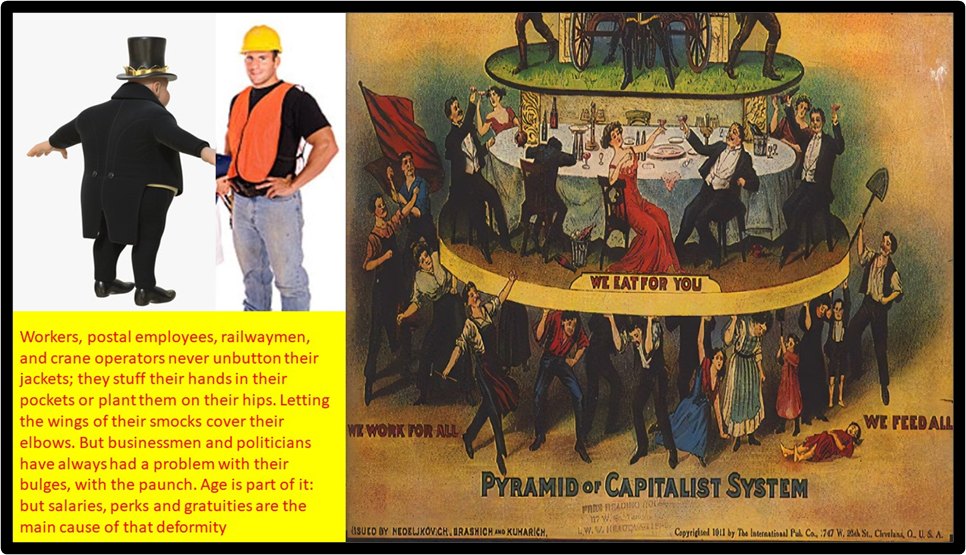
I want to return to this in order to point out that it is highly significant that Vuillard finds truth in Mauriac’s bold decision to become a writer of the left despite the entitlement of his upbringing. In French culture, existential decisions are often recorded by writers who choose to be socialists and to write or make art as such. Vuillard is aware that the cost of commitment can be high. After all, he tells us people, especially influential and powerful people, stopped reading Mauriac at this stage. Now whatever the truth of that claim – and there is a great deal of nuance in the political direction making in Mauriac’s career – it must be a significant claim for Vuillard who has long nailed his red flag to the mast. He loves to point out when he tells us of the gross fat cat capitalist mayor I have before described as unbuttoning his waistcoat, that this unbuttoning is a bourgeois trait based on inequality of the distribution of goods, including food of course, between the privileged and unprivileged and exploited by capitalism. At the very moment Herriot unbuttons we are told that:
Workers, postal employees, railwaymen, and crane operators never unbutton their jackets; they stuff their hands in their pockets or plant them on their hips. Letting the wings of their smocks cover their elbows. But businessmen and politicians have always had a problem with their bulges, with the paunch. Age is part of it: but salaries, perks and gratuities are the main cause of that deformity.[17]
And there you have it. Suddenly, not only thoughts are a means of reforming, indeed deforming, the body but so also is the entire micro-structure of capitalism, living on means of showing itself in little treats for the darlings it favours, and denying them to those sturdy working class guys Vuillard clearly much prefers. And perhaps, so he should. I am not sure that I don’t do so myself. LOL.
But the key message of this novel is surely that of how the evils of colonial imperialism gave way to the neo-imperialism required by capitalism to ensure the hegemony of the few in the West and which surely underlies the rationale of the shift from the subjugation of Indo-China by the French to the USA, illustrated so perfectly by an excursion into the diplomatic bargaining between these powers in the chapter called ‘The Diplomats’. The role of Allen Dulles in the toppling of the reforming Mossadegh government (about to nationalise oil production in Iran) and the establishment of a regime under a pro-Western Shah by ‘legal, or quasi-legal, methods’ is told as indicative of why Dulles went so far as to offer two atomic bombs to France in return for the passage of French interests to US ones in Saigon. The enemy becomes the international bourgeoisie even when the French version is being described. For the bourgeoisie in this novel is self-sustaining entity, consisting of few families marrying between and sometimes within themselves, so that Vuillard can call the system incest.[18] It is a kind of madness being part of this system, where false selves have taken over the humanity that ought to rule the world in its own interests. Consider this wonderfully rhetorical passage that seems to mime the concern with ‘the player’ in Shakespeare’s Macbeth and Hamlet.
Imagine actors who never revert to being themselves but go on playing their parts in perpetuity. The curtain falls, but the applause doesn’t snap them out of their role. Even when the auditorium is empty and the lights out, they never leave the boards. … it’s as if they’ve become engrossed in themselves, caught in their own game, hearts pierced by their own arrows.[19]
This is novel writing like no other, feeding off the satiric traditions of the eighteenth century but doing so with an eye to the discoveries of the potentials of the modern novel to which Jonathan Swift never had access. Please read it. It is WONDERFUL.
All the best and my love,
Steve
[1] Thomas Filbin (2023) ‘Book Review: Éric Vuillard’s “An Honorable Exit” — A Brilliant Chronicle of a Tragedy Foretold’ in ArtsFuse (a digital magazine) [April 27, 2023] Available at: https://artsfuse.org/272078/book-review-eric-vuillards-an-honorable-exit-a-brilliant-chronicle-of-a-tragedy-foretold/
[2] Éric Vuillard [trans. by Mark Polizotti] (2023: 170f.) An Honourable Exit London, Picador.
[3] ‘Note’ in Éric Vuillard [trans. by Mark Polizotti] (2023: 183) An Honourable Exit London, Picador.
[4] Ibid: 43
[5] Ibid: 42
[6] Ibid: 45
[7] Ibid: 27 – 29
[8] Ibid: 31f.
[9] See ibid: 95ff. for descriptions (both horrific and very darkly amusing) of Dien Bien Phu
[10] Ibid: 80
[11] Ibid: 81f.
[12] Ibid: 135
[13] Ibid: 138
[14] Ibid: 142
[15] ibid: 145
[16] ibid: 170f.
[17] Ibid: 27
[18] Ibid: 156
[19] Ibid: 152f.
 Steve_Bamlett_blog
Well, you got well history knowledge and you have great writing skills which attract the reader between thanks for sharing link of that books
LikeLike