This week I returned to teaching. My first assignment is to teach Safeguarding as part of a Law for Social Worker’s course. Since I come in without knowledge of the group, though I have met them once, this workshop / lecture is tro introduce basic issues in the interpretation of the law for application by Social Workers, with emphasis of the liberatory and / or coercive in that role. So here goes:
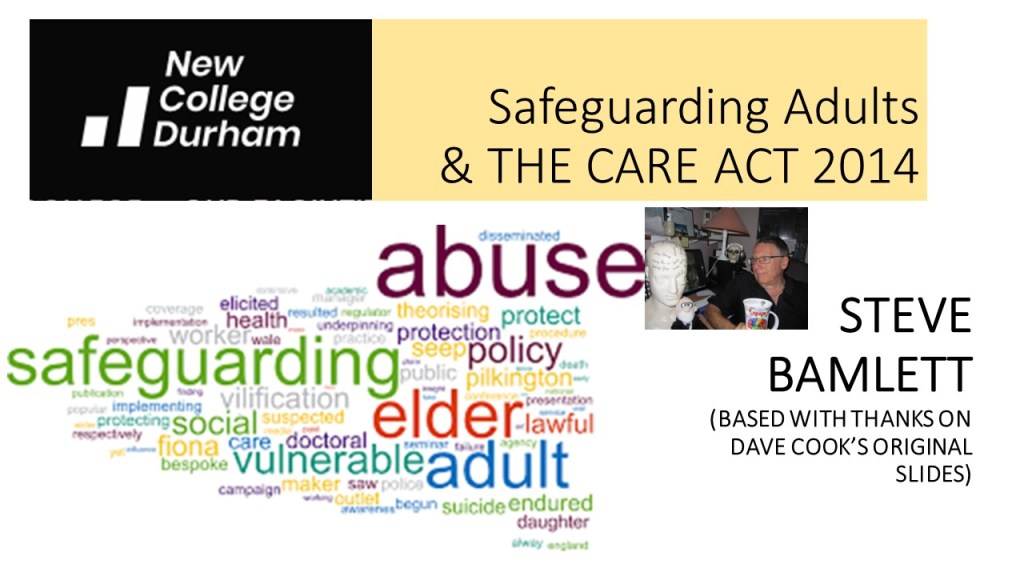
Partlt to orientate myself, I started by returning to the situation in Adult Social Working Law when I last taught, which was mainly before the introduction of The Care Act (2014). Here then are slides related to the campaigning I did in my teaching once – by using an example that contrasted the parlous situation of what we then knew as ‘Vulnerable Adults’ (rightly now seen as an insulting and marginalising time, since vulnerability id a situational rather more than a dispositional one, though it is the latter too. If some people are vulnerable in most situations, in some we all are.
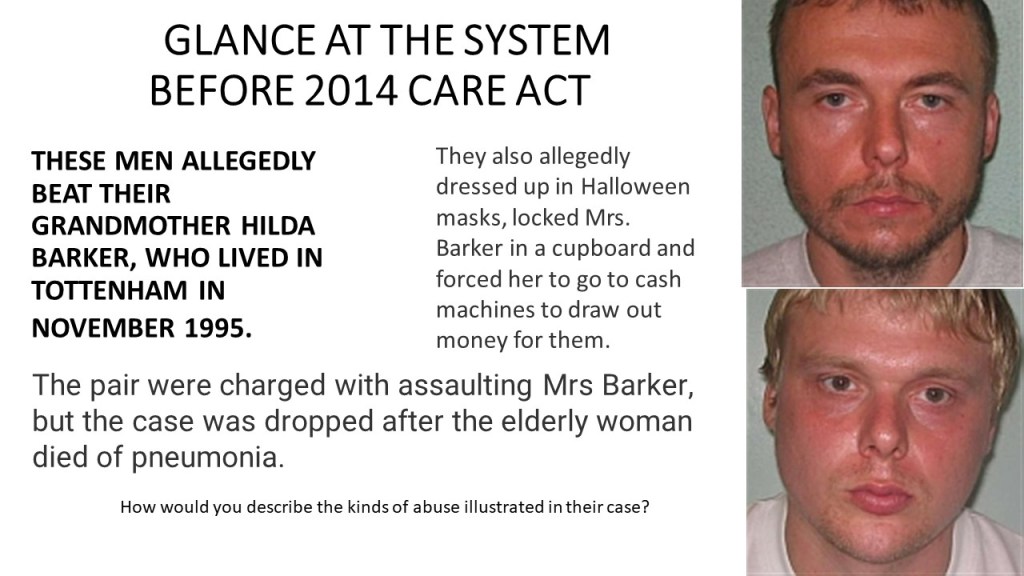
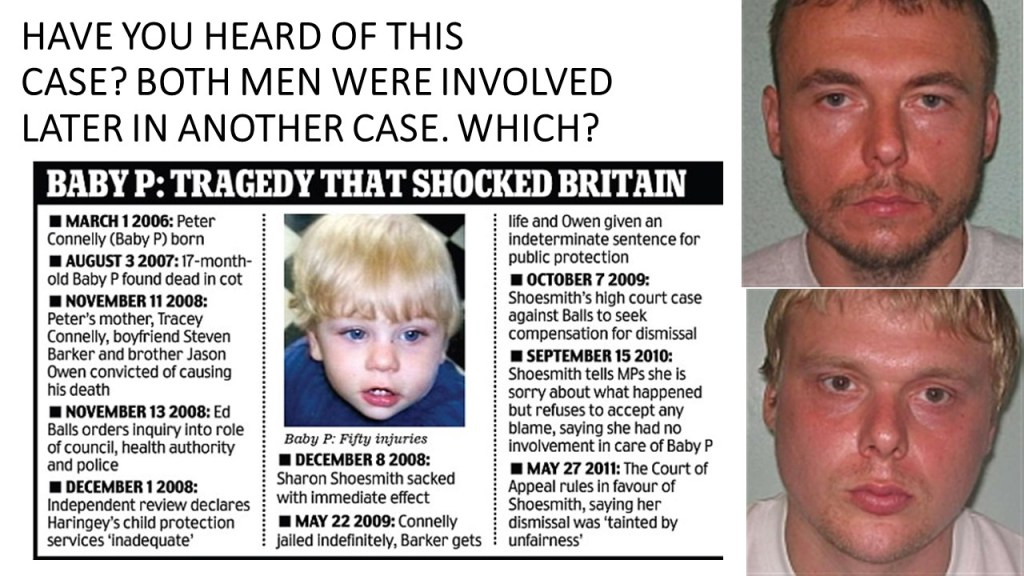
Obviously the item on Baby Peter Connelly was obscured as the learners racked their brains for, and put onto notepaper, their guesses or knowledge. I do this because historically, so important was the Baby P case, people did not associate Donnelly and Barker with adult or elder abuse.
I now move on to be basic about the law but must test if this is old hat already to these learners. Pace depends on their feedback response in situ. Committing their group discussion to flipchart paper.
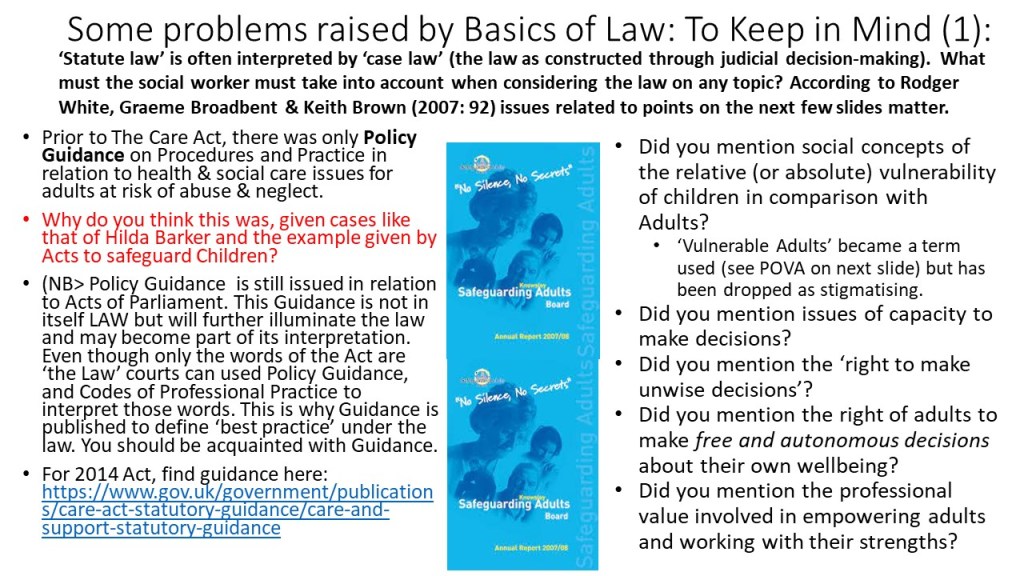
Of course, I want them to use knowledge in this and the previous slide which is reinforced later.
1.About the categories of elder / adult abuse regarding the Hilda Barker scenario.
2. About the ability to cross reference to The Mental Capacity Act 2005 and its purpose to empower service users as decision-makers in complex issues about their security..
However, the next slide tests the grasp of the legal function of guidance extra to a specific law or in its absence. Guidance appears to ensure that control is more flexible and in the realm of greater professional discretion in social work than initially in the courtroom.
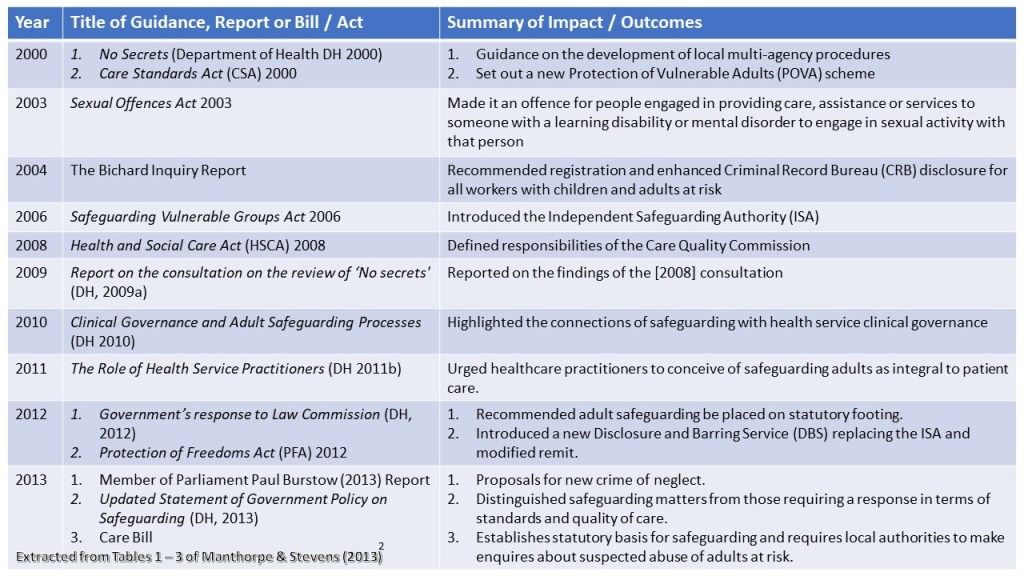
Of course I also aim to introduce Harvard citation systems and how they relate to References Lists at the end of a piece of work. We return Law Basics. This time in relation to the importance of the powers and duties from a suite of relevant legislation that might be invoked in any one case.
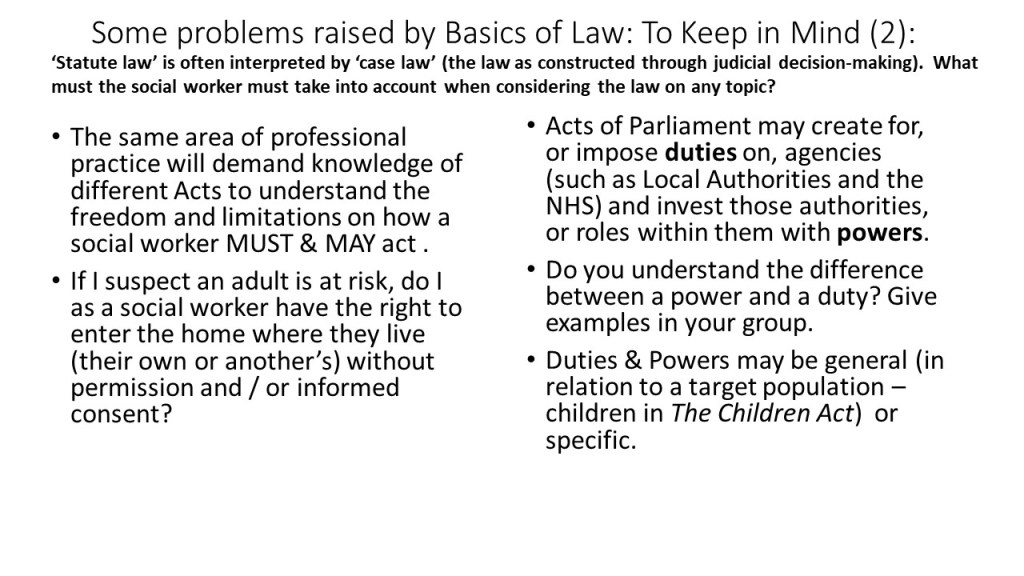
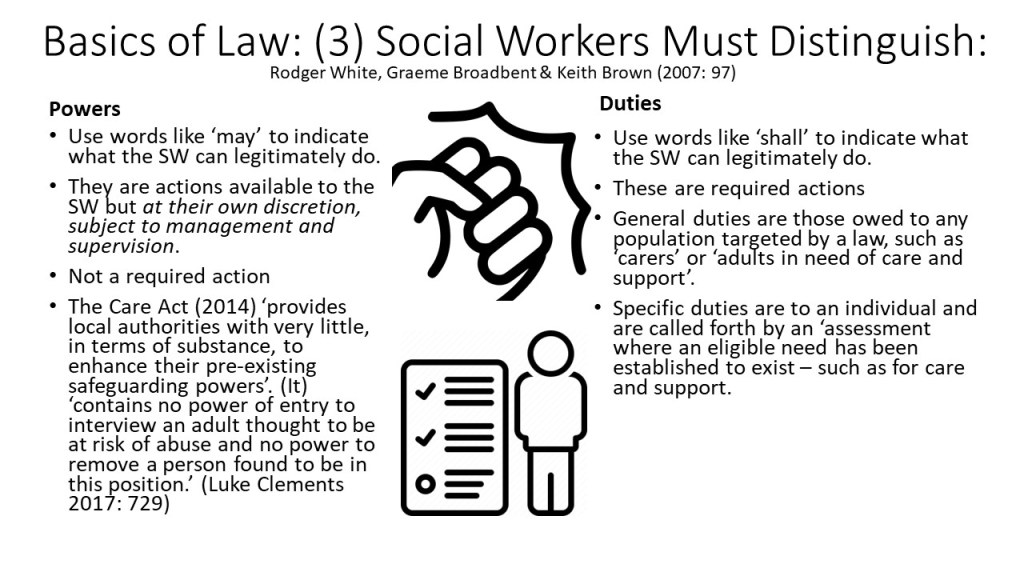
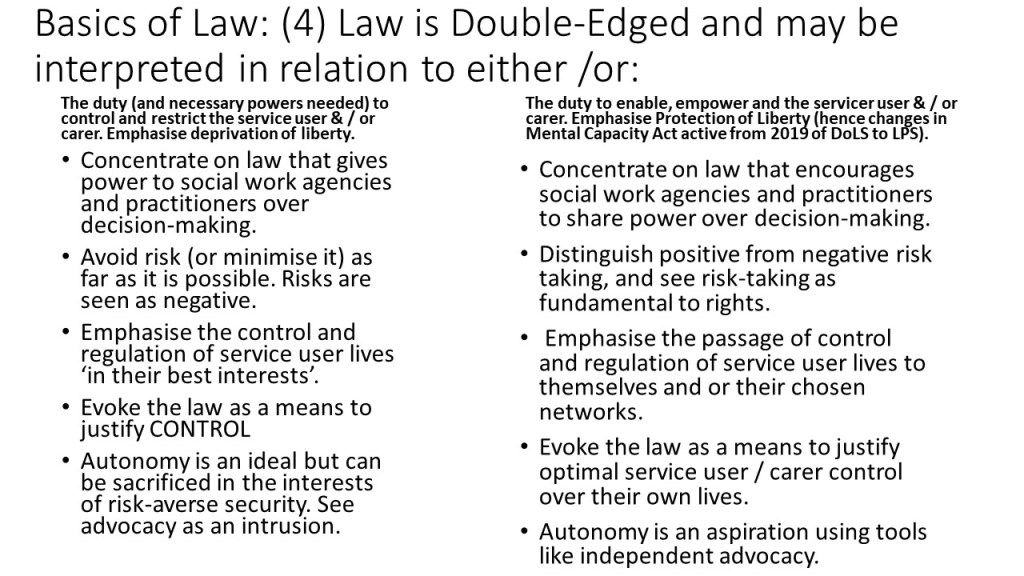
By now I have a good idea of the understanding of why there is a distinction in law between powers and duties by looking at The Care Act as an example where some see it as deficient in safeguarding powers, such as the right of entry to a home wherein abuse may be occurring.The important goa is to see why the Act operates through the duty towards the ‘wellbeing’ of service users and carers.Obviously that to which I aim is to see that element of the Act as the key example of its attempt to be an act that persuades and empowers autonomous decisions by service users users and carers rather than having social work decisions imposed coercively upon them, or at least as much as is possible & appropriate. Thus we slide into the specific Act.
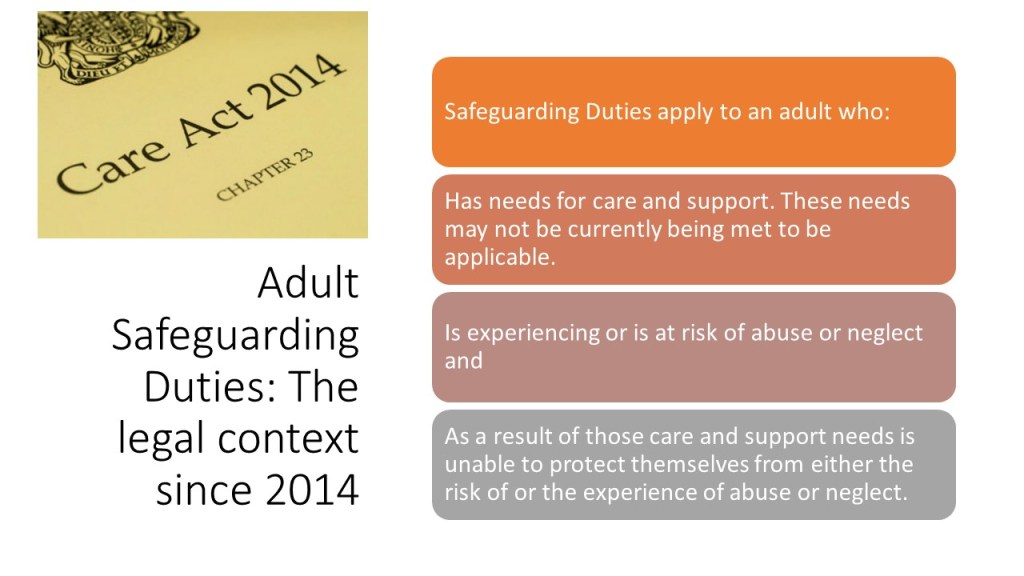
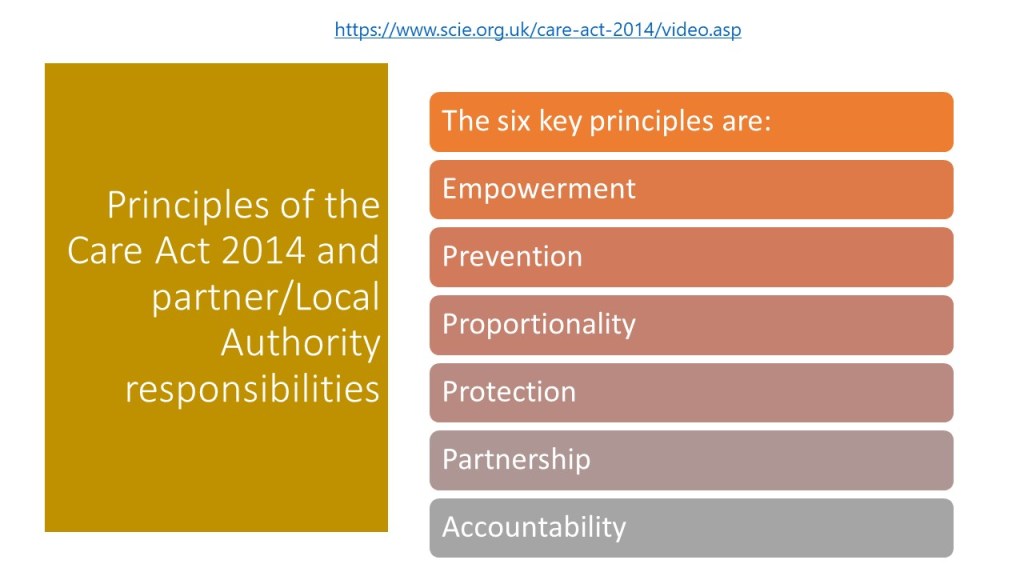
And its principles, which I hope aren’t just token words by this point.
It should now be possiblto talk about the procedures of the safeguarding process identified by the Act.. The aim is to compare language with the kind of process that can be made into a followable flow chart. I use the model from ADASS (2019) so there are no decision boxes in this flowchart. We might dwell on that in case it’s useful.
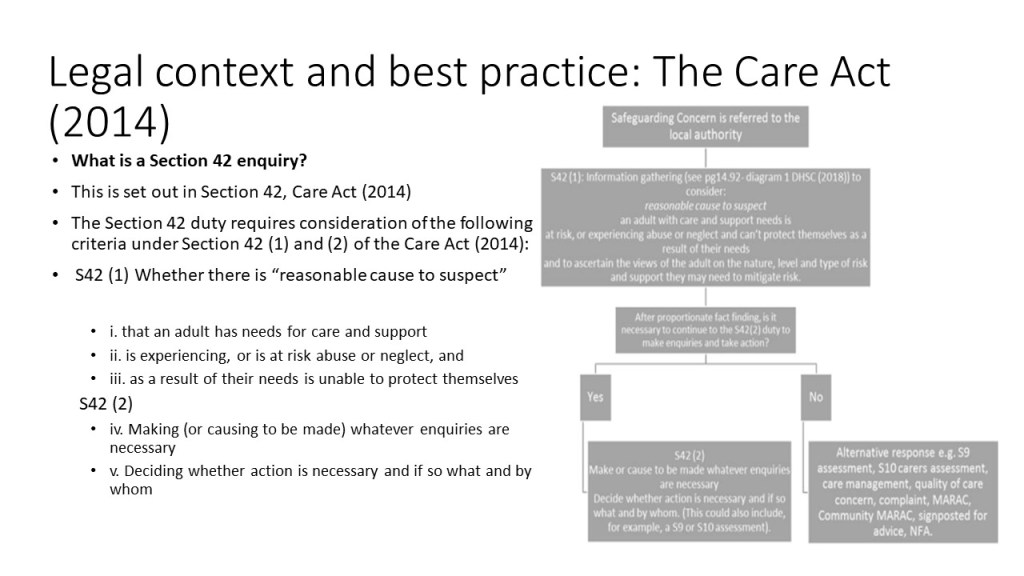
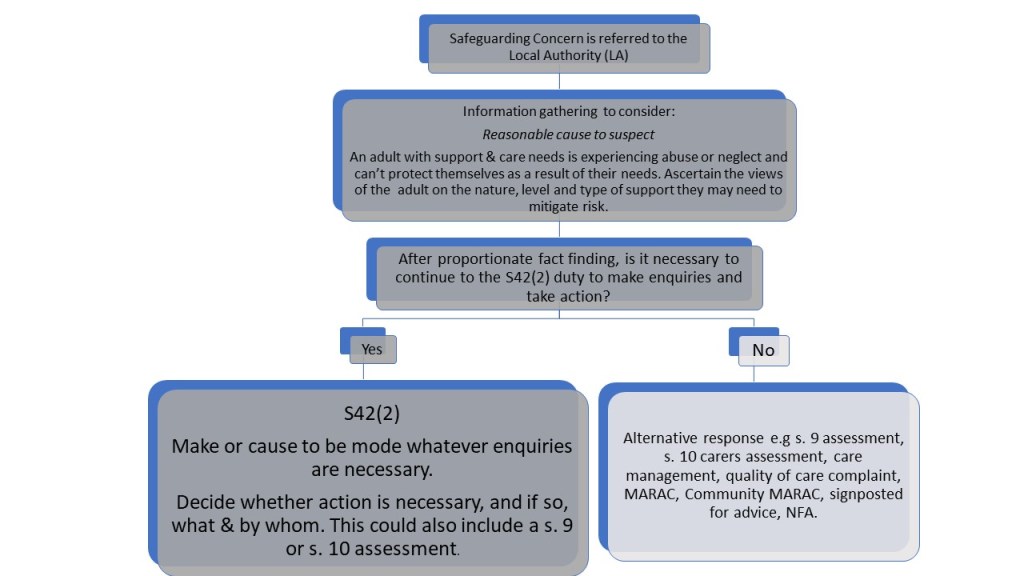
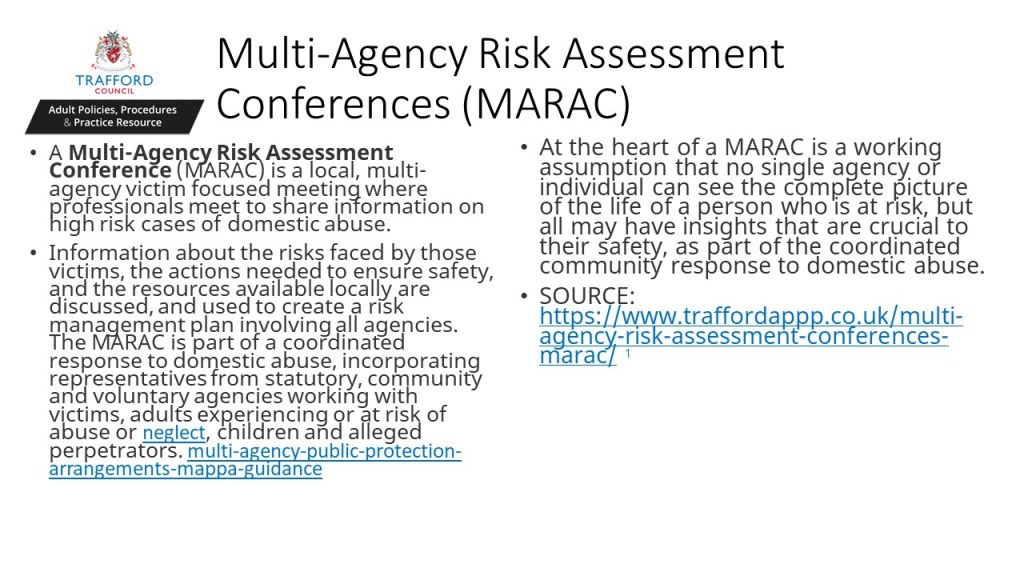
Of course I check that they know about MAPPA procedures such as MARAC.
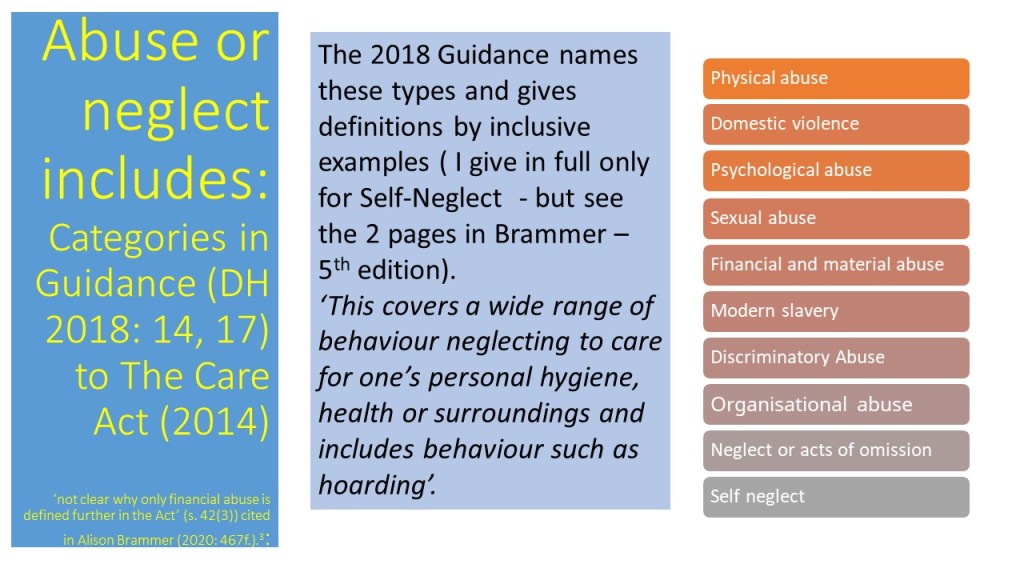
I need to be sure they know the categories of abuse opened up in the consultation processes that led up to the passage of the Bill into an Act. Refeer back to the Hilda Barker discussions to consolidate knowledge.
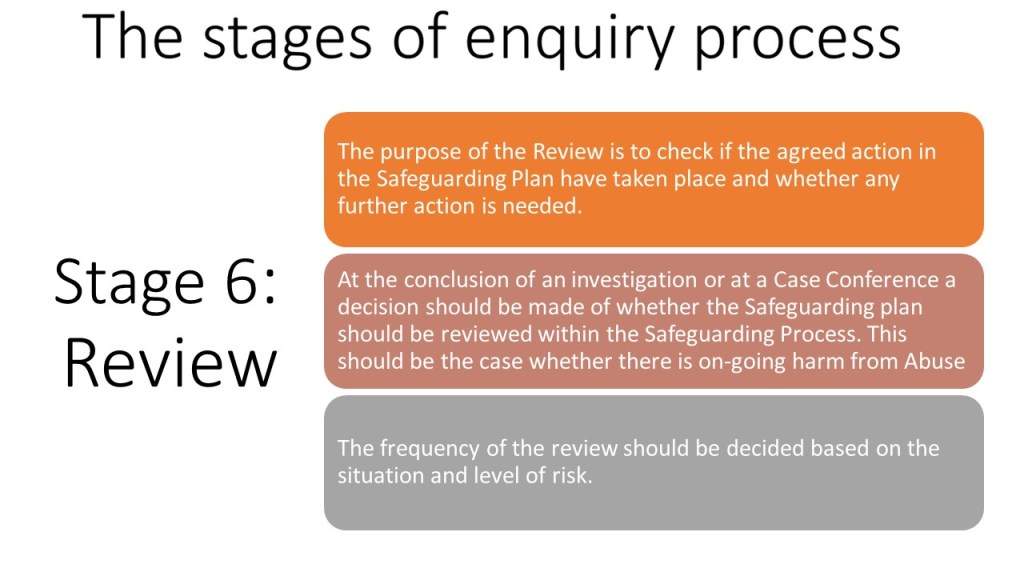
Now top the Stages of process in flowchart.
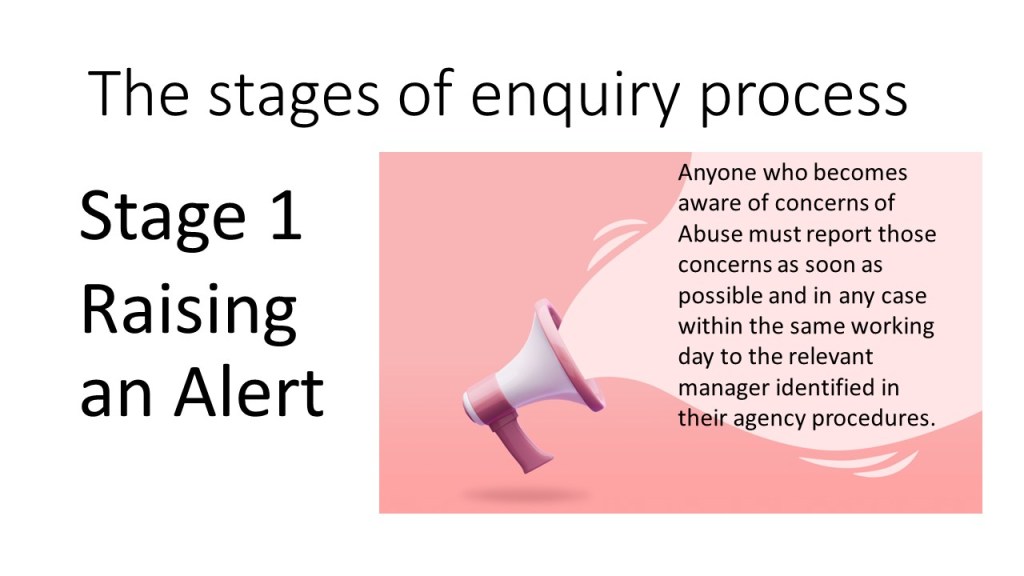
And then
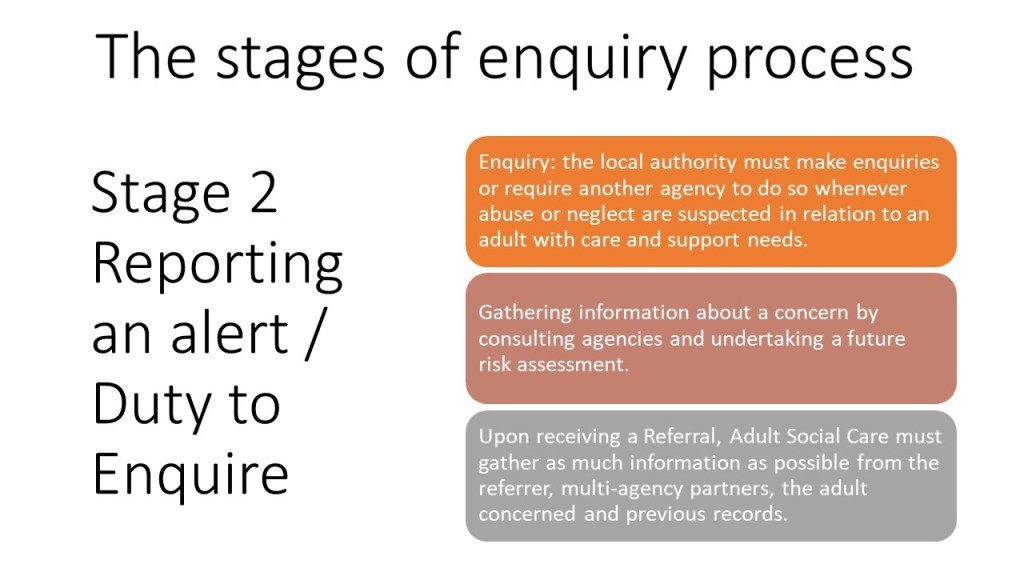
Make sure these slides are pacy but make a thing of Stage 3 to examine the implications of language used about safeguarding because ADASS addresses the term ‘thresholds’ here used in the original slide set. I make the use of the word a problem, leading to next slide, after whole group talk..
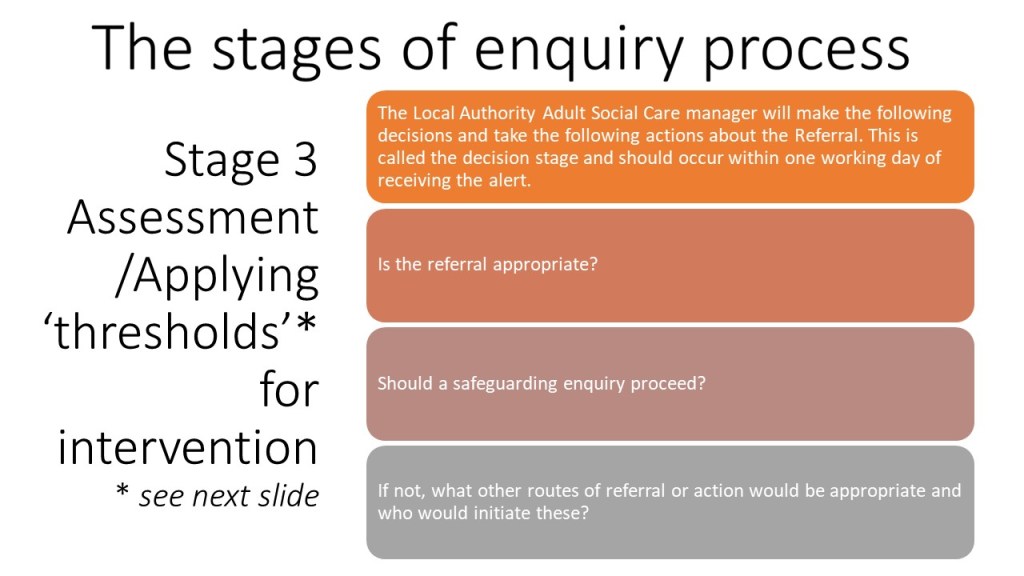
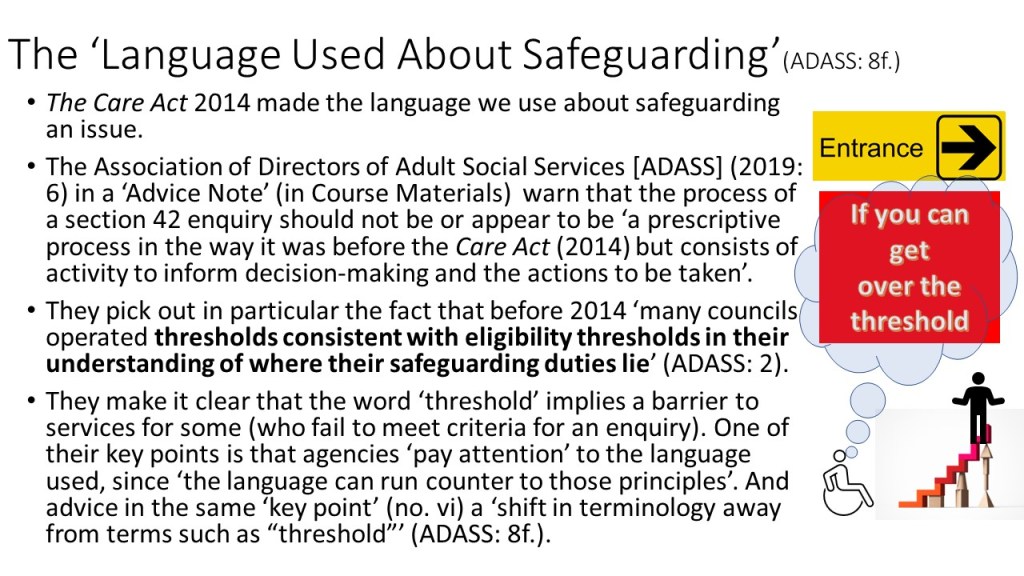
The link to physical barriers in the icon is purposive. The aim is to get them to make the links of course betwee issues of access,eligibility and exclusion. Then back to quick pace through stages.
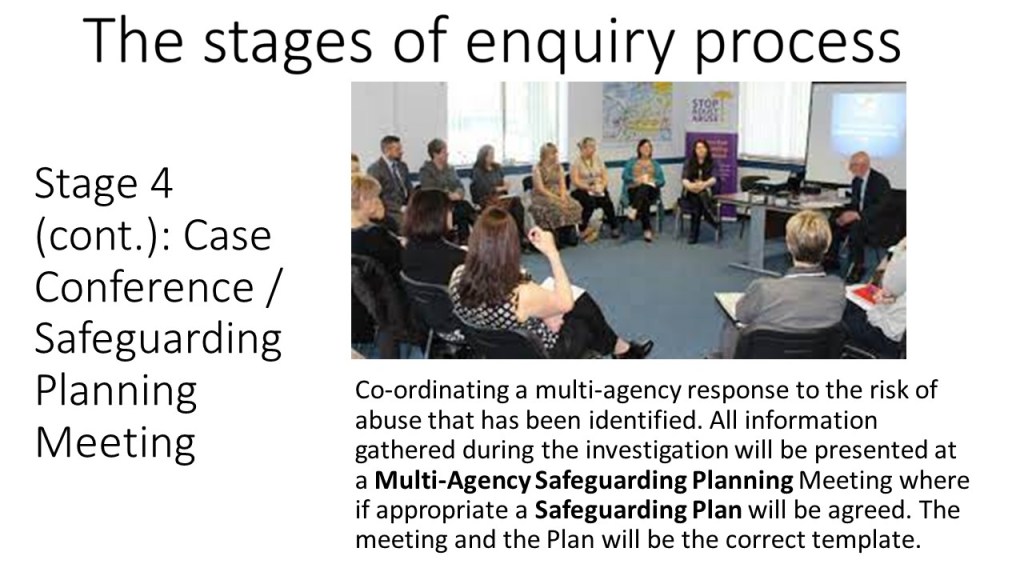
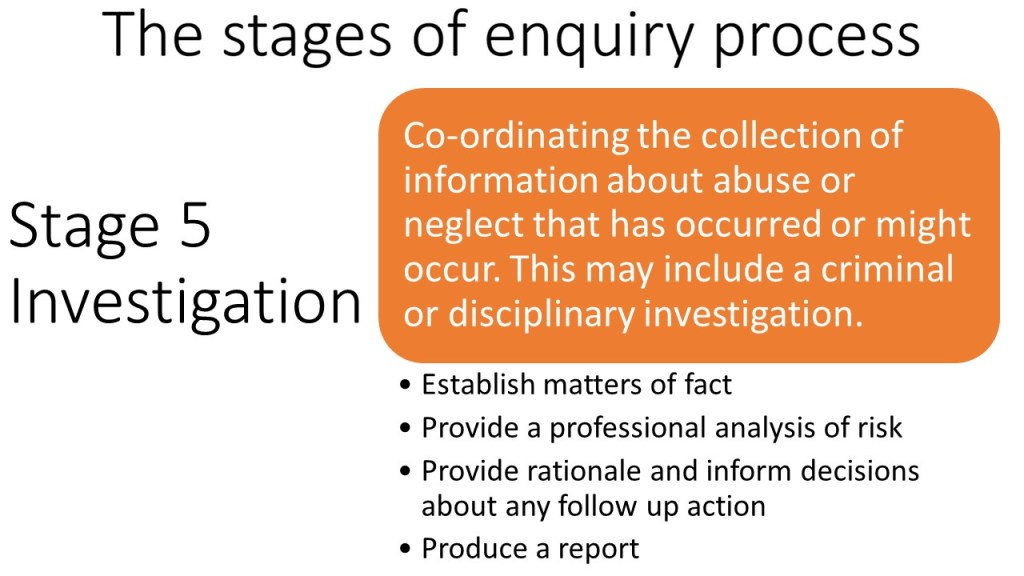
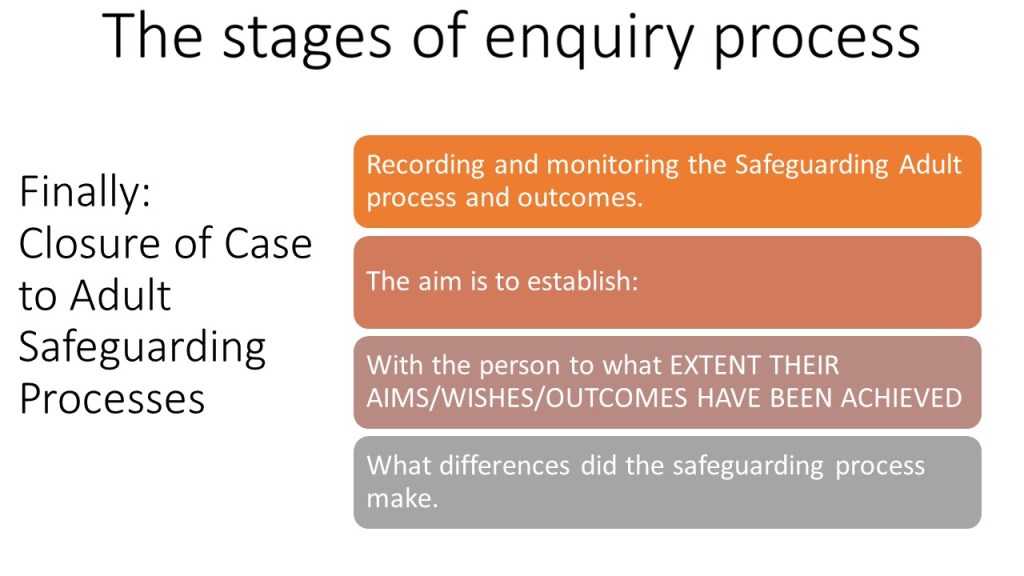
Hopefully feedforward from basics of law and values discussion makes this a good point to introduce, from the Act’s Guidance document, Making Safeguarding Personal to link to empowerment discourses in those earlier values and here.
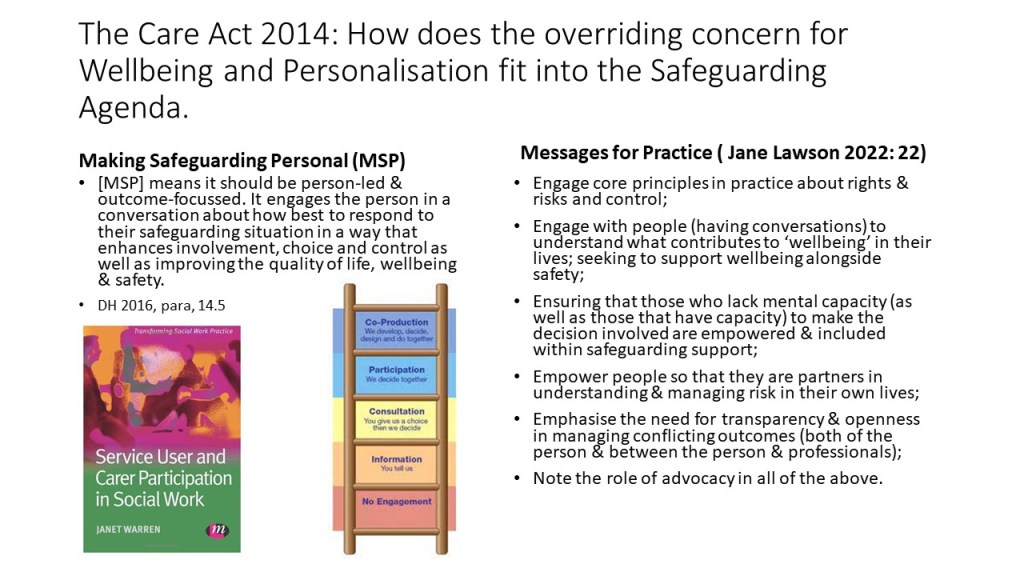
I need to establish how good their knowledge of types of advocacy is – in themselves as proto-advocates themselves PARTIALLY and the role of independent advocates. Values stressed throughout, especially participation and co-production.
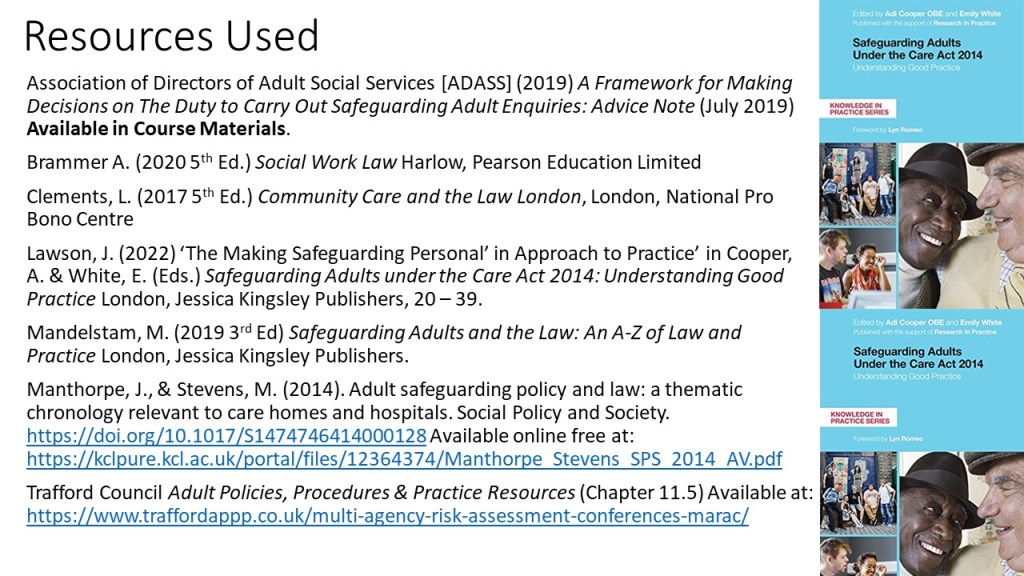
Ensure they understand Harvard end-list referencing and relation to in-text citation. END by looking forward to next week and link to this week UNLESS they feel they have done all this before.
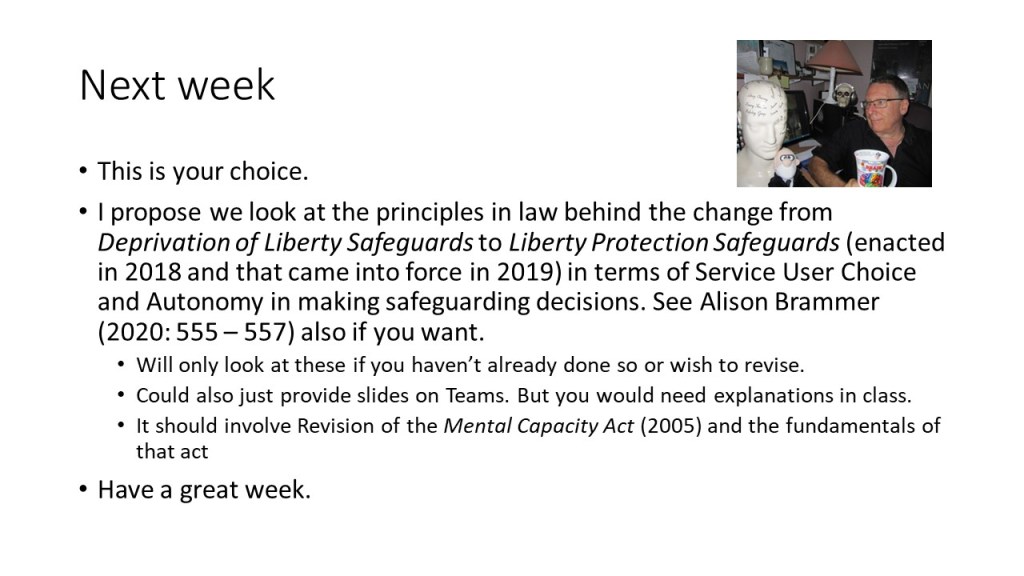
So that’s how I conceive it going. I will evaluate below:
EVALUATION OF EVENT ON MONDAY 12/12/2022.
 Steve_Bamlett_blog