At a crucial movement in this queer romance, two young American men at college together confront the manner of their love for each other, as one of these men also faces the fact that his mother, in another room of the home the men are visiting will soon die: ‘Desire, yes, but for something else, for this space where they stood so close, for the quiet of it’. [1] In an ‘Author’s Note’, Grimsley points out an anachronism in his novel relating to a Buñuel ‘movie’ mentioned therein: ‘ “That Obscure Object of Desire” was not released until later in the year that I depict but the title of the movie suited my purposes too well to lose’.[2] This blog reflects on Jim Grimsley’s (2022) ‘The Dove in the Belly’ Levine Querido, Montclair, Amsterdam, and Hoboken.
Sometimes one reads a novel with a specific agenda. In this case I had been alerted by a good friend and queer-ally on Twitter (@CharleyBarley74) to the fact that she had read this one and found its portrayal of women convincing, and sought feedback from queer men about those queer male characters in it, which she had also liked. Given that this too was a genre in which I had read very little, I was both interested in responding, because she is a friend and because I wished to try such a novel for myself, though it be directed at a contemporary and younger audience. One effect of this was to show how far modern novels have come from stories in which a central character ‘comes out’ and proclaims a gay identity of which they already knew, or at least suspected. In these novels ‘coming out’ is both the process of a story and its denouement and its aim was to promote the value of a positive self-image. However the central figure in the novel, Ronny, is already ‘out’, though neither he nor other use the term ‘gay man’ and, in fact feels antagonistic to identifying with this term or from desiring other ‘gay’ men.
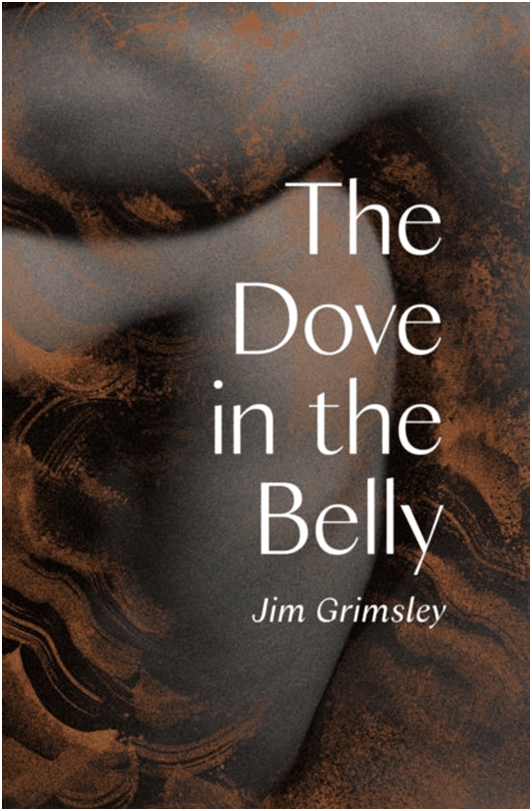
Indeed, so uninterested is the novel in either of the two most prominent men with gay-identifying potential on the novel, Ronny or Judson, ‘coming out’ stories, its focus as a queer novel is on the realisation of the queer Bildungsroman of Ben, the unredeemable jock. Ben, who could not truly be said to come out, instead rather interactively absorbs the gay ‘boy’ Ronny into his well-tried heteronormative method of ‘winning his sexual goal’ against the competition. The novel fascinates (me at least) by concentrating on how satisfying sex and romance are learned from formative events that are in a lot of ways seen as ‘educational’. We need later to look at this in more detail. Moreover, even though Ronny gets near being asked for sex by the ‘anxious, breathy’ Judson, whom he meets first at the University Gay Association, when both are drinking in the campus social club charmingly called He’s Not Here, the novel refuses such a denouement. After all, this club is mainly frequented by jocks and, although Judson is ‘trying hard to show some energy’; he is overshadowed by the macho intervention of Ben, whom Ronny had felt had abandoned him for a girlfriend, muscling in on the pair. Judson howls, having been addressed as a ‘piece of shit’ by Ben as the latter ‘raised a hand, started to make a fist’. “I thought that guy was going to kill me”.
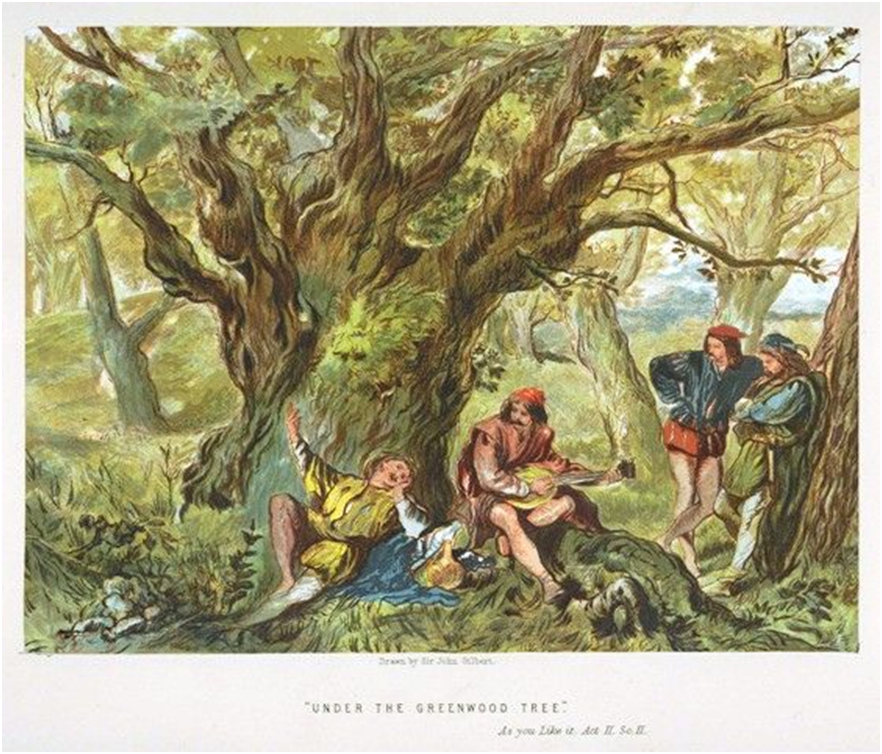
This rescue of a young gay hero by the very model of an aggressive and ‘hard’, and apparently ‘straight’, male means Ronny never has to confront the idea of whether he has accepted his status as ‘gay’, at least under that label, as the novel moves to its rather escapist end. At this end Ronny and Ben set up home temporarily in a caravan which is ‘overwhelmed by the greenwood’.[3] The phrasing here recalls Shakespeare’s rural idyll of escape from social reality in As You Like It, and perhaps the darker version in Hardy’s novel Under The Greenwood Tree and even the similarly escapist end for Maurice and Alec in E.M. Forster’s Maurice:
Under the greenwood tree,
Who loves to lie with me.
And turn his merry note,
Unto the sweet bird’s throat:
Come hither, come hither, come hither.
Here shall he see
No enemy
But winter and rough weather.
Who doth ambition shun,
And loves to live i’ the sun,
Seeking the food he eats,
And pleased with what he gets,
Come hither, come hither, come hither.
Here shall he see
No enemy
But winter and rough weather.[4]
The use of this echo is part and parcel of a novel already replete with echoes of literature and art (like that of the silent usage of the phrase ‘the greenwood’). This is not least because Ronny is a literature scholar and adept, unlike the jocks we encounter in Ben and Tate, whom both call Ronny their ‘pet faggot’.[5] In Tate the stereotype of the ‘jock’ is dully realised: he is ‘Mule Man’; who, Ronny jokes, does not wash his dick regardless of whom he asks to suck it! – and what is more stereotypically manly – “My girls like me funky”. In contrast the educated literary gay character, Ronny, is seen to work his way through The Brothers Karamazov, use prior knowledge of (and re-read) I, Claudius as well as watch Buñuel’s auteur film-work The Obscure Object of Desire. Moreover, as I indicate in my title, Grimsley indicates that the ‘title’ of the last is important to his aims in the novel. For the novel is about learning the object of one’s desire and how to handle it. This is why I called it above a Bildungsroman since it is a novel about how two different types of men learn both sexual and romantic interactive practices which trump any interest in labels, such as ‘being gay’ or looking ‘queer’ or sissy, or ‘like’ a faggot or ‘bitch’. Ben and Ronny discuss this very topic as they discuss ‘defending’ Ronny from the talk of other jocks like Tate. They also discuss confusion or otherwise around ‘gay identity’ and objects of sexual choices but it is Ben’s, not Ronny’s, gaze that watches the road ahead (and whom is, after all, the one in the driving seat, perhaps an allegory for their potential future as lovers). Ben starts here:
“… I mean, I still call you a faggot myself. …” / “I don’t care what (Tate) calls me. Or what you call me.” Anger in the assertion, a touch of it. …. Looking ahead at the road. “Or what anybody calls me.” / … / “How can you be confused about what makes you dick hard?” / Ben laughed quietly, watching the road. “You got me there. That’s what clued me in.”[6]
Ben does not learn easily but he learns effectively and he learns not by labelling words for sexual activity but by learning the necessities of the process of genital sex for men. At this point I feel that we need to consider this novel’s concentration, despite the primacy of the consciousness and ‘point of view’ of an ‘out’ (in a developing uncompleted sense) educated and intelligent gay young man, on under-educated men whose prime asset is their body and their usage of it like Tate, the ‘Man Mule’, and Ben. The picture below provides a good image of the stereotype of the role of young men like Tate and Ben in the novel.

Ben is described as having ‘a vast body’, ‘a big guy, solid and dense’ and being ‘made of force’. [7] In that penultimate quotation ‘dense’ presumably means thick-set in body, as in the picture above, but Ben himself points to another meaning, as Ronny and he ‘look over this crap for the essay’ such that Ronny might complete Ben’s term papers. He answers Ronny saying ‘you sound like a student’ (instead of a mere jock Ronny implies) continuing with playful self-irony, : “Hey, what can I say. I’m a fucking intellectual’.[8] Both meanings of ‘dense’ are playfully evoked as Ben drives Ronny to the former’s home to see his dying mother: ‘In the front seat Ronny felt the density of Ben next to him, taking up width, relaxed and unself-conscious …’.[9] Meanwhile Ben elsewhere looms and glowers from the safety of that apparently invulnerable masculinity.[10]
Ronny completes Ben’s academic term essay, as he does to for Mule Man Tate (for a monetary price) and mentors him through his college courses. It is for this that he gains the respect of Ben’s dying mother and feminist sister, Nina. Yet the subject of learning about physical comfort in the sexual interactions of men with each other focuses on the reversed mentor relationship between Ben and Ronny. The writing about sex in this novel is crucial and perhaps more interesting than any I have previously seen, excluding, of course, Garth Greenwell, about whom I have blogged previously. I possibly need to show however how learning how to execute sexual actions becomes a topic based in learning before thinking about why this happens in this novel. Try this passage, for instance, dealing with the first sexual encounter:
Ben was easy to please and had no problem saying what he liked. They managed well enough at first and very well after that. Ronny had studied some pictures at Mac’s porn shop on Franklin Street, and had watched some of the quarter movies when he had change to spare. How hard could it be when he already knew how a penis worked? He tried to do the same things with his mouth and tongue and hands that he had seen in the movies, that he would have enjoyed if someone were doing it to him. His natural sense took over, and he could feel Ben’s body respond when something felt right. Slow down, go easy, be smooth, oh, yes, that. … Ben took over and put his hand in Ronny’s hair and after that Ronny only had to try to keep up. Most of the time that was pretty easy. They felt like one thing, one flesh, same as the Bible called it, but maybe it was an odd time to think of that. But they were moving together, breathing together, feeling each other. / …/
Ben’s voice was so deep. He had a little smirk. “That was your first time sucking cock?”
“Yep.”
“You like it?”
Ronny grinned, looked down at the tangled sheets, and nodded his head.
“You little cocksucker.” Ben put his arms behind his head. “You did a pretty good job.”
“Well, I guess coming from the big jock blowjob expert I should take that as a compliment.”
“You should. I think you can be encouraged about your prospects.” He was likely imitating one of his coaches. “With my tutelage and a little guts, son, I think maybe I can make a man of you.”
… [11]
So much of this contains the comedy of intimate sexual banter but its main characteristic is the multiplicity of tone and reference and the huge swings between them, like that marked by the recognition that citing liturgical and Biblical text (in the term ‘one flesh’) is being used at an ‘odd time’. The move from language that has a mythical and spiritual significance in this ‘odd place’ is mirrored by shifts from the language of nature to that of learned behaviour. It’s instructive moreover to note that ‘natural’ and spontaneous behaviour, implied in the term ‘natural sense’, never accounts for the success of sexual congress, for it ‘took over’ at one point just before that same phrase (‘took over’) is used shortly afterwards to describe Ben taking strategic action to increase his pleasure from Ronny’s skills by commanding the motion of Ronny’s head. Otherwise the language of sex is of things that should be ‘managed’ and learned, like a form of learnt expertise, based on both prior ‘study’ (in movies and porn), reflective self-knowledge on how a ‘penis worked’ and learning completed on the spot by a trial and error method, In the latter what ‘feels right’ in the moment is confirmed as pleasurable by signals in one’s partner, the beginnings of inter- and intra-flesh mutuality.

I think this is important, not just because it creates better sexual descriptions in language but also because it allows what is learned through interaction of bodies to mean much more than what is conventionally thought of as sex, as something purely made up of visceral dynamics. Instead it is also something with potential to accrue meanings for each partner and more importantly both mutually. For the passage is set in the context of a mutual knowledge such as might be conveyed by ‘one flesh’ and its echo of the marriage ceremony and the creation of humanity in the Garden of Eden in Genesis. In their second sexual meeting knowledge and experience passes from two selves feeling simultaneous pleasure to the potential of mutuality of sensation, emotion and knowledge:
Ronny got lost in it all, the movement of his body leading him into new territory, Ben furled over him from behind, breathing against his neck, arm around Ronny’s waist, the two of them blowing and making sounds, sweat running along the place where their skins came together. Such a fire, this pleasure was, coursing inside and out. They both had the feeling that this was merely the edge of the thing they could do and be. (my italics)[12]
The part I have italicised here is the sure sign of a novel announcing itself a Bildungsroman in which new selves are learned through processes of learning about one’s own body and its communion with that of others in internal and external space, the potential of ‘one flesh’. If that sounds something I have imposed on this novel, it is try worth reading this summation of the young men’s sexual learning in the crucial chapter titled ‘Wife and Husband’:
Ben gentle for longer than ever, which only made the turn to something fiercer more acute, more like a heartache that pierced them both at the same moment. Suddenly in the double bed they learned economy and hardly needed to move. Pleasure can burn, can sting, can cool, can heat, can do everything at once, and then soothe, and then rush forward, almost there, and almost there, as many times as it can be pressed, until there comes an end. They had thought again, together and at the same time, that this was the thing they were, not what they were doing but what they were seeing, that what they contained was a big space, open, clean, belonging to no one else. Free.[13]
I find this passage quite beautiful in the twists it achieves in its innovatory syntax where ‘gentle’ is given the grammatical locus of a verb and feels like one, such that it is grasped by the neck in the verbal phrase ‘made the turn to something fiercer’ seem more than a mere opposition between what is relatively more passive than active violence and pain in the service of pleasure. It grasps the antinomies common to the explanation of sexual experience, taking them beyond mere pleasure and pain to something transcendent. Again the aim is the creation of a mutual entity, ‘they’ which is ‘a thing’ (like the ‘one flesh’ invoked before) which experiences apparently impossible contradictions where the ‘contained’ or closed is set against the ‘open’, the constrained against the free. The cognitive dissonance in this is typical of Walt Whitman:
My voice goes after what my eyes cannot reach,
With the twirl of my tongue I encompass worlds and volumes of worlds.
Speech is the twin of my vision, it is unequal to measure itself,
It provokes me forever, it says sarcastically,
Walt you contain enough, why don’t you let it out then?
Come now I will not be tantalized, you conceive too much of articulation,
Do you not know O speech how the buds beneath you are folded?
Waiting in gloom, protected by frost,
The dirt receding before my prophetical screams,
I underlying causes to balance them at last,
My knowledge my live parts, it keeping tally with the meaning of all things,
Happiness, (which whoever hears me let him or her set out in search of this day.)[14]

In fact the echoes of Whitman I hear here (rightly or wrongly) would be expected in a novel for whom the film title, That Obscure Object of Desire suited Jim Grimsley’s ’purposes too well to lose’; as he says in his Author’s Note at the novel’s conclusion. [15] For poetic prose, that breaks the norms of conventional syntactic expectations, might be thought to be, as it is by me, the ideal medium for conveying the ‘obscure’ that underlies a world we too often think resolved into neat objects and subjects – into cognitions of a world thought wrongly to be divided between binaries of objectivity and subjectivity, rather than made by both, in which both inform each other as in those sexual passages in the novel. For, in the end the sexual of the desire is not contained in passages that describe the dynamics of a bedroom but is contained in other spaces and opens out from them whole continents. At this point Ben is feeling the hurt of his mother’s impending death:
Ben frowned, and looked around, slipped on his sneakers, shouldered past Ronny, waited at the door, then came back into the room, and they held each other. He was big and warm, stilled with hurt. He rubbed his cheek onto Ronny’s, slow and easy, and they breathed against each other. Desire, yes, but for something else, for this space where they stood so close, for the quiet of it. …
I guess that here the twin terms ‘the room’ (describing an objective place) and ‘this space’ describing some aspect of subjective being comment on each other and interpenetrate each other, just as the language of sexual desire and bodily contact slowly and easily feeds into a sexualised dynamic that is not merely sexual but ‘something else’, an ‘obscure object of desire’. For me this explicates the book’s relationship to another poem, the title of which gives the novel its own: Wallace Stevens’ The Dove in the Belly, the first two lines of which form the epigraph of the novel. But let’s have the whole poem here, with some words linked to dictionary definitions:
The Dove in the Belly
The whole of appearance is a toy. For this,
The dove in the belly builds his nest and coos,Selah, tempestuous bird. How is it that
The rivers shine and hold their mirrors up,Like excellence collecting excellence?
How is it that the wooden trees stand upAnd live and heap their panniers of green
And hold them round the sultry day? Why shouldThese mountains being high be, also, bright,
Fetched up with snow that never falls to earth?And this great esplanade of corn, miles wide,
Is something wished for made effectualAnd something more. And the people in costumes,
Though poor, though raggeder than ruin, have thatWithin them right for terraces—oh, brave salut!
Deep dove, placate you in your hiddenness.[16]
The poem is built on oppositions of, and intrusive interaction between, inside and outside space, in and on which a dove nests in the seat of the appetites. Other antinomies – peace (even in the emblematic association of the dove) and tempest, entrapped stillness and emotional flow. That set of feelings Ben embeds, like the dove in the gut of Ronny, only delicately suggesting the narrative of the poem above in a ‘long monologue of memory’, in order to create an icon of ‘longing and desire followed by another’:
There was a vibration inside him, a warmth, like a throb or a cooing, as though a peaceful bird had nested there, and it occurred to him how close this feeling was to the fear he felt at times that also settled in his belly and hung there, palpable. The same bird, only anxious and fluttery.[17]
There we have it: a translation-cum-interpretation that renders a prose poem of Wallace Stevens’ precious object of an oral lyric. And the ‘object’ of that prose-poem – a translation of all the complexity and difficult-to-comprehend things we understand by desire in the flesh. My response to this, applied only to the aesthetics of art that shape novels, is admiration but there is more than beauty here because this book addresses, as I hope I have already suggested, objective issues in queer history and not least the issues of the labelling of queer persons. These issues explain the fact that Ronny, though comfortable in his desires and the actions needed to fulfil them, has a difficulty with labels of identity. Resolutions of this difficulty are, at the least, only provisional ones, as in this section when he contemplates visiting the Gay Association meeting:
If he was too afraid for people to know he was gay, then what did that mean about his character? …/ Never mind all that though. He was gay. He came to the meeting. … But here he was, and here were these other people – maybe twenty, mixed men and women. They were arguing about the group’s purpose, its identity. Did “gay” include women? Were black students as welcome as everyone else? … Some of the boys looked sissy in an exaggerated way. But that might just have been the way he was seeing them. Others just looked like boys. Same contrast with girls. A room full of people.[18]
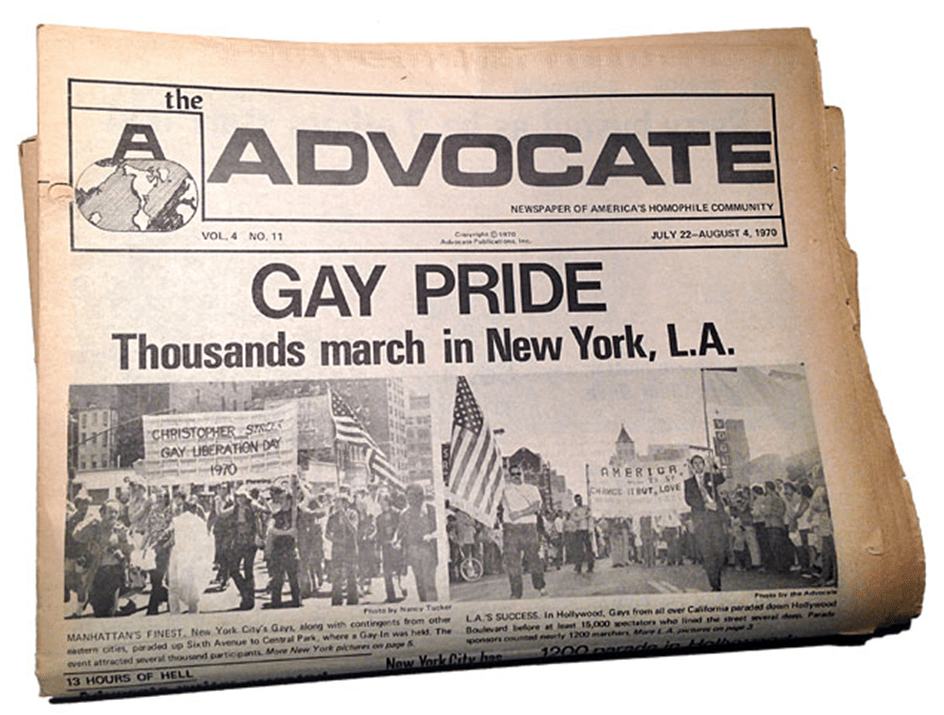
That play on the origin of labelling words, as objective or subjective description (as in the discussion of ‘sissy’ here), runs throughout the novel and I believe that its goal is to undermine the value of any one word label, even the sacrosanct term ‘gay’, as was attempted in the queer movement and queer theory. In such a book no word or term cannot be used (at least in playacted form) and running through the novel’s romance are some fairly stereotypical usages of words I was myself trained, as a member of the gay movement in the 1970s, to despise, including ‘sissy’, ‘bitch’, ‘queer’ and ‘faggot’. Grimsley references that time of concern about labels and the shattering of norms early in the novel, speaking of ‘the subtext of much of Ronny’s life as the ‘upheaval in these days of the middle 1970s, the breaking of old patterns, the sudden freedom to act in different ways from the past, …’.[19] However, though this be the case, Grimsley ensures that he shows that some of those patterns subsist if used entirely differently.
It is as if the novel needs to reject the overthrow of all of the old patterns, even those of casual sexism. For instance, Ronny’s penchant for ‘girl’s work’ (feminist Nina calls him a ‘Pollyanna’) is accepted. Indeed sexist patterns are reproduced even by feminist Nina, whose room holds the sacred texts of that movement at that time, and who is a student of ‘women’s studies’, can reproduce sexist domestic patterns as if she were another ‘Pollyanna’ like the ‘sissy bitch’ (in Ben’s playful terms – or are they?) Ronny. That is so even if Nina enacts at the same time some irritation and indifference at the circumstance of that ocurring. Look at this scenario: ‘Ben went for a run in the afternoon, lifted weights in the basement. … Nina worked around the house with Ronny, dusting, cleaning her parents’ bathroom and bedroom’.[20] Sexually, Ben and Ronny, even if with flexibility in their practice act out gendered roles with gendered labels. Caught with another man after Ben’s football game, Ben’s violence with that man (it’s Judson of course as previously referenced) is accompanied by terms that feminise and marginalise Ronny as if he were other, even when Ben is obviously playacting (even reproducing normative monogamous bonding):
“The cussing is getting almost excellent for a sissy such as yourself.”
“So, bitch, the answer is you don’t want to see me with anybody or hear about me with anybody and I have a similar hankering for myself where you are concerned.”[21]
Similarly other binary descriptive words like ‘hard’ and ‘soft’ are distributed between Ben and Ronny, almost as if they indicate the binary of sex/gender. My own feeling is that what this novel acknowledges is that, as its romantic central couple approach the ‘the edge of the thing they wanted to be’, there are dynamics of learning which accepts that new forms of being often still require old terms and patterns to describe them, as long as such terms and patterns are not held to with too much rigour and form inflexible habits. For, in the end, the only thing this novel is certain about is that the old calcify and die through patterns. Indeed I want to end by looking at some fabulous sentences about old dying women. Miss Dee, Ronny’s landlady, is a wonderful lady but the decay of her memory in dementia leaves a life that is hollowed out and empty. Though the picture of her is a loving one, it is also, sometimes, cruel. For Miss Dee is surely patronised by her young student tenants, and their parents both. Moreover, her death is really an emblem of the death of all merely conventionally desexualised (rather than actively asexualised) lives. Ronny is intelligent. He knows that perhaps the desire to call Miss Dee a ‘sweet’ old lady is a mask of the indifference of those with a life to live:
Her smile had such sweetness. Though maybe that was just the way he saw her; maybe that was just the way people saw older women, full of gentleness, when it was really something altogether different.[22]
The absolute beauty and intelligence of that sentence must oft get missed as does the novel’s dark admission that Miss Dee’s life was tragic in its waste and suppressed intention even before she gets dementia, her love of youth concealing something lost not to be regained in any way in herself. This is certainly the case in the coldest and most queerly horrifying of beautiful sentences in this book (there are many beautiful queer sentences in it): ‘Everyone at the graveside sorry, but only mildly so, and embarrassed at the idea of death, Miss Dee, lying in her box, safely out of sight’.[23]
This chill sentence is followed by a scene in which, on a freezing day in December, starts thus: ‘There was something about the coldness of this drew them near, Ben and Ronny’. For what stops Ben ‘fleeing’ the scene and his relationship with Ronny is the sense that, at many lives’ ends, people ‘stand around in embarrassment … gathered more out of a sense of obligation than loss’.[24] For in the end we make something out of our bonds to each other or, like Miss Dee, we go ‘safely out of sight’ worrying no-one by our insignificance, ‘in a box’. In this context, light play with sex/gender roles and norms is not a sin, but being boxed in by them, like Miss Dee, is.

I loved this novel.
All the best
Steve
[1] Jim Grimsley (2022: 164) ‘The Dove In The Belly’ Levine Querido, Montclair, Amsterdam, Hoboken.
[2] Ibid: 323
[3] Ibid: 319
[4] Shakespeare As You Like It Act 2, Scene V. Text available at: https://www.poetryfoundation.org/poems/47423/song-under-the-greenwood-tree
[5] Ibid: 102f.
[6] Ibid 180f.
[7] The quotations in the 2 sentences come respectively from ibid: 72, 76, & 31.
[8] Ibid: 48
[9] Ibid: 178
[10] For instance ibid: 285 & 31f respectively.
[11] Ibid: 83f.
[12] Ibid: 130
[13] Ibid: 204
[14] Walt Whitman Song of Myself (from section 25). Available at https://www.poetryfoundation.org/poems/45477/song-of-myself-1892-version (Italics in original)
[15] Grimsley op.cit: 323
[16] Available at: https://knopfdoubleday.com/2011/04/15/wallace-stevens/
[17] Grimsley op.cit: 98
[18] Ibid: 257
[19] Ibid: 22
[20] Ibid: 218
[21] Both from ibid: 230
[22] Ibid: 250
[23] Ibid: 317
[24] Ibid.

