BOOKER SHORTLIST: ‘If all she was was funny, and none of this is funny, where did that leave her’.[1] A reflection on no one is talking about this by Patricia Lockwood (2021), London, Oxford, New York etc., Bloomsbury Circus.
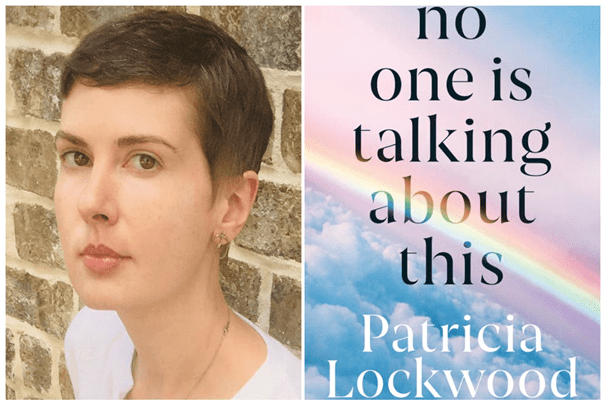
Of course dedicated to @TriciaLockwood with apologies for errors.
I have put off reading this novel for some time given it was one of the first from the Booker longlist I purchased, partly because so many serious novelists who were already important to me were on the list and partly because they were voices for the kind of novelists that knew, and made the fact the fact that they knew obvious, why they were writing novels and not writing in another mode. Even from the appearances and certainly from the reviews I glanced at, this was not going to be the case with Patricia Lockwood. There is a kind of literary conservatism in me I find that resists the pain of books that just don’t work because they travel beyond the boundaries of at least some of the conventions without the author having the talent to meet the additional demand on them. There was no room for such pain in reading this novel however. It is a highly achieved form of innovative writing that needs time to absorb. Indeed I decided to return to the reviews to see why they had put me off and why they did the book a disservice while balancing their critique with some sense that they we knew we have a very original and very good writer here.
Thus Claire Alfree, probably the most intelligently focused of the critics I read at least, from the London Evening Standard cannot help but remind us that a novelist has to do more than enact her narrator’s sense that, ‘Everything is a huge joke even when it’s not’. She slyly inserts her own critical judgement here that, ‘This can become quite exhausting’. Is it that critics cannot feel they are acting their role properly if they have not completely understood a novel’s intention and can and will demonstrate this understanding that this archly authoritative tone is taken, as if a tired teacher were reprimanding a bright but over energetic teenage girl in her school class. For by the end of her review Alfree has decided that the book is ‘a bit of a cop out’ in that it merely (or so Claire thinks) uses its framing narrative form merely to contrast the ‘unserious’ world of the Twittersphere with what is ‘serious’ in life – such as the life and death of a congenitally differently constituted child, so constituted that they cannot survive in fact. This she points out is because the novel does an ‘about-turn’ which contrasts a brilliant but tiring exposition of the deficiencies of social media to a more conventional story of personal and family tragedy that deals with serious subjects like that ‘at the end of the day in the same way we’ve always done’.[2]
There may, of course be strength in numbers and professional critics may, in the end, prove to be wiser than me, since Mark O’Connell in The Guardian appears to have a similar take on the wearing nature of the ubiquitous humorous tone that does not make him laugh and also believes that the novel’s formal characteristics betray an over-simple take on the world and its spaces, whether these be on Twitter or in the home of a grieving parent. He describes the novel thus. Read it carefully because I think I take exception to the workly done by some adverbials, like ‘neatly’ for instance in the first sentence.
The novel is neatly divided into two parts, each made up of tightly composed fragments. The first half is a study of a peculiarly static existence, a life spent gazing into the roiling abyss of the portal. We are in the company, here, of a person with full-blown brain worms – Twitter’s preferred term for the morally and cognitively degenerative condition caused by spending too much time posting, and reading the posts of others (most of whom themselves have brain worms).
…//…
But as the dimensions of this human tragedy become clearer, things get more complex, and more sophisticated: the novel itself becomes seriously concerned with the problem of unseriousness – which is, you could argue, among the more serious problems of our time. The language of the portal is, suddenly, inadequate to the intimate sadness of the protagonist’s new reality.[3]
Again, like Alfree, O’Connell feels ably to summarily describe the novel’s intentions even from its formal feature of being in two parts. The first dealing with a world that cannot be serious, the second with one that self-evidently is to its pained participants. But again I think the case for saying that is all this novel is doing is being skewed. There is nothing ‘neat’ about the division of the novel in two parts and no support in my view for thinking they should be seen as self-evidently demonstrating a different concern without any relation between one and the other. For in my view the two parts continually interact, even if in differing registers, like the two movements of one long piece of music – wherein the second movement deepens the lightness the first movement attempts to carry with insouciance and comments upon it so that its ironies might be noticed on our return to that first movement.
One sign of a common recklessness that critics feel in front of a work that they feel the need to master is a tendency to make very rapid interpretations of features of the work – its content and its form. Both of the critics thus far have very quickly jumped to a conclusion, for instance, that the term ‘portal’ in the novel is merely a term chosen out of mere subjective whim to mean something else, whose name might have been used instead. Thus O’Connell: ‘The internet, which she coyly refers to as “the portal”, is, for her, life itself…’.[4] Alfree carries of the exact identification of the terms ‘portal’ and ‘internet’ even more summarily in a sub-clause: ‘The novel follows a protagonist who is “extremely online,” a genius of the “portal”, as the internet is called here …’.[5]
Yet this is a very thin reading of a novel, let alone a novel by a poet who knows that how a term is chosen has a lot hanging on it. For portals are doorways or other openings that exist to allow passage between worlds and Lockwood only uses this term where such a meaning is possible. Otherwise she also uses the term ‘internet’ where that is the appropriate term. And portals do not exist alone in this novel – they form networks with other references to transitional points across a barrier or threshold such as literal doors, holes and ‘mouths’. The novel ends, for instance, with a reference to the narrator’s mobile phone as itself a representative of a portal door that is also a hole and a mouth:
Someone at this point slid her phone out of her pocket …. her whole self was on it, if anyone wanted. Someone would try to unlock it later, and see the picture of the baby opening her mouth, about to speak, about to say anything.[6]
At this moment the portal becomes an image that unites the concerns of the first part of the novel with the second in the body and body orifices of a baby that has no hope of ever articulating a thought and whose inner world remains to be penetrated. That is, for me the beauty of this novel. If a reader’s mind stays open, unlike the critics I cite, then the story of a baby locked into a dissociated self in which the elements of viable being have become entirely disassociated becomes a means of us re-evaluating the accusation of a lack of seriousness in the first part of the novel as a symptom of another creation whose elements have failed to grow in any way others will recognise as altogether human, but which might also benefit from love rather than just unthinking and superficial attention. At one moment the narrator, listening to a neurosurgeon’s explanation of the disorders of the baby’s brain could also easily describe an approach to Twitter seeking confirmation of what is their own, your own soul, ‘recognizable by the subtle shadows of things in it’.
… and so she began to live in that brain, thinking herself along its routes, thinking what it meant that the baby would never know the news. The picture of it approached total abstraction, almost became beautiful. “The neurons all migrated into isolated pods, where they will never talk to each other,” the doctor said. Ten words, maybe. Maybe she’ll know who you are. Everyone in the room gazing at the blooming gray cloud; everyone in the room seized with a secret wish to see their own, which they believed would be recognizable by the subtle shadows of things in it.[7]
Of course this works more like poetry than the exposition we expect, rightly or wrongly, of novels. The imagination of the child’s central nervous system as a neuronal network, which in this child’s case fails to be a network, represents too the successes and failures of the internet, and Twitter specifically perhaps, too. If the child’s configured brain and spinal cord keeps its member neurons, who ought (in able to be functional) to communicate, isolated, then the most either system can hope for is for individual or small groups of neurons to form a misleading knowledge of what their aims and function are in relation to any wholeness of body. Whilst still in Part 1 of the novel, that O’Connell insists is ‘neatly’ divided from Part 2 and Alfree thinks precedes a total turn-about The narrator imagines the ‘internet’ thus:
When she was away from it, it was not just like being away from a body, but a warm body that wanted her. The way, when she was gone from it, she thought so longingly of My information. Oh, my answers. Oh, my everything I never needed to know.[8]
This is beautiful because it equates the feelings of the person at the threshold of the ‘portal’ as someone who feels unable to enter or exit from it but who is stuck in a relation of desire to a body that has mutual desire. Keen readers will remember that, when absent from her husband, he learns not to need her body near him and purchases a second bed. We cannot know the internet except as a knowledge that yearns and longs to be flesh and embodied and in a relation of desire for its own and the other’s completeness. And this is what Part 2 provides – a visceral example of a non-communicating body that fails to achieve sufficient integrity to survive whole and is everything the internet is NOT ‘talking about’. Those question concern the relationship of ideas or cognitions or ‘intelligence’ to felt emotion and to the sensations of the body, for the portal is a doorway to that desire for unfulfillable completeness with others and, since that is what they are in potential, the other previously unknown parts of oneself.
Some men on Twitter and in this novel confuse this longing to explore with others unknown parts of themselves with a desire they do not themselves understand to put ‘my balls online’, displaying that otherwise socially inadmissible part of oneself at the very least. But we should read carefully how Lockwood expresses this revelation when she meets a man from the ‘portal’ but ‘in the flesh’. In that way we will notice how portals and mouths exchange function, as metaphors for each other (and the novel has a lot to say about metaphor) to produce the ‘modern tone incarnate’: ‘In Toronto, the man she talked to so often in the portal began to speak out of his actual mouth, which produced the modern tone incarnate’.[9]
In Part 2 of the novel far from manifesting a ‘neat’ divide, a baby is born to the novelist’s sister disordered in body and brain (though of course these are the same thing ultimately) that could just be the picture of itself the internet refuses knowledge of recognizing to its participants by its subsistence in the unserious and the ‘joke’.
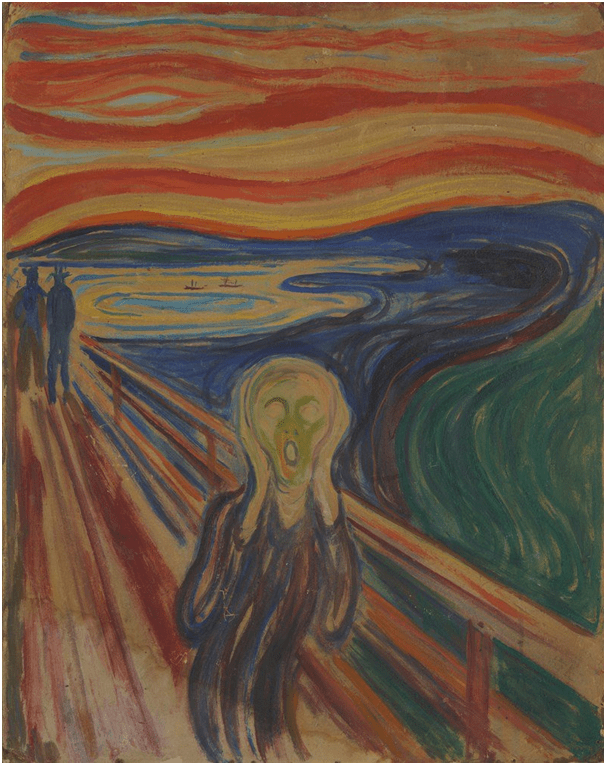
Because if you read Part 1 again after Part 2 has moved you, as it moved me so much, and notice that people go to the ‘portal’ to enter in or receive someone or something coming out that might make them feel more whole, just as the baby can be imagined to want a wholeness it cannot imagine in its present state nor articulate. Sometimes indeed, when the portal meets the limitation of beginning to recognise that it does not yield anything substantial in the face of human realities like death and incompletion we see it for what it is, an open mouth that might be screaming (Munch’s The Scream comes to mind hence my insertion of it above) at its own inadequacy and the inadequacy of others to love people as they are in their actual bodies, of which of course, The Elephant Man becomes the emblem.[10]
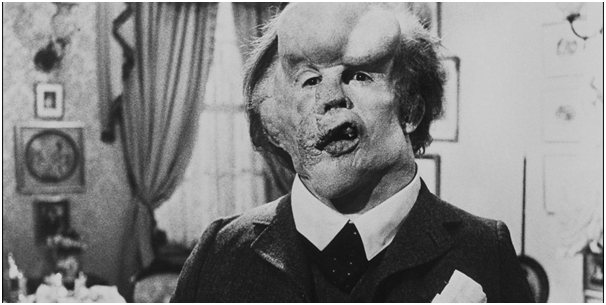
The open mouth of grief and longing that is all we have left of her sister’s baby at the end of the novel is, after all, all the ‘portal’ sees in the grieving other when called on to ‘talk about’ the human issues of Part 2, because it too is a baby born already bearing the signature of the disordered networks of communication accidentally born with it.
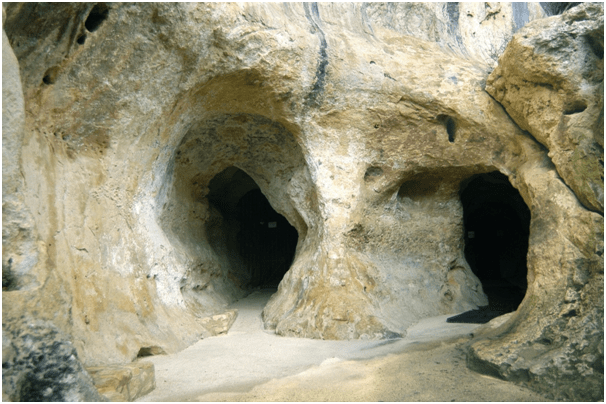
She went silent in the portal; she knew that as she scrolled you averted your eyes from the ones who could not apply their lipstick within the lines. The ones who were beginning to edge into mania, from the ones who were Horny, from the domes who were not remotely mean enough, from the nudeness that received only eight likes, … from the new displays of animal weakness that told us to lengthen the distance between the pack and the stragglers. But above all you averted your eyes from the ones who were in mad grief, whose mouths were open like caves with ancient paintings inside.[11]
The complicity of the narrator is a complicity that colludes even with the marginalisation of her own ‘mad grief’ and that of her sister in Part 2 and is based, not on a perception of the poverty of emotional empathy available on the internet but on the careful guarding of what we let in or out of the portal, lest it begin to resemble the mouth-like opening of an ancient cave whose message to humanity has perhaps been lost.
There is more to Lockwood’s engagement with the portal then than a superficial dismissal of its triviality and lack of seriousness. Both critics cited already hint that that is their view and interpretation, especially of Part 1 of the book, but Jordan Kisner gives the bluntest summary of this viewpoint: ‘Despite her concerns about the individual mind’s dilution in the great tidal insanity of Online Discourse, Lockwood is a stylist who only ever sounds like herself’.[12] In O’Connell’s piece he hints that Lockwood aims for a reader to understand only the negatives of the ‘affective reality’ of the portal: ‘the skittering triviality of its denizens’.[13]
Personally I find no evidence that either Lockwood or her narrator find the ‘denizens’ of Twitter classifiable simple as living in a mode that is comprehended by the description, ‘skittering triviality’. Rather the triviality is a symptom of the fear of what portals bring out from within the interiors they guard or let in to investigate a more private space in the Lockwood I read. There are fearsome elements to the motivation to ‘live so completely in the portal’, not least the relatively unexplored (and that feels to be for a very good reason) memory of the ‘Child Chained Up in the Yard’.[14] And sometimes Lockwood’s narrator feels like the oracular Sybil at the mouth of the cave at Delphi or Virgil’s Cumean Sybil. In the best instance this is a direct association. At one point the narrator, having turned into a joke the pretensions of a man at a Twitter conference she attended who claimed ‘his ancestors were always with him when he performed’, says:
But then, almost as a serious laugh, a strength entered her voice and she stood like a tree with a spirit in it, ans she opened a portal where her mouth was and spoke better than she ever had before, and as she rushed like blood back and forth in the real artery she saw that ancestors weren’t just behind, they were the ones to come.[15]
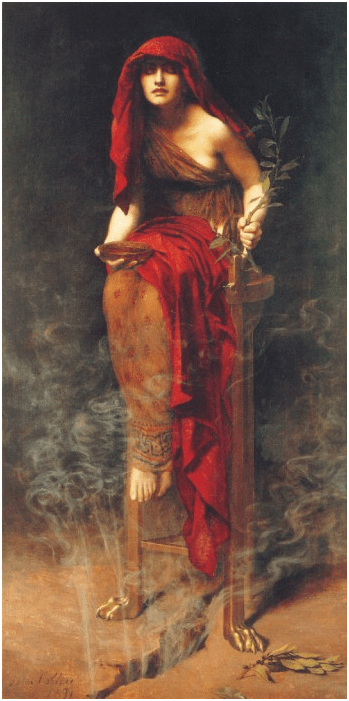
Of course the reading of tone in contemporary fiction, unlike say Jane Austen and George Eliot, is notoriously difficult but there is surely more here than the ubiquity of ‘irony poisoning’ that O’Connell feels characterises Part 1 and, to a degree, himself.[16] So what do I find that others appear not to in this novel? It seems fair to ask. First that there is no reason to simplify the workings of metaphor in a novel merely because it aids a thin reading of that novel and that is precisely what the critics I cite do to the network of portal, doorway, cave, mouth references in the novel, thus missing some emotional resonance. Second tone can be as ambiguous as meaning in good writing and may be layered just like psyche is layered from a superficial conscious intent to ones increasingly subconscious and then perhaps unconscious and operating through symbols and myth. How does O’Connell, for instance, interpret the phrase, ‘almost as a serious laugh’ if he is to insist that there is nothing that aspires to the serious in Part 1 and sees his own lack of laughter as a sign of some kind of failing in the writer.
What is serious is the analysis of the contradictions of Twitter and/or ‘portal’ identity, particularly those of self and other, speaking in ‘private whilst being everywhere, profundity and the shallowest silliness.[17] The phrase the novel interrogates is ‘shared reality’ which is at most felt in the presence of the dying baby.[18] But it is interrogated too in Part 1 as in this brilliant use of the homophone of ‘eye’ and ‘I’: “Each day to turn to a single eye that scanned a piece of writing”.[19] Of course the diurnal shared reality of Twitter can seem only to be trivial and unserious but nevertheless it continually captures the ways in which shifting identities between people emerge and then dissolve, before emerging in a metamorphosed form:
It was in this place where we were on the verge of losing our bodies that bodies became the most important, it was in this place of the great melting that it became important whether you called it pop or soda growing up, … . … it was the brotherhood of man, and in some ways you had never been flung further from each other.[20]
The mind we were in was obsessive, perseverant.[21]
( A singular mind that contains multiple persons)
When she set the portal down, the Thread tugged her back to it. … This might be the one that connected everything, that would knit her to an indestructible coherence.[22]
And, despite O’Connell’s scepticism, I think contradictions become the focus of a new art and new narrative technique that blends persons and then disintegrates them just as easily. The metaphor for connection is not a bridge but a ‘synapse’ which is, of course, a radical disconnection wherein connection is both made and dissolved by similar biochemical and bio-anatomical processes.
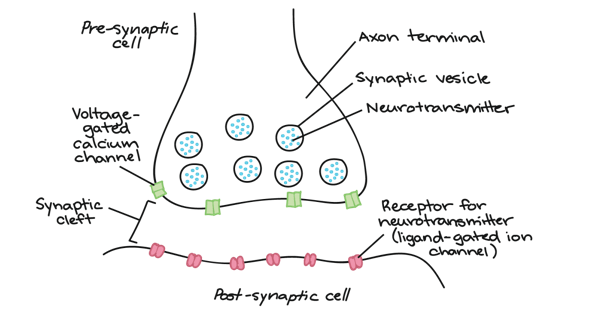
That these disconnections were what kept the pages turning, that these blank spaces were what moved the plot forward. The plot! That was a laugh. …[23]
O’Connell’s review is very useful in referring us to an early article by Lockwood from 2018 How Do We Write Now? This contains a vital reference to the theory of metaphor as cited by Mary Ruefle. It explains how the connection between orifices and portals are made – even the prick of a needle. This quotations starts with the italicised citation of Ruefle that could be describing too transfer and change at a synapse:
Metaphor is not, and never has been, a mere literary term. It is an event. A poem is a physical experience and metaphor is, simply, an exchange of energy between two things. …
That the place in yourself where metaphors wait is a place where all things in the world are one, where the globe is all possible circles imposed on each other and we are the final Venn.[24]
All the best
Steve
[1] Lockwood (2021: 125).
[2] Claire Allfree (2021) ‘No One Is Talking About This by Patricia Lockwood review: fizzing, filthy and funny’ in The London Evening Standard (online) 18 February 2021. Available at: https://www.standard.co.uk/culture/books/no-one-is-talking-about-this-twitter-patricia-lockwood-b919813.html [3]Mark O’Connell (2021) ‘No One Is Talking About This by Patricia Lockwood review – life in the Twittersphere In The Guardian (online) Fri 12 Feb 2021 07.30 GMT Available at: https://www.theguardian.com/books/2021/feb/12/no-one-is-talking-about-this-by-patricia-lockwood-review-life-in-the-twittersphere
[4] Ibid.
[5] Alfree, op.cit.
[6] Lockwood, op.cit.:208
[7] Ibid: 127
[8] Ibid: 94
[9] Ibid: 25.
[10] See reference to The Elephant Man for example ibid: 136f., 199.
[11] Ibid: 124f.
[12] Jordan Kisner ‘Extremely Online and Wildly Out of Control’ in The Atlantic Magazine (online) published online on February 13, 2021. Available https://www.theatlantic.com/magazine/archive/2021/03/patricia-lockwood-no-one-is-talking-about-this/617798/
[13] O’Connell, op.cit.
[14] Lockwood, op.cit.: 15
[15] Ibid; 111, 112.
[16] O’Connell op.cit.
[17] See Lockwood op.cit:: 72, 3, 5 & 7 respectively.
[18] Ibid: 128
[19] Ibid: 58
[20] Ibid: 12
[21] Ibid: 71
[22] Ibid: 99
[23] Ibid; 63
[24] Citing Mary Ruefle (in italics) this is Patricia Lockwood (2018) ‘How Do We Write Now?’ (an ‘essay originally given as a lecture at the Sylvia Beach Hotel as part of our 2018 Poetry Winter Workshop). Available at: How Do We Write Now? | Tin House .


One thought on “BOOKER SHORTLIST: ‘If all she was was funny, and none of this is funny, where did that leave her’.[1] A reflection on ‘no one is talking about this’ by Patricia Lockwood (2021).”