REVISION 21st Feb. 2020. I’m calling the experiment below to an end, having received no contributors. That’s hardly surprising in a blog site that hasn’t been popular. In many ways it anyway failed to open itself for collaboration by aiming higher than I could go myself, at least yet. I’m publishing my own version of a possible end product today. You can see it on: https://stevebamlett.home.blog/2020/02/21/reflecting-on-garth-greenwells-cleanness-2020-new-york-farrar-strauss-and-giroux/
EXPERIMENTAL CO-BLOGGING. Beginning a reflective blog ‘out there’: Reflecting on Garth Greenwell’s Cleanness (2020) after a first read on Twitter (hard copy available March).
This novel is welcome because its take on what it means to write on and about relationships. Because relationships are about interactions between variant stories about relationships just as they perform relationships. So often, in this novel, people tell each stories. For instance, meeting his student, G, the narrator (let’s call him for convenience GG without asserting any identification of narrator to author) reports a story that G tells him about G’s relationship with B. In the story he relates G has just been told about B’s romantic or sexual liaison with another boy :
And he said all this to me like I knew it already, G went on, like it was so clear it didn’t need to be said. But I didn’t know, I hadn’t seen anything, and as I sat there I felt something I had never felt before, it was like I was falling into something, like water though it wasn’t really like water, it was like a new element, G said. But surely he didn’t say precisely that, surely this is something I’ve added; added in solidarity, I’d like to say, but it wasn’t solidarity I felt as I listened to him, it was more like the laying of a claim. The experience he had was my own, I felt, I recognized it exactly, and as he spoke I felt myself falling also, into his story and his feeling both, I was trapped in what he told.
Kindle version in England: Loc. 171-80 c.
A lot has already been said about Greenwell’s punctuation but here we need to pick up the central issue about the punctuation for reported speech, the inverted comma (speech marks), and Greenwell’s decision to entirely avoid the clarification such punctuation gives as to who is currently speaking, who listening and of the turn-taking all speech involves. Hence even the uses of frequent markers like ‘he said’ often come too late to obscure the sense that the ‘I’ in this story could be either G or GG. Reported speech then by virtue of this alone by necessity embeds stories within stories in which stories are also embedded and within which the agency of speech is made difficult to attribute.
In this beautiful passage this effect is conveyed by the metaphor of ‘falling into’ something. Moreover the narrator suddenly reveals that the effect of reported speech is anyway illusory, containing new elements of which the reported speaker could have been oblivious –‘something I’ve added’. Whether that new element is ‘water’, for want of a better metaphor, or ‘his story and his feeling both’, its nature is fluid, its content often sticky – adhering to the surfaces of the bodies from which it is emitted.
*******

APHORISTIC NOTES FOR CONTINUATION:
Stories are like sex – friction from resistant mutual touch of surfaces, or sticky or eased by fluids
Stories and feelings make identity and action fluid if they are divergent enough and hear each other. Stories which stick to one end probably destroy what they contain.
Bodies and body actions tell stories
The common factor is the moulding of time by purposes or teleologies (ends)
Stories can delay or even change the ends with which they started into life – narrators don’t always own the ends of their stories.
Language is shaped temporally not in static structures.
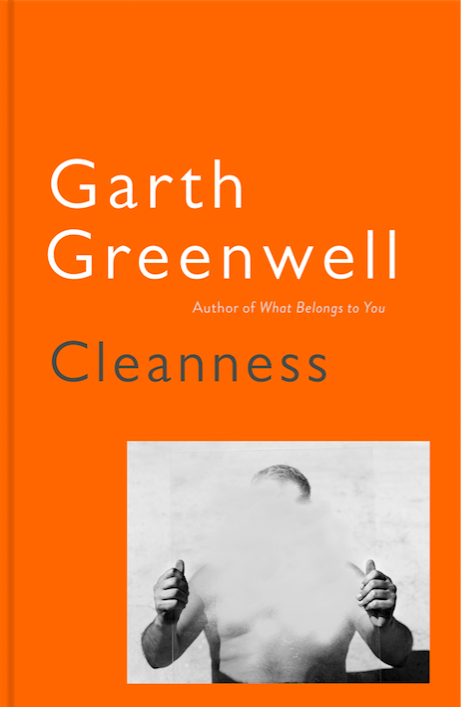
THIS SO FAR IS THE PLANNED BLOG. Comments to help shape and re-shape it as written welcome.
PLEASE ADD / COMMENT / QUERY IN FEEDBACK. WILL CONTINUE ALONE IF NO COMMENT. THIS IS EXPERIMENTAL BUT BASED ON A RESPONSE TO THIS BOOK.
Steve
 Steve_Bamlett_blog